




~1 min
Average Reply Time
~1 hour
To Be Matched With A Tutor
1 Trial
75% Find Their Tutor On The 1st Trial
$1
Your First 30 Minutes
Hire The Best Digital Electronics Tutor
Top Tutors, Top Grades. Without The Stress!
Related Subjects
Boolean algebra made sense on the slides. Then the K-map exam arrived — and 40% of the class failed the combinational logic section.
Digital Electronics Tutor Online
Digital electronics is the branch of electronics dealing with circuits that process binary signals using logic gates, flip-flops, counters, and programmable devices, equipping students to design, analyse, and implement digital systems from combinational logic to sequential circuits and microprocessor interfaces.
If you are searching for a Digital Electronics tutor near me, MEB’s 1:1 online sessions connect you with a verified specialist — someone who knows your exact syllabus, whether that’s a first-year EE module, an Electrical and Electronics programme, or a graduate-level VLSI course. Every session is calibrated to where you actually are, not where a textbook assumes you should be. Students who work consistently with an online Electronics Engineering tutor see measurable improvement — without any grade guarantees, the pattern holds across thousands of sessions.
- 1:1 online sessions tailored to your specific course and syllabus
- Expert-verified tutors with demonstrated subject depth in digital systems
- Flexible time zones — US, UK, Canada, Australia, Gulf covered
- Structured learning plan built after a diagnostic session
- Ethical homework and assignment guidance — you understand before you submit
52,000+ students across the US, UK, Canada, Australia, and the Gulf have used MEB since 2008 — including students in Electrical Engineering subjects like Digital Electronics, Analog Electronics, and Digital Signal Processing.
Source: My Engineering Buddy, 2008–2025.
How Much Does a Digital Electronics Tutor Cost?
Most Digital Electronics tutoring sessions run $20–$40/hr. Graduate-level topics — VLSI design, FPGA implementation, advanced HDL — can reach up to $100/hr depending on tutor background and turnaround needs. Start with the $1 trial: 30 minutes of live tutoring, or one homework question explained in full.
| Level / Need | Typical Rate | What’s Included |
|---|---|---|
| Undergraduate (most levels) | $20–$35/hr | 1:1 sessions, homework guidance |
| Advanced / Graduate / VLSI | $35–$100/hr | Expert tutor, niche depth, HDL support |
| $1 Trial | $1 flat | 30 min live session or 1 homework question |
Tutor availability tightens significantly in the 3–4 weeks before end-of-semester exams. Book early if your assessment window is fixed.
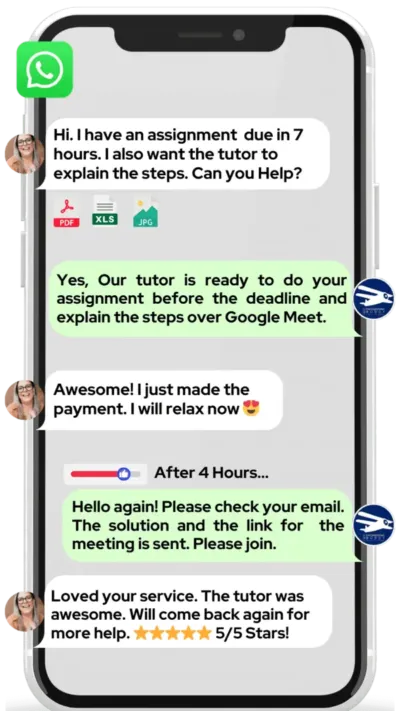
WhatsApp MEB for a quick quote — average response time under 1 minute.
Who This Digital Electronics Tutoring Is For
Digital Electronics trips up students at every level — not just beginners. The jump from truth tables to sequential circuit timing diagrams catches a lot of second-year EE students off guard, and HDL synthesis failures in FPGA labs are a common late-semester crisis.
- First and second-year undergraduates hitting the wall on combinational and sequential logic
- Students retaking after a failed first attempt in a digital systems module
- Students with a university conditional offer depending on this grade
- Graduate students needing targeted help with VHDL, Verilog, or FPGA implementation for a project or thesis
- Students at universities like MIT, Georgia Tech, Imperial College, University of Toronto, UNSW, TU Delft, and ETH Zurich where digital systems courses are notoriously demanding
- Parents watching a child’s confidence drop alongside their grades in an electronics programme
Whether you need help decoding a timing diagram at 11pm or want structured weekly sessions ahead of finals, MEB’s digital circuit tutoring covers it.
At MEB, we’ve found that most Digital Electronics students don’t struggle with the individual concepts — they struggle with connecting them. A student who understands flip-flops separately from counters still stalls when asked to design a complete state machine. That’s exactly what 1:1 sessions are built to fix.
1:1 Tutoring vs Self-Study vs AI vs YouTube vs Online Courses
Self-study works if you’re disciplined — but digital electronics has enough interdependent concepts that a single gap compounds fast. AI tools explain definitions quickly but can’t watch you draw a state transition diagram and catch the error. YouTube handles gate logic beautifully, then goes silent when your Karnaugh map won’t simplify. Online courses move at a fixed pace regardless of where you’re stuck. With MEB, a live tutor watches you work through a JK flip-flop timing problem in real time, corrects the exact step where your logic breaks, and adjusts the next 20 minutes based on what just happened. That’s what no recorded resource can replicate in Digital Electronics.
Outcomes: What You’ll Be Able To Do in Digital Electronics
After consistent 1:1 sessions, students are able to solve multi-variable Boolean expressions using both algebraic simplification and Karnaugh maps without prompting. They can analyse and design combinational circuits — including multiplexers, decoders, and adders — from a problem specification. Students learn to model sequential systems using state diagrams and implement them with D, JK, and T flip-flops. They can explain timing hazards and race conditions in clocked circuits and apply that understanding to assignment problems. Many go on to write synthesisable VHDL or Verilog for FPGA targets — a skill that shows up directly in internship and lab assessments.
Supporting a student through Digital Electronics? MEB works directly with parents to set up sessions, track progress, and keep coursework on schedule. WhatsApp MEB — average response time is under a minute, 24/7.
Based on feedback from 40,000+ sessions collected by MEB from 2022 to 2025, 58% of students improved by one full grade after approximately 20 hours of 1:1 tutoring in subjects like Digital Electronics. A further 23% achieved at least a half-grade improvement.
Source: MEB session feedback data, 2022–2025.
What We Cover in Digital Electronics (Syllabus / Topics)

Track 1: Combinational Logic and Boolean Algebra
- Number systems — binary, octal, hexadecimal, BCD, and conversions
- Boolean theorems, De Morgan’s laws, and algebraic simplification
- Karnaugh maps (2, 3, 4 variable) — grouping, don’t cares, SOP and POS forms
- Logic gate families — TTL, CMOS, tri-state outputs
- Combinational circuits — half adder, full adder, carry lookahead adder
- Multiplexers, demultiplexers, encoders, decoders, and priority encoders
- Hazards and glitches in combinational networks
Core texts for this track: Morris Mano’s Digital Design (5th ed.) and Floyd’s Digital Fundamentals are the most widely assigned at undergraduate level.
Track 2: Sequential Logic and State Machines
- Latches — SR, D, and their timing limitations
- Flip-flops — D, JK, T, master-slave configurations, edge triggering
- Registers — shift registers, parallel load, serial/parallel conversion
- Counters — ripple, synchronous, modulo-N, up/down, ring and Johnson
- Finite state machines — Mealy vs Moore models, state tables, state diagrams
- Timing analysis — setup time, hold time, propagation delay, clock skew
- Synchronous vs asynchronous circuit hazards
Recommended: Wakerly’s Digital Design: Principles and Practices for state machine coverage; Harris and Harris Digital Design and Computer Architecture for timing depth.
Track 3: HDL, FPGAs, and Programmable Logic
- VHDL fundamentals — entities, architectures, concurrent and sequential statements
- Verilog HDL — modules, always blocks, blocking vs non-blocking assignments
- Synthesis constraints and simulation vs synthesis mismatch errors
- FPGA design flow — RTL design, place and route, timing closure basics
- Programmable logic — PAL, PLA, CPLD architectures and their applications
- Testbench writing and functional simulation in ModelSim or Vivado
Key references: Pedroni’s Circuit Design and Simulation with VHDL; for Verilog, Palnitkar’s Verilog HDL: A Guide to Digital Design and Synthesis. IEEE Xplore hosts peer-reviewed papers on HDL synthesis — see IEEE Xplore for research-level material.
What a Typical Digital Electronics Session Looks Like
The tutor opens by checking the previous topic — usually sequential circuit timing or Karnaugh map simplification, depending on where you left off. You share your screen or a photo of the assignment problem. The tutor works through one example on a digital pen-pad, annotating the state transition diagram or truth table step by step while explaining each decision out loud. Then it’s your turn — you replicate the approach on a new problem while the tutor watches, pausing only to correct the exact step where the reasoning breaks. Sessions on logic gate design and flip-flop timing tend to run tighter than HDL sessions, which often involve screen-sharing a Vivado or ModelSim window directly. The session closes with one concrete practice problem set for before next time, and the tutor notes the next topic in the sequence.
How MEB Tutors Help You with Digital Electronics (The Learning Loop)
Diagnose: In the first session, the tutor asks you to work through a combinational simplification problem or draw a state diagram from scratch. That single exercise reveals exactly where the logic breaks — whether it’s number system conversions, K-map grouping rules, or FSM output equations. No time wasted on topics you already have.
Explain: The tutor solves a representative problem live on the digital pen-pad — annotating the Boolean expression reduction or the flip-flop excitation table while talking through every decision. You see the reasoning, not just the answer.
Practice: You attempt a parallel problem while the tutor watches. For VHDL or Verilog sessions, you type the code in real time and the tutor flags synthesis issues before you run simulation.
Feedback: The tutor walks through every error step by step — not just marking it wrong, but explaining which rule was applied incorrectly and where the mark scheme would deduct points. Students in microprocessors and embedded systems modules find this especially useful for HDL lab reports.
Plan: At the end of each session, the tutor sets the next topic in sequence and a specific practice task. Progress is tracked against your exam or submission deadline from session one.
Sessions run over Google Meet. The tutor uses a digital pen-pad or iPad with Apple Pencil for circuit diagrams and timing waveforms. Before your first session, have your course syllabus or module guide, a recent assignment or past-paper question you found difficult, and your exam date or coursework deadline. The first session doubles as your diagnostic — every minute is used. Start with the $1 trial: 30 minutes of live tutoring that also serves as that first diagnostic session.
Try your first session for $1 — 30 minutes of live 1:1 tutoring or one homework question explained in full. No registration. No commitment. WhatsApp MEB now and get matched within the hour.
Tutor Match Criteria (How We Pick Your Tutor)
Not every electronics tutor is a digital systems specialist. MEB matches on four criteria.
Subject depth: the tutor must demonstrate working knowledge of your specific module — combinational logic, sequential design, HDL, or FPGA — not just general electronics. Tools: Google Meet plus digital pen-pad or iPad with Apple Pencil, so circuit diagrams and timing diagrams render clearly. Time zone: matched to your region — US, UK, Gulf, Canada, or Australia — so sessions don’t require 5am starts. Goals: whether you need exam score improvement in semiconductor devices coursework, deeper conceptual understanding of integrated circuits, homework guidance, or research support for a master’s thesis on FPGA implementation, the tutor is selected to fit that specific aim.
Unlike platforms where you fill out a form and wait, MEB responds in under a minute, 24/7. Tutor match takes under an hour. The $1 trial means you test before you commit. Everything runs over WhatsApp — no logins, no intake forms.
MEB tutors don’t just re-explain the textbook. They identify the one concept that’s blocking five others — and fix that first. In Digital Electronics, that’s usually state machine output logic or HDL blocking versus non-blocking assignment rules.
Source: My Engineering Buddy, 2008–2025.
Students consistently tell us that the moment digital electronics clicks is rarely gradual — it’s a specific session where the connection between a state diagram and its flip-flop implementation finally becomes visual. The pen-pad makes that moment happen faster than any textbook explanation.
Study Plans (Pick One That Matches Your Goal)
The tutor builds a specific session sequence after the diagnostic. Three plans cover most situations: a catch-up plan for students 1–3 weeks from an exam with significant topic gaps — typically prioritising combinational logic, K-maps, and sequential circuit design in that order; an exam prep plan for students 4–8 weeks out, covering the full syllabus with timed past-paper practice built in; and weekly support for ongoing help aligned to lecture topics and assignment deadlines through the semester. Students targeting VLSI design or advanced HDL coursework often combine weekly support with intensive catch-up sessions in the final two weeks.
Pricing Guide
Rates start at $20/hr for standard undergraduate Digital Electronics modules. Advanced topics — FPGA synthesis, VLSI, graduate-level HDL — typically run $40–$100/hr depending on tutor background and turnaround time. Level, topic complexity, your deadline, and tutor availability all affect the final rate.
Availability tightens sharply in the 3–4 weeks before end-of-semester exam periods at major universities. If you have a fixed exam date, don’t leave the booking to the last week.
For students targeting top engineering programmes — graduate admissions, FPGA roles, or professional certification in embedded systems — tutors with direct industry or research backgrounds in digital design are available at higher rates. Share your specific goal and MEB will match the tier to your ambition.
Start with the $1 trial — 30 minutes, no registration, no commitment. WhatsApp MEB for a quick quote.
FAQ
Is Digital Electronics hard?
It depends heavily on your maths and logic foundation. Students with solid Boolean algebra and binary arithmetic find the first half manageable. The difficulty jumps significantly with sequential logic, state machines, and HDL — where timing constraints and synthesis rules trip up even strong students.
How many sessions are needed?
Most students close a single-topic gap in 3–5 sessions. A full-semester catch-up — covering combinational logic through HDL — typically takes 15–25 hours of 1:1 work. The first session diagnostic gives a clearer estimate for your specific situation.
Can you help with homework and assignments?
Yes — MEB tutoring is guided learning. The tutor explains the underlying concept, walks through a similar worked example, and helps you understand the method. You work out the answer and submit it yourself. See our Academic Integrity policy and Why MEB page for full details on what we help with and what we don’t.
Will the tutor match my exact syllabus or exam board?
Yes. Share your course outline, module guide, or exam board details over WhatsApp when you make contact. MEB matches tutors to your specific syllabus — whether that’s a UK university module, a US community college course, or a graduate EE programme at a specific institution.
What happens in the first session?
The tutor runs a short diagnostic — usually a problem from your actual coursework or a past-paper question. That identifies exactly which concepts need work. The remainder of the session starts addressing the most urgent gap. You leave with a clear plan for subsequent sessions.
Is online tutoring as effective as in-person?
For Digital Electronics, yes. Circuit diagrams, timing waveforms, and HDL code all render clearly on a shared screen with pen-pad annotation. Students in the US, UK, Canada, Gulf, and Australia report no practical difference in learning quality compared to in-person sessions.
What’s the difference between VHDL and Verilog, and which should I learn first?
Both are hardware description languages used to design and simulate digital circuits. VHDL is more verbose and typed — common in European and defence-oriented programmes. Verilog is more concise — widely used in the US and in ASIC/FPGA industry roles. Your course syllabus will specify one; MEB tutors cover both.
Can MEB help with FPGA lab assignments, not just theory?
Yes. Tutors assist with full FPGA lab workflows — RTL design in VHDL or Verilog, simulation in ModelSim or Vivado, interpreting synthesis warnings, and debugging timing constraint failures. Share your lab brief or design specification before the session and the tutor comes prepared.
Can I get Digital Electronics help at midnight or on weekends?
Yes. MEB operates across time zones 24/7. Students in the Gulf, Australia, and the US West Coast regularly book late-night or early-morning sessions. WhatsApp response time is under a minute regardless of when you message.
What if I don’t understand my tutor’s explanation style?
Tell MEB. Tutor rematch is straightforward — message over WhatsApp and a replacement is assigned, usually within the hour. The $1 trial is specifically designed so you can test the fit before committing to a paid package.
How do I get started?
Three steps: WhatsApp MEB with your subject, syllabus, and exam date. MEB matches you with a verified Digital Electronics tutor — usually within the hour. Your first session is the $1 trial: 30 minutes live or one homework question fully explained, no registration required.
Trust & Quality at My Engineering Buddy
Every MEB tutor goes through a subject-specific screening process — a live demo session evaluated by an internal subject lead, degree and experience verification, and ongoing review based on student feedback after each session. Tutors covering Digital Electronics are assessed specifically on combinational logic, sequential design, and HDL — not just general electronics knowledge. Rated 4.8/5 across 40,000+ verified reviews on Google.
MEB tutoring is guided learning — you understand the work, then submit it yourself. For full details on what we help with and what we don’t, read our Academic Integrity policy and Why MEB.
MEB has served 52,000+ students across the US, UK, Canada, Australia, Gulf, and Europe since 2008 — across 2,800+ subjects. Within Electrical Engineering, that includes Digital Electronics, Analog Circuits tutoring, Signals and Systems help, and Control Systems tutoring. The MEB tutoring methodology — diagnostic first, structured session plan, feedback loop — is the same across every subject.
MEB has operated since 2008 across 2,800+ subjects. In Electrical Engineering, the most common reason students contact us is a specific topic that a lecture couldn’t fix — in Digital Electronics, that topic is almost always state machine design or HDL synthesis errors.
Source: My Engineering Buddy, 2008–2025.
A common pattern our tutors observe is that students who failed a digital electronics exam once don’t need more content — they need to re-encounter the same concepts in a different sequence, with immediate feedback on where their reasoning diverges. That’s what the diagnostic-first approach is designed to provide.
Explore Related Subjects
Students studying Digital Electronics often also need support in:
- Microcontrollers
- Microelectronics
- Embedded C Programming
- Circuit Analysis
- Digital Communications
- PCB Design
- Network Theory
Next Steps
When you message MEB, share your exam board or course name, the topic giving you the most trouble, and your exam or assignment deadline. Add your time zone and preferred session days. MEB matches you with a verified Digital Electronics tutor — usually within 24 hours, often within the hour.
Before your first session, have ready:
- Your syllabus or module guide (or the course outline from your university portal)
- A recent past-paper attempt or the homework question you got stuck on
- Your exam date or coursework submission deadline
The tutor handles the rest. The first session is also your diagnostic — no time is wasted on concepts you already have.
Visit www.myengineeringbuddy.com for more on how MEB works.
WhatsApp to get started or email [email protected].
52,000+ Happy Students From Various Universities






Reviewed by Subject Expert
This page has been carefully reviewed and validated by our subject expert to ensure accuracy and relevance.
