

Hire Verified & Experienced
Forensic Geology Tutors
Email: [email protected]
4.8/5 40K+ session ratings collected on the MEB platform



Hire The Best Forensic Geology Tutor
Top Tutors, Top Grades. Without The Stress!
Most students don’t fail Forensic Geology because the geology is hard — they fail because nobody showed them how soil morphology and mineral evidence connect to a real case scenario.
Forensic Geology Tutor Online
Forensic Geology applies earth science — including soil analysis, mineralogy, and sedimentology — to criminal investigations and legal proceedings, equipping students to interpret geological evidence within forensic and judicial contexts.
If you’ve searched for a Forensic Geology tutor near me, MEB connects you with a verified 1:1 online Forensic Geology tutor who knows the exact topics your course covers. Whether you’re working through soil comparison, rock identification, or the chain-of-custody requirements for geological evidence, your tutor adapts to your syllabus from session one. This is part of MEB’s broader forensic science tutoring network, covering specialisms across the discipline.
- 1:1 online sessions tailored to your specific Forensic Geology course or module
- Expert verified tutors with subject-specific knowledge in earth sciences and forensic application
- Flexible time zones — US, UK, Canada, Australia, Gulf
- Structured learning plan built after a diagnostic session
- Ethical homework and assignment guidance — you understand before you submit
52,000+ students across the US, UK, Canada, Australia, and the Gulf have used MEB since 2008 — including students in Forensic Science subjects like Forensic Geology, Forensic Chemistry, and Forensic Botany.
Source: My Engineering Buddy, 2008–2025.
How Much Does a Forensic Geology Tutor Cost?
Most Forensic Geology tutoring sessions run $20–$40/hr. Graduate-level or highly specialised topics — expert witness preparation, advanced sedimentary analysis — can reach up to $100/hr. Try the $1 trial first: 30 minutes live or one full homework question explained.
| Level / Need | Typical Rate | What’s Included |
|---|---|---|
| Standard (most undergrad levels) | $20–$35/hr | 1:1 sessions, homework guidance |
| Advanced / Specialist | $35–$100/hr | Expert tutor, graduate or professional depth |
| $1 Trial | $1 flat | 30 min live session or 1 homework question |
Tutor availability tightens around semester deadlines and summer fieldwork prep periods. Book early if you’re working to a fixed submission date.
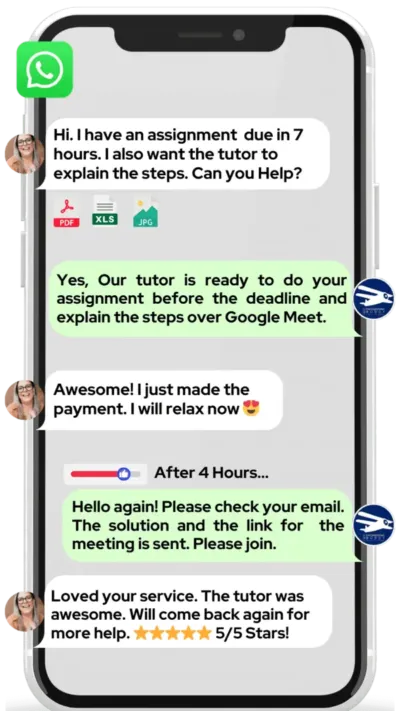
WhatsApp MEB for a quick quote — average response time under 1 minute.
Who This Forensic Geology Tutoring Is For
This is for students who know enough geology to get by but not enough to apply it correctly in a forensic context. That gap — between knowing what a mineral is and knowing how to present it as admissible evidence — is exactly where most marks are lost.
- Undergraduates taking Forensic Geology as a core or elective module
- Graduate students covering geological evidence in criminal justice or earth science programmes
- Students whose fieldwork or lab reports are due and the write-up isn’t coming together
- Students retaking after a failed first attempt who need a different approach, not more of the same
- Students at universities such as University of Leicester, University of Florida, Ohio State, University of Edinburgh, or Macquarie University who need support beyond lecture hours
- Parents watching a child’s confidence drop alongside their grades — MEB works directly with families to set up sessions and track progress
At MEB, we’ve found that Forensic Geology students often arrive with solid earth science foundations but struggle specifically with the evidence interpretation step — translating field observations into court-ready language. That translation is a teachable skill, and most students close the gap faster than they expect with the right guidance.
1:1 Tutoring vs Self-Study vs AI vs YouTube vs Online Courses
Self-study works if your notes are good and your course is well-structured — but Forensic Geology involves applied judgement, not just recall. AI tools give fast answers but can’t watch you misread a soil profile and correct you in real time. YouTube covers the geology basics well; it stops short when you need case-specific evidence interpretation. Online courses are structured but fixed — no room for your specific assignment question. With 1:1 tutoring at MEB, a tutor who knows Forensic Geology works through your actual problems with you, live — correcting errors before they become habits.
Outcomes: What You’ll Be Able To Do in Forensic Geology
After structured 1:1 sessions, you’ll be able to analyze soil and sediment samples using correct forensic protocols, apply mineralogical comparisons to link physical evidence to a location, explain the chain-of-custody requirements for geological specimens in legal proceedings, write defensible field reports that hold up under cross-examination standards, and present geological findings in the structured format required for case documentation. These aren’t generic science skills — they’re the specific competencies that separate a pass from a strong mark in this subject.
Based on feedback from 40,000+ sessions collected by MEB from 2022 to 2025, 58% of students improved by one full grade after approximately 20 hours of 1:1 tutoring in subjects like Forensic Geology. A further 23% achieved at least a half-grade improvement.
Source: MEB session feedback data, 2022–2025.
Start with the $1 trial — it doubles as your first diagnostic and shows you exactly where the gaps are.
What We Cover in Forensic Geology (Syllabus / Topics)

Track 1: Geological Evidence and Crime Scene Analysis
- Soil classification systems and forensic sampling protocols
- Mineral identification — optical microscopy and X-ray diffraction in forensic contexts
- Particle size analysis and its role in linking soil evidence to crime scenes
- Sedimentary and depositional environments as location indicators
- Trace evidence handling and contamination prevention in geological samples
- Documentation standards for geological evidence in criminal casework
Core texts for this track include Forensic Geology by Raymond Murray and John Tedrow and Soil in Criminal and Environmental Forensics (Dawson et al.).
Track 2: Geochemistry and Physical Geography in Forensic Investigations
- Geochemical profiling — matching samples through elemental composition
- Isotope analysis as a forensic tool for provenance determination
- Rock and mineral databases used in forensic comparison work
- Geomorphological mapping and terrain analysis for search operations
- Remote sensing and GIS applications in forensic scene reconstruction
- Volcanic ash and dust as trace evidence — case study applications
Relevant reading includes Geological and Soil Evidence: Forensic Applications by Kenneth Pye and Environmental and Medical Geology (Selinus et al.).
Track 3: Expert Witness Practice and Legal Frameworks
- Standards for geological expert testimony in civil and criminal courts
- Writing forensic geology reports — structure, language, and admissibility
- Cross-examination preparation: anticipating challenges to geological evidence
- Chain-of-custody procedures specific to earth science specimens
- Case law and precedent involving geological evidence in the US, UK, and Australia
- Ethical responsibilities of the forensic geologist as an expert witness
Supporting texts include The Forensic Casebook (Platt) and relevant chapters from Principles of Forensic Science (White).
Students consistently tell us that the expert witness track catches them off guard. The geology they can handle — it’s the courtroom language and the report structure that costs marks. A few focused sessions on how to translate technical findings into legally defensible writing makes a measurable difference to final submissions.
What a Typical Forensic Geology Session Looks Like
The tutor opens by reviewing the previous topic — usually soil comparison methodology or mineral identification from the last session. From there, you and the tutor work through your current material on screen: reading a thin section micrograph together, walking through a geochemical dataset, or drafting a section of a forensic report. The tutor uses a digital pen-pad to annotate directly over the sample images or your written work. You explain your reasoning out loud; the tutor corrects errors in real time. By the end, you have a specific practice task — usually a past question or a short report section to draft — and a clear topic for next session. Nothing is vague. You leave knowing exactly what to do next.
How MEB Tutors Help You with Forensic Geology (The Learning Loop)
Diagnose: In the first session, the tutor identifies whether your difficulty is conceptual (not understanding the geology), applied (unable to transfer knowledge to forensic scenarios), or procedural (struggling with report structure and legal language). Most students have a mix of all three — and the proportions matter for how sessions are sequenced.
Explain: The tutor works through live examples using a digital pen-pad — annotating soil profiles, walking through mineral comparison logic, or marking up a draft forensic report on screen. No passive listening. Every concept is tied to a specific case type or exam question format.
Practice: You attempt problems with the tutor present. This might mean identifying an unknown sediment sample, constructing a chain-of-custody argument, or writing the findings section of a geological evidence report under timed conditions.
Feedback: The tutor goes through every error step by step — not just marking it wrong but explaining which part of the reasoning broke down and why that costs marks in assessed work.
Plan: Each session ends with a clear topic progression. The tutor tracks what’s been covered and adjusts the sequence based on your upcoming deadlines and remaining syllabus gaps.
Sessions run on Google Meet. The tutor uses a digital pen-pad or iPad with Apple Pencil to annotate directly on your materials. Before your first session, share your course outline, a recent piece of work you found difficult, and your submission or exam date. The tutor uses that first session as a full diagnostic. Whether you need a quick catch-up before a deadline, structured revision over 4–6 weeks, or ongoing weekly support through the semester, the plan is built after that first session — not before. Start with the $1 trial — 30 minutes that also serves as your diagnostic.
Try your first session for $1 — 30 minutes of live 1:1 tutoring or one homework question explained in full. No registration. No commitment. WhatsApp MEB now and get matched within the hour.
Tutor Match Criteria (How We Pick Your Tutor)
MEB doesn’t assign a generic science tutor and hope for the best. Every match is deliberate.
Subject depth: Tutors are matched on their specific background — earth sciences, geochemistry, forensic science, or legal evidence frameworks, depending on which track you’re working on.
Tools: Every tutor works on Google Meet with a digital pen-pad or iPad and Apple Pencil — so annotations, sample marking, and report feedback all happen live on screen.
Time zone: Matched to your region — US, UK, Gulf, Canada, or Australia. No awkward scheduling across 12 time zones.
Goals: Your tutor is briefed on whether you need conceptual depth, exam technique, homework support, or help with a specific report submission.
Unlike platforms where you fill out a form and wait, MEB responds in under a minute, 24/7. Tutor match takes under an hour. The $1 trial means you test before you commit. Everything runs over WhatsApp — no logins, no intake forms.
Study Plans (Pick One That Matches Your Goal)
The tutor builds your specific session sequence after the diagnostic, but here’s how the options typically work. Catch-up (1–3 weeks): intensive focus on the highest-weight topics and report components before a submission deadline. Exam prep (4–8 weeks): structured coverage of the full syllabus with timed practice and feedback on past questions. Weekly support: ongoing sessions aligned to your lecture schedule and coursework deadlines throughout the semester. The tutor decides the exact sequence — that’s the point of the diagnostic.
Pricing Guide
Forensic Geology tutoring starts at $20/hr for standard undergraduate modules. Rates rise with topic complexity, tutor specialisation (geochemistry, expert witness preparation), and timeline urgency. Graduate-level or pre-submission intensive support can reach $100/hr.
For students targeting careers in law enforcement geology, environmental forensics, or professional expert witness roles, tutors with active fieldwork or courtroom experience are available at higher rates — share your specific goal and MEB will match the tier to your needs.
Availability is limited during semester submission windows. Start with the $1 trial — 30 minutes, no registration, no commitment. WhatsApp MEB for a quick quote.
FAQ
Is Forensic Geology hard?
It’s not the hardest geological subject, but the forensic application layer trips most students. Knowing your minerals isn’t enough — you have to know how to present them as evidence. That gap is teachable, and most students close it faster than expected with targeted 1:1 help.
How many sessions are needed?
Most students see measurable progress within 6–10 sessions. If you’re starting from a significant deficit or have a major submission coming up, a 12–15 session block is more realistic. The tutor maps this out after the first diagnostic session.
Can you help with homework and assignments?
MEB tutoring is guided learning — you understand the work, then submit it yourself. The tutor explains the methodology, walks through similar problems, and helps you develop your own answer. See our Academic Integrity policy and Why MEB page for full details on what we help with and what we don’t.
Will the tutor match my exact syllabus or exam board?
Yes. Share your course outline or module handbook when you WhatsApp MEB. The tutor is matched specifically to your institution’s syllabus — whether that’s a UK university module, a US undergraduate course, or an Australian forensic science programme.
What happens in the first session?
The tutor runs a diagnostic — asking questions about recent topics, reviewing a piece of your work, and identifying where the gaps are. No time is wasted on things you already know. The session plan for the next 4–8 weeks is shaped by what comes out of this first meeting.
Is online tutoring as effective as in-person?
For Forensic Geology specifically, online works well — most of the work involves reviewing documents, annotating images, and working through reports, all of which translate cleanly to screen. The tutor uses a pen-pad to annotate directly. Students consistently rate it as equal to or better than in-person support.
Can I get Forensic Geology help at midnight?
Yes. MEB operates 24/7 across time zones. WhatsApp MEB at any hour and the average response time is under one minute. Tutors are available across US, UK, Gulf, and Australian time zones, so late-night sessions before a submission deadline are entirely manageable.
What if I don’t get on with my assigned tutor?
Tell MEB via WhatsApp and a replacement is arranged immediately — no forms, no delay. The $1 trial exists precisely so you can test the match before committing to a full block of sessions. Most students stick with their first tutor, but the option is always there.
Do Forensic Geology tutors help with GIS and remote sensing components?
Yes. GIS mapping, remote sensing interpretation, and terrain analysis are covered within the geochemistry and physical geography track. If your module includes software-specific GIS work, mention the platform when you contact MEB so the tutor match can account for it.
How do geological samples become admissible evidence — and can a tutor help me understand the legal side?
This is one of the trickiest parts of the course. Chain-of-custody procedures, documentation standards, and the expert witness reporting format are all teachable skills. MEB tutors with legal or courtroom background cover this in the expert witness track — it’s a common focus area for students preparing final reports.
How do I get started?
WhatsApp MEB, share your course details and exam or deadline date, and MEB matches you with a verified Forensic Geology tutor — usually within the hour. The first session starts with a diagnostic. Try the $1 trial: 30 minutes live or one full question explained.
How do I find a Forensic Geology tutor in my city?
MEB tutors are entirely online, which means location doesn’t limit your options. Students in London, Houston, Toronto, Dubai, and Sydney all access the same pool of verified tutors. You get the right subject-match — not just whoever is geographically convenient.
Trust & Quality at My Engineering Buddy
Every MEB tutor is screened before they teach a single session — academic background verified, subject knowledge tested in a live demo evaluation, and ongoing feedback reviewed after every student session. Tutors covering Forensic Geology hold relevant degrees in earth sciences, geochemistry, forensic science, or closely related fields, with many bringing fieldwork or legal casework experience. Rated 4.8/5 across 40,000+ verified reviews on Google. MEB has been running since 2008 — 18 years of verifiable track record in specialist tutoring.
MEB tutoring is guided learning — you understand the work, then submit it yourself. For full details on what we help with and what we don’t, read our Academic Integrity policy and Why MEB.
MEB serves 52,000+ students across the US, UK, Canada, Australia, Gulf, and Europe in 2,800+ subjects. Within Forensic Science, that includes Forensic Geology, Forensic Entomology tutoring, and Forensic Pathology help — each covered by tutors who know the subject at depth, not generalists filling a gap. See MEB’s tutoring methodology for how sessions are structured across all subjects.
MEB has matched students to verified Forensic Geology tutors across the US, UK, Canada, Australia, and the Gulf since 2008 — with sessions covering everything from soil comparison methodology to expert witness report preparation. The platform, the tutors, and the process are all built around one goal: you do better work.
Source: My Engineering Buddy, 2008–2025.
Explore Related Subjects
Students studying Forensic Geology often also need support in:
- Forensic Archeology
- Forensic Biology and Serology
- DNA Analysis
- Forensic Toxicology
- Forensic Engineering
- Forensic Physics
- Toxicology
Next Steps
Getting started takes about two minutes.
- Share your exam board or course module, the topic giving you the most trouble, and your current deadline or exam date
- Share your availability and time zone
- MEB matches you with a verified Forensic Geology tutor — usually within 24 hours, often within the hour
- First session starts with a diagnostic so every minute is used on what actually matters
Before your first session, have ready: your course outline or syllabus, a recent assignment or lab report you struggled with, and your submission or exam date. The tutor handles the rest.
Visit www.myengineeringbuddy.com for more on how MEB works.
WhatsApp to get started or email [email protected].
Our experience across thousands of sessions shows that students who share a specific piece of work — a lab report, a past paper answer, a draft forensic report — get more from session one than students who arrive with a general topic in mind. Specificity is free. Bring the actual problem.
52,000+ Happy Students From Various Universities



How Much For Private 1:1 Tutoring & Hw Help?
Private 1:1 Tutoring and HW help Cost $20 – 35 per hour* on average.
Reviewed by Subject Expert
This page has been carefully reviewed and validated by our subject expert to ensure accuracy and relevance.

