




~1 min
Average Reply Time
~1 hour
To Be Matched With A Tutor
30 Min Trial
75% Find Their Tutor On The 1st Trial
$20-35+/hr
Premium Yet Affordable Learning
HSC Music Extension is one of the hardest subjects to self-study — most students who struggle do so on the Musicology essay, not the performance.
HSC Music Extension Tutor Online
HSC Music Extension is an advanced elective within the NSW Higher School Certificate, assessed by NESA, requiring students to undertake a Musicology research essay and a 10-minute Composition or Performance submission alongside critical analytical study.
Finding a HSC Music Extension tutor near me is harder than finding help for most HSC subjects — this is a small cohort, specialist syllabus. MEB offers 1:1 online tutoring and homework help in 2,800+ advanced subjects, including HSC Music Extension. Our tutors know the NESA rubric, the Musicology essay structure, and the compositional or performance portfolio requirements. If you need a verified HSC specialist with subject-specific knowledge, you’re in the right place.
- 1:1 online sessions tailored to the NESA HSC Music Extension syllabus
- Expert-verified tutors with conservatorium or music research backgrounds
- Flexible time zones — US, UK, Canada, Australia, Gulf
- Structured learning plan built after a diagnostic session
- Ethical homework and assignment guidance — you understand the work, then submit it yourself
52,000+ students across the US, UK, Canada, Australia, and the Gulf have used MEB since 2008 — including students in HSC subjects like HSC Music Extension, HSC Music 2, and HSC History Extension.
Source: My Engineering Buddy, 2008–2025.
How Much Does a HSC Music Extension Tutor Cost?
Most HSC Music Extension tutoring sessions run at $20–$40/hr. Tutors with conservatorium performance credentials or published musicology backgrounds may sit at the higher end. The $1 trial gets you 30 minutes of live 1:1 tutoring or one homework question explained in full — no registration required.
| Level / Need | Typical Rate | What’s Included |
|---|---|---|
| Standard HSC Music Extension | $20–$35/hr | 1:1 sessions, essay and portfolio guidance |
| Advanced / Specialist (conservatorium-level) | $35–$70/hr | Expert tutor, Musicology depth, composition feedback |
| $1 Trial | $1 flat | 30 min live session or 1 homework question explained |
Tutor availability tightens significantly in Term 3 and the weeks before the NESA submission deadline. Book early if you’re working to a hard date.
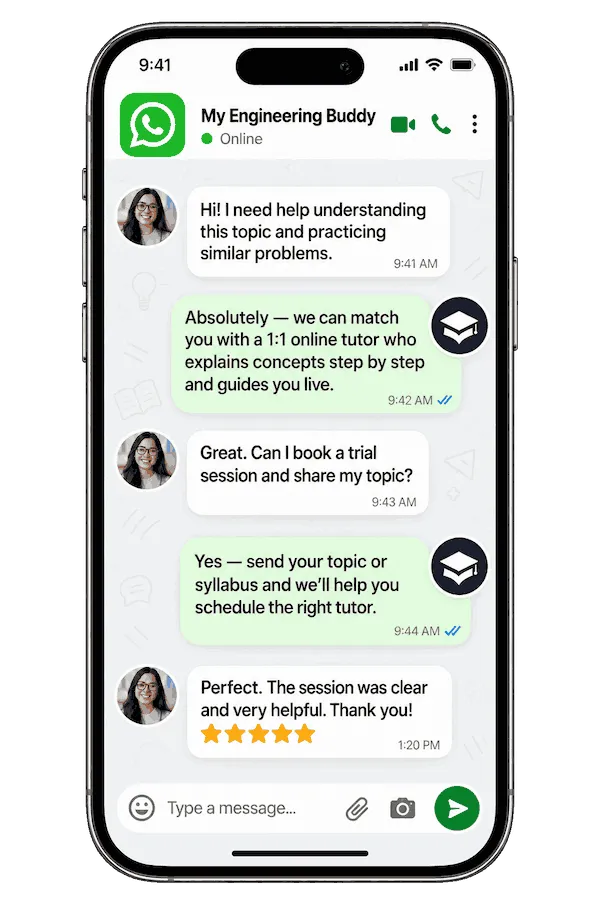
WhatsApp MEB for a quick quote — average response time under 1 minute.
Who This HSC Music Extension Tutoring Is For
HSC Music Extension attracts students who are already strong in HSC Music 1 or Music 2 — but strong performance doesn’t automatically translate into a high-scoring Musicology essay or a polished compositional portfolio. The gap between musical ability and academic writing is where most marks are lost.
- Students who find the Musicology research essay structure unclear or unfamiliar
- Students whose composition or performance submission needs focused structural feedback
- Students with a university conditional offer depending on their ATAR — and Music Extension is part of the calculation
- Parents watching a child’s confidence drop alongside their grades in an already small, high-stakes cohort
- Students 4–6 weeks from the NESA submission deadline with significant gaps still to close
- Students retaking or resubmitting after a result that didn’t reflect their preparation
Students typically come from NSW secondary schools progressing to conservatoriums, university music faculties, or arts programmes at institutions including the Sydney Conservatorium of Music, the Australian Institute of Music, UNSW, the University of Melbourne, and the ANU School of Music. Many are also aiming for ATAR rankings where Extension subjects carry additional weighting.
1:1 Tutoring vs Self-Study vs AI vs YouTube vs Online Courses
Self-study works if you’re already confident with the Musicology essay format — most students aren’t. AI tools can draft an essay plan fast, but can’t assess whether your musical analysis actually meets NESA’s critical language expectations. YouTube covers broad music theory well; it stops when you need feedback on your specific aural analysis paragraph. Online courses give structure but no personalisation — they don’t know whether you’re doing Composition or Performance, or which set work is tripping you up. 1:1 tutoring with MEB is live, calibrated to your exact NESA syllabus track, and corrects errors in the moment — including the ones you didn’t know you were making in your Musicology argument.
Outcomes: What You’ll Be Able To Do in HSC Music Extension
After working with an MEB HSC Music Extension tutor, students are able to write a structured Musicology essay that applies critical analysis to a chosen musical focus, using subject-specific vocabulary NESA markers expect. They can analyse set works across historical, cultural, and stylistic contexts — not just describe them. Students learn to present and justify compositional decisions in their portfolio commentary, or articulate performance interpretation choices with academic precision. Most reach the point where they can approach an unseen aural analysis task with a method, rather than guessing.
At MEB, we’ve found that HSC Music Extension students lose the most marks not from weak musical knowledge — but from writing about music without the analytical vocabulary the rubric demands. That’s a fixable problem, usually within 3–4 sessions.
Based on feedback from 40,000+ sessions collected by MEB from 2022 to 2025, 58% of students improved by one full grade after approximately 20 hours of 1:1 tutoring in subjects like HSC Music Extension. A further 23% achieved at least a half-grade improvement.
Source: MEB session feedback data, 2022–2025.
Supporting a student through HSC Music Extension? MEB works directly with parents to set up sessions, track progress, and keep submissions on schedule. WhatsApp MEB — average response time is under a minute, 24/7.
What We Cover in HSC Music Extension (Syllabus / Topics)
Track 1: Musicology (Research Essay)
- Choosing and narrowing a musical focus for the essay
- Primary and secondary source research in music history and analysis
- Applying critical and analytical frameworks to musical works
- Structuring arguments using NESA’s Musicology essay conventions
- Using subject-specific vocabulary: texture, form, style, context, influence
- Integrating aural analysis into written argument
- Drafting, revising, and proofreading under word-count constraints
Recommended resources: NESA HSC Music Extension syllabus document; Grove Music Online for research; Wollongong’s HSC Music resources. Past exam papers and NESA marking guidelines are used in every essay-focused session.
Track 2: Composition Portfolio
- Developing a cohesive compositional concept across portfolio pieces
- Applying extended techniques and stylistic devices appropriate to chosen style
- Notation accuracy: score preparation and formatting for submission
- Writing the compositional commentary — justifying structural and stylistic decisions
- Score analysis of works in the compositional tradition being drawn from
- Revision cycles: structural coherence, harmonic language, idiomatic writing
Recommended resources: Samuel Adler’s The Study of Orchestration; Kostka and Payne’s Tonal Harmony; NESA’s sample compositional portfolios from past years.
Track 3: Performance (Recital and Viva)
- Programme selection: cohesion, contrast, technical demand
- Preparation for the performance viva — articulating interpretation decisions
- Score study and stylistic research for each repertoire item
- Managing performance anxiety and pacing in the recital setting
- Recording and reviewing practice sessions for self-assessment
- Academic framing of performance choices for written components
Recommended resources: NESA performance requirements documentation; stylistic guides relevant to chosen repertoire period; past viva question banks compiled by MEB tutors.

What a Typical HSC Music Extension Session Looks Like
The tutor opens by checking the Musicology essay draft or composition score from the previous session — specifically looking at whether the analytical argument holds up paragraph by paragraph, or whether the compositional motif development follows the logic stated in the commentary. From there, student and tutor work through a live problem on screen: unpacking a set work passage, restructuring a weak Musicology paragraph, or reviewing a notation error in the composition. The tutor uses a digital pen-pad to annotate scores and essay sections in real time. The student then attempts a rewrite or revision with the tutor present, explaining the changes aloud. The session closes with a specific practice task — usually one Musicology paragraph to draft or one 8-bar compositional passage to complete — and the next session’s focus is confirmed before logging off.
How MEB Tutors Help You with HSC Music Extension (The Learning Loop)
Diagnose: In the first session, the tutor reads a Musicology draft or listens to a recorded performance and identifies the exact gap — whether that’s weak analytical language, an under-argued thesis, poor score notation, or an inability to connect stylistic context to the music itself. That diagnosis shapes everything that follows.
Explain: The tutor works through a live example — annotating a NESA sample essay on screen, walking through a model Musicology paragraph, or demonstrating a compositional technique using a digital pen-pad. Nothing is theoretical. Everything is shown, not described.
Practice: The student attempts the same task immediately — drafts a paragraph, revises a passage, or plays back a section of the performance programme for feedback. The tutor stays present throughout, not watching from a distance.
Feedback: Errors are corrected step by step. In Musicology, this means identifying where the argument breaks down and why marks would be lost under the NESA rubric. In Composition, it means pointing to the bar where the structural logic fails and showing an alternative.
Plan: The tutor sets the next session’s focus based on what was covered and what still needs work. Progress is tracked against the submission or exam date — no drifting.
Sessions run on Google Meet. The tutor uses a digital pen-pad or iPad with Apple Pencil to annotate scores and essay drafts live. Before your first session, send your current Musicology draft, your composition score or recording, and your NESA submission deadline. The first session functions as a diagnostic and produces a clear 3–5 session plan from that single meeting. Start with the $1 trial — 30 minutes of live tutoring that also serves as your first diagnostic.
Students consistently tell us that the moment HSC Music Extension clicks is when they stop treating Musicology as a music essay and start treating it as an argument that happens to use music as evidence. That reframe usually takes one session to land.
Tutor Match Criteria (How We Pick Your Tutor)
Not every music tutor is equipped for HSC Music Extension. The match criteria are specific.
Subject depth: tutors must demonstrate working knowledge of the NESA Music Extension syllabus — Musicology essay conventions, the compositional portfolio requirements, and the performance viva format. Generalist music tutors are not matched to this subject.
Tools: all tutors use Google Meet with a digital pen-pad or iPad and Apple Pencil for real-time score and essay annotation. No whiteboard-only tutors.
Time zone: matched to your region — NSW students are prioritised for AEST-compatible tutors, but US, UK, Gulf, and Canadian students are served across all time zones.
Goals: whether you’re targeting a Band 6 on the Musicology essay, finalising your Composition submission, or preparing for the performance viva, the tutor assigned reflects your specific track and timeline.
Unlike platforms where you fill out a form and wait, MEB responds in under a minute, 24/7. Tutor match takes under an hour. The $1 trial means you test before you commit. Everything runs over WhatsApp — no logins, no intake forms.
Study Plans (Pick One That Matches Your Goal)
The tutor builds your session sequence after the first diagnostic, but most HSC Music Extension students fall into one of three plans. Catch-up (1–3 weeks): targeted at students with an imminent NESA deadline and a draft that needs rapid, structural intervention. Exam and submission prep (4–8 weeks): systematic coverage of Musicology essay writing, portfolio commentary, or performance programme preparation — week by week, tracked against the submission date. Weekly support: ongoing sessions aligned to school term deadlines, useful for students who want consistent feedback throughout the year rather than a last-minute push.
Pricing Guide
HSC Music Extension tutoring runs at USD $20–$40/hr for most students. Tutors with conservatorium performance credits, published musicology research, or professional composition experience are available at higher rates — up to $100/hr for genuinely specialist backgrounds.
Rate factors include the track (Musicology, Composition, or Performance), how close the submission deadline is, and tutor availability in your time zone.
Tutor availability drops sharply in the 3–4 weeks before NESA’s submission windows. Students who book early get more scheduling flexibility and better tutor fit.
For students targeting entry to the Sydney Conservatorium of Music, the Australian Institute of Music, or university music faculties at UNSW or Melbourne, tutors with professional performance or composition backgrounds are available at higher rates — share your goal and MEB matches the tier to your ambition.
Start with the $1 trial — 30 minutes, no registration, no commitment. WhatsApp MEB for a quick quote.
MEB has supported students in over 2,800 subjects since 2008 — from HSC Music Extension Musicology essays to postgraduate research. One platform, verified tutors, every level.
Source: My Engineering Buddy, 2008–2025.
FAQ
Is HSC Music Extension hard?
Yes — it has one of the smallest cohorts in the HSC and requires genuinely high-level analytical writing in Musicology alongside a substantial creative or performance submission. The combination of academic and practical demands makes it more demanding than most electives.
How many sessions are needed?
Most students see clear improvement in their Musicology essay structure within 3–5 sessions. A full Composition or Performance submission cycle typically runs 8–12 sessions depending on how close to deadline you start and how complete your draft already is.
Can you help with homework and assignments?
MEB tutoring is guided learning — you understand the work, then submit it yourself. Tutors help you work through Musicology essay drafts, composition scores, and portfolio commentaries by explaining structure, analytical methods, and NESA rubric requirements. See our Academic Integrity policy and Why MEB page for full details on what we help with and what we don’t.
Will the tutor match my exact syllabus or exam board?
Yes. MEB tutors for HSC Music Extension are matched specifically to the NESA syllabus. They know the Musicology essay conventions, the portfolio submission requirements, and the performance viva format — not a generic music curriculum.
What happens in the first session?
The tutor reviews your current draft, score, or recording and identifies the most urgent gap. By the end of the session you’ll have a clear 3–5 session plan and at least one concrete fix you can apply immediately. The $1 trial counts as this first session.
Is online tutoring as effective as in-person?
For HSC Music Extension, yes — especially for Musicology and Composition, where the tutor annotates your essay or score live on screen. Performance students benefit from video review and viva preparation equally well over Google Meet with screen share.
Can I get HSC Music Extension help at short notice — even late at night?
WhatsApp MEB any time. Average response is under a minute. Tutors across multiple time zones mean late-night AEST sessions are available, particularly for students in NSW working to a submission deadline the next morning.
What’s the difference between HSC Music Extension and HSC Music 2?
HSC Music 2 focuses on advanced performance and musicology as integrated study. HSC Music Extension adds a standalone Musicology research essay and a separate Composition or Performance submission assessed independently by NESA — making it a distinct and more research-intensive qualification.
Do MEB tutors help with Musicology essay topic selection, or only drafts?
Both. Tutors help students choose a focused, assessable musical topic early — a poorly scoped essay is one of the most common reasons for weak marks. Topic selection, research framing, and draft revision are all within scope for HSC Music Extension tutoring.
What if I’m doing the Composition track and my tutor isn’t familiar with my chosen style?
MEB will match you with a tutor whose compositional background aligns to your chosen style — whether that’s contemporary art music, jazz, film scoring, or a specific historical idiom. Share your style when you first WhatsApp MEB and the match reflects it.
Do you offer group HSC Music Extension sessions?
No. MEB sessions are 1:1 only. HSC Music Extension is too individualised — each student is on a different track, with a different submission topic — for group sessions to be useful. Every session is built around your specific work.
How do I get started?
WhatsApp MEB with your track (Musicology, Composition, or Performance), your NESA submission deadline, and your biggest current gap. You’ll be matched within the hour. The $1 trial — 30 minutes of live tutoring or one essay question explained — is your first session.
Trust & Quality at My Engineering Buddy
Every MEB tutor goes through a live demo evaluation before being matched to any student. For HSC Music Extension, that means demonstrating working knowledge of the NESA Musicology essay rubric, the portfolio submission requirements, and the ability to annotate a score or essay in real time using a digital pen-pad. Tutors are then reviewed continuously through session feedback. Rated 4.8/5 across 40,000+ verified reviews on Google. Degrees and professional credentials in music — performance, composition, or musicology — are required for tutors working on this subject. Generalist tutors are not assigned to Extension-level HSC courses.
MEB tutoring is guided learning — you understand the work, then submit it yourself. For full details on what we help with and what we don’t, read our Academic Integrity policy and Why MEB.
MEB has been serving students across the US, UK, Canada, Australia, Gulf, and Europe in 2,800+ subjects since 2008. Within HSC, the platform covers the full subject range — from HSC Music 1 tutoring and HSC English Extension 1 help through to specialist subjects like HSC Music Extension. The same tutor-matching and diagnostic process applies across every subject. See our tutoring methodology for the full approach.
Our experience across thousands of sessions shows that the students who improve fastest in HSC Music Extension are those who bring a real draft — even a rough one — to the first session. Something to annotate is worth more than a blank page and good intentions.
Explore Related Subjects
Students studying HSC Music Extension often also need support in:
- HSC English Advanced
- HSC English Extension 2
- HSC Ancient History
- HSC Modern History
- HSC Visual Arts
- HSC Dance
- HSC Society and Culture
HSC Music Extension students who also work with an MEB tutor on their English Extension subjects consistently report clearer academic writing — the analytical skills transfer directly across both disciplines.
Source: My Engineering Buddy, 2008–2025.
Next Steps
To get matched with a verified HSC Music Extension tutor:
- Share your track — Musicology, Composition, or Performance — and your NESA submission or exam date
- Share your availability and time zone
- MEB matches you with a verified tutor, usually within an hour
- Your first session starts with a diagnostic — so no time is wasted on material you already know
Before your first session, have ready: your NESA syllabus and chosen track documentation, a current Musicology draft or composition score (even a rough one), and your submission or exam deadline. The tutor handles the rest.
Try your first session for $1 — 30 minutes of live 1:1 tutoring or one homework question explained in full. No registration. No commitment. WhatsApp MEB now and get matched within the hour.
Visit www.myengineeringbuddy.com for more on how MEB works. Or email directly: [email protected].
WhatsApp to get started or email [email protected].
Reviewed by Subject Expert
This page has been carefully reviewed and validated by our subject expert to ensure accuracy and relevance.




