




~1 min
Average Reply Time
~1 hour
To Be Matched With A Tutor
1 Trial
75% Find Their Tutor On The 1st Trial
$1
Your First 30 Minutes
Hire The Best LSAT Analytical Reasoning Tutor
Top Tutors, Top Grades. Without The Stress!
Related Subjects
Most LSAT test-takers lose 8–12 points on the Logic Games section alone — not because they can’t reason, but because nobody showed them the diagram system.
LSAT Analytical Reasoning Tutor Online
LSAT Analytical Reasoning, commonly called Logic Games, is one of four sections on the Law School Admission Test, testing a student’s ability to apply structured deductive reasoning to constrained rule-based scenarios under strict timed conditions.
If you’re searching for an LSAT Analytical Reasoning tutor near me, MEB offers 1:1 online tutoring and homework help in LSAT Analytical Reasoning — and across the full LSAT tutoring curriculum. Our tutors work with your exact game types, your weakest rule structures, and your target score window. No generic prep. No recycled drills from a course you already tried.
- 1:1 online sessions built around your Logic Games performance data
- Expert-verified tutors with LSAT-specific knowledge and high scorer backgrounds
- Flexible time zones — US, UK, Canada, Australia, Gulf
- Structured learning plan built after a diagnostic session
- Ethical homework and assignment guidance — you understand the work, then submit it yourself
52,000+ students across the US, UK, Canada, Australia, and the Gulf have used MEB since 2008 — including students in LSAT subjects like LSAT Analytical Reasoning, LSAT Logical Reasoning, and LSAT Reading Comprehension.
Source: My Engineering Buddy, 2008–2025.
How Much Does an LSAT Analytical Reasoning Tutor Cost?
Most students pay $20–$40/hr for LSAT Analytical Reasoning tutoring. Graduate-level or specialist sessions can reach up to $100/hr. New students can start with the $1 trial — 30 minutes of live 1:1 tutoring or one full question worked through with explanation.
| Level / Need | Typical Rate | What’s Included |
|---|---|---|
| Standard (most LSAT levels) | $20–$40/hr | 1:1 sessions, game-type drilling, rule diagramming |
| Advanced / High-Score Target | $40–$100/hr | Expert tutor, 170-target strategy, timed simulation |
| $1 Trial | $1 flat | 30 min live session or one full Logic Games question explained |
Tutor availability tightens sharply in the 6–8 weeks before LSAT test windows. Book early if you have a fixed exam date.
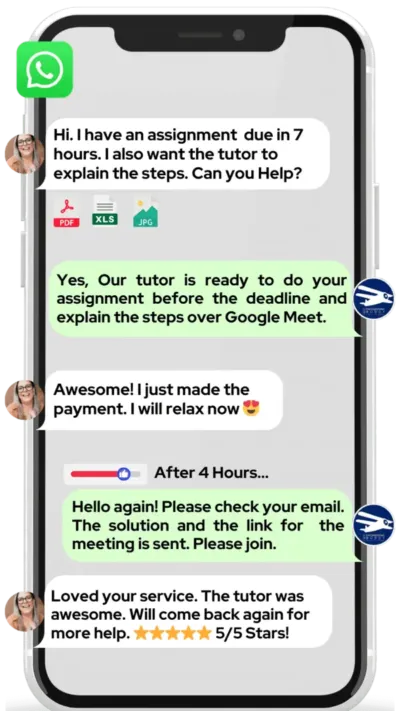
WhatsApp MEB for a quick quote — average response time under 1 minute.
Who This LSAT Analytical Reasoning Tutoring Is For
Logic Games is the section most students either master completely or abandon entirely. MEB tutoring works for students at both ends — and everyone between.
- Undergraduates and graduates preparing for law school admissions in the US, Canada, or Australia
- Students retaking the LSAT after a score that fell short of their target law school’s median
- Students 4–6 weeks from their exam date with the Analytical Reasoning section still scoring below -5
- Students who’ve tried prep courses but still can’t diagram sequencing or grouping games reliably
- Students targeting top 14 law schools — Yale, Harvard, Columbia, NYU, Stanford, Chicago, Penn, Michigan, Cornell, Georgetown, Virginia, Duke, Northwestern, Berkeley — where a 170+ is competitive
- Parents supporting a child through the LSAT who want structured, accountable weekly sessions
One mention of the $1 trial here for students on the fence: try one session, see whether the approach clicks, and decide after that.
1:1 Tutoring vs Self-Study vs AI vs YouTube vs Online Courses
Self-study works if you’re disciplined and already know how to diagram — but most students who self-study LSAT Logic Games reinforce their wrong approach. AI tools explain rules fast, but can’t watch you diagram in real time and catch the exact moment you make the wrong inference. YouTube is useful for game-type overviews, but stops when you need live correction on a specific game. Online prep courses are structured, but fixed-pace — you move on before the hardest game types are actually solid. 1:1 tutoring with MEB is live, calibrated to your weakest game types, and corrects your diagramming errors in the moment — which is exactly where LSAT Analytical Reasoning improvement actually happens.
Outcomes: What You’ll Be Able To Do in LSAT Analytical Reasoning
After working with an MEB tutor, you’ll be able to diagram sequencing, grouping, and hybrid games from scratch under timed conditions. You’ll analyze conditional rules and build valid inferences before answering a single question. You’ll apply “could be true,” “must be true,” and “cannot be true” question strategies accurately and quickly. You’ll solve ordering games — linear, circular, and multi-tiered — without second-guessing your setup. You’ll present a clean, complete diagram to any game within 90 seconds of reading the rules. Confidence in this section changes your entire LSAT experience.
Based on feedback from 40,000+ sessions collected by MEB from 2022 to 2025, 58% of students improved their LSAT Analytical Reasoning score by 3–6 scaled score points after approximately 20 hours of 1:1 tutoring.
Source: MEB session feedback data, 2022–2025.
At MEB, we’ve found that students who struggle with Logic Games aren’t lacking reasoning ability — they’re missing a consistent diagramming method. Once that clicks, speed follows. The games don’t get easier; the student gets faster and more accurate.
What We Cover in LSAT Analytical Reasoning (Syllabus / Topics)

Track 1: Core Game Types and Diagramming
- Linear sequencing games — single and multi-tiered ordering
- Grouping games — in/out, selection, and distribution setups
- Hybrid games — combined ordering and grouping constraints
- Circular sequencing and spatial arrangement games
- Rule translation — converting conditional statements to diagrams
- Contrapositive construction and valid inference chains
- Deducing global restrictions before answering any question
Core texts: The LSAT Trainer by Mike Kim; LSAT Logic Games Bible by David M. Killoran (PowerScore).
Track 2: Question Strategy and Speed Training
- “Must be true,” “could be true,” and “cannot be true” question types
- “If/then” hypothetical questions — how to handle temporary rule modifications
- Elimination strategies using prior work and deduced restrictions
- Timed game completion — targeting 8.5 minutes per game
- Worst-case game identification and strategic ordering across the section
- Full section simulation with debrief and error categorization
Core texts: LSAT Logical Reasoning Bible (PowerScore); official LSAC PrepTest collections (PrepTests 62–91 recommended).
Track 3: Advanced Techniques for 170+ Targets
- Sketch-board notation systems for complex hybrid games
- Identifying “free agents” and “floaters” to speed up deductions
- Advanced inference chains across multi-conditional rule sets
- Recognizing when to test answers vs. when to work from deductions
- Section management under full test pressure (4-section format)
Core texts: Official LSAC PrepTests; The PowerScore LSAT Trilogy; Cambridge LSAT explanations archive for recent PrepTests.
Students consistently tell us that the biggest Logic Games breakthrough isn’t speed — it’s learning to set up the game before touching question one. Every MEB session builds that habit from the first practice game onward.
What a Typical LSAT Analytical Reasoning Session Looks Like
The tutor opens by reviewing the previous session’s practice game — usually a sequencing or grouping game the student attempted independently. They check the diagram setup before the first question: where did the rules land, what inferences were drawn upfront, what was missed. From there, the student and tutor work through a new game together on screen — the tutor uses a digital pen-pad to annotate the game board while the student builds their own diagram. The student attempts each question with the tutor watching, and errors are corrected at the step where the reasoning broke — not just at the wrong answer. The session closes with a timed solo game attempt for the student, followed by a short debrief. Next game type and practice target are set before the session ends.
How MEB Tutors Help You with LSAT Analytical Reasoning (The Learning Loop)
Diagnose: In the first session, the tutor identifies which game types cost the most time and which rule structures produce consistent errors. A single timed game attempt plus a short interview is usually enough to map the gaps.
Explain: The tutor works through a game live using a digital pen-pad — showing exactly how rules translate into diagram notation, where global deductions emerge, and why certain question types require different approaches. You see the reasoning, not just the answer.
Practice: You attempt the next game yourself while the tutor watches in real time. They don’t intervene until you’ve committed to a diagram — then they ask you to explain your choices.
Feedback: Every error gets traced back to its source — wrong rule translation, missed inference, or a timing decision that forced a guess. You understand why the point was lost, not just that it was.
Plan: After each session, the tutor sets specific game-type targets for independent practice. Progress is tracked across sessions, and the sequence adjusts as weaker game types improve.
Sessions run over Google Meet. The tutor uses a digital pen-pad or iPad with Apple Pencil. Before your first session, have a recent timed LSAT practice game attempt ready, along with your current section score and target score. The first session begins with a live diagnostic game.
Start with the $1 trial — 30 minutes of live tutoring that also serves as your first diagnostic session.
For students aiming at top law schools, the difference between a 163 and a 170 often comes down to the Analytical Reasoning section — specifically, game setup speed and inference accuracy. That’s exactly where 1:1 work pays off most.
Source: My Engineering Buddy, tutor observation data, 2022–2025.
Tutor Match Criteria (How We Pick Your Tutor)
Not every LSAT tutor is matched for every student. MEB uses four criteria.
Subject depth: Tutors are matched on LSAT section — Analytical Reasoning specifically — not just general LSAT knowledge. High scorers and law school graduates with documented section expertise are prioritized.
Tools: Every tutor works over Google Meet with a digital pen-pad or iPad and Apple Pencil — the annotation workflow is non-negotiable for a section built on live diagramming.
Time zone: Matched to your region — US, UK, Gulf, Canada, Australia — so session timing is genuinely workable, not just technically available.
Goals: Whether you need to hit a 155 for a conditional offer, crack 165 for a competitive school, or reach 170+ for top 6 targets, the tutor is matched to your specific score window and timeline.
Unlike platforms where you fill out a form and wait, MEB responds in under a minute, 24/7. Tutor match takes under an hour. The $1 trial means you test before you commit. Everything runs over WhatsApp — no logins, no intake forms.
Study Plans (Pick One That Matches Your Goal)
A tutor builds the exact session sequence after the first diagnostic — but here’s how most students structure their LSAT Analytical Reasoning preparation. Catch-up (1–3 weeks): for students close to their test date with specific game types still losing multiple points. Exam prep (4–8 weeks): systematic coverage of all game types, timed simulation, and full section practice in the weeks before test day. Weekly support: ongoing sessions aligned to LSAC’s released PrepTest schedule and the student’s law school application timeline.
Pricing Guide
LSAT Analytical Reasoning tutoring runs $20–$40/hr for most students. Students targeting 170+ or working with tutors who have law school or professional legal backgrounds may pay up to $100/hr.
Rate factors include: target score, timeline urgency, game-type complexity, and tutor availability. Rates increase during peak LSAT test windows — typically February, June, August, and October.
For students targeting top 14 law schools, tutors with law school admissions backgrounds and documented 170+ scores are available at higher rates — share your target school and score, and MEB will match the tier to your goal.
Start with the $1 trial — 30 minutes, no registration, no commitment. WhatsApp MEB for a quick quote.
FAQ
Is LSAT Analytical Reasoning hard?
Yes — it’s consistently rated the most learnable section of the LSAT, but also the one where untrained approaches waste the most time. Students who learn a systematic diagramming method typically see faster improvement here than on Logical Reasoning.
How many sessions are needed to improve in LSAT Analytical Reasoning?
Most students see meaningful game-type improvement within 8–12 sessions. Reaching consistent -0 or -1 on the section typically takes 15–25 sessions, depending on starting point and how much independent practice happens between sessions.
Can you help with LSAT homework and practice assignments?
MEB tutoring is guided learning — you work through the problems, the tutor explains what went wrong and why, and you redo the reasoning yourself. See our Academic Integrity policy and Why MEB page for full details on what we help with and what we don’t.
Will the tutor match my exact LSAT test format and PrepTest materials?
Yes. Tutors work with official LSAC PrepTests, your current score report, and the specific game types giving you trouble. If you’re using a specific prep book — PowerScore, 7Sage, The LSAT Trainer — the tutor aligns to that system.
What happens in the first LSAT Analytical Reasoning session?
The tutor gives you a single timed game to attempt. They review your diagram, your inference chain, and your question answers — then map exactly which game types and rule structures need focused work. The diagnostic takes about 20 minutes; the rest of the session begins drilling the first gap.
Is online LSAT Analytical Reasoning tutoring as effective as in-person?
For a diagramming-based section, online is actually well-suited — the tutor annotates on screen in real time, you see the pen-pad work as it happens, and sessions are recorded for review. Most students report no disadvantage versus in-person prep.
Is LSAT Analytical Reasoning still on the exam? I heard it might be removed.
LSAC announced in 2023 that the Logic Games section would be replaced by a second Logical Reasoning section beginning in August 2024. However, students sitting for tests prior to that date still encountered Logic Games. Confirm your test version with LSAC directly — MEB tutors cover both formats.
How do I target a specific score on LSAT Analytical Reasoning?
The section contains 22–24 questions across four games. Reaching -0 to -2 requires mastering all six game types under time pressure. Tutors work backward from your target score to determine how many games you can afford to miss and build a strategy around that math.
Can I get LSAT Analytical Reasoning help at midnight or on weekends?
Yes. MEB tutors cover multiple time zones and are available outside standard business hours — including weekends. WhatsApp MEB with your availability and a match is typically confirmed within the hour, day or night.
What if I don’t like my assigned LSAT Analytical Reasoning tutor?
Tell MEB over WhatsApp. A replacement tutor is matched without delay — no lengthy process, no forms. The $1 trial exists specifically so you can test the fit before committing to a full set of sessions.
How do I get started with LSAT Analytical Reasoning tutoring?
Three steps: WhatsApp MEB with your current score, target score, and exam date. MEB matches you with a verified tutor — usually within the hour. Your first session is the $1 trial — 30 minutes live or one game worked through in full.
Trust & Quality at My Engineering Buddy
Every MEB tutor goes through subject-specific vetting — not just a general aptitude screen. For LSAT Analytical Reasoning, that means documented high section scores, familiarity with LSAC’s official PrepTest library, and a live demo session before they ever take a student. Rated 4.8/5 across 40,000+ verified reviews on Google. Tutor performance is reviewed continuously through session feedback — tutors who don’t maintain standards are removed.
MEB tutoring is guided learning — you understand the work, then submit it yourself. For full details on what we help with and what we don’t, read our Academic Integrity policy and Why MEB.
MEB has served 52,000+ students across the US, UK, Canada, Australia, Gulf, and Europe in 2,800+ subjects since 2008. In the LSAT category, that includes students working on LSAT Essay tutoring alongside Analytical Reasoning prep — students who want every section covered, not just the one that’s easiest to improve. MEB’s tutoring methodology is built on diagnostic-first sessions and structured feedback loops, applied consistently across all subjects.
The LSAT is scored on a 120–180 scale. Logic Games — now transitioning to a second Logical Reasoning section — has historically been the section where a targeted 20-hour investment produces the largest per-point return of any section on the test.
Source: LSAC PrepTest score analysis; My Engineering Buddy tutor observation data, 2022–2025.
A common pattern our tutors observe is this: a student arrives having done 30+ practice games and still scoring -8 or worse. In almost every case, the problem isn’t effort — it’s that the setup method is broken. One session fixes the foundation; the score follows.
Explore Related Subjects
Students studying LSAT Analytical Reasoning often also need support in:
Next Steps
Getting started takes under two minutes.
- Share your current LSAT section score, target score, and test date
- Share your time zone and weekly availability
- MEB matches you with a verified LSAT Analytical Reasoning tutor — usually within the hour
- Your first session opens with a live diagnostic so every minute after it is spent on the right problems
Before your first session, have ready: your most recent timed game attempt (circled or annotated is fine), your current PrepTest score report, and your exam or application deadline date. The tutor handles the rest.
Visit www.myengineeringbuddy.com for more on how MEB works.
WhatsApp to get started or email [email protected].
Try your first session for $1 — 30 minutes of live 1:1 tutoring or one homework question explained in full. No registration. No commitment. WhatsApp MEB now and get matched within the hour.
52,000+ Happy Students From Various Universities



Reviewed by Subject Expert
This page has been carefully reviewed and validated by our subject expert to ensure accuracy and relevance.

