

Contact MEB Today To Get The Best
NCEA Early Childhood Education Tutoring Online
Email: [email protected]



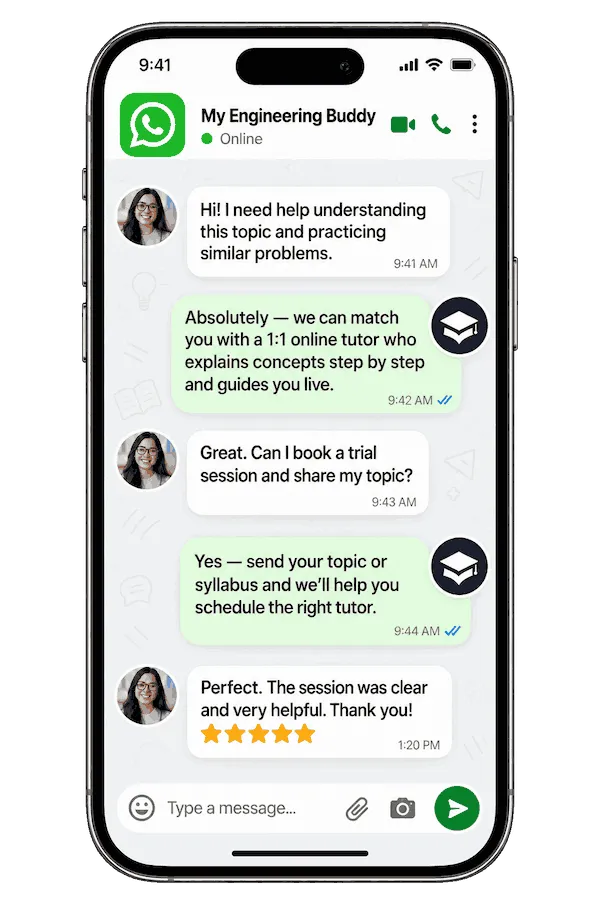
~1 min
Average Reply Time
~1 hour
To Be Matched With A Tutor
30 Min Trial
75% Find Their Tutor On The 1st Trial
$20-35+/hr
Premium Yet Affordable Learning
NCEA Early Childhood Education is one of those subjects where students either click with the theory early — or spend weeks guessing what assessors actually want.
NCEA Early Childhood Education Tutor Online
NCEA Early Childhood Education is a New Zealand NCEA-accredited subject covering child development theory, Te Whāriki curriculum principles, and professional practice for working with children aged 0–8. It equips students for ECE sector roles and further study.
If you’ve searched for an NCEA Early Childhood Education tutor near me, MEB offers something most local options can’t: a verified, subject-specific tutor available the same day, matched to your exact NCEA level and assessment schedule. Our NCEA tutoring covers the full qualification framework — and Early Childhood Education is one of the most assessment-dense subjects in the cohort. One tutor. One student. Sessions built around your gaps, not a class schedule.
- 1:1 online sessions aligned to your NCEA level and achievement standards
- Expert tutors with ECE subject knowledge and NCEA assessment experience
- Flexible time zones — US, UK, Canada, Australia, Gulf
- Structured learning plan built after a diagnostic session
- Ethical academic guidance — you understand the work, then submit it yourself
52,000+ students across the US, UK, Canada, Australia, and the Gulf have used MEB since 2008 — including students in NCEA subjects like Early Childhood Education, NCEA Health, and NCEA Psychology.
Source: My Engineering Buddy, 2008–2025.
How Much Does a NCEA Early Childhood Education Tutor Cost?
Most NCEA Early Childhood Education tutoring sessions run $20–$40/hr. If you need a specialist tutor for Level 3 or ECE practicum preparation, rates can reach $60–$70/hr. The $1 trial gives you 30 minutes of live 1:1 tutoring or a full explanation of one assignment question — no registration required.
| Level / Need | Typical Rate | What’s Included |
|---|---|---|
| NCEA Level 1–2 ECE | $20–$35/hr | 1:1 sessions, assignment guidance |
| NCEA Level 3 / Practicum Prep | $35–$70/hr | Expert tutor, Te Whāriki depth, portfolio support |
| $1 Trial | $1 flat | 30 min live session or 1 assignment question explained |
Tutor availability tightens significantly around NCEA assessment windows — especially October and November. Book early if your submission deadline is approaching.
WhatsApp MEB for a quick quote — average response time under 1 minute.
Who This NCEA Early Childhood Education Tutoring Is For
NCEA Early Childhood Education draws students from very different starting points. Some are working toward a career in teaching or childcare; others are completing the qualification as part of a broader health and community studies pathway. What they share is a subject that rewards precise, evidence-based writing — and that’s where most students need the most help.
- Students struggling to apply Te Whāriki principles to assessment tasks
- Students retaking after a failed first attempt at an achievement standard
- Students with a university conditional offer depending on this grade
- Students 4–6 weeks from a submission deadline with significant gaps still to close
- Parents watching a child’s confidence drop alongside their grades
- Students transitioning into ECE diploma programmes who need NCEA credit completion
Students heading to institutions such as the University of Auckland, Victoria University of Wellington, AUT, the University of Otago, Massey University, Canterbury University, or UNITEC use MEB to close gaps before entry requirements are assessed.
At MEB, we’ve found that NCEA Early Childhood Education students often know the content — they just don’t know how to frame their answers in the language assessors reward. That’s a tutoring problem, not an intelligence problem. One focused session on unpacking an achievement standard often shifts more than a week of solo revision.
1:1 Tutoring vs Self-Study vs AI vs YouTube vs Online Courses
Self-study works if you’re disciplined — but NCEA ECE assessment tasks require precise, criterion-referenced language that’s hard to self-teach. AI tools give fast definitions but can’t read your specific task sheet or tell you why your response missed the Excellence threshold. YouTube covers broad child development theory well but stops when you’re stuck on how to link Vygotsky to a specific assessment question. Online courses are structured but move at a fixed pace, with no adjustment for your actual gaps. 1:1 tutoring with MEB is live, calibrated to your exact achievement standard and level, and corrects your reasoning in real time — which matters when a Merit or Excellence depends on one well-placed piece of evidence.
Outcomes: What You’ll Be Able To Do in NCEA Early Childhood Education
After working with an online NCEA Early Childhood Education tutor from MEB, students write achievement standard responses with clear, criterion-linked evidence rather than vague descriptions. You’ll be able to analyze child development scenarios using named theorists — Bronfenbrenner, Vygotsky, Piaget — and connect them explicitly to observed practice. You’ll apply Te Whāriki’s strands and goals to real planning documents. You’ll explain the role of family and community in early childhood settings in ways that meet Excellence descriptors. You’ll present structured arguments in portfolio tasks and written assessments that hold up under marker scrutiny.
“Based on feedback from 40,000+ sessions collected by MEB from 2022 to 2025, 58% of students improved by one full grade after approximately 20 hours of 1:1 tutoring in subjects like NCEA Early Childhood Education. A further 23% achieved at least a half-grade improvement.”
Source: MEB session feedback data, 2022–2025.
Supporting a student through NCEA Early Childhood Education? MEB works directly with parents to set up sessions, track progress, and keep coursework on schedule. WhatsApp MEB — average response time is under a minute, 24/7.
What We Cover in NCEA Early Childhood Education (Syllabus / Topics)

Child Development Theory
- Piaget’s stages of cognitive development and their classroom implications
- Vygotsky’s zone of proximal development and scaffolding
- Bronfenbrenner’s ecological systems model
- Attachment theory — Bowlby and Ainsworth frameworks
- Social learning theory applied to early childhood settings
- Developmental milestones: physical, cognitive, language, social-emotional
Key references: Child Development by Berk; Te Whāriki: He Whāriki Mātauranga mō ngā Mokopuna o Aotearoa (Ministry of Education NZ); How Children Learn by Holt.
Te Whāriki Curriculum and ECE Practice
- Te Whāriki’s four principles: Empowerment, Holistic Development, Family and Community, Relationships
- Five strands: Well-being, Belonging, Contribution, Communication, Exploration
- Learning stories and portfolio documentation
- Inclusive practice and culturally responsive teaching in Aotearoa New Zealand
- Transition to school — what ECE graduates need to demonstrate
- Role of kaiako (teacher) and the adult’s role in play-based learning
Key references: Te Whāriki (Ministry of Education, 2017); Belonging, Being and Becoming (EYLF Australia, for comparative study); Weaving Te Whāriki by Nuttall.
Professional Practice and Assessment Standards
- NCEA achievement standards: internal vs external assessments in ECE
- Ethics in early childhood education — professional codes and boundaries
- Observation, documentation, and reflection in ECE settings
- Health, safety, and wellbeing requirements in licensed ECE centres
- Working with families: communication, engagement, partnership models
- Writing assessment responses at Achieved, Merit, and Excellence levels
Key references: Early Childhood Education: An Introduction by Pound; Professionalism in Early Childhood Education and Care by Urban and Dalli; NZQA achievement standard exemplars.
What a Typical NCEA Early Childhood Education Session Looks Like
The tutor opens by reviewing the previous session’s focus — often an achievement standard response or a Te Whāriki application task. If you submitted a draft, the tutor reads it before you join. The session moves to the current challenge: maybe you’re writing about Vygotsky’s zone of proximal development and can’t connect it to a specific scenario, or you’re stuck on how to distinguish Merit from Excellence in a written response. The tutor works through the question on a shared screen using a digital pen-pad, annotating your draft in real time and modelling the language structure assessors reward. You rewrite a section while the tutor watches. Errors in reasoning or evidence selection are corrected immediately. The session closes with a specific practice task — one more achievement standard question — and the next topic is noted.
How MEB Tutors Help You with NCEA Early Childhood Education (The Learning Loop)
Diagnose: In the first session, the tutor identifies your specific gap — whether that’s theory application, assessment language, Te Whāriki strand knowledge, or evidence selection. Students often think they understand the content; the diagnostic shows where the writing breaks down.
Explain: The tutor works through live examples using a digital pen-pad — annotating exemplar responses, breaking down the criteria for Excellence, and showing exactly what a high-scoring answer includes that a mid-range answer doesn’t.
Practice: You attempt a response or task with the tutor present. No waiting until next session to find out if you got it right. The tutor sees your reasoning as it forms.
Feedback: Step-by-step error correction — not just “this isn’t quite right” but “here’s the specific phrase the marker needed to see, and here’s why your version fell short of Merit.” That precision is what moves grades.
Plan: The tutor maps what comes next — which achievement standard to tackle, which theory gaps to fill, and how to pace the remaining sessions before your submission window closes.
Sessions run on Google Meet. Tutors use a digital pen-pad or iPad with Apple Pencil. Before your first session, share your achievement standard number, any draft work, and your submission or exam date. The first session is also your diagnostic — so the $1 trial serves double duty. Start with the $1 trial — 30 minutes of live tutoring that also works as your first diagnostic session.
Students consistently tell us that the biggest shift in NCEA Early Childhood Education comes when they stop describing child development theory and start applying it to a specific scenario with named evidence. That move — from general to specific — is what separates an Achieved from a Merit, and a Merit from an Excellence. Our tutors focus on it from session one.
Tutor Match Criteria (How We Pick Your Tutor)
Every NCEA Early Childhood Education tutor at MEB is matched to you on four criteria.
Subject depth: Tutors hold qualifications in early childhood education, child development, or education studies. They know NCEA achievement standards, NZQA criteria, and Te Whāriki — not just general teaching theory.
Tools: All sessions use Google Meet with a digital pen-pad or iPad and Apple Pencil for live annotation and document review.
Time zone: Matched to your region — New Zealand, Australia, UK, US, Gulf, or Canada. You book sessions in your own timezone.
Goals: Whether you need to pass a specific achievement standard, improve from Achieved to Merit, or prepare a full portfolio for submission, the tutor is briefed on your target before session one.
Unlike platforms where you fill out a form and wait, MEB responds in under a minute, 24/7. Tutor match takes under an hour. The $1 trial means you test before you commit. Everything runs over WhatsApp — no logins, no intake forms.
Study Plans (Pick One That Matches Your Goal)
After the diagnostic, your tutor builds a session sequence matched to your timeline. Catch-up plans (1–3 weeks) focus on the highest-weight achievement standards and the fastest route to passing marks. Exam and submission prep plans (4–8 weeks) work through each standard systematically, with practice tasks and feedback loops built in. Weekly ongoing support aligns sessions to your school’s internal assessment schedule, keeping you ahead of each submission deadline rather than scrambling the night before.
Pricing Guide
NCEA Early Childhood Education tutoring starts at $20/hr for standard Level 1–2 work. Level 3 and practicum-focused sessions with specialist tutors run $35–$70/hr. Rate factors include your NCEA level, the complexity of the achievement standards in focus, your timeline, and tutor availability.
For students targeting teacher education programmes at top New Zealand universities or ECE diploma pathways, tutors with professional ECE backgrounds and NZQA marking experience are available at higher rates — share your specific goal and MEB will match the tier to your target.
Availability tightens in October and November when NCEA internal assessment deadlines cluster. Book before the rush.
Start with the $1 trial — 30 minutes, no registration, no commitment. WhatsApp MEB for a quick quote.
MEB has supported students across NCEA Health Studies, NCEA Social Studies, and NCEA Early Childhood Education — subjects where the gap between Achieved and Excellence often comes down to how precisely students write, not how much they know.
Source: My Engineering Buddy, 2008–2025.
FAQ
Is NCEA Early Childhood Education hard?
It’s manageable if you understand how NCEA achievement standards work. Most students find the theory accessible but struggle to write responses at Merit or Excellence level. The assessor’s language is specific — a tutor helps you learn it quickly.
How many sessions are needed?
Students with one or two achievement standards to improve typically need 4–8 sessions. Those covering the subject from scratch or preparing a full portfolio usually benefit from 12–20 sessions spread over 6–10 weeks. The diagnostic sets the exact number.
Can you help with homework and assignments?
MEB tutoring is guided learning — you understand the work, then submit it yourself. See our Academic Integrity policy and Why MEB page for full details on what we help with and what we don’t. Tutors explain, model, and check your understanding — they do not write your responses.
Will the tutor match my exact syllabus or exam board?
Yes. MEB tutors are matched to your specific NCEA level and achievement standard numbers. If you’re working on AS 91088 or a Level 3 ECE standard, the tutor knows the criteria and exemplars before your session starts.
What happens in the first session?
The tutor reviews any work you’ve shared — a draft, a past attempt, or your task sheet. The first 10–15 minutes is a diagnostic. The rest of the session addresses your most urgent gap. You leave with a specific practice task and a clear next step.
Is online tutoring as effective as in-person?
For NCEA ECE, yes. The tutor can annotate your written work, mark up exemplar responses, and model answer structure in real time on a shared screen. Most students find live digital annotation clearer than in-person whiteboard sessions for written subject work.
Can I get NCEA Early Childhood Education help at midnight?
Yes. MEB operates 24/7 across time zones. WhatsApp MEB at any hour — average response time is under a minute. If your deadline is tomorrow morning, we can often get a tutor matched the same night.
What if I don’t like my assigned tutor?
Request a change via WhatsApp. No forms, no delays. MEB will rematch you with a different tutor, usually within the hour. The $1 trial exists precisely so you can test the fit before committing to multiple sessions.
Do you offer group NCEA Early Childhood Education sessions?
No. MEB is 1:1 only. Group sessions dilute the diagnostic accuracy that makes the sessions effective. Every session is built around one student’s gaps, not a class average.
How do I know my tutor understands Te Whāriki specifically?
Tutors covering NCEA Early Childhood Education are screened on Te Whāriki’s principles, strands, and their application to NZQA achievement standards. Before your session, you can share your specific task and the tutor confirms familiarity. If there’s any mismatch, MEB rematch you at no extra cost.
What’s the difference between Achieved, Merit, and Excellence in NCEA ECE?
Achieved requires accurate knowledge. Merit requires application — linking theory to a specific scenario with evidence. Excellence requires evaluation or in-depth analysis with well-supported judgements. Tutors focus on exactly which threshold you’re just below and what your writing needs to cross it.
How do I get started?
WhatsApp MEB with your NCEA level, achievement standard number, and your deadline. MEB matches you with a verified ECE tutor — usually within the hour. Your first session is the $1 trial: 30 minutes live or one assignment question explained in full. Three steps: WhatsApp → matched → start trial.
Trust & Quality at My Engineering Buddy
MEB tutors are screened through subject-specific vetting: a live demo session, qualification review, and ongoing student feedback monitoring. Tutors covering NCEA Early Childhood Education hold degrees or professional credentials in ECE, child development, or education, and demonstrate familiarity with NZQA achievement standards before being assigned to students. Rated 4.8/5 across 40,000+ verified reviews on Google.
MEB tutoring is guided learning — you understand the work, then submit it yourself. For full details on what we help with and what we don’t, read our Academic Integrity policy and Why MEB.
MEB has been serving students in 2,800+ subjects since 2008 — across the US, UK, Canada, Australia, Gulf, and Europe. In the NCEA subject family, we cover everything from NCEA Biology tutoring and NCEA English help to specialist subjects like Early Childhood Education. Every tutor goes through the same vetting process regardless of subject. Find out more about how we select and match tutors at our tutoring methodology page.
MEB’s tutors cover NCEA Education for Sustainability, NCEA Sociology, and NCEA Early Childhood Education — all subjects where precise, evidence-based academic writing is the difference between a pass and a merit.
Source: My Engineering Buddy, 2008–2025.
Try your first session for $1 — 30 minutes of live 1:1 tutoring or one homework question explained in full. No registration. No commitment. WhatsApp MEB now and get matched within the hour.
Explore Related Subjects
Students studying NCEA Early Childhood Education often also need support in:
- NCEA Home Economics
- NCEA Adult Education
- NCEA Health
- NCEA Physical Education
- NCEA Core Skills
- NCEA Supported Learning
- NCEA Religious Studies
Next Steps
Getting started takes about two minutes.
- Share your NCEA level, achievement standard number, and your hardest component
- Share your availability and time zone
- MEB matches you with a verified ECE tutor — usually within 24 hours
- First session starts with a diagnostic so every minute counts
Before your first session, have ready: your achievement standard number and task sheet (or course outline), a recent draft or homework attempt you struggled with, and your submission or exam date. The tutor handles the rest.
Visit www.myengineeringbuddy.com for more on how MEB works.
WhatsApp to get started or email [email protected].
Reviewed by Subject Expert
This page has been carefully reviewed and validated by our subject expert to ensure accuracy and relevance.




