

Contact MEB Today To Get The Best
NCEA Materials and Processing Technology (Level 1 only) Tutoring Online
Email: [email protected]



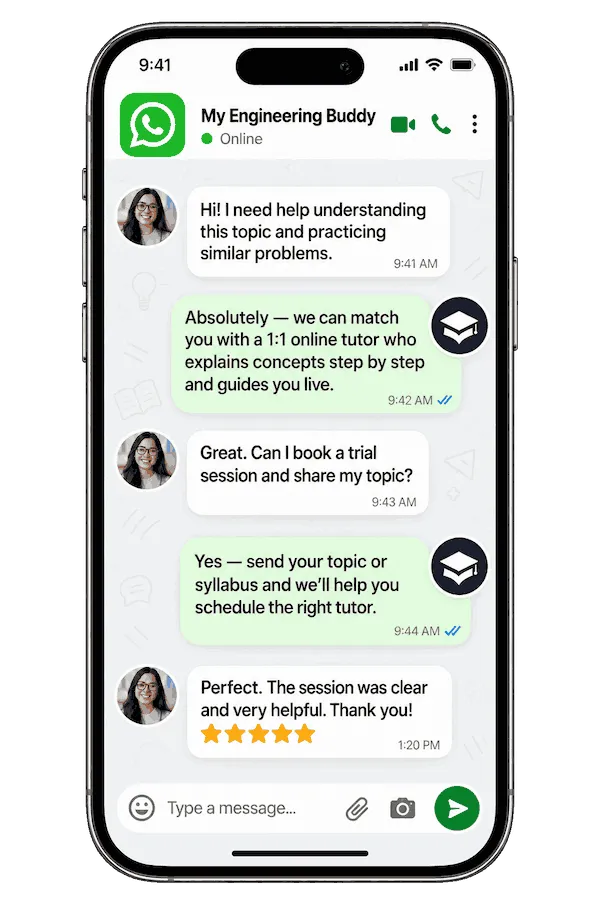
~1 min
Average Reply Time
~1 hour
To Be Matched With A Tutor
30 Min Trial
75% Find Their Tutor On The 1st Trial
$20-35+/hr
Premium Yet Affordable Learning
Struggling to tell the difference between Achievement and Merit in your Materials and Processing Technology assessment — and your submission deadline is two weeks away?
NCEA Materials and Processing Technology (Level 1) Tutor Online
NCEA Materials and Processing Technology Level 1 is a New Zealand NCEA qualification subject where students investigate properties of materials, apply processing techniques, and develop practical outcomes — assessed through internal and external standards set by NZQA.
Finding a qualified NCEA Materials and Processing Technology Level 1 tutor online is harder than it sounds. The subject blends science, design thinking, and hands-on processing skills — and most tutors know one area but not all three. MEB connects you with tutors who have worked specifically with NCEA technology subjects, understand the achievement standard criteria, and know exactly what markers are looking for. If you’ve been searching for an NCEA Materials and Processing Technology tutor near me, online 1:1 sessions cover every standard with the same depth as in-person, without the geography limit. MEB’s broader NCEA tutoring programme spans the full qualification framework — so whether you need support in one standard or across multiple subjects, the same platform has you covered.
- 1:1 online sessions mapped to your specific achievement standards and internal deadlines
- Tutors with verified knowledge of NCEA technology and materials subjects
- Flexible scheduling across NZ, Australia, UK, US, Canada, and Gulf time zones
- Structured learning plan built after a diagnostic session pinpoints your weakest standard
- Ethical academic guidance — you understand the work, then submit it yourself
52,000+ students across the US, UK, Canada, Australia, and the Gulf have used MEB since 2008 — including students in NCEA subjects like Materials and Processing Technology, NCEA Technology, and NCEA Design and Visual Communication.
Source: My Engineering Buddy, 2008–2025.
How Much Does a NCEA Materials and Processing Technology Tutor Cost?
Most NCEA Materials and Processing Technology sessions run at $20–$35/hr. Tutors with specialist materials science or engineering backgrounds sit at the higher end. The $1 trial gives you 30 minutes of live tutoring or one full question explained before you commit to anything.
| Level / Need | Typical Rate | What’s Included |
|---|---|---|
| Standard (most Level 1 students) | $20–$35/hr | 1:1 sessions, achievement standard guidance |
| Advanced / Specialist (materials science depth) | $35–$70/hr | Expert tutor, deeper processing knowledge |
| $1 Trial | $1 flat | 30 min live session or 1 full question explained |
Tutor availability tightens significantly in the weeks before NCEA internal submission deadlines — earlier contact means more choice.
WhatsApp MEB for a quick quote — average response time under 1 minute.
Who This NCEA Materials and Processing Technology Tutoring Is For
This is for students who understand the basic ideas in class but freeze when it comes to applying them in a structured assessment. The gap between knowing what a material does and writing about it at Merit or Excellence level is where most students lose marks.
- Year 11 students working through their first NCEA internal assessments
- Students retaking after a failed first attempt on an internal standard
- Students with a university entrance score depending on this result
- Students 3–5 weeks out from an internal submission with significant gaps still to close
- Parents watching a child’s confidence drop alongside their grades in technology subjects
- Students who need help with NCEA Digital Technologies alongside materials processing
Students who have gone through this course come from Year 11 programmes at secondary schools across New Zealand, Australia, and internationally. Many go on to study engineering, industrial design, or materials science at universities such as the University of Auckland, University of Otago, Victoria University of Wellington, Massey University, and the University of Canterbury.
1:1 Tutoring vs Self-Study vs AI vs YouTube vs Online Courses
Self-study works if you’re disciplined, but NCEA internal standards require feedback on your specific written response — not just concept recall. AI tools give fast explanations but can’t read your actual assessment draft and tell you where you’ve missed the Merit criteria. YouTube covers material properties at a surface level and stops when you need to apply them to a specific processing task. Online courses follow a fixed pace that rarely matches your internal deadline. 1:1 tutoring with MEB works through your exact standard, your actual draft, your specific processing scenario — and corrects the gaps before you submit.
Outcomes: What You’ll Be Able To Do in NCEA Materials and Processing Technology (Level 1)
After working with an online NCEA Materials and Processing Technology tutor, you’ll be able to explain the physical and mechanical properties of materials — metals, polymers, ceramics, composites — in the precise language markers look for at Merit and Excellence. You’ll apply processing techniques such as forming, cutting, joining, and finishing to real design briefs with clear justification. You’ll analyze how material selection affects the function, durability, and sustainability of an outcome. You’ll present design decisions in structured written responses that meet NZQA achievement standard descriptors. You’ll approach internal assessments with a clear method rather than starting from blank.
Try your first session for $1 — 30 minutes of live 1:1 tutoring or one homework question explained in full. No registration. No commitment. WhatsApp MEB now and get matched within the hour.
Based on feedback from 40,000+ sessions collected by MEB from 2022 to 2025, 58% of students improved by one full grade after approximately 20 hours of 1:1 tutoring in subjects like NCEA Materials and Processing Technology. A further 23% achieved at least a half-grade improvement.
Source: MEB session feedback data, 2022–2025.
Supporting a student through NCEA Materials and Processing Technology? MEB works directly with parents to set up sessions, track progress, and keep internal submissions on schedule. WhatsApp MEB — average response time is under a minute, 24/7.
What We Cover in NCEA Materials and Processing Technology Level 1 (Syllabus / Topics)

Track 1: Properties of Materials
- Physical properties: density, thermal conductivity, electrical conductivity, optical properties
- Mechanical properties: hardness, tensile strength, elasticity, ductility, toughness
- Material categories: metals and alloys, polymers, ceramics, composites, natural materials
- How properties are tested and measured in practical contexts
- Matching material properties to product function and use case
- Environmental and sustainability considerations in material selection
- Writing Merit- and Excellence-level justifications for material choice
Useful reference: Materials Science and Engineering: An Introduction by Callister & Rethwisch; Engineering Materials 1 by Ashby & Jones.
Track 2: Processing Techniques and Manufacturing
- Forming processes: casting, forging, rolling, extrusion, injection moulding
- Cutting and shaping: machining, laser cutting, CNC, hand tools
- Joining methods: welding, adhesives, mechanical fasteners, soldering
- Surface finishing: painting, anodising, plating, sanding, coating
- How processing affects material properties (e.g. work hardening, heat treatment)
- Selecting appropriate processes for a given material and design outcome
- Safety and quality control in processing environments
Useful reference: Technology in Action (NCEA-aligned); Manufacturing Engineering and Technology by Kalpakjian.
Track 3: Design Outcomes and NZQA Achievement Standards
- Understanding the NZQA achievement standard structure: Achieved, Merit, Excellence descriptors
- Interpreting internal assessment tasks and brief requirements
- Designing a product outcome with clear material and process justification
- Documenting design decisions in portfolio or written report format
- Evaluating a completed outcome against original brief and specifications
- Common reasons students drop from Merit to Achieved — and how to fix them
Useful reference: NZQA achievement standard documents for Technology (AS91044, AS91047, and related standards); teacher-issued assessment schedules.
At MEB, we’ve found that the biggest mark losses in NCEA Materials and Processing Technology aren’t from wrong answers — they’re from incomplete justifications. A student can name the right material and still receive Achieved instead of Merit because they didn’t explain why that property matters for the specific outcome.
What a Typical NCEA Materials and Processing Technology Session Looks Like
The tutor opens by checking where you left off — usually your last internal standard, a specific processing task, or a material properties question you found unclear. From there, you’ll work through the exact section of your assessment or topic together on screen. If you’re writing a material selection justification, the tutor reads your draft, identifies the gap between what you wrote and what the Merit descriptor requires, and shows you exactly where to add depth. You try a revised version while the tutor watches. For processing topics, the tutor draws out diagrams using a digital pen-pad to show forming steps or cutting sequences clearly. The session closes with a specific task — usually one section to revise or one question to attempt independently — and a note on what comes next before your internal deadline.
How MEB Tutors Help You with NCEA Materials and Processing Technology (The Learning Loop)
Diagnose: In the first session, the tutor looks at your current achievement standard task, any feedback from your teacher, and where your understanding of material properties and processing techniques breaks down. This is not a general quiz — it targets your specific submission.
Explain: The tutor works through the concept or technique live, using a digital pen-pad to annotate diagrams, draw processing sequences, or mark up your written response. You see the thinking in real time.
Practice: You attempt the next section yourself with the tutor present. This might be writing a Merit-level justification, answering a processing question, or completing a comparison of two materials for a given product.
Feedback: The tutor reviews what you produced, pinpoints exactly where marks were lost or where language fell below the descriptor level, and explains the fix — not just the answer.
Plan: Before the session ends, the tutor notes which standard or topic comes next and sets a specific task to complete before the following session. Nothing is left vague.
Sessions run on Google Meet with a digital pen-pad or iPad and Apple Pencil for drawing and annotation. Before your first session, have your NZQA achievement standard number, any teacher feedback, and your internal deadline date ready. The first session covers your diagnostic and starts work on the highest-priority standard immediately. Start with the $1 trial — 30 minutes of live tutoring that also serves as your first diagnostic.
Students consistently tell us that the shift from Achieved to Merit in NCEA technology subjects isn’t about knowing more — it’s about writing more precisely. The tutor’s job is to close that gap before the submission date, not after.
Source: My Engineering Buddy tutoring feedback, 2008–2025.
Tutor Match Criteria (How We Pick Your Tutor)
Not every tutor who knows materials science knows NCEA. Here’s what MEB checks before matching.
Subject depth: Tutors are matched on their knowledge of NCEA technology subjects specifically — not just general science or engineering. They understand the achievement standard structure and the Merit/Excellence distinction in written responses.
Tools: All tutors work on Google Meet with a digital pen-pad or iPad and Apple Pencil for clear diagram annotation during processing topics.
Time zone: Matched to your region — New Zealand, Australia, UK, US, Canada, or Gulf — so session times are practical, not 2am compromises.
Goals: Whether you need to pass a specific internal, close a gap before a portfolio deadline, or build solid understanding across all materials standards, the tutor’s focus is calibrated to that.
Unlike platforms where you fill out a form and wait, MEB responds in under a minute, 24/7. Tutor match takes under an hour. The $1 trial means you test before you commit. Everything runs over WhatsApp — no logins, no intake forms.
Study Plans (Pick One That Matches Your Goal)
If your internal submission is two weeks away, you need a catch-up plan — one standard per session, highest-priority first. If you have 4–8 weeks, a structured revision plan works through all relevant achievement standards systematically, with practice tasks between sessions. For ongoing weekly support through the semester, sessions align to your school’s internal calendar and coursework deadlines as they come. After the first diagnostic session, the tutor builds the specific sequence — you don’t need to figure this out before you contact MEB.
Pricing Guide
NCEA Materials and Processing Technology tutoring starts at $20/hr for standard Level 1 support. Tutors with specialist backgrounds in materials engineering or industrial design sit at $35–$70/hr. Rate factors include your specific standard, how close your deadline is, and tutor availability in your time zone.
Availability tightens in the 2–3 weeks before major NCEA internal submission windows — booking earlier gives you more options and more sessions before your deadline.
For students targeting engineering, industrial design, or technology programmes at competitive universities, tutors with professional or research backgrounds in materials science are available at higher rates. Share your specific goal and MEB will match the tier to what you’re aiming for.
Start with the $1 trial — 30 minutes, no registration, no commitment. WhatsApp MEB for a quick quote.
A common pattern our tutors observe is that students preparing for NCEA technology internals spend most of their study time on the practical side — and almost none on practising how to write up their decisions at Merit level. The written component is where most grades are decided.
FAQ
Is NCEA Materials and Processing Technology Level 1 hard?
It’s manageable if you can connect the concepts to real products and write your reasoning clearly. Most students find the practical side straightforward — the difficulty is translating their understanding into Merit- or Excellence-level written justifications that match the NZQA descriptors.
How many sessions do students typically need?
Students targeting one specific internal standard usually need 3–5 sessions. Those working across multiple achievement standards over a semester typically do 8–15 sessions. The tutor gives a clearer estimate after the first diagnostic session based on your actual gaps.
Can you help with homework and assignments?
Yes — MEB tutoring is guided learning. The tutor explains the concept, works through examples, and helps you understand what the standard requires. You write and submit your own work. See our Academic Integrity policy and Why MEB page for full details on what we help with and what we don’t.
Will the tutor match my exact syllabus or exam board?
Yes. MEB tutors working on this subject are matched to NZQA achievement standards specifically. Before the first session, share your standard number and any teacher-issued assessment schedule — the tutor prepares around your exact task, not a generic materials science curriculum.
What happens in the first session?
The tutor reviews your current standard, any teacher feedback, and your understanding of the relevant material properties or processing topic. This diagnostic takes 10–15 minutes, then the session moves straight into working on your highest-priority gap. Nothing is wasted on general introductions.
Is online tutoring as effective as in-person for this subject?
For the written and conceptual components of NCEA Materials and Processing Technology — which make up most of the assessed work — yes. The tutor annotates diagrams live, reads your draft responses, and corrects in real time. The main limitation is hands-on practical work, which is done in school anyway.
Can I get NCEA Materials and Processing Technology help at midnight?
MEB operates 24/7 on WhatsApp. You can message at any hour to ask about availability or share your question. Session scheduling depends on tutor time zones, but matches for NZ and Australian students are available outside standard school hours without much difficulty.
What if I don’t like my assigned tutor?
Tell MEB over WhatsApp and a different tutor is matched — usually within the same day. There is no lock-in. The $1 trial exists specifically so you can assess fit before committing to a block of sessions.
What is the difference between Achievement, Merit, and Excellence in this subject?
Achievement requires you to demonstrate understanding of material properties or processing techniques. Merit requires you to justify your choices with clear reasoning. Excellence requires you to evaluate — comparing options and explaining trade-offs with reference to the specific brief or context. Most students lose marks moving between these levels in written responses.
Do I need to cover both materials properties and processing techniques, or can I focus on one?
NZQA achievement standards in this subject are split — some focus on materials selection, others on processing and manufacturing. You can target specific standards with the tutor rather than covering everything. After the diagnostic, the tutor maps which standards you’re assessed on and sequences sessions accordingly.
How do I get started?
Start with the $1 trial — 30 minutes of live tutoring or one full assessment question explained. Three steps: WhatsApp MEB, get matched with a verified NCEA technology tutor within an hour, and start your trial session. No forms, no waiting.
Can MEB help with the NCEA Technology portfolio or design brief component?
Yes. Tutors help students understand what the portfolio or design brief requires at each grade level, how to document material and process decisions clearly, and how to structure evaluation sections that meet Excellence descriptors. Share your brief and the tutor works from your actual task.
Trust & Quality at My Engineering Buddy
Every MEB tutor goes through subject-specific screening — not a general interview. For NCEA technology subjects, tutors demonstrate knowledge of achievement standard structures, material properties content, and how Merit and Excellence descriptors differ in practice. They complete a live demo evaluation before being accepted. Ongoing session feedback flags any tutor whose explanations aren’t landing and triggers a review. Rated 4.8/5 across 40,000+ verified reviews on Google.
MEB tutoring is guided learning — you understand the work, then submit it yourself. For full details on what we help with and what we don’t, read our Academic Integrity policy and Why MEB.
MEB has been running since 2008, serving 52,000+ students across the US, UK, Canada, Australia, Gulf, and Europe in 2,800+ subjects. NCEA subjects — including Materials and Processing Technology, NCEA Chemistry, and NCEA Physics — are a well-established part of the catalogue. Tutors are matched on specific subject knowledge, not general academic background. Learn more about our approach at MEB’s tutoring methodology.
MEB has served students across NCEA technology subjects since 2008. The platform covers 2,800+ subjects — from NCEA Materials and Processing Technology through to postgraduate engineering — with tutor matching in under an hour, 24/7.
Source: My Engineering Buddy, 2008–2025.
Explore Related Subjects
Students studying NCEA Materials and Processing Technology often also need support in:
- NCEA Science
- NCEA Earth and Space Science
- NCEA Mathematics and Statistics
- NCEA Geography
- NCEA Home Economics
- NCEA Agricultural and Horticultural Science
- NCEA Physics, Earth and Space Science (Level 1)
Next Steps
When you contact MEB, share your NZQA achievement standard number, your hardest topic or task, and your internal submission deadline. Include your time zone and your available session windows. MEB matches you with a verified NCEA Materials and Processing Technology tutor — usually within an hour.
Before your first session, have ready:
- Your achievement standard number and any teacher-issued assessment schedule
- A recent draft or attempt you struggled with — even a partial one
- Your internal submission or exam date
The tutor handles the rest. First session starts with a diagnostic so every minute is used on what actually matters for your grade.
Visit www.myengineeringbuddy.com for more on how MEB works.
WhatsApp to get started or email [email protected].
Reviewed by Subject Expert
This page has been carefully reviewed and validated by our subject expert to ensure accuracy and relevance.




