

Hire Verified & Experienced
PCB Design Tutors
4.8/5 40K+ session ratings collected on the MEB platform
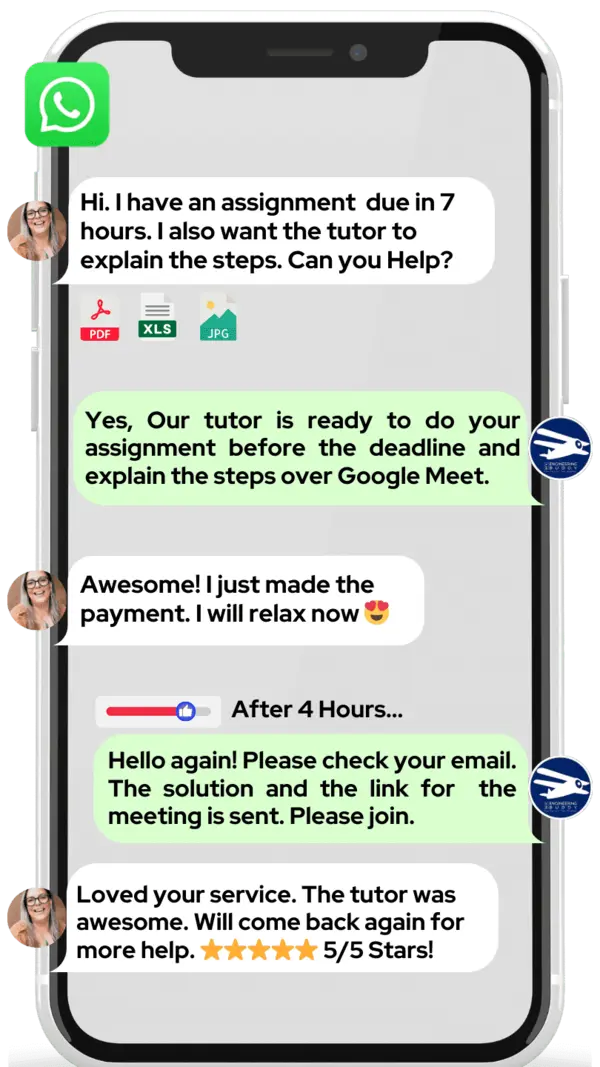



Hire The Best PCB Design Tutor
Top Tutors, Top Grades. Without The Stress!
52,000+ Happy Students From Various Universities






How Much For Private 1:1 Tutoring & Hw Help?
Private 1:1 Tutoring and HW help Cost $20 – 35 per hour* on average.
Your PCB layout keeps failing DRC checks — and your tutor has never touched a real board. That changes here.
PCB Design Tutor Online
PCB Design is the process of translating an electronic schematic into a manufacturable printed circuit board, covering component placement, trace routing, design rule checks, and signal integrity — skills central to electronics engineering coursework and industry practice.
MEB offers 1:1 online tutoring and homework help in 2800+ advanced subjects, including PCB Design. Whether you’re searching for a PCB Design tutor near me or need live help with KiCad, Altium, or Eagle, MEB connects you with a verified tutor who has hands-on PCB experience — not just theory. Sessions are live, calibrated to your exact course, and built around your specific gaps. One structured session can shift how you approach layer stackup, impedance matching, and DRC resolution.
- 1:1 online sessions tailored to your course syllabus and software environment
- Expert-verified tutors with subject-specific PCB and electronics engineering knowledge
- Flexible time zones — US, UK, Canada, Australia, Gulf
- Structured learning plan built after a diagnostic session
- Ethical homework and assignment guidance — you understand the work before you submit it
52,000+ students across the US, UK, Canada, Australia, and the Gulf have used MEB since 2008 — including students in Electrical Engineering subjects like PCB Design, Circuit Design, and Electronic Circuit Design.
Source: My Engineering Buddy, 2008–2025.
How Much Does a PCB Design Tutor Cost?
Most PCB Design tutoring sessions run $20–$40/hr. Graduate-level or highly specialised work — RF PCB design, high-speed signal integrity, multilayer HDI boards — can reach up to $100/hr. The $1 trial gives you 30 minutes of live 1:1 tutoring or a full explanation of one homework question before you commit to anything.
| Level / Need | Typical Rate | What’s Included |
|---|---|---|
| Standard (most undergrad levels) | $20–$35/hr | 1:1 sessions, schematic review, homework guidance |
| Advanced / Specialist (RF, HDI, signal integrity) | $35–$70/hr | Expert tutor, niche depth, design review |
| $1 Trial | $1 flat | 30 min live session or one full homework question explained |
Tutor availability tightens around end-of-semester project submission deadlines — especially in November and April. Book early if your deadline is within three weeks.
WhatsApp MEB for a quick quote — average response time under 1 minute.
Who This PCB Design Tutoring Is For
PCB Design sits at the intersection of theory and manufacturing reality. Students hit walls that textbooks don’t solve — clearance errors that make no sense, layouts that simulate cleanly but fail on the bench, or coursework briefs that assume software fluency nobody taught them.
- Undergraduate electronics or electrical engineering students with a PCB design coursework submission due
- Students whose simulation worked in LTSpice but whose physical layout is generating interference
- Graduate students designing PCBs for embedded or IoT projects who need signal integrity guidance
- Students retaking a module after a failed first attempt — particularly those who lost marks on DRC compliance or layer stackup errors
- Students with a university conditional offer depending on their final electronics grade
- Parents watching a capable student lose confidence over a tool they were never properly taught
MEB has worked with students at universities including MIT, Georgia Tech, Imperial College London, ETH Zurich, the University of Toronto, Delft University of Technology, and UNSW Sydney — and with students progressing toward roles at hardware companies, defence contractors, and embedded systems firms.
At MEB, we’ve found that most PCB Design errors don’t come from a lack of ability — they come from a gap between what the schematic shows and what the student knows to check during layout. One focused session on design rule configuration and ground plane placement tends to unlock the rest.
1:1 Tutoring vs Self-Study vs AI vs YouTube vs Online Courses
Self-study works if you’re disciplined and your errors are surface-level — it breaks down when you don’t know what you don’t know. AI tools explain concepts fast but can’t watch you route a trace and catch a crosstalk risk in real time. YouTube is fine for getting started with KiCad or Altium but stops when you’re stuck on a board-specific DRC failure nobody else has documented. Online courses move at a fixed pace and assume a generic skill level. 1:1 tutoring with MEB is live, calibrated to your exact assignment or project, and corrects your specific PCB layout errors in the session — not three forum replies later.
Outcomes: What You’ll Be Able To Do in PCB Design
After working with an MEB tutor, students can apply design rule checks confidently using their chosen EDA tool — whether KiCad, Altium Designer, or Eagle. They can analyse a schematic and translate it into a clean two- or four-layer layout with correct net assignments. They can explain why differential pair routing matters for high-speed signals, and present a layer stackup decision to a lab supervisor or project assessor without second-guessing the reasoning. They can solve thermal dissipation placement problems and write a proper bill of materials tied to the layout. These are outcomes tied directly to what examiners and project supervisors actually mark.
Based on feedback from 40,000+ sessions collected by MEB from 2022 to 2025, 58% of students improved by one full grade after approximately 20 hours of 1:1 tutoring in subjects like PCB Design. A further 23% achieved at least a half-grade improvement.
Source: MEB session feedback data, 2022–2025.
Try your first session for $1 — 30 minutes of live 1:1 tutoring or one homework question explained in full. No registration. No commitment. WhatsApp MEB now and get matched within the hour.
What We Cover in PCB Design (Syllabus / Topics)
MEB tutors cover PCB Design across three tracks, matching the depth and tool set of your course or project brief.
Track 1: Schematic Capture and Component Selection
- Reading and drawing schematics in KiCad, Altium Designer, or Eagle
- Net labelling, power flags, and schematic conventions
- Component footprint creation and library management
- BOM generation and component rating verification
- Decoupling capacitor placement strategy
- Design for manufacture (DFM) principles at schematic stage
Recommended texts: PCB Design Tutorial by David Jones; The Art of Electronics by Horowitz and Hill (3rd ed.) for component context.
Track 2: PCB Layout, Routing, and Design Rule Checks
- Board outline definition and layer stackup decisions (2-layer vs 4-layer)
- Component placement strategy — thermal, signal, and mechanical constraints
- Manual and autorouting — when to use each
- Trace width calculations for current capacity and impedance control
- Ground planes, copper pours, and via stitching
- Differential pair routing for USB, HDMI, and high-speed signals
- Running and resolving DRC errors — clearance, annular ring, silkscreen overlap
Recommended texts: High Speed Signal Propagation by Johnson and Graham; PCB Design for Real-World EMI Control by Bruce Archambeault.
Track 3: Signal Integrity, EMC, and Fabrication Output
- Impedance matching and controlled impedance traces
- Crosstalk mechanisms and mitigation — guard traces, spacing rules
- EMC design principles: filtering, shielding, and layout strategies
- Generating Gerber files and drill files for fabrication
- Reviewing fabrication house design rules (e.g. JLCPCB, PCBWay specifications)
- Design for testability — test points, bed-of-nails access
Recommended texts: Signal and Power Integrity — Simplified by Eric Bogatin; IET guidance on EMC-compliant PCB layout via the Institution of Engineering and Technology.

Platforms, Tools & Textbooks We Support
PCB Design is fundamentally tool-dependent. MEB tutors work across the software environments students actually use in their courses and projects — not just one platform.
- KiCad (versions 6, 7, and 8)
- Altium Designer
- Cadence Allegro and Cadence Virtuoso
- Eagle (Autodesk)
- Proteus Design Suite
- Multisim (for pre-layout simulation)
- LTSpice (schematic-level verification before layout)
- PADS (Mentor Graphics)
What a Typical PCB Design Session Looks Like
The tutor opens by checking where you got stuck since the last session — usually a specific DRC error, a routing decision that went wrong, or a schematic net that isn’t transferring cleanly to the layout editor. You share your screen inside Google Meet. The tutor walks through your board file directly, using a digital pen-pad to annotate over your layout — marking the ground plane gaps, the trace that’s too close to a via, or the footprint that’s been placed backwards. You fix it while the tutor watches. Then you route one section yourself — say, the power input stage — and the tutor calls out errors as they happen. Session ends with two or three specific tasks: fix the remaining DRC flags, re-route the differential pair using the constraints manager, and check the courtyard overlaps before next time.
How MEB Tutors Help You with PCB Design (The Learning Loop)
Diagnose: In the first session, the tutor looks at your actual board file or schematic — not a generic example. They identify whether the problem is conceptual (you don’t understand why ground planes matter) or procedural (you know the theory but the tool is fighting you).
Explain: The tutor works through the problem live, annotating your layout with a digital pen-pad. They show you the correct trace routing, then immediately show you what goes wrong when you deviate — on your own board, not a textbook diagram.
Practice: You replicate the fix or attempt the next section while the tutor watches. This is where most students learn fastest — doing it under observation, not after the session ends.
Feedback: The tutor stops you mid-route if you’re heading toward a signal integrity problem. They explain which DRC flag you’d have triggered, why the mark would have been lost, and what the examiner or fabrication house would flag.
Plan: Before the session ends, the tutor sets a specific task — complete the power delivery routing, generate a Gerber and check it against the fab house rules, or write up the layer stackup justification for your report. Next session picks up there.
Sessions run over Google Meet. Tutors use a digital pen-pad or iPad with Apple Pencil to annotate directly over your shared screen. Before your first session, have your EDA project file ready, your assignment brief or project spec, and a note of which DRC errors are currently showing. The first session is diagnostic — the tutor will assess where you are and build the session plan from there. Start with the $1 trial — 30 minutes of live tutoring that also serves as your first diagnostic.
Students consistently tell us that the moment things click in PCB Design is when they stop treating the DRC as an obstacle and start treating it as a design checklist. Our tutors build that shift deliberately — usually in the second or third session.
Tutor Match Criteria (How We Pick Your Tutor)
Not every electronics tutor knows PCB layout. MEB matches on specifics.
Subject depth: Tutors are matched by EDA tool proficiency (KiCad vs Altium vs Cadence), course level (undergrad project vs graduate research), and design domain (RF, power, digital, or mixed-signal).
Tools: Every session runs on Google Meet with a digital pen-pad or iPad and Apple Pencil — the tutor can annotate your board file in real time.
Time zone: Matched to your region — US, UK, Gulf, Canada, or Australia. No scheduling across 12-hour gaps.
Goals: Whether you need to pass a module, complete a capstone project, or understand signal integrity at a deeper level, the tutor match reflects that — not a generic electronics background.
Unlike platforms where you fill out a form and wait, MEB responds in under a minute, 24/7. Tutor match takes under an hour. The $1 trial means you test before you commit. Everything runs over WhatsApp — no logins, no intake forms.
Study Plans (Pick One That Matches Your Goal)
Catch-up (1–3 weeks): for students with a board submission or lab report due soon and specific gaps to close — DRC errors, layer stackup, or Gerber output. Exam prep (4–8 weeks): structured sessions covering schematic capture through to fabrication-ready output, with progress checks against your module assessment criteria. Weekly support: ongoing, aligned to your semester project milestones or coursework deadlines. The tutor builds the specific session sequence after the first diagnostic — nothing is prescribed before they’ve seen your actual work.
Pricing Guide
PCB Design tutoring runs $20–$40/hr for most undergraduate and coursework levels. Specialist topics — RF PCB design, high-speed multilayer boards, or FPGA-integrated layouts — can reach up to $100/hr depending on tutor background and project complexity.
Rate factors: course level, EDA tool required, topic complexity (standard digital vs RF or signal integrity), timeline pressure, and tutor availability.
Availability tightens sharply in late November and early April when electronics capstone projects and coursework submissions cluster. If your deadline is within four weeks, contact MEB now rather than after the slot fills.
For students targeting positions at companies like Apple, Qualcomm, or Texas Instruments, or aiming for top graduate programmes in electrical engineering, tutors with professional hardware design and signal integrity backgrounds are available at higher rates — share your specific goal and MEB will match the tier to your ambition.
Start with the $1 trial — 30 minutes, no registration, no commitment. WhatsApp MEB for a quick quote.
PCB Design is one of the most tool-specific subjects in electronics engineering — the gap between knowing the theory and producing a manufacturable board is real, and it’s exactly where 1:1 tutoring makes the fastest difference.
Source: My Engineering Buddy, based on 18 years of tutoring in electronics engineering subjects.
FAQ
Is PCB Design hard?
The concepts are learnable, but the tool fluency takes time. Most students struggle not with the theory but with translating a schematic into a clean, DRC-passing layout. That gap closes quickly with hands-on guidance in your specific EDA tool.
How many sessions are needed?
For a specific coursework project with defined deliverables, most students need 4–8 sessions. For broader module support covering schematic through to Gerber output, 10–15 sessions is typical. The tutor sets a realistic plan after the first diagnostic session.
Can you help with homework and assignments?
Yes. MEB tutoring is guided learning — you understand the work, then submit it yourself. Tutors explain schematic errors, walk through DRC resolution, and help you understand layout decisions — you do the work and submit it. See our Academic Integrity policy and Why MEB page for full details on what we help with and what we don’t.
Will the tutor match my exact syllabus or exam board?
Yes. Tutors are matched to your specific course — whether that’s a module at a UK university using KiCad, a US engineering programme using Altium, or a capstone project with custom fabrication requirements. The match happens before the first session.
What happens in the first session?
The tutor reviews your current board file, assignment brief, or schematic. They identify the specific gaps — tool knowledge, design rules, or conceptual understanding — and build the session plan from there. No time is spent on topics you already know.
Is online tutoring as effective as in-person?
For PCB Design, yes — because the work is screen-based anyway. You share your EDA software window over Google Meet, the tutor annotates your layout in real time with a digital pen-pad, and the feedback is immediate. Many students find it more focused than in-person sessions.
KiCad or Altium — which should I learn first?
KiCad is free, open-source, and widely used in universities and maker communities — a solid starting point. Altium Designer is industry-standard in professional hardware teams. Learn whichever your course requires first; MEB tutors cover both to professional depth.
Can you help with RF PCB design specifically?
Yes. RF PCB work — including microstrip trace calculations, impedance-controlled routing, via placement near RF components, and layout for high-frequency boards — requires a specialist tutor. MEB matches RF-experienced tutors for these sessions, typically at the higher rate tier.
What if my PCB design passes DRC but fails when manufactured?
DRC catches rule violations within your EDA tool settings, but fabrication houses have their own minimum specs. MEB tutors cover how to check Gerber files against real fab house requirements — JLCPCB, PCBWay, OSH Park — and how to set up DRC rules that match manufacturing reality, not just software defaults.
Can I get PCB Design help at midnight?
Yes. MEB operates 24/7 via WhatsApp. You can send a message at any hour, describe your problem, and get a tutor matched or an initial response within the hour. Session scheduling then follows your time zone — US, UK, Gulf, Canada, or Australia.
How do I get started?
Three steps: WhatsApp MEB with your course, tool, and current deadline. MEB matches you with a verified PCB Design tutor — usually within the hour. Your first session is the $1 trial: 30 minutes of live 1:1 tutoring or one homework problem explained in full.
Trust & Quality at My Engineering Buddy
Every MEB tutor goes through subject-specific vetting — not a generic background check. For PCB Design, that means demonstrating live proficiency in at least one major EDA platform, showing familiarity with DRC configuration and layer stackup decisions, and passing a live demo session reviewed by MEB’s quality team. Ongoing feedback from students triggers re-evaluation if ratings drop. Rated 4.8/5 across 40,000+ verified reviews on Google.
MEB tutoring is guided learning — you understand the work, then submit it yourself. For full details on what we help with and what we don’t, read our Academic Integrity policy and Why MEB.
MEB has served 52,000+ students across the US, UK, Canada, Australia, Gulf, and Europe in 2,800+ subjects since 2008. In Electrical Engineering specifically, that includes students needing help with analog circuits tutoring, embedded systems help, and signals and systems tutoring — alongside PCB Design. The platform’s methodology is documented at MEB’s tutoring methodology page.
A common pattern our tutors observe is that students who have been self-teaching PCB layout often get 80% of the way there — the last 20% is where the marks are lost. That last 20% is almost always signal integrity, ground plane continuity, or fabrication output — exactly what 1:1 review catches in one session.
Explore Related Subjects
Students studying PCB Design often also need support in:
- VLSI Design
- Microelectronics
- FPGA Design
- Digital Electronics
- Semiconductor Devices
- Microcontrollers
- Electromagnetic Field Theory
Next Steps
To get started, have these ready when you WhatsApp MEB:
- Your EDA tool (KiCad, Altium, Eagle, or other) and your current project file or assignment brief
- The specific problem — DRC errors, routing issues, signal integrity question, or fabrication output
- Your submission or exam deadline and your time zone
MEB matches you with a verified PCB Design tutor — usually within 24 hours, often within the hour. The first session opens with a diagnostic so every minute counts.
Before your first session, have ready: your EDA project file and board layout, a recent assignment you struggled with or a list of current DRC flags, and your submission or project deadline. The tutor handles the rest.
Visit www.myengineeringbuddy.com for more on how MEB works.
WhatsApp to get started or email meb@myengineeringbuddy.com.
Reviewed by Subject Expert
This page has been carefully reviewed and validated by our subject expert to ensure accuracy and relevance.
