




~1 min
Average Reply Time
~1 hour
To Be Matched With A Tutor
30 Min Trial
75% Find Their Tutor On The 1st Trial
$20-35+/hr
Premium Yet Affordable Learning
Hire The Best Power System Protection Tutor
Relay tripped. Fault uncleared. You’ve been staring at the overcurrent coordination curve for two hours — and nothing makes sense.
Power System Protection Tutor Online
Power System Protection is an electrical engineering discipline covering relay coordination, fault analysis, circuit breaker operation, and protective device settings used to detect and isolate faults in transmission and distribution networks.
Finding a reliable Power System Protection tutor near me is harder than it sounds — most tutors cover power systems broadly and stumble when you get into distance relay characteristics or differential protection schemes. MEB’s 1:1 online Power System Protection tutoring targets exactly where you’re stuck: overcurrent grading, PSCAD simulations, per-unit fault calculations, or ETAP relay settings. Our electrical engineering tutoring covers the full discipline, but Power System Protection gets a tutor matched specifically to your course and depth. One session can shift a failing assignment into a passing one.
- 1:1 online sessions tailored to your university module or industry certification syllabus
- Expert-verified tutors with hands-on relay coordination and protection engineering backgrounds
- Flexible time zones — US, UK, Canada, Australia, Gulf
- Structured learning plan built after a diagnostic session
- Ethical academic guidance — you understand the work before you submit it
52,000+ students across the US, UK, Canada, Australia, and the Gulf have used MEB since 2008 — including students in Electrical Engineering subjects like Power System Protection, Power System Analysis, and High Voltage Engineering.
Source: My Engineering Buddy, 2008–2025.
How Much Does a Power System Protection Tutor Cost?
Most Power System Protection tutoring sessions run $20–$40/hr. Graduate-level work — relay modelling in PSCAD, protection coordination studies, or thesis support — can reach $70–$100/hr depending on tutor depth. Not sure if it’s worth it? The $1 trial gives you 30 minutes of live 1:1 tutoring or one homework question explained in full before you commit to anything.
| Level / Need | Typical Rate | What’s Included |
|---|---|---|
| Standard undergraduate | $20–$40/hr | 1:1 sessions, assignment guidance |
| Advanced / Graduate / ETAP or PSCAD | $40–$100/hr | Expert tutor, simulation support |
| $1 Trial | $1 flat | 30 min live session or 1 homework question |
Tutor availability tightens sharply in April–May and November–December. Book early if your submission or exam falls in those windows.
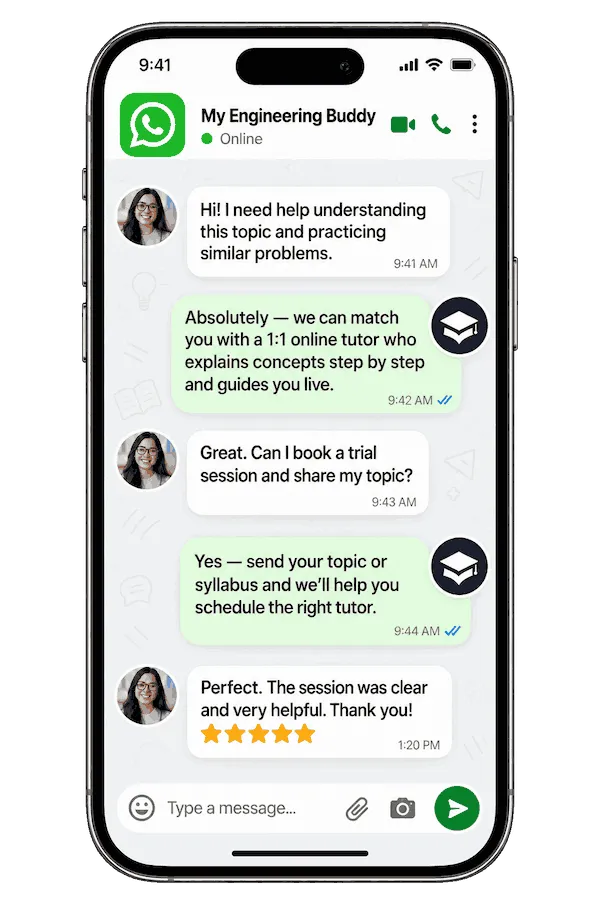
WhatsApp MEB for a quick quote — average response time under 1 minute.
Who This Power System Protection Tutoring Is For
Power System Protection sits in the harder half of any electrical engineering degree. It asks you to hold relay logic, fault current paths, and protection coordination all in your head simultaneously. Most students hit a wall somewhere between overcurrent grading and distance relay zones.
- Third and fourth-year undergraduate students whose protection module counts toward their degree classification
- Students retaking after a failed first attempt — especially where relay coordination or per-unit fault analysis cost them marks
- Master’s and PhD students modelling protection schemes in PSCAD or ETAP for thesis work
- Students with a university conditional offer depending on this grade
- Working engineers preparing for PE, IET, or IEE professional certification exams with a protection component
- Parents supporting a student at MIT, Imperial College London, ETH Zurich, University of Toronto, UNSW Sydney, or TU Delft whose grades have slipped in power modules
1:1 Tutoring vs Self-Study vs AI vs YouTube vs Online Courses
Self-study works if you’re disciplined, but Power System Protection has no feedback loop when your relay grading is wrong. AI tools explain concepts quickly — they can’t walk through your specific coordination chart or catch why your impedance locus is off. YouTube is fine for understanding what a Buchholz relay does; it stops cold when you’re trying to set one. Online courses cover protection theory at a fixed pace with no personalisation. With MEB, a tutor works through your actual fault study, corrects your reach settings in real time, and adjusts the pace to your specific university module — not a generic syllabus.
Outcomes: What You’ll Be Able To Do in Power System Protection
After consistent 1:1 Power System Protection tutoring, you’ll be able to analyse symmetrical and asymmetrical faults using sequence network methods, set and coordinate overcurrent and earth fault relays for a radial distribution feeder, model protection schemes in ETAP or PSCAD and interpret the output, explain the operating principle and application boundaries of distance, differential, and pilot protection, and apply the IEEE/IEC relay coordination standards to a graded protection study without working backwards from a textbook example.
Based on feedback from 40,000+ sessions collected by MEB from 2022 to 2025, 58% of students improved by one full grade after approximately 20 hours of 1:1 tutoring in subjects like Power System Protection. A further 23% achieved at least a half-grade improvement.
Source: MEB session feedback data, 2022–2025.

What We Cover in Power System Protection (Syllabus / Topics)
Track 1: Fault Analysis and Symmetrical Components
- Three-phase symmetrical fault calculations — per-unit method
- Sequence networks: positive, negative, and zero sequence impedances
- Line-to-ground, line-to-line, and double line-to-ground fault analysis
- Bus impedance matrix (Zbus) and fault current distribution
- Short-circuit MVA and X/R ratio calculations
- Fault level contribution from generators, motors, and grid infeed
Core texts: Glover, Sarma & Overbye — Power Systems Analysis and Design; Bergen & Vittal — Power Systems Analysis.
Track 2: Protective Relays and Coordination
- Overcurrent relay characteristics — IDMT, definite time, instantaneous
- Time–current grading for radial and meshed networks
- Distance (impedance) relay: mho, reactance, and quadrilateral characteristics
- Zone 1, Zone 2, Zone 3 reach settings and time delays
- Differential protection for transformers, busbars, and generators
- Earth fault and restricted earth fault (REF) protection
- Pilot protection schemes: POTT, PUTT, and blocking schemes
Core texts: Blackburn & Domin — Protective Relaying: Principles and Applications; Anderson — Power System Protection.
Track 3: Protection Systems, Simulation and Standards
- Current transformer (CT) and voltage transformer (VT) selection and saturation
- Circuit breaker ratings, interrupting capacity, and operating times
- Auto-reclosing schemes and dead-time settings
- Modelling protection in ETAP: relay coordination studies and arc flash
- PSCAD simulation of protection schemes and fault transients
- IEC 60255 and IEEE C37 relay standards — application and compliance
- Busbar protection, feeder protection, and substation automation (IEC 61850)
Core texts: Horowitz & Phadke — Power System Relaying; IEEE Std C37.113.
At MEB, we’ve found that students who struggle with distance relay zone settings almost always have the same root problem — they haven’t fully internalised the relationship between impedance seen by the relay and the physical fault location on the line. One session fixing that gap tends to unlock the rest of the topic.
What a Typical Power System Protection Session Looks Like
The tutor opens by checking your last session’s topic — usually overcurrent grading or sequence network setup — and asks you to explain one step from your notes. From there, you and the tutor work through a live fault calculation or relay coordination problem on screen: the tutor draws the impedance diagram on a digital pen-pad while you follow along, then you replicate the calculation yourself with the tutor watching for errors in your sequence component substitution or your per-unit conversion. A specific problem — say, why your Zone 2 reach is encroaching on the adjacent feeder’s Zone 1 — gets worked through step by step until the logic is clear. The session closes with a concrete task: one coordination table to complete, one simulation to run in ETAP, one past exam question to attempt before next time.
How MEB Tutors Help You with Power System Protection (The Learning Loop)
Diagnose: In the first session, your tutor asks you to attempt a short fault calculation and walk through your relay grading logic. That’s enough to identify whether your issue is sequence network setup, per-unit arithmetic, CT burden, or protection philosophy — and sets the session plan.
Explain: The tutor works through a live example on the digital pen-pad — annotating the single-line diagram, labelling impedance zones, and stepping through the IEEE grading equations. Nothing is skipped. You see why the formula is structured that way, not just what to plug in.
Practice: You attempt the next problem while the tutor watches in real time. This is where most students discover they understood the concept but couldn’t execute it under time pressure — exactly what exam markers see.
Feedback: Every wrong step gets corrected immediately with a reason: “Your zero-sequence impedance is wrong because you’ve used the positive-sequence transformer model here — here’s why that matters for earth fault current.” That kind of targeted correction is what separates one session from ten hours of textbook re-reading.
Plan: Each session ends with a written next step — specific topic, specific problem type, specific exam question — so the next 48 hours of independent study have a clear target.
Sessions run on Google Meet. The tutor uses a digital pen-pad or iPad with Apple Pencil to annotate circuit diagrams and relay characteristics live. Before your first session, send your university module guide or past paper, your ETAP or PSCAD version if relevant, and your exam date. The first session is your diagnostic — expect 15 minutes of problem-solving before any teaching begins. Start with the $1 trial — 30 minutes of live tutoring that also serves as your diagnostic session.
Students consistently tell us that Power System Protection feels abstract until they’ve drawn the same impedance locus three times with a tutor correcting the reach in real time. After that, it clicks. The subject rewards repetition with a live expert — not re-reading the same textbook chapter.
Tutor Match Criteria (How We Pick Your Tutor)
Not every electrical engineering tutor can handle protection coordination at the level your course demands. Here’s what MEB screens for.
Subject depth: Tutors must demonstrate working knowledge of relay types, coordination methods, and fault analysis at your specific level — undergraduate module, master’s thesis, or professional certification prep. A tutor who covers power systems broadly is not automatically matched to Power System Protection.
Tools: Sessions run on Google Meet. The tutor uses a digital pen-pad or iPad with Apple Pencil — essential for drawing single-line diagrams and relay characteristics live.
Time zone: Matched to your region. US, UK, Gulf, Canada, and Australia are all covered. Evening and weekend slots available in every region.
Goals: Protection courses range from pass-the-exam to publish-the-thesis. The tutor is matched to your objective — not assigned by algorithm.
Unlike platforms where you fill out a form and wait, MEB responds in under a minute, 24/7. Tutor match takes under an hour. The $1 trial means you test before you commit. Everything runs over WhatsApp — no logins, no intake forms.
Study Plans (Pick One That Matches Your Goal)
If you’re three weeks from a protection exam with gaps in relay grading and sequence networks, the catch-up plan covers the highest-weight topics first and works backwards from your past papers. If you have six to eight weeks, the structured exam prep plan sequences fault analysis, relay types, coordination, and simulation in order — with weekly checkpoints. Students with ongoing coursework use weekly sessions aligned to their submission schedule. After the $1 trial diagnostic, your tutor builds the specific sequence — not a fixed template.
Pricing Guide
Power System Protection tutoring starts at $20/hr for undergraduate modules. Graduate-level work — relay modelling, protection coordination studies, thesis support — typically runs $50–$100/hr depending on depth and tutor background. Rate factors include your course level, topic complexity, deadline pressure, and tutor availability.
Availability drops significantly in April–May and November–December. If your exam or submission is in that window, don’t leave it two weeks out.
For students targeting roles at National Grid, AECOM, Jacobs, or utility operators, or those pursuing PE or IET Chartered Engineer status, MEB can match you with a tutor who has direct industry experience in protection engineering — available at higher rates. Share your specific goal and MEB will match the right tier.
Start with the $1 trial — 30 minutes, no registration, no commitment. WhatsApp MEB for a quick quote.
MEB tutors have supported students in power engineering, control systems, and Power System Protection across 18 years — in universities from MIT and Imperial College to ETH Zurich and UNSW Sydney.
Source: My Engineering Buddy, 2008–2025.
Try your first session for $1 — 30 minutes of live 1:1 tutoring or one homework question explained in full. No registration. No commitment. WhatsApp MEB now and get matched within the hour.
FAQ
Is Power System Protection hard?
Yes — it’s consistently rated one of the harder modules in electrical engineering degrees. The difficulty comes from holding fault current paths, relay logic, and coordination constraints simultaneously. Students who struggle usually have gaps in sequence networks or per-unit analysis from earlier modules.
How many sessions are needed?
Most students need 6–12 sessions spread over 4–8 weeks to close significant gaps. A single session can resolve one specific problem — relay zone settings, CT ratio selection — if that’s all you need. The diagnostic clarifies this immediately.
Can you help with homework and assignments?
Yes. MEB tutoring is guided learning — you understand the work, then submit it yourself. See our Academic Integrity policy and Why MEB page for full details on what we help with and what we don’t.
Will the tutor match my exact syllabus or exam board?
Yes. Before matching, MEB asks for your university, module code, and assessment structure. Relay types, standards (IEC or IEEE), and simulation tools vary between institutions — the tutor is matched to your specific course, not a generic outline.
What happens in the first session?
The tutor asks you to attempt a short problem — usually a fault calculation or a relay grading step — while they observe. That diagnostic takes 15 minutes and sets the direction for every session after. No time is wasted on topics you already know.
Is online tutoring as effective as in-person?
For Power System Protection, yes. The tutor annotates single-line diagrams and relay characteristics live on a digital pen-pad via Google Meet. Students in the US, UK, and Gulf consistently report the same quality of explanation as face-to-face sessions.
What’s the difference between overcurrent and distance protection — and why do students mix them up?
Overcurrent protection responds to current magnitude and uses time grading. Distance protection responds to the impedance seen by the relay — calculated from voltage and current — and uses reach zones. Students confuse them because both use time delays, but the operating principles and setting methods are entirely different.
Can MEB tutors help with ETAP relay coordination studies?
Yes. Tutors with ETAP experience are available for relay coordination, arc flash studies, and protection settings. Share your ETAP version and the specific coordination problem before the first session — the tutor will come prepared to work through it directly on your model.
What if I need help with PSCAD simulation for my protection thesis?
PSCAD protection modelling is covered — overcurrent relay models, distance relay simulation, fault transient analysis. Graduate and PhD students working on protection-related theses regularly use MEB for simulation troubleshooting and interpretation of results.
Do you offer group Power System Protection sessions?
No. All MEB sessions are 1:1. Group sessions reduce the diagnostic precision that makes protection tutoring effective — your relay coordination errors are specific to your calculation method, not a shared problem across five students.
Can I get Power System Protection help at midnight?
Yes. MEB operates 24/7 across time zones. WhatsApp response time averages under one minute at any hour. Tutor availability varies by region and time slot — evening and overnight sessions are common for students in the Gulf, Australia, and North America.
How do I get started?
Three steps: WhatsApp MEB with your module, exam date, and what you’re stuck on. MEB matches you with a verified tutor — usually within the hour. Your first session is the $1 trial: 30 minutes live or one question explained in full.
Trust & Quality at My Engineering Buddy
Every MEB tutor goes through subject-specific screening — not a general engineering interview. For Power System Protection, that means demonstrating live relay coordination, walking through a fault calculation under observation, and showing familiarity with the tools your university actually uses. Tutors with only power electronics or circuit theory backgrounds are not matched to protection courses. Rated 4.8/5 across 40,000+ verified reviews on Google.
MEB tutoring is guided learning — you understand the work, then submit it yourself. For full details on what we help with and what we don’t, read our Academic Integrity policy and Why MEB.
MEB has been running since 2008, serving 52,000+ students across the US, UK, Canada, Australia, Gulf, and Europe in 2,800+ subjects. Within Electrical Engineering, the platform covers everything from power system operation and control tutoring to smart grid help and ETAP tutoring. See our tutoring methodology for how sessions are structured across all subjects.
The Bureau of Labor Statistics projects steady demand for electrical and electronics engineers through 2032 — Power System Protection skills are among the most employer-cited in grid modernisation and renewable integration roles.
Source: U.S. Bureau of Labor Statistics, Occupational Outlook Handbook.
A common pattern our tutors observe is that students arrive having memorised relay types from lecture slides but having never set one from scratch on a real network. That gap between recognition and application is exactly what 1:1 sessions are built to close — and it usually closes faster than students expect.
Explore Related Subjects
Students studying Power System Protection often also need support in:
- Power System Analysis
- High Voltage Engineering
- Power Transmission Systems
- Electrical Machines
- Power Generation
- Transformer
- PSCAD
- Distributed Control Systems (DCS)
Next Steps
Before your first session, have ready: your university module guide or exam board syllabus, a recent assignment or past paper question you struggled with, and your exam or submission date. The tutor handles the rest.
- Share your module, exam board (IEC or IEEE standard used), and your biggest gap right now
- Share your availability and time zone
- MEB matches you with a verified Power System Protection tutor — usually within the hour
Your first session starts with a diagnostic so every minute is used well. No time is spent on topics you’ve already mastered.
Visit www.myengineeringbuddy.com for more on how MEB works.
WhatsApp to get started or email [email protected].
Reviewed by Subject Expert
This page has been carefully reviewed and validated by our subject expert to ensure accuracy and relevance.



