

Hire Verified & Experienced
SACE Japanese (background speakers) Tutors Online
Email: [email protected]



~1 min
Average Reply Time
~1 hour
To Be Matched With A Tutor
1 Trial
75% Find Their Tutor On The 1st Trial
$1
Your First 30 Minutes
Hire The Best SACE Japanese (background speakers) Tutor
Top Tutors, Top Grades. Without The Stress!
Related Subjects
Most students sitting SACE Japanese (background speakers) already speak the language at home — but still drop marks on written expression, text analysis, and formal register.
SACE Japanese (Background Speakers) Tutor Online
SACE Japanese (background speakers) is a South Australian Certificate of Education subject designed for students with home-language or heritage proficiency in Japanese, assessed at Stage 1 and Stage 2 levels through reading, writing, and oral components.
Finding a SACE Japanese (background speakers) tutor near me who actually understands the background-speaker pathway — not just Japanese as a foreign language — is harder than it sounds. MEB tutors know the SACE background-speaker syllabus, the specific text types assessed, and the register demands the exam requires. Sessions are 1:1, online, and built around your current Stage 1 or Stage 2 coursework — not a generic Japanese curriculum.
- 1:1 online sessions tailored to the SACE background-speaker syllabus
- Expert tutors with heritage-Japanese language knowledge and SACE assessment experience
- Flexible time zones — students in Australia, the Gulf, Canada, the UK, and the US are all covered
- Structured learning plan built after a diagnostic session covering your written and oral gaps
- Ethical homework and assignment guidance — you understand the work, then submit it yourself
52,000+ students across Australia, the US, the UK, Canada, and the Gulf have used MEB since 2008 — including students in SACE languages subjects like SACE Japanese (background speakers), SACE Chinese (background speakers), and SACE Korean (background speakers).
Source: My Engineering Buddy, 2008–2025.
How Much Does a SACE Japanese (Background Speakers) Tutor Cost?
Online SACE Japanese (background speakers) tutoring at MEB runs $20–$40/hr for most Stage 1 and Stage 2 students. Specialist tutors with advanced Japanese linguistics or SACE marking experience sit at the higher end. The $1 trial gets you 30 minutes of live 1:1 tutoring or a full explanation of one assignment question — no registration required.
| Level / Need | Typical Rate | What’s Included |
|---|---|---|
| Stage 1 (most students) | $20–$35/hr | 1:1 sessions, written & oral guidance |
| Stage 2 / advanced | $35–$55/hr | Expert tutor, exam-focused depth |
| $1 Trial | $1 flat | 30 min live session or 1 assignment question explained |
Tutor availability tightens significantly in the September–November SACE exam period. Book ahead if you’re in Stage 2.
WhatsApp MEB for a quick quote — average response time under 1 minute.
Who This SACE Japanese (Background Speakers) Tutoring Is For
This subject attracts students who are already fluent conversationally but struggle the moment the exam requires formal writing, precise kanji use, or structured analytical responses. That gap — between spoken comfort and written performance — is exactly where tutoring pays off.
- Stage 1 students losing marks on written text types despite strong speaking ability
- Stage 2 students preparing for the external exam’s reading and writing components
- Students with a university conditional offer depending on their SACE result
- Students 4–6 weeks from their exam with gaps in formal register or kanji accuracy still to close
- Students whose written Japanese is inconsistent — strong in informal contexts, weaker under exam conditions
- Parents watching a student’s written marks trail behind their obvious verbal ability
MEB has worked with students progressing to Japanese studies at universities including the Australian National University, the University of Melbourne, the University of Sydney, and the University of Adelaide.
1:1 Tutoring vs Self-Study vs AI vs YouTube vs Online Courses
Self-study works if you’re already disciplined and know exactly which text types to practise — most students aren’t sure. AI tools give fast translations and grammar checks, but they can’t diagnose why your formal written register keeps slipping or adapt to your specific SACE assessment tasks. YouTube covers Japanese grammar broadly; it stops short when you need feedback on a specific written response. Online courses move at a fixed pace with no personalisation for background speakers. 1:1 SACE Japanese (background speakers) tutoring with MEB is live, calibrated to your Stage 1 or Stage 2 syllabus, and corrects errors in the moment — including the subtle register and kanji issues that cost background speakers the most marks.
Outcomes: What You’ll Be Able To Do in SACE Japanese (Background Speakers)
After consistent 1:1 sessions, you’ll be able to write structured analytical responses in formal Japanese across the text types required by your stage, apply accurate kanji in assessed written tasks, and present oral responses that meet the register and fluency standards examiners look for. You’ll be able to analyse and respond to unseen Japanese texts with precision, not just general comprehension. You’ll be able to explain cultural and linguistic nuance in ways that satisfy the higher SACE performance bands.
Supporting a student through SACE Japanese (background speakers)? MEB works directly with parents to set up sessions, track progress, and keep coursework on schedule. WhatsApp MEB — average response time is under a minute, 24/7.
Based on feedback from 40,000+ sessions collected by MEB from 2022 to 2025, 58% of students improved by one full grade after approximately 20 hours of 1:1 tutoring in subjects like SACE Japanese (background speakers). A further 23% achieved at least a half-grade improvement.
Source: MEB session feedback data, 2022–2025.
What We Cover in SACE Japanese (Background Speakers) (Syllabus / Topics)

Written Communication and Text Types
- Formal written responses: persuasive essays, reports, and letters in Japanese
- Kanji accuracy and appropriate vocabulary selection for assessed text types
- Register distinction — formal vs informal Japanese in written contexts
- Cohesion and structure in multi-paragraph Japanese writing
- Responding to stimulus texts with evidence and elaboration
- Editing and self-correction strategies for written drafts
Useful texts include Tobira: Gateway to Advanced Japanese and SACE board-issued past written tasks and marking guides.
Reading Comprehension and Text Analysis
- Interpreting unseen Japanese texts across a range of genres and registers
- Identifying writer purpose, audience, and cultural context
- Responding to comprehension questions at both literal and inferential levels
- Analysing stylistic and linguistic features in authentic Japanese texts
- Vocabulary strategies for unfamiliar kanji compounds in exam conditions
Practice material includes authentic newspaper articles, literature extracts, and SACE external exam past papers from SACE Board of South Australia.
Oral Communication and Interaction
- Structured oral presentations aligned to SACE Stage 1 and Stage 2 criteria
- Conversation and interview preparation for oral assessment tasks
- Pronunciation, intonation, and formal speech patterns
- Cultural knowledge embedded in oral responses — not just language accuracy
- Managing spontaneous questions from assessors with confidence
Tutors use role-play scenarios, modelled responses, and timed practice sessions drawn from VCAA and VCAA oral task exemplars alongside SACE-specific materials.
At MEB, we’ve found that background-speaker students often have the strongest spoken instincts in the room — but lose marks because formal written Japanese operates by rules they’ve never been explicitly taught. One targeted session on register and text structure can shift a written mark more than ten hours of general revision.
What a Typical SACE Japanese (Background Speakers) Session Looks Like
The tutor opens by checking the previous session’s written task — usually a formal letter or analytical response — reviewing where marks were lost on register or kanji accuracy. Then you and the tutor work through a new text type together on screen: the tutor models the structural approach using a digital pen-pad, you draft a response, and the tutor corrects errors in real time — not after the fact. Specific topics like persuasive essay construction in Japanese or reading comprehension strategies for unfamiliar kanji compounds get the most session time when exams are close. The session closes with a clear written task to attempt before next time, and the next topic is noted so preparation can begin early.
How MEB Tutors Help You with SACE Japanese (Background Speakers) (The Learning Loop)
Diagnose: In the first session, the tutor identifies where your formal written Japanese breaks down — often register slippage, inconsistent kanji, or underdeveloped analytical structure — and maps these against your current Stage 1 or Stage 2 assessment tasks.
Explain: The tutor works through live examples on a digital pen-pad: annotating a model written response, showing exactly how a formal register differs from conversational Japanese, and explaining why the examiner’s mark scheme rewards specific structural choices.
Practice: You attempt a written or oral task with the tutor present. No guessing alone at home and hoping for the best. Errors surface immediately.
Feedback: The tutor goes step-by-step through your attempt — explaining which kanji choices cost marks, where your argument structure lost cohesion, and precisely how to correct it for the next task.
Plan: Each session ends with a clear next topic, an assigned practice task, and a note of what to bring to the next session so no time is wasted.
Sessions run on Google Meet with a digital pen-pad or iPad and Apple Pencil for annotation. Before your first session, have your SACE stage, your most recent written task or past paper attempt, and your assignment or exam date ready. The first session covers a diagnostic and tackles your most pressing written or oral gap straight away. Start with the $1 trial — 30 minutes of live tutoring that also serves as your first diagnostic.
Students consistently tell us that the biggest unlock in SACE Japanese background-speaker prep is understanding that their spoken instincts are an asset — but the exam rewards a different kind of precision. Tutors help bridge that gap deliberately, not by drilling vocabulary, but by teaching formal written structure explicitly.
Tutor Match Criteria (How We Pick Your Tutor)
Not every Japanese tutor is right for this subject. MEB matches on four things.
Subject depth: tutors must have specific knowledge of the SACE background-speaker pathway — its syllabus, assessment types, and the register demands that differ from continuers or beginners courses. Get SACE Japanese (continuers) tutoring from a different tutor profile entirely — the background-speaker pathway has its own demands.
Tools: Google Meet with a digital pen-pad or iPad and Apple Pencil for live annotation of written work.
Time zone: matched to the student’s region — Australia, the Gulf, Canada, the UK, and the US are all covered.
Goals: whether you need exam score improvement, stronger written text types, oral assessment preparation, or ongoing assignment guidance, the tutor’s session focus is set accordingly.
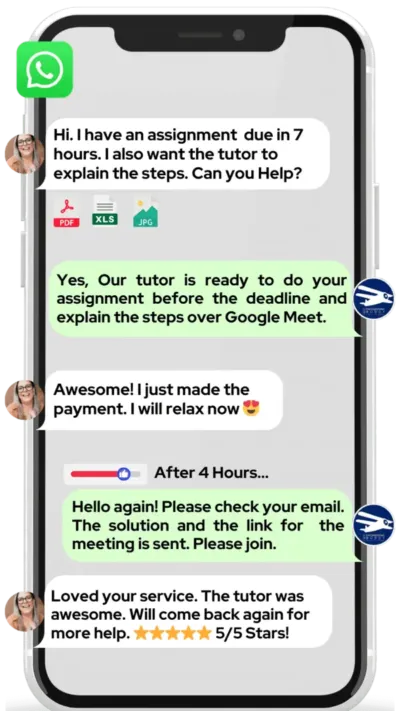
Unlike platforms where you fill out a form and wait, MEB responds in under a minute, 24/7. Tutor match takes under an hour. The $1 trial means you test before you commit. Everything runs over WhatsApp — no logins, no intake forms.
Study Plans (Pick One That Matches Your Goal)
Catch-up (1–3 weeks): for students behind on written tasks or approaching the external exam with gaps still open. Intensive focus on the 2–3 highest-value assessment components. Exam prep (4–8 weeks): structured revision across all Stage 2 components — written, reading, and oral — mapped to your exam date. Weekly support: ongoing sessions aligned to your Stage 1 or Stage 2 coursework deadlines and teacher-assessed tasks. The tutor builds the specific sequence after the first diagnostic session.
Pricing Guide
SACE Japanese (background speakers) tutoring at MEB starts at $20/hr for Stage 1 students. Stage 2 and specialist exam preparation typically runs $35–$55/hr depending on tutor experience and topic complexity. Timeline urgency and tutor availability in peak SACE periods can affect rate — book early in Term 3.
For students targeting Japanese studies or Asia-Pacific focused degrees at leading Australian universities, tutors with Japanese linguistics, translation, or SACE marking backgrounds are available at higher rates. Share your specific goal and MEB will match the tier to your ambition.
Start with the $1 trial — 30 minutes, no registration, no commitment. WhatsApp MEB for a quick quote.
FAQ
Is SACE Japanese (background speakers) hard?
It’s demanding in a specific way. Conversational fluency doesn’t automatically translate to exam performance. The formal register, kanji accuracy under timed conditions, and analytical writing structure trip up many background speakers who assume their home-language advantage will carry them.
How many sessions are needed?
Most Stage 2 students see measurable written mark improvement within 8–12 sessions. Stage 1 students with specific gaps in text structure or register often see results faster — sometimes within 4–6 targeted sessions.
Can you help with homework and assignments?
Yes. MEB tutoring is guided learning — you understand the work, then submit it yourself. Tutors explain written task requirements, model the approach, and give feedback on your draft. See our Academic Integrity policy and Why MEB page for full details on what we help with and what we don’t.
Will the tutor match my exact syllabus or exam board?
Yes. MEB tutors are matched to the SACE background-speaker pathway specifically — not to generic Japanese or to the continuers pathway. Your stage, current assessment tasks, and exam date are confirmed before the first session.
What happens in the first session?
The tutor runs a short diagnostic — usually reviewing a recent written task or past paper — to identify exactly where marks are being lost. Then the session moves straight into targeted work on your most pressing gap. No wasted time on topics you already know.
Is online tutoring as effective as in-person?
For written Japanese, online is often better. The tutor can annotate your text directly on screen in real time, and you can share your document instantly. For oral practice, Google Meet gives you a realistic speaking environment without the pressure of a face-to-face setting.
Can I get SACE Japanese (background speakers) help at short notice — even late at night?
Yes. MEB operates 24/7 across time zones. WhatsApp MEB at any hour — average response time is under a minute. Tutor match typically happens within an hour, and sessions can start the same day if a tutor is available.
What’s the difference between the background speakers and continuers pathway for SACE Japanese?
The background-speaker pathway is designed for students with existing home-language or heritage proficiency. Assessment demands higher register precision, more sophisticated text analysis, and more complex written production than the continuers course. A tutor matched to the wrong pathway will misalign the preparation entirely.
Do you offer group SACE Japanese (background speakers) sessions?
MEB’s model is 1:1 only. Group sessions dilute feedback and slow progress on the specific written and oral gaps each student carries. One student’s register problem is rarely identical to another’s.
How do I find a SACE Japanese (background speakers) tutor in my city?
You don’t need to. All MEB sessions are online — Google Meet with a digital pen-pad. Students in Adelaide, Melbourne, Sydney, Perth, and internationally all access the same tutor pool. Location doesn’t limit your options.
How do I get started?
WhatsApp MEB, share your stage and most pressing challenge, and get matched with a verified tutor — usually within the hour. The first session starts with a diagnostic and is available for $1: 30 minutes of live tutoring or one assignment question explained in full.
Does it matter if I was schooled partly in Japan vs raised speaking Japanese at home in Australia?
It does, and a good tutor accounts for it. Students schooled in Japan tend to have stronger formal written foundations but sometimes struggle with SACE text-type conventions. Heritage speakers raised in Australia often have strong oral instincts but gaps in formal written kanji and register. The tutor’s diagnostic identifies which profile applies and adjusts the session focus accordingly.
Trust & Quality at My Engineering Buddy
Every MEB tutor is screened through a multi-stage process: application review, subject-specific knowledge assessment, and a live demo session evaluated by MEB staff. Tutors covering SACE Japanese (background speakers) hold relevant degrees and demonstrate working knowledge of the SACE background-speaker syllabus — not just general Japanese proficiency. Ongoing feedback from every session feeds into tutor quality reviews. Rated 4.8/5 across 40,000+ verified reviews on Google.
MEB tutoring is guided learning — you understand the work, then submit it yourself. For full details on what we help with and what we don’t, read our Academic Integrity policy and Why MEB.
MEB has served 52,000+ students across 2,800+ subjects since 2008 — across the US, UK, Canada, Australia, the Gulf, and Europe. In SACE languages, that includes students working on SACE Japanese (beginners) tutoring, SACE Indonesian (background speakers) help, and SACE Vietnamese (background speakers) tutoring alongside Japanese background-speaker students. See our tutoring methodology for how sessions are structured across all subjects.
A common pattern our tutors observe is that background-speaker students underestimate how much the exam rewards explicit structural knowledge — not just language instinct. The students who improve fastest are the ones who stop treating their home-language ability as a substitute for exam technique and start treating it as a foundation to build on.
Explore Related Subjects
Students studying SACE Japanese (background speakers) often also need support in:
- SACE Language and Culture
- SACE Arabic (continuers)
- SACE French (continuers)
- SACE German (continuers)
- SACE Italian (continuers)
- SACE English Literary Studies
- SACE Modern History
Next Steps
Before your first session, have ready: your SACE stage and subject outline (or most recent assessment task), a written response or past paper attempt you struggled with, and your exam or assignment deadline date. The tutor handles the rest.
- Share your stage, hardest component (written, reading, or oral), and current timeline
- Share your availability and time zone
- MEB matches you with a verified SACE Japanese (background speakers) tutor — usually within 24 hours
Ready to close the gap between your spoken Japanese and your written exam marks?
Source: My Engineering Buddy, 2008–2025.
Try your first session for $1 — 30 minutes of live 1:1 tutoring or one homework question explained in full. No registration. No commitment. WhatsApp MEB now and get matched within the hour.
Visit www.myengineeringbuddy.com for more on how MEB works. Or email [email protected]. WhatsApp to get started — response in under a minute, 24/7.
52,000+ Happy Students From Various Universities



Reviewed by Subject Expert
This page has been carefully reviewed and validated by our subject expert to ensure accuracy and relevance.

