Hire Verified & Experienced
Scholarship Essay Tutors
Email: [email protected]
4.8/5 40K+ session ratings collected on the MEB platform



Hire The Best Scholarship Essay Tutor
Top Tutors, Top Grades. Without The Stress!
Most scholarship essays get rejected not because the student lacks merit — but because the essay doesn’t say anything a committee hasn’t read 400 times already.
Scholarship Essay Tutor Online
A scholarship essay is a written application component in which a student presents their academic goals, personal experiences, and qualifications to a selection committee, used by universities and funding bodies to award merit-based or need-based financial aid.
MEB offers 1:1 online tutoring and homework help in 2,800+ advanced subjects, including essay writing tutoring for applications, awards, and academic funding. If you’ve searched for a Scholarship Essay tutor near me, you’re in the right place — MEB matches you with a verified tutor who has guided students through competitive scholarships at universities across the US, UK, Canada, Australia, and the Gulf. One session can reframe an unfocused draft into something a committee actually remembers.
- 1:1 online sessions tailored to your specific scholarship prompt and deadline
- Expert-verified tutors with experience in application writing and committee selection criteria
- Flexible time zones — US, UK, Canada, Australia, Gulf covered
- Structured session plan built after reviewing your draft and prompt
- Ethical guidance — you write and submit your own essay; MEB helps you understand what works and why
52,000+ students across the US, UK, Canada, Australia, and the Gulf have used MEB since 2008 — including students working on essay writing subjects like scholarship essays, college admission application essays, and personal statements.
Source: My Engineering Buddy, 2008–2025.
How Much Does a Scholarship Essay Tutor Cost?
Rates run $20–$40/hr for most levels of scholarship essay support. Graduate fellowship applications and highly competitive national awards (Rhodes, Fulbright, Chevening) may run higher given the depth of drafting and feedback involved. Start with the $1 trial — 30 minutes of live 1:1 tutoring or one essay section reviewed in full.
| Level / Need | Typical Rate | What’s Included |
|---|---|---|
| Undergraduate scholarships | $20–$35/hr | 1:1 sessions, prompt analysis, draft feedback |
| Graduate / fellowship level | $35–$70/hr | Expert tutor, competitive programme strategies |
| $1 Trial | $1 flat | 30 min live session or one essay section explained |
Tutor availability tightens significantly in October–November and February–March, when most major scholarship deadlines cluster. Book early if your deadline falls in those windows.
WhatsApp MEB for a quick quote — average response time under 1 minute.
Who This Scholarship Essay Tutoring Is For
Scholarship essay tutoring at MEB is built for students who know they’re qualified for an award but aren’t sure how to make the committee feel it on the page. That gap — between genuine merit and a compelling essay — is exactly what 1:1 guidance closes.
- Undergraduates applying for merit-based or departmental scholarships at universities like Yale, Oxford, the University of Toronto, ANU, or NYU
- Graduate students preparing Fulbright, Rhodes, Gates Cambridge, or Chevening applications
- Students submitting applications to community foundations, employer-sponsored awards, or STEM-focused scholarships
- Students who have applied before and want to understand why their previous essay didn’t advance
- Students with a submission deadline 2–4 weeks away who still have a blank page or a draft that isn’t working
- Parents supporting a student whose essay keeps getting revised but never quite lands
If your scholarship essay is the deciding factor between a conditional offer and full funding, this is not the moment for generic feedback from a friend. You need a tutor who has read what committees actually respond to.
1:1 Tutoring vs Self-Study vs AI vs YouTube vs Online Courses
Self-study works if you have strong instincts about persuasive writing — most students don’t, and a scholarship essay is a genre with specific conventions. AI tools generate plausible-sounding sentences but can’t tell you whether your story is specific enough to stand out or generic enough to be ignored. YouTube covers the basics of essay structure but stops when you need feedback on your actual draft. Online courses give frameworks; they can’t tell you that your third paragraph undercuts everything the first two set up. A 1:1 Scholarship Essay tutor reads your specific draft, asks the questions a committee would ask, and rebuilds from there.
Outcomes: What You’ll Be Able To Do in Scholarship Essay
After working with an MEB tutor, you’ll be able to write an opening paragraph that identifies a specific moment rather than a broad theme, analyse a scholarship prompt for its implicit selection criteria before you write a single sentence, structure a 500–650 word essay so each paragraph earns its place, and present your academic and personal experiences without listing them. You’ll also be able to revise independently — identifying where your own draft loses focus or becomes generic — rather than depending on external feedback for every iteration.
Based on feedback from 40,000+ sessions collected by MEB from 2022 to 2025, 58% of students improved by one full grade after approximately 20 hours of 1:1 tutoring in subjects like Scholarship Essay. A further 23% achieved at least a half-grade improvement.
Source: MEB session feedback data, 2022–2025.
Supporting a student through Scholarship Essay? MEB works directly with parents to set up sessions, track progress, and keep the application timeline on schedule. WhatsApp MEB — average response time is under a minute, 24/7.
What We Cover in Scholarship Essay (Syllabus / Topics)

Track 1: Essay Structure and Argumentation
- Reading the prompt: identifying what the committee is actually asking
- Hook strategies — specific incident, vivid detail, or counterintuitive claim
- Thesis positioning in short-form scholarship essays (when to state, when to imply)
- Body paragraph logic — evidence, reflection, forward link
- Transitions that don’t announce themselves
- Closing without summarising — how to end on forward motion
Tutors draw on resources including They Say / I Say by Graff and Birkenstein and the Purdue OWL scholarship writing guides. The National Center for Education Statistics publishes data on postsecondary financial aid that tutors use to contextualise what committees prioritise at different institution types.
Track 2: Voice, Specificity, and Authenticity
- Why most scholarship essays sound the same — and how to avoid it
- Mining personal experience for concrete, specific detail
- Cutting clichés: “passion,” “journey,” “making a difference” and what replaces them
- Matching tone to award type — community foundation vs national fellowship vs departmental grant
- Showing academic and personal identity without separate paragraphs for each
- Reading your draft as a committee member would after 40 applications in a row
Tutors reference On Writing Well by William Zinsser and feedback frameworks used in competitive writing programmes at Columbia and the University of Michigan.
Track 3: Scholarship-Specific Application Formats
- Common App additional essay vs standalone scholarship prompts
- Word-count discipline: 250, 500, and 650-word formats each require different compression
- Fulbright and Rhodes: research statement vs personal statement distinction
- STEM scholarship prompts: balancing technical credibility with narrative accessibility
- Personal statement tutoring crossover — when and how to adapt existing material
- Revision workflow: how many drafts, what to fix in each pass
Supplementary references include the academic writing support frameworks MEB uses across graduate-level applications, plus award-specific guidance from scholarship programme websites.
At MEB, we’ve found that the students who struggle most with scholarship essays aren’t the ones who can’t write — they’re the ones who try to include everything. The essay that gets funded usually makes one point, clearly, with evidence only a specific person could have written.
What a Typical Scholarship Essay Session Looks Like
The tutor opens by reviewing the prompt alongside any draft you’ve shared in advance — they note immediately whether you’ve answered what was actually asked or what you assumed was asked. From there, the session moves through specific paragraphs: the tutor reads a section aloud (or asks you to), then identifies the single weakest sentence and explains exactly why it loses momentum. You revise live, in the Google Doc or shared document, while the tutor watches and responds in real time. By the end of an hour, you’ll have a reworked section and a concrete list of what the next draft needs to do differently.
How MEB Tutors Help You with Scholarship Essay (The Learning Loop)
Diagnose: In the first session, the tutor reads your draft — or, if you have none, works through the prompt with you — and identifies the three or four structural or voice problems that are holding the essay back. No generic feedback. Specific, fixable issues only.
Explain: The tutor shows you why each problem matters from a committee’s perspective. They use real examples of strong and weak openings, specific to the award type you’re applying for, so you’re not working from abstract rules.
Practice: You rewrite a section live, with the tutor present. This isn’t editing — it’s drafting out loud. The tutor can stop you mid-sentence and redirect before a weak pattern sets in.
Feedback: Every revision gets specific commentary — not “this is better” but “this is better because the committee can now verify the claim you’re making.” You leave knowing what worked and why, not just that something changed.
Plan: The tutor maps the remaining sessions to your deadline. If you have three weeks, the session plan covers draft 1 feedback, structural rewrite, voice pass, and final read. Nothing is left to guess.
Sessions run on Google Meet with shared document access. Before your first session, send the prompt, any existing draft, and the deadline. The first session functions as both diagnostic and active working session — nothing is wasted. Start with the $1 trial — 30 minutes of live tutoring that also serves as your first diagnostic.
Students consistently tell us that the most useful moment in a scholarship essay session is when the tutor reads their opening sentence back to them and asks, “What does this tell the committee that no other applicant could say?” That question changes everything.
Tutor Match Criteria (How We Pick Your Tutor)
Not every strong writer makes a strong scholarship essay tutor. MEB matches on four specific factors.
Subject depth: The tutor must have direct experience with the award level and type you’re targeting — undergraduate merit, graduate fellowship, STEM-specific, or arts and humanities awards each have distinct criteria.
Tools: All sessions use Google Meet with shared document access. Tutors are comfortable working directly in your draft, not alongside it.
Time zone: Matched to your region — US, UK, Gulf, Canada, Australia. Deadline pressure doesn’t work around awkward scheduling.
Goals: Whether you need a full draft built from scratch, a structural rewrite of an existing essay, or a final read before submission, the tutor’s approach is calibrated to your exact stage in the process.
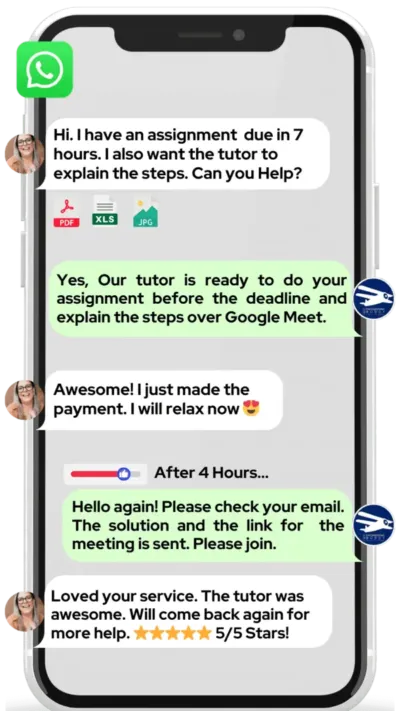
Unlike platforms where you fill out a form and wait, MEB responds in under a minute, 24/7. Tutor match takes under an hour. The $1 trial means you test before you commit. Everything runs over WhatsApp — no logins, no intake forms.
Study Plans (Pick One That Matches Your Goal)
Catch-up (1–2 weeks before deadline): intensive sessions focused on prompt analysis, single-draft rebuild, and final polish — used when a student has a draft that isn’t working and limited time. Exam prep equivalent for scholarship essays is the two-week sprint: two sessions in the first week, one final session 48 hours before submission. Ongoing support runs weekly through an application season, aligned to multiple scholarship deadlines across a semester. The tutor builds a specific sequence after the first session based on your prompt, deadline, and draft stage — nothing is assumed in advance.
Pricing Guide
Fees run $20–$40/hr for most undergraduate and graduate scholarship essay sessions. Highly competitive national fellowships — Fulbright, Rhodes, Gates Cambridge — involving research statements and multiple essay components may go up to $100/hr given the depth of preparation required.
Rate factors include the award’s competitiveness, where you are in the drafting process, your deadline, and tutor availability. For students targeting top fellowships or Ivy-equivalent awards, tutors with backgrounds in academic advising, graduate admissions, or published research are available at higher rates — share your specific award and MEB will match the tier to your application.
Availability tightens sharply in October and February when most national scholarship deadlines fall. Start with the $1 trial — 30 minutes, no registration, no commitment. WhatsApp MEB for a quick quote.
FAQ
Is scholarship essay writing hard?
The mechanics of writing aren’t the hard part. The challenge is producing a specific, genuine narrative that distinguishes you from equally qualified applicants — in 500 words or fewer. That’s a learnable skill, but it takes directed feedback to develop quickly.
How many sessions are needed?
Most students need 3–5 sessions for a single scholarship essay — one diagnostic and structural session, one or two drafting sessions, and a final polish. Students applying to multiple awards simultaneously often benefit from ongoing weekly support through the application season.
Can you help with scholarship essay drafts and application materials?
MEB tutoring is guided learning — the tutor helps you understand what works and why, then you write and submit your own essay. See our Academic Integrity policy and Why MEB page for full details on what we help with and what we don’t.
Will the tutor match my exact scholarship prompt and award type?
Yes. When you contact MEB, share the scholarship name, the specific prompt, and your deadline. Tutors are matched to your award category — undergraduate merit, national fellowship, departmental grant, or community foundation — not assigned generically.
What happens in the first session?
The tutor reads your prompt and any existing draft. They identify the two or three most significant structural or voice issues, explain exactly why they matter to a selection committee, and begin working through a fix with you live. You leave with a concrete action list for the next draft.
Is online tutoring as effective as in-person for scholarship essays?
For writing feedback, online is often more effective — the tutor works directly in your shared document in real time, which is faster and more precise than passing printed drafts back and forth. Students in the US, UK, Canada, Australia, and Gulf consistently report strong results with this format.
Can I get scholarship essay help at short notice — even the night before a deadline?
MEB operates 24/7. WhatsApp response averages under a minute. Tutor availability at very short notice depends on the time of year — October and February are the busiest periods — but same-day sessions are often possible. Contact MEB directly to check availability for your deadline.
What if my scholarship essay prompt is unusual or highly specific to my field?
Scholarship prompts vary widely — from “describe a challenge you overcame” to “explain your proposed research and its societal impact.” MEB covers research paper writing tutoring and argumentative writing tutoring alongside scholarship essays. If your prompt crosses into technical or research territory, a tutor with the relevant subject background is matched accordingly.
Do you offer group scholarship essay sessions?
No. All MEB sessions are 1:1. Scholarship essays are personal documents — group feedback sessions produce generic advice that doesn’t serve an individual applicant’s story or prompt. Every session is built around your specific essay and award.
How do I find a scholarship essay tutor in my city?
All MEB tutoring is online via Google Meet — location doesn’t limit your tutor options. Students across the US, UK, Canada, Australia, and the Gulf are matched with tutors based on subject expertise and availability, not geography.
How do I get started?
Start with the $1 trial — 30 minutes of live 1:1 tutoring or one essay section reviewed in full. Three steps: WhatsApp MEB with your scholarship name, prompt, and deadline → get matched with a verified tutor, usually within the hour → begin your first session.
What’s the difference between a scholarship essay and a personal statement?
A personal statement covers your broader academic and personal narrative, typically for university admission. A scholarship essay responds to a specific prompt set by a funding body, often narrower in scope and requiring a tighter argument. Many students need support with personal statement tutoring alongside scholarship writing — the drafting skills overlap but the strategy differs.
Trust & Quality at My Engineering Buddy
Every MEB tutor passes a subject-specific vetting process: degree verification, a live demo session assessed by MEB’s academic team, and ongoing review based on student feedback after each session. Tutors working on scholarship and application essays are assessed specifically on their understanding of selection criteria, not just their writing ability. Rated 4.8/5 across 40,000+ verified reviews on Google.
MEB tutoring is guided learning — you understand the work, then submit it yourself. For full details on what we help with and what we don’t, read our Academic Integrity policy and Why MEB.
MEB has been serving students across the US, UK, Canada, Australia, Gulf, and Europe since 2008 — across 2,800+ subjects. The essay writing category covers scholarship essays, analytical essay writing tutoring, statement of purpose tutoring, and dissertation writing tutoring, among many others. 52,000+ students have used MEB since 2008.
A common pattern our tutors observe is that students revise their scholarship essay six or seven times without changing the core problem — usually that the essay is about a topic rather than a person. The fastest path to a fundable draft is identifying that problem in the first session, not the fifth.
MEB’s tutoring methodology — diagnostic-first, then structured practice with real-time feedback — is described in full on the MEB Tutoring Methodology page. The same framework that works for exam subjects applies directly to high-stakes writing like scholarship applications.
Source: My Engineering Buddy, 2008–2025.
Explore Related Subjects
Students studying Scholarship Essay often also need support in:
- Expository Writing
- Persuasive Writing
- Reflective Essay Writing
- Cause and Effect Essay Writing
- Resume Writing
- Proofreading
- Creative Writing
- Law School Application Essays
Next Steps
Getting started is straightforward. Share your scholarship name, the specific prompt, and your deadline. Share your time zone and availability — MEB covers US, UK, Canada, Australia, and Gulf hours. MEB matches you with a verified scholarship essay tutor, usually within 24 hours. The first session starts with a diagnostic review of your prompt and draft so every minute is spent on what matters.
Before your first session, have ready:
- The scholarship name and the exact prompt (copy it in full)
- Any existing draft, even if it’s a rough paragraph
- Your submission deadline
The tutor handles the rest. Visit www.myengineeringbuddy.com for more on how MEB works.
WhatsApp to get started or email [email protected].
Try your first session for $1 — 30 minutes of live 1:1 tutoring or one essay section explained in full. No registration. No commitment. WhatsApp MEB now and get matched within the hour.
52,000+ Happy Students From Various Universities



How Much For Private 1:1 Tutoring & Hw Help?
Private 1:1 Tutoring and HW help Cost $20 – 35 per hour* on average.
Reviewed by Subject Expert
This page has been carefully reviewed and validated by our subject expert to ensure accuracy and relevance.