

Hire Verified & Experienced
Systematic Review Tutors
Email: [email protected]
4.8/5 40K+ session ratings collected on the MEB platform



Hire The Best Systematic Review Tutor
Top Tutors, Top Grades. Without The Stress!
Most students don’t fail systematic review because they lack intelligence. They fail because nobody ever walked them through PRISMA flow diagrams, heterogeneity assessment, or PICO frameworks in real time.
Systematic Review Tutor Online
A systematic review is a structured research synthesis method that identifies, screens, and critically appraises all relevant studies on a defined question, using explicit, reproducible protocols such as PRISMA or PROSPERO registration to minimise bias.
MEB offers 1:1 online tutoring and homework help in 2,800+ advanced subjects — including systematic review, as part of our Statistics tutoring category. Whether you’re stuck on protocol design, struggling to run a meta-analysis, or staring at a PRISMA diagram that makes no sense, an online Systematic Review tutor near me from MEB will work through it live with you. No recordings. No chatbots. A real expert, on screen, in your time zone.
- 1:1 online sessions tailored to your course syllabus or research protocol
- Expert-verified tutors with subject-specific knowledge in evidence synthesis
- Flexible time zones — US, UK, Canada, Australia, Gulf
- Structured learning plan built after a diagnostic session
- Ethical homework and assignment guidance — you understand the work before you submit
52,000+ students across the US, UK, Canada, Australia, and the Gulf have used MEB since 2008 — including students in Statistics subjects like Systematic Review, Biostatistics tutoring, and Epidemiology tutoring.
Source: My Engineering Buddy, 2008–2025.
How Much Does a Systematic Review Tutor Cost?
Most students pay $20–$40/hr for online Systematic Review tutoring with MEB. Graduate-level or highly specialised support — meta-analysis coding, GRADE evidence appraisal, protocol writing for publication — can run up to $100/hr. The $1 trial gets you 30 minutes of live 1:1 tutoring or a full explanation of one homework question.
| Level / Need | Typical Rate | What’s Included |
|---|---|---|
| Undergraduate / taught postgraduate | $20–$35/hr | 1:1 sessions, homework guidance |
| Advanced / PhD / specialist | $35–$100/hr | Expert tutor, meta-analysis depth |
| $1 Trial | $1 flat | 30 min live session or 1 HW question |
Tutor availability tightens around dissertation submission periods — particularly March–May and September–October in UK and Australian universities. Book early if your deadline is approaching.
WhatsApp MEB for a quick quote — average response time under 1 minute.
Who This Systematic Review Tutoring Is For
Systematic review sits at the intersection of research methodology, statistics, and critical appraisal. Students at every level hit different walls. MEB tutoring is built for:
- Masters and PhD students designing their first systematic review protocol or PROSPERO registration
- Public health, nursing, and clinical students at universities like Johns Hopkins, University of Toronto, UCL, University of Melbourne, and King’s College London who need to complete an evidence synthesis module
- Undergraduate researchers assigned a scoping review or narrative synthesis for the first time
- Students who submitted a draft and received feedback that their inclusion criteria, search strategy, or risk-of-bias assessment needs a full rework
- Students 4–6 weeks from a dissertation submission with significant gaps still to close in their review methodology
- Faculty and academic administrators seeking structured support for student cohorts working on evidence synthesis projects
If you need research methodology help alongside your systematic review work, MEB covers both.
1:1 Tutoring vs Self-Study vs AI vs YouTube vs Online Courses
Self-study works if you have a clear protocol and no methodology gaps — most students don’t. AI tools explain PRISMA steps quickly but can’t tell you why your specific PICO question is too broad or catch errors in your search string. YouTube covers the overview well and stops the moment your Cochrane risk-of-bias table doesn’t match your data. Online courses are structured but fixed — they won’t pause to debug your STATA forest plot. A 1:1 Systematic Review tutor from MEB works through your actual protocol, your actual database search results, your actual heterogeneity problem — live, in the session.
Outcomes: What You’ll Be Able To Do in Systematic Review
After working with a Systematic Review tutor online through MEB, students consistently report being able to write a complete PICO or PICOS framework from scratch, apply PRISMA 2020 reporting standards to their own study selection process, and explain their inclusion and exclusion criteria in a viva or dissertation defence without hesitation. You’ll be able to run a basic meta-analysis in RevMan or R, interpret I² heterogeneity statistics, and apply GRADE evidence quality ratings to a body of literature. Specific outcomes depend on your starting point, but the direction is always forward.
Based on feedback from 40,000+ sessions collected by MEB from 2022 to 2025, 58% of students improved by one full grade after approximately 20 hours of 1:1 tutoring in subjects like Systematic Review. A further 23% achieved at least a half-grade improvement.
Source: MEB session feedback data, 2022–2025.
At MEB, we’ve found that students who arrive with a half-built PRISMA flow diagram and three conflicting papers they can’t reconcile make the fastest progress — because there’s something real to work with. Bring your messiest draft. That’s exactly what the session is for.
What We Cover in Systematic Review (Syllabus / Topics)

Track 1: Protocol Design and Search Strategy
- Formulating a well-structured PICO or PICOS research question
- PROSPERO registration: what to include, how to write it
- Constructing Boolean search strings for PubMed, Embase, and CINAHL
- Database selection and grey literature sourcing
- Deduplication and reference management using Covidence or Zotero
- Defining and documenting inclusion and exclusion criteria
Core texts: Higgins et al., Cochrane Handbook for Systematic Reviews of Interventions (current edition); Booth, Sutton & Papaioannou, Systematic Approaches to a Successful Literature Review.
Track 2: Study Selection, Appraisal, and Data Extraction
- Screening titles and abstracts — inter-rater reliability and Cohen’s kappa
- Full-text screening and PRISMA 2020 flow diagram construction
- Risk-of-bias assessment: Cochrane RoB 2, ROBINS-I, Newcastle-Ottawa Scale
- Critical appraisal tools: CASP checklists for RCTs, cohort studies, qualitative research
- Data extraction table design and piloting
- Handling missing data and contacting study authors
Core texts: Liberati et al., PRISMA Statement (PLOS Medicine); Critical Appraisal Skills Programme (CASP) checklists.
Track 3: Synthesis — Meta-Analysis and Narrative Synthesis
- Fixed-effect vs random-effects models: when and why
- Forest plot construction and interpretation in RevMan and R
- Heterogeneity: I² statistic, Cochran’s Q, and what to do when heterogeneity is high
- Subgroup analysis and sensitivity analysis
- Funnel plots and publication bias assessment (Egger’s test)
- GRADE evidence quality framework: downgrading and upgrading domains
- Narrative synthesis when meta-analysis is not appropriate
Core texts: Borenstein et al., Introduction to Meta-Analysis; Guyatt et al., GRADE guidelines series. Students also use R programming tutoring alongside this track when conducting analyses in R.
What a Typical Systematic Review Session Looks Like
The tutor opens by checking where you stopped last time — usually the search strategy or screening stage. If you’ve been struggling to narrow a Boolean string across three databases, that’s the starting point. On screen, tutor and student pull up the actual search results together: refining MeSH terms, adjusting filters, tracking how the hit count changes with each modification. The tutor uses a digital pen-pad to annotate a PRISMA template or mark up an extraction table in real time. You replicate the process for a second database with the tutor watching, then explain your inclusion decision on a borderline paper. The session closes with a concrete task — finish screening 50 remaining abstracts, draft the risk-of-bias section for three included studies — and the next topic is noted before the call ends.
How MEB Tutors Help You with Systematic Review (The Learning Loop)
Diagnose: In the first session, the tutor reviews your protocol draft, your current search strings, and any screened studies you’ve already worked through. They identify exactly where the methodology breaks down — vague eligibility criteria, incomplete database coverage, or a synthesis plan that doesn’t match your data.
Explain: The tutor works through the problem live. If your forest plot shows I² at 78% and you don’t know what to do next, the tutor shows you — on screen, using worked examples from comparable reviews — what subgroup analysis looks like in that situation.
Practice: You attempt the next step with the tutor present. Screened abstracts, extracted data cells, GRADE judgements — whatever the current stage requires. The tutor doesn’t do it for you. They stay on screen while you work.
Feedback: Step-by-step error correction follows. The tutor explains not just what’s wrong but why a reviewer or dissertation examiner would flag it — and how to fix it before submission.
Plan: Before the session ends, the tutor sets the next section target and notes which topics need to be covered in the following session. If you have a submission date, the plan works backwards from it.
Sessions run over Google Meet. The tutor uses a digital pen-pad or iPad with Apple Pencil to annotate your documents, PRISMA diagrams, and analysis outputs directly. Before your first session, have your protocol draft, your database search history, and your dissertation or assignment brief ready to share. The first session is also your diagnostic — so the tutor understands exactly where to focus from session two onward. Start with the $1 trial — 30 minutes of live tutoring that also serves as your first diagnostic.
Students consistently tell us that the moment systematic review clicks is when they stop thinking of it as a literature search and start treating it as an auditable research process. That shift usually happens in the session when they build their first complete PRISMA flow from scratch.
Tutor Match Criteria (How We Pick Your Tutor)
Not every statistician can teach systematic review methodology. MEB matches on specifics.
Subject depth: Tutors are matched to your level — undergraduate scoping review, Masters evidence synthesis module, or PhD-level Cochrane-style protocol — and to your field (clinical, public health, social science, education research).
Tools: All sessions run on Google Meet with a digital pen-pad or iPad and Apple Pencil. Tutors who use RevMan, R, STATA, or Covidence professionally are matched when those tools are part of your workflow. Students needing SPSS tutoring or causal inference help alongside their review are matched to tutors with overlap in both areas.
Time zone: Matched to your region — US, UK, Gulf, Canada, Australia — so sessions happen at times that don’t require you to set a 3am alarm.
Goals: Whether you need to pass an evidence synthesis module, complete a dissertation chapter, or prepare for a viva defence, the tutor is briefed on your specific goal before the first session.
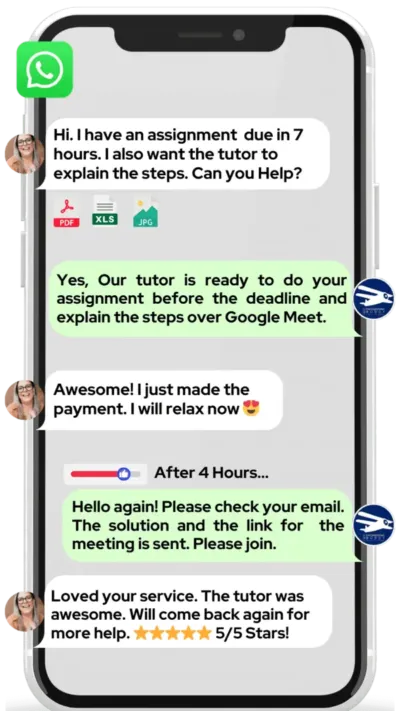
Unlike platforms where you fill out a form and wait, MEB responds in under a minute, 24/7. Tutor match takes under an hour. The $1 trial means you test before you commit. Everything runs over WhatsApp — no logins, no intake forms.
Study Plans (Pick One That Matches Your Goal)
After a first-session diagnostic, your tutor builds the sequence that fits your timeline. Catch-up plans (1–3 weeks) focus on closing the most critical methodology gaps before a submission deadline. Exam prep plans (4–8 weeks) build from protocol design through to synthesis and write-up in a structured sequence. Ongoing weekly support works best for PhD students running a review over several months, aligned to chapter deadlines as they fall.
Pricing Guide
Systematic Review tutoring starts at $20/hr for undergraduate and taught postgraduate level. Specialist support — meta-analysis in R, GRADE appraisal for clinical guidelines, PROSPERO protocol writing — runs $35–$100/hr depending on tutor background and timeline urgency.
Rate factors include your level, the complexity of your synthesis approach, your deadline, and tutor availability. Demand peaks around March–May and September–November when dissertation submissions cluster in US, UK, and Australian academic calendars.
For students targeting publication-ready systematic reviews, Cochrane collaboration submissions, or PhD examinations at research-intensive universities, tutors with active publishing records in evidence synthesis are available at higher rates — share your specific goal and MEB will match the tier to your ambition.
Start with the $1 trial — 30 minutes, no registration, no commitment. WhatsApp MEB for a quick quote.
Try your first session for $1 — 30 minutes of live 1:1 tutoring or one homework question explained in full. No registration. No commitment. WhatsApp MEB now and get matched within the hour.
FAQ
Is systematic review hard?
It’s methodologically demanding — more so than most students expect. The difficulty isn’t the concept but the execution: building a defensible search strategy, maintaining inter-rater reliability, and choosing the right synthesis method all require practice. Most students need structured guidance at least once through the process.
How many sessions are needed?
Students with a clear protocol but specific stuck points often need 3–6 sessions. Students building a review from scratch for a dissertation typically work with a tutor across 10–20 sessions over several weeks, depending on scope and submission date.
Can you help with homework and assignments?
MEB tutoring is guided learning — you understand the work, then submit it yourself. If your assignment asks you to complete a PRISMA flow, appraise three studies, or write a methods section, the tutor explains the process and works through it with you. See our Academic Integrity policy and Why MEB page for full details on what we help with and what we don’t.
Will the tutor match my exact syllabus or exam board?
Yes. Tutors are matched to your specific course requirements — whether that’s a Cochrane-style protocol for a clinical module, a scoping review for a public health programme, or a mixed-methods synthesis for an education research dissertation. Share your brief before the first session.
What happens in the first session?
The tutor reviews your current draft, search history, or assignment brief. They identify exactly where the methodology breaks down and set a clear priority list for the sessions ahead. It’s a diagnostic first, a teaching session second — so no time is wasted from session two onward.
Is online tutoring as effective as in-person?
For systematic review specifically, online works well — screen sharing lets tutor and student work through the same database, extraction table, or forest plot simultaneously. The digital pen-pad replicates whiteboard annotation. Most MEB students report preferring online for this subject.
Can I get Systematic Review help at midnight?
Yes. MEB operates 24/7 across time zones. WhatsApp MEB at any hour and you’ll typically receive a response within a minute. Session scheduling follows your availability — including evenings and weekends during dissertation crunch periods.
What if my systematic review uses a non-standard methodology, like a realist synthesis or meta-ethnography?
MEB has tutors with experience in qualitative and mixed-methods synthesis approaches — realist synthesis, meta-ethnography, thematic synthesis, and framework synthesis. When booking, specify your methodology so MEB can match a tutor with direct experience in that approach rather than a standard quantitative meta-analysis background.
What’s the difference between a systematic review and a scoping review, and which does MEB help with?
A systematic review answers a specific clinical or research question with formal quality appraisal and synthesis. A scoping review maps the breadth of a topic without formal appraisal. MEB tutors help with both — including the Joanna Briggs Institute framework commonly used for scoping reviews. Specify which you’re doing when you make contact.
Do you offer group Systematic Review sessions?
MEB is 1:1 only — all sessions are private, matched to your specific review and timeline. Group workshops are not offered. This is deliberate: systematic review problems are almost always specific to your protocol, your dataset, and your field.
How do I find a Systematic Review tutor in my city?
All MEB sessions are online, so location is irrelevant. Students in New York, London, Toronto, Sydney, and Dubai all access the same tutor pool. WhatsApp MEB with your subject, level, and time zone and you’ll be matched within the hour.
How do I get started?
Start with the $1 trial — 30 minutes of live tutoring or one assignment question explained in full. Three steps: WhatsApp MEB, get matched to a verified Systematic Review tutor, start your trial session. No forms, no waiting room, no commitment beyond $1.
Trust & Quality at My Engineering Buddy
Every MEB tutor goes through subject-specific vetting before taking a session. That means holding a relevant degree or higher, passing a live demo evaluation, and maintaining a feedback score that keeps them on the platform. Tutors covering systematic review and evidence synthesis are assessed on their knowledge of PRISMA, Cochrane methodology, risk-of-bias tools, and meta-analysis software — not just general research methods. Rated 4.8/5 across 40,000+ verified reviews on Google.
MEB tutoring is guided learning — you understand the work, then submit it yourself. For full details on what we help with and what we don’t, read our Academic Integrity policy and Why MEB.
MEB has served 52,000+ students across the US, UK, Canada, Australia, the Gulf, and Europe since 2008, covering 2,800+ subjects. Within Statistics, that includes clinical trials tutoring, hypothesis testing help, and Bayesian statistics tutoring — subjects that sit directly alongside systematic review in research-methods programmes at universities worldwide. See how MEB’s approach to teaching is structured on our tutoring methodology page.
MEB tutors work across the full evidence synthesis pipeline — from PROSPERO registration through to GRADE appraisal. If a step in your systematic review has stopped you, there is a tutor in the MEB pool who has been stuck in exactly that same place and knows how to get through it.
Source: My Engineering Buddy, 2008–2025.
Explore Related Subjects
Students studying Systematic Review often also need support in:
- Meta-Analysis
- Biostatistics
- Design of Experiments
- Multivariate Statistics
- Survival Analysis
- Predictive Modeling
- Computational Statistics
A common pattern our tutors observe is that students who struggle with systematic review are often also uncertain about the statistical concepts sitting underneath it — heterogeneity, effect sizes, confidence intervals. Fixing both at once is faster than fixing them separately, and MEB tutors are equipped to do exactly that.
Next Steps
Before your first session, have ready: your exam board and syllabus or course outline, a recent past paper attempt or homework question you struggled with, and your exam or deadline date. The tutor handles the rest.
- Share your course brief, current stage of your review, and your submission timeline
- Share your availability and time zone
- MEB matches you with a verified Systematic Review tutor — usually within the hour
The first session starts with a diagnostic so every minute from session two onward is used well.
Visit www.myengineeringbuddy.com for more on how MEB works.
WhatsApp to get started or email [email protected].
52,000+ Happy Students From Various Universities





How Much For Private 1:1 Tutoring & Hw Help?
Private 1:1 Tutoring and HW help Cost $20 – 35 per hour* on average.
Reviewed by Subject Expert
This page has been carefully reviewed and validated by our subject expert to ensure accuracy and relevance.
