




~1 min
Average Reply Time
~1 hour
To Be Matched With A Tutor
1 Trial
75% Find Their Tutor On The 1st Trial
$1
Your First 30 Minutes
Hire The Best Aviation Safety Tutor
Top Tutors, Top Grades. Without The Stress!
Related Subjects
One unresolved gap in SMS procedures or ICAO Annex 19 cost a student their FAA written — six weeks of work, gone.
Aviation Safety Tutor Online
Aviation Safety is the study of risk identification, accident prevention, and safety management systems in civil and military aviation. Grounded in ICAO standards and FAA/EASA regulatory frameworks, it equips students to assess hazards, apply SMS principles, and support safer flight operations.
If you searched for an Aviation Safety tutor near me, MEB connects you with a verified 1:1 online Aviation Safety tutor — someone who knows the difference between a hazard register and a bow-tie analysis, and can walk you through it live. MEB has delivered 1:1 online tutoring and homework help in 2,800+ advanced subjects since 2008. Sessions are built around your course, your exam board, and your deadline. You won’t repeat topics you already know.
- 1:1 online sessions tailored to your specific Aviation Safety course or syllabus
- Expert verified tutors with subject-specific knowledge in safety management, human factors, and regulatory frameworks
- Flexible time zones — US, UK, Canada, Australia, Gulf
- Structured learning plan built after a diagnostic session
- Ethical homework and assignment guidance — you understand the material before you submit
52,000+ students across the US, UK, Canada, Australia, and the Gulf have used MEB since 2008 — across 2,800+ subjects, from AP Calculus to A Level Music Technology to Data Science.
Source: My Engineering Buddy, 2008–2025.
How Much Does an Aviation Safety Tutor Cost?
Most Aviation Safety tutoring sessions run $20–$40/hr. Graduate-level or highly specialised topics — EASA Part-145, advanced SMS auditing, accident investigation methodology — can reach $70–$100/hr. The $1 trial gets you 30 minutes of live 1:1 tutoring or one full homework question explained.
| Level / Need | Typical Rate | What’s Included |
|---|---|---|
| Undergraduate / Certificate | $20–$40/hr | 1:1 sessions, homework guidance, SMS frameworks |
| Graduate / Advanced Specialist | $40–$100/hr | Expert tutor, accident investigation, regulatory depth |
| $1 Trial | $1 flat | 30 min live session or 1 homework question explained |
Tutor availability narrows during peak exam and assignment submission periods. Book early if your deadline is within six weeks.
WhatsApp MEB for a quick quote — average response time under 1 minute.
Who This Aviation Safety Tutoring Is For
Aviation Safety draws students from aerospace engineering, transport management, military aviation, and professional pilot programmes. The subject spans regulation, human factors, systems thinking, and statistical risk — and most students hit a wall somewhere in that range.
- Undergraduate and postgraduate students in aviation, aerospace engineering, or transport safety programmes at universities including Embry-Riddle, Cranfield, RMIT, TU Delft, and the University of Southern California
- Students retaking an Aviation Safety module after a first attempt that didn’t reach the required standard — with a conditional progression offer now at risk
- Professionals pursuing FAA, EASA, or ICAO-aligned certification programmes who need structured support alongside work commitments
- Students whose coursework or safety case report deadline is approaching within four weeks
- Those who understand the theory in isolation but struggle to apply SHELL, HFACS, or bow-tie analysis to case study questions
- Parents supporting a student through an aviation degree whose assignment feedback keeps pointing to the same conceptual gaps
Need aviation tutoring across the wider subject? MEB covers that too.
1:1 Tutoring vs Self-Study vs AI Tools
Self-study works well for building vocabulary and reading frameworks, but Aviation Safety hinges on applied judgment — knowing which model fits which accident scenario, and why the examiner expects that specific answer. Without feedback, students repeat the same reasoning errors across mock papers without realising it. AI tools can explain ICAO Annex 19 or summarise the Swiss Cheese Model quickly, but they cannot watch you attempt a safety case analysis in real time, spot the moment you misapply a layer of the SHELL model, and correct it before it becomes a habit. Human factors questions and accident investigation reports require the kind of back-and-forth that no static explanation can replace. MEB tutors bring live, structured feedback calibrated to your exact course — online flexibility without losing the rigour.
Outcomes: What You’ll Be Able To Do in Aviation Safety
After structured 1:1 Aviation Safety tutoring, students can apply the Safety Management System framework to real operational scenarios, not just define its four components from memory. You will analyse accident reports using HFACS or the Reason Model and identify contributory factors at each level with precision. Students learn to write a credible safety case argument — with a clear hazard log, risk matrix, and mitigation rationale — rather than producing a list of generic controls. You will explain the regulatory relationship between ICAO standards, national CAA rules, and airline operations manuals, and answer exam questions that move between those layers. Presenting a structured risk assessment in an oral viva or written assignment, with the correct terminology and logical sequence, becomes straightforward rather than stressful.
Supporting a student through Aviation Safety? MEB works directly with parents to set up sessions, track progress, and keep coursework on schedule. WhatsApp MEB — average response time is under a minute, 24/7.
Based on feedback from 40,000+ sessions collected by MEB from 2022 to 2025, 58% of students improved by one full grade after approximately 20 hours of 1:1 tutoring in a single subject. A further 23% achieved at least a half-grade improvement.
Source: MEB session feedback data, 2022–2025.
What We Cover in Aviation Safety (Syllabus / Topics)

Safety Management Systems (SMS)
- ICAO Annex 19 and the four components of SMS
- Hazard identification and risk assessment methodologies
- Safety performance indicators and safety targets
- Safety promotion, culture, and reporting systems
- Safety case development and bow-tie analysis
- Regulatory compliance: FAA SMS rule, EASA Part-SMS, CAA frameworks
Key references include Stolzer, Halford & Goglia’s Safety Management Systems in Aviation and the ICAO Safety Management Manual (Doc 9859), third and fourth editions.
Human Factors in Aviation
- The SHELL model: software, hardware, environment, liveware interactions
- Human Factors Analysis and Classification System (HFACS)
- Crew Resource Management and threat and error management
- Fatigue, situational awareness, and decision-making under pressure
- Automation and human-machine interface considerations
- Incident reporting culture: ASRS, CHIRP, mandatory vs voluntary systems
Core texts include Hawkins’ Human Factors in Flight and Reason’s Human Error, alongside EUROCONTROL human factors materials.
Accident Investigation and Risk Analysis
- Accident versus incident classification under ICAO Annex 13
- The Swiss Cheese Model and barrier analysis
- Fault tree analysis (FTA) and failure mode and effects analysis (FMEA)
- Reading and interpreting official accident investigation reports (NTSB, AAIB, BEA)
- Quantitative risk assessment: probability, severity matrices, risk tolerability
- Post-accident safety recommendations and implementation tracking
Students work with NTSB accident reports, AAIB bulletins, and texts such as Wood & Sweginnis’ Aircraft Accident Investigation for applied case study work.
What a Typical Aviation Safety Session Looks Like
The tutor opens by checking the previous topic — usually a bow-tie diagram or HFACS classification exercise the student attempted independently. If the hazard barriers were misplaced or the contributory factors were mapped to the wrong level, the tutor works through the error on screen using a digital pen-pad, annotating the diagram in real time so the student can see exactly where the reasoning broke down. Then the pair moves to the current topic — often a safety case structure or a quantitative risk matrix from a past paper. The student attempts the analysis first while the tutor watches, then the tutor corrects step by step and asks the student to explain the fix aloud. The session closes with a short NTSB report extract to review before next time, and the next topic — typically regulatory hierarchy or fatigue risk management systems — is noted for the following session.
How MEB Tutors Help You with Aviation Safety (The Learning Loop)
Diagnose: In the first session, the tutor identifies exactly where understanding breaks down — whether that’s the logic of ICAO’s risk matrix, the difference between a hazard and a consequence, or the structure of a written safety argument. No time is wasted on material you already know.
Explain: The tutor works through live examples using a digital pen-pad — annotating SHELL diagrams, building fault trees step by step, and showing how examiners expect each layer of a risk assessment to be written. Explanation is always paired with a worked case.
Practice: The student attempts the next problem while the tutor is present. This is where real learning happens — not watching, but doing, with immediate support available when the reasoning stalls.
Feedback: The tutor goes through every error line by line — not just marking it wrong, but showing which step caused the mark to be lost and how to restructure the answer. For Aviation Safety, this often means re-ordering the hazard-risk-mitigation sequence correctly.
Plan: Each session ends with a clear next step: the specific topic, the past paper question, or the section of the accident report to review before next time. Progress is tracked across sessions so no gap reopens.
Sessions run over Google Meet with a digital pen-pad or iPad and Apple Pencil for live annotation. Before the first session, share your course outline or exam board syllabus and any past paper or assignment you’ve already attempted. The tutor uses that to plan the diagnostic. Start with the $1 trial — 30 minutes of live tutoring that also serves as your first diagnostic.
At MEB, we’ve found that Aviation Safety students make the fastest progress when they stop reading about accident models and start applying them to real cases under timed conditions — even before they feel ready. The discomfort of getting it wrong in a session is far less costly than getting it wrong in the exam.
Tutor Match Criteria (How We Pick Your Tutor)
Every Aviation Safety tutor is matched to your specific course before the first session. Here is what MEB checks.
Subject depth: The tutor must have direct experience with the level and framework you’re studying — whether that’s an undergraduate SMS module, an EASA-aligned certification programme, or a postgraduate accident investigation course. General aerospace knowledge is not enough.
Tools: All sessions use Google Meet with a digital pen-pad or iPad and Apple Pencil for live diagram annotation — essential for working through HFACS charts, fault trees, and bow-tie analyses in real time.
Time zone: MEB covers New York, Los Angeles, Chicago, London, Dubai, Toronto, Sydney, Melbourne, and all major US, UK, Gulf, Canadian, Australian, and European time zones — including evenings and weekends.
Learning style: The tutor calibrates pace and approach from the first session — some students need conceptual grounding first; others learn fastest by attacking past paper questions immediately.
Communication: Clear English, adapted to the student’s level. No assumption that jargon is understood until demonstrated.
Goals: Whether you need to pass an end-of-year exam, complete a safety case assignment, reach a higher grade for programme progression, or build conceptual depth for research work — the tutor structures sessions around that specific target.
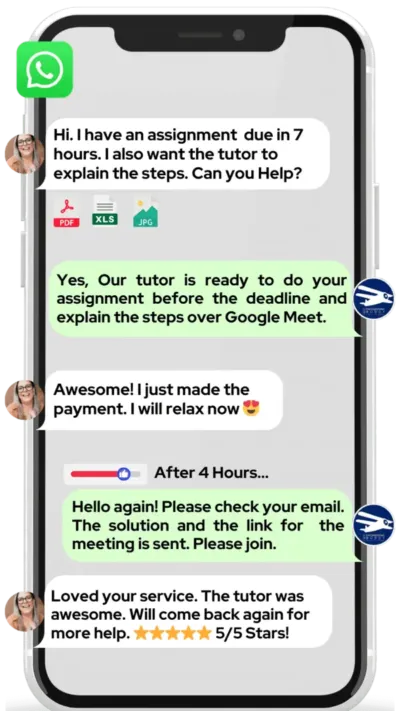
Unlike platforms where you fill out a form and wait, MEB responds in under a minute, 24/7. Tutor match takes under an hour. The $1 trial means you test before you commit. Everything runs over WhatsApp — no logins, no intake forms.
Study Plans (Pick One That Matches Your Goal)
The tutor builds the specific session sequence after the diagnostic, but most Aviation Safety students fall into one of three patterns: a catch-up plan covering one to three weeks of intensive work to close a specific gap before submission; an exam prep plan running four to eight weeks with structured past paper practice and timed safety case writing; or ongoing weekly support aligned to semester deadlines and coursework stages. Tell MEB your exam date or submission deadline and the tutor maps the plan from there.
Pricing Guide
Aviation Safety tutoring starts at $20/hr for undergraduate-level coursework and standard SMS topics. Graduate-level regulatory analysis, accident investigation methodology, and advanced risk quantification typically run $40–$100/hr depending on tutor specialism and session length.
Rate factors include the specific topic, your timeline, and tutor availability in your time zone. For students targeting roles at major aviation authorities, airlines, or defence contractors — or progressing to postgraduate research — tutors with professional industry or regulatory backgrounds are available at higher rates. Share your goal and MEB matches the tier to your ambition.
Availability tightens during peak assignment and exam periods. Start with the $1 trial — 30 minutes, no registration, no commitment. WhatsApp MEB for a quick quote.
MEB tutors bring subject depth most platforms cannot match — not generalists reading from a textbook, but specialists who have worked with or studied the exact frameworks your course uses, from ICAO Doc 9859 to AAIB investigation methodology.
Source: My Engineering Buddy, 2008–2025.
Try your first session for $1 — 30 minutes of live 1:1 tutoring or one homework question explained in full. No registration. No commitment. WhatsApp MEB now and get matched within the hour.
FAQ
Is Aviation Safety hard?
It is conceptually demanding rather than mathematically intensive. Students most often struggle with applying theoretical models — HFACS, bow-tie, Swiss Cheese — to case study scenarios under exam conditions. That applied step is exactly where 1:1 Aviation Safety tutoring makes the clearest difference.
How many sessions are needed?
Most students see a clear improvement in their ability to structure safety arguments and apply risk frameworks within six to ten sessions. Students with larger gaps or a full module to cover typically need twelve to twenty sessions. The diagnostic in session one gives a clearer projection.
Can you help with homework and assignments?
Yes. MEB tutors explain the concepts and frameworks behind your Aviation Safety assignment so you can produce and submit the work yourself. MEB tutoring is guided learning — you understand the work, then submit it yourself. For full details on what we help with and what we don’t, read our Academic Integrity policy and Why MEB.
Will the tutor match my exact syllabus or exam board?
Yes. Before the first session, MEB confirms your course outline, institution, and exam or assessment format. Tutors are matched on that basis — not assigned generically. If your course follows EASA, FAA, ICAO, or a university-specific framework, the tutor will have worked within it.
What happens in the first session?
The first session is a diagnostic. The tutor identifies your strongest and weakest areas across the syllabus, reviews any past paper or assignment you share, and builds the session plan from there. No time is spent on topics you already understand clearly.
Is online Aviation Safety tutoring as effective as in-person?
For Aviation Safety, yes. The subject requires diagram annotation, report analysis, and structured written argument — all of which work well with Google Meet and a digital pen-pad. Most students find the flexibility of online sessions improves consistency and reduces missed sessions.
Can I get Aviation Safety tutoring help at midnight or on weekends?
Yes. MEB operates 24/7. Tutors are available across time zones including the US, UK, Gulf, and Australia, which means evening and late-night sessions are standard. WhatsApp MEB at any hour and the average response time is under one minute.
What if I don’t get on with my assigned Aviation Safety tutor?
Tell MEB via WhatsApp. Tutor reassignment is straightforward and handled quickly — usually within the same day. There is no obligation to continue with a tutor who is not the right match for your learning style or course level.
How do I find an Aviation Safety tutor in my city?
MEB sessions are fully online, so city location is not a constraint. Students in New York, London, Dubai, Toronto, Sydney, and across Europe and the Gulf all access the same pool of verified Aviation Safety tutors. Time zone matching ensures sessions fit your schedule.
How do I get started?
The $1 trial gives you 30 minutes of live 1:1 Aviation Safety tutoring or one homework question fully explained. Three steps: WhatsApp MEB, get matched to a verified tutor within the hour, start your trial session. No registration. No forms.
Trust & Quality at My Engineering Buddy
Every MEB tutor goes through subject-specific screening: a live demo session evaluation, background verification, and ongoing review based on student feedback. Aviation Safety tutors hold degrees in aerospace engineering, aviation management, or related disciplines, and many have professional experience in safety management, accident investigation, or regulatory compliance. Rated 4.8/5 across 40,000+ verified reviews on Google.
MEB tutoring is guided learning — you understand the work, then submit it yourself. For full details on what we help with and what we don’t, read our Academic Integrity policy. See also MEB’s tutoring methodology for how sessions are structured from diagnostic to final review.
MEB has served 52,000+ students across the US, UK, Canada, Australia, the Gulf, and Europe since 2008 — across 2,800+ subjects. Students who need aircraft maintenance tutoring, aircraft structures help, or 1:1 flight mechanics tutoring will find specialist tutors across the full range of aerospace disciplines.
18 years. 52,000+ students. 2,800+ subjects. MEB has been running since 2008 — before most tutoring platforms existed — and the session structure, tutor vetting, and WhatsApp-first model have been refined across every one of those years.
Source: My Engineering Buddy, 2008–2025.
Students consistently tell us that the moment things shifted was when they stopped summarising what an accident model says and started using it to explain what went wrong in a specific case — and why different decisions would have broken the chain. That shift rarely happens from a textbook alone.
Explore Related Subjects
Students studying Aviation Safety often also need support in:
- Aerodynamics
- Aerospace Propulsion
- Aircraft Design
- Aircraft Performance
- Propulsion
- Gas Dynamics
- Compressible Flow
Next Steps
Getting started takes less than five minutes. Here is what to do:
- Share your exam board or course outline, the topic or assignment you are struggling with, and your deadline or exam date
- Share your availability and time zone
- MEB matches you with a verified Aviation Safety tutor — usually within 24 hours, often within the hour
Before your first session, have ready: your course syllabus or module guide, a recent past paper attempt or homework question you struggled with, and your exam or submission deadline. The tutor handles the rest.
Visit www.myengineeringbuddy.com to read more about how MEB runs sessions, vets tutors, and structures the diagnostic process.
WhatsApp to get started or email [email protected].
52,000+ Happy Students From Various Universities



Reviewed by Subject Expert
This page has been carefully reviewed and validated by our subject expert to ensure accuracy and relevance.

