~1 min
Average Reply Time
~1 hour
To Be Matched With A Tutor
30 Min Trial
75% Find Their Tutor On The 1st Trial
$20-35+/hr
Premium Yet Affordable Learning
Most students hit a wall in Social Communication not because the concepts are hard — but because no one ever showed them how message, context, and relationship interact in real time.
Social Communication Tutor Online
Social Communication is the study of how individuals exchange meaning within social contexts, examining verbal and nonverbal cues, relational dynamics, and cultural norms. It equips students to analyse, design, and deliver effective messages across interpersonal, group, and mediated settings.
If you’ve searched for a Social Communication tutor near me, MEB offers something better than local — a 1:1 online Social Communication tutor available across the US, UK, Canada, Australia, and the Gulf, matched to your exact course, your exam board, and your current gap. Whether you’re working through a Communication & Media Studies programme or a standalone Social Communication module, the sessions are built around what you don’t yet understand — not a generic syllabus run-through.
- 1:1 online sessions tailored to your course or syllabus
- Expert-verified tutors with subject-specific knowledge in social and relational communication
- Flexible time zones — US, UK, Canada, Australia, Gulf
- Structured learning plan built after a diagnostic session
- Ethical homework and assignment guidance — you understand the work, then submit it yourself
52,000+ students across the US, UK, Canada, Australia, and the Gulf have used MEB since 2008 — including students in Communication & Media Studies subjects like Social Communication, Interpersonal Communication, and Communication Theory.
Source: My Engineering Buddy, 2008–2025.
How Much Does a Social Communication Tutor Cost?
Most Social Communication tutoring sessions run $20–$40/hr. Graduate-level or highly specialised work can reach $100/hr. Not sure where you fit? Start with the $1 trial — 30 minutes live, or one assignment question explained in full, before you commit to anything.
| Level / Need | Typical Rate | What’s Included |
|---|---|---|
| Standard (most undergrad levels) | $20–$35/hr | 1:1 sessions, assignment guidance |
| Advanced / Graduate / Specialist | $35–$100/hr | Expert tutor, research depth, theory-heavy modules |
| $1 Trial | $1 flat | 30 min live session or 1 homework question fully explained |
Tutor availability tightens during peak submission periods. Book early if you have a deadline within three weeks.
WhatsApp MEB for a quick quote — average response time under 1 minute.
Who This Social Communication Tutoring Is For
Social Communication sits at the crossroads of theory and practice. Students struggle when they can’t connect frameworks like Goffman’s impression management or Watzlawick’s axioms to their actual assignments — or when they understand the theory but freeze writing the analysis.
- Undergraduate students in Communication, Sociology, Psychology, or Media programmes with a Social Communication module
- Graduate students working on theses or research involving relational, health, or organisational communication
- Students retaking after a failed first attempt, particularly those who lost marks on reflective or analytical essays
- Students with a university conditional offer depending on this grade
- Parents watching a child’s confidence drop alongside their grades in writing-heavy communication modules
- Students at institutions including the University of Southern California, University of Leeds, University of Amsterdam, University of Toronto, Macquarie University, and NYU who need targeted 1:1 support
1:1 Tutoring vs Self-Study vs AI vs YouTube vs Online Courses
Self-study works if you’re disciplined — but Social Communication assignments require structured argument, and there’s no one to tell you why your analysis is circular. AI tools give fast definitions of Shannon-Weaver or CMC theory, but can’t diagnose why your essay keeps missing the mark. YouTube explains concepts at a surface level and stops when you need to apply Habermas to a real case. Online courses are structured but fixed — no adjustment for your specific assignment brief. With a 1:1 online Communication Studies tutor from MEB, sessions are live, calibrated to your exact brief and course readings, and errors are caught and corrected in the moment — not after you’ve submitted.
Outcomes: What You’ll Be Able To Do in Social Communication
After working with an MEB Social Communication tutor, students consistently apply theoretical frameworks — from Symbolic Interactionism to Speech Act Theory — to real texts and scenarios without prompting. You’ll analyse relational dynamics in group and dyadic settings, write structured reflective essays that hold an argument from introduction to conclusion, present findings on communication breakdowns with evidence-backed reasoning, and explain the role of nonverbal cues and context in message interpretation. These aren’t generic writing skills. They’re specific to how Social Communication is assessed.
Supporting a student through Social Communication? MEB works directly with parents to set up sessions, track progress, and keep coursework on schedule. WhatsApp MEB — average response time is under a minute, 24/7.
Based on feedback from 40,000+ sessions collected by MEB from 2022 to 2025, 58% of students improved by one full grade after approximately 20 hours of 1:1 tutoring in subjects like Social Communication. A further 23% achieved at least a half-grade improvement.
Source: MEB session feedback data, 2022–2025.
What We Cover in Social Communication (Syllabus / Topics)

Foundations of Social Communication
- Models of communication: Shannon-Weaver, transactional, interactional
- Verbal and nonverbal communication — functions, channels, and interference
- Goffman’s dramaturgical model and impression management
- Watzlawick’s five axioms of communication
- Speech Act Theory — illocutionary and perlocutionary acts
- Proxemics, paralanguage, and kinesics in social settings
Core texts: Communication: A Critical/Cultural Introduction (Burgess & Green); The Presentation of Self in Everyday Life (Goffman); introductory chapters from Griffin’s A First Look at Communication Theory.
Interpersonal and Relational Communication
- Relationship development models — Knapp’s staircase model
- Conflict communication and face-negotiation theory
- Active listening, empathic response, and feedback cycles
- Power, identity, and self-disclosure in dyadic communication
- Computer-mediated communication (CMC) and social media dynamics
- Health communication — patient-provider interaction and communication barriers
Core texts: Interpersonal Communication: Everyday Encounters (Wood); A First Look at Communication Theory (Griffin, Ledbetter & Sparks); selected chapters from OpenStax Psychology 2e for social psychology foundations.
Communication in Groups, Organisations, and Society
- Group communication dynamics — roles, norms, groupthink
- Organisational communication structures and culture
- Intercultural communication — Hofstede’s dimensions, high/low context
- Habermas’s theory of communicative action
- Media framing and agenda-setting in public discourse
- Critical approaches — race, gender, and power in communication
Core texts: Organisational Communication (Miller); Intercultural Communication in Contexts (Martin & Nakayama); Habermas, The Theory of Communicative Action Vol. 1.
At MEB, we’ve found that students who struggle with Social Communication essays usually have a strong intuition about what went wrong in a communication event — they just don’t know which framework to reach for, or how to structure an argument around it. That’s the gap a tutor closes in the first two sessions.
What a Typical Social Communication Session Looks Like
The tutor opens by checking what you covered since the last session — often a reading on Knapp’s relational model or a draft paragraph from your current assignment. You work through the problem together on screen: if it’s an essay, the tutor annotates your draft in real time using a digital pen-pad, showing exactly where your argument loses its thread or where you’ve described rather than analysed. If it’s theory application, you and the tutor work through a real scenario — say, a workplace conflict case — mapping it to face-negotiation theory step by step. You replicate the reasoning yourself while the tutor watches. The session closes with a concrete task: rewrite one body paragraph using the corrected argument structure, ready to review next time. Get interpersonal communication tutoring alongside Social Communication if your module covers both.
How MEB Tutors Help You with Social Communication (The Learning Loop)
Diagnose: In the first session, the tutor identifies exactly where your understanding breaks down — whether that’s confusing descriptive and analytical writing, misapplying a theoretical model, or struggling to build a coherent argument from evidence. Most gaps are specific and fixable.
Explain: The tutor works through the concept live — using a digital pen-pad to annotate, diagram communication models, or mark up your draft. You see the reasoning built step by step, not handed to you as a finished answer.
Practice: You attempt a similar problem or paragraph while the tutor is present. This is where the real learning happens — not during the explanation, but during your first attempt after it.
Feedback: The tutor gives step-by-step error correction, naming exactly where marks are lost and why. For Social Communication, this often means distinguishing between description, analysis, and critical evaluation — the three levels most marking rubrics distinguish.
Plan: Next topics are mapped, a reading is assigned, and your next session is tied to a specific deadline or gap. There’s no drifting between sessions.
Sessions run on Google Meet. Tutors use a digital pen-pad or iPad with Apple Pencil. Before your first session, share your module outline, your most recent assignment brief, and any marked work you’ve received back. The first session is also your diagnostic — start with the $1 trial and it serves both purposes at once.
Students consistently tell us that the moment Social Communication clicks is when they stop treating it as a writing task and start treating it as an argument construction task. The frameworks are tools — not content to summarise. Our tutors make that shift happen early.
Tutor Match Criteria (How We Pick Your Tutor)
MEB doesn’t assign the first available tutor. Match criteria are specific.
Subject depth: The tutor must have studied or taught Social Communication at the level you’re working at — undergraduate theory modules, graduate research seminars, or health and organisational communication tracks.
Tools: Every tutor uses Google Meet and a digital pen-pad or iPad with Apple Pencil. No exceptions — annotation is central to how communication concepts are taught at MEB.
Time zone: Matched to your region — US, UK, Gulf, Canada, or Australia — so sessions can run consistently, not just when someone happens to be awake.
Goals: Whether you need communication theory help for a specific exam, assignment guidance through a reflective portfolio, or conceptual depth for a research dissertation, the tutor is matched to that goal — not a generic profile.
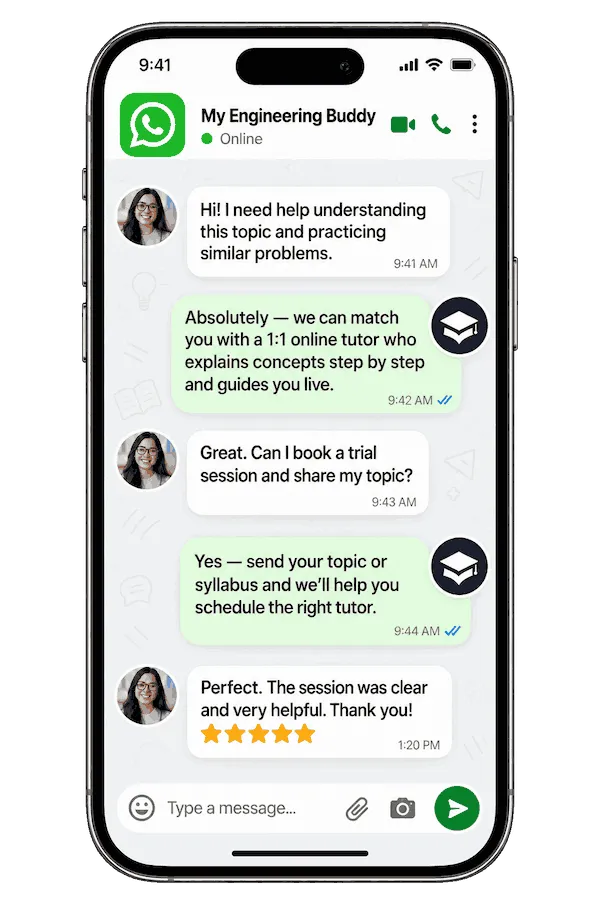
Unlike platforms where you fill out a form and wait, MEB responds in under a minute, 24/7. Tutor match takes under an hour. The $1 trial means you test before you commit. Everything runs over WhatsApp — no logins, no intake forms.
Study Plans (Pick One That Matches Your Goal)
The tutor builds your specific session sequence after the diagnostic. Three starting points are common: catch-up (1–3 weeks before a submission deadline, targeting the single biggest gap), exam or assessment prep (4–8 weeks of structured work through frameworks, essay technique, and past paper practice), or weekly support through the semester, aligned to your lecture schedule and assignment calendar. Students studying mass communication alongside Social Communication often opt for the semester support plan to keep both modules on track.
Pricing Guide
Social Communication tutoring starts at $20/hr for standard undergraduate modules. Graduate-level theory, dissertation support, or health and organisational communication specialisms run $35–$100/hr depending on tutor background and topic complexity. Rates also vary by timeline — urgent sessions within 48 hours may carry a premium, and tutor availability is tighter during peak essay submission periods.
For students targeting postgraduate programmes at research-intensive institutions, tutors with academic publishing or professional communication backgrounds are available at higher rates — share your specific goal and MEB matches the tier to what you actually need.
Start with the $1 trial — 30 minutes, no registration, no commitment. WhatsApp MEB for a quick quote.
MEB has matched students with Social Communication tutors across 40+ countries since 2008. Sessions are available around the clock — not just during business hours in one time zone.
Source: My Engineering Buddy, 2008–2025.
A common pattern our tutors observe is that Social Communication students who read widely but still lose marks in essays are usually summarising theory rather than using it as a lens. One session spent restructuring a single paragraph — not rewriting it, restructuring it — often shifts the grade by a full band.
FAQ
Is Social Communication hard?
It’s conceptually demanding because it asks you to apply abstract theory to concrete human behaviour — and most students are assessed on both accuracy and analytical depth simultaneously. The reading load is heavy. The writing demands a level of critical argument many students haven’t practised before.
How many sessions are needed?
Most students see a meaningful improvement in assignment quality within 4–6 sessions. Students targeting a full-grade improvement across a module or closing a significant theory gap typically work across 12–20 sessions. The diagnostic clarifies this in the first meeting.
Can you help with homework and assignments?
MEB tutoring is guided learning — you understand the work, then submit it yourself. A tutor will work through the theory with you, help you structure your argument, and explain where your analysis needs to deepen. See our Academic Integrity policy and Why MEB page for full details on what we help with and what we don’t.
Will the tutor match my exact syllabus or exam board?
Yes. Share your module outline, assignment brief, or course name before the first session. The tutor is matched based on that specific content — not a generic Social Communication profile. This applies whether your course uses US, UK, Australian, or European frameworks.
What happens in the first session?
The tutor runs a diagnostic — reviewing your current understanding of key frameworks, identifying where your essays lose marks, and mapping the gap between where you are and where your assessment criteria require you to be. The session plan follows from that, not from a pre-set curriculum.
Is online tutoring as effective as in-person?
For Social Communication — which centres on written analysis, essay construction, and framework application — online tutoring with real-time annotation is often more effective. The tutor marks up your work on screen as you watch, which is harder to replicate at a table with a pen.
Can I get Social Communication help at midnight or on weekends?
Yes. MEB operates 24/7 across all time zones. Students in the Gulf, Australia, and the US West Coast regularly book late-night or early-morning sessions. WhatsApp response typically comes within a minute regardless of the hour.
What if I don’t like my assigned tutor?
Tell MEB via WhatsApp and a replacement is arranged — usually within the same day. The $1 trial is specifically designed so you can assess tutor fit before committing to a full session block. No awkward forms to fill in.
Do you cover health communication and organisational communication within Social Communication?
Yes. These are two of the most common specialisms within Social Communication modules at undergraduate and graduate level. Tutors with specific backgrounds in health communication, patient-provider interaction, and organisational communication dynamics are available on request.
What’s the difference between Social Communication and Communication Studies — and can MEB help with both?
Social Communication focuses on relational, contextual, and interpersonal dimensions of how people exchange meaning. Communication Studies is broader, covering media, rhetoric, and institutional communication. Many students take modules from both areas. MEB covers both — and can match a single tutor across them if your course overlaps.
How do I get started?
Three steps: WhatsApp MEB, share your module name and current gap, get matched with a verified tutor. Your first session is the $1 trial — 30 minutes live or one question explained in full. No registration, no intake form, no commitment beyond the dollar.
Trust & Quality at My Engineering Buddy
MEB tutors are screened before they teach a single session. Every tutor completes a live demo evaluation assessed by the MEB academic team — not a multiple-choice application. Subject-specific vetting means a Social Communication tutor is assessed on their ability to explain relational theory, annotate an essay argument, and distinguish analysis from description in student work. Degrees and professional experience in communication, media, psychology, or sociology are required at the relevant level. Ongoing session feedback keeps the standard consistent. Rated 4.8/5 across 40,000+ verified reviews on Google.
MEB tutoring is guided learning — you understand the work, then submit it yourself. For full details on what we help with and what we don’t, read our Academic Integrity policy and Why MEB.
MEB has served 52,000+ students across the US, UK, Canada, Australia, the Gulf, and Europe since 2008 — across 2,800+ subjects. Within Communication & Media Studies, that includes students needing intercultural communication tutoring, nonverbal communication help, and public speaking tutoring alongside their Social Communication modules. See our tutoring methodology for how sessions are structured across disciplines.
Try your first session for $1 — 30 minutes of live 1:1 tutoring or one homework question explained in full. No registration. No commitment.
WhatsApp MEB now
and get matched within the hour.
Explore Related Subjects
Students studying Social Communication often also need support in:
- Advertising
- Broadcast Journalism
- Communication Skills
- Cultural Studies
- Journalism
- Personal Development
- Visual Communication
From foundational communication models to advanced critical theory, MEB tutors cover the full range of Social Communication topics taught across US, UK, Canadian, and Australian university programmes.
Source: My Engineering Buddy, 2008–2025.
Next Steps
Before your first session, have ready: your module outline or assignment brief, a recent piece of marked work you struggled with, and your submission or exam date. The tutor handles the rest.
- Share your exam board or university, the hardest component of your Social Communication module, and your current timeline
- Share your availability and time zone — sessions are available 24/7
- MEB matches you with a verified tutor, usually within 24 hours
Visit www.myengineeringbuddy.com for more on how MEB works.
WhatsApp to get started or email [email protected].
Reviewed by Subject Expert
This page has been carefully reviewed and validated by our subject expert to ensure accuracy and relevance.