




~1 min
Average Reply Time
~1 hour
To Be Matched With A Tutor
30 Min Trial
75% Find Their Tutor On The 1st Trial
$20-35+/hr
Premium Yet Affordable Learning
Struggling with magma rheology, eruption forecasting, or volcanic hazard assessment? Most students hit a wall here — not from lack of effort, but lack of the right explanation.
Volcanology Tutor Online
Volcanology is the scientific study of volcanoes, magma, lava, and related geological phenomena. It equips students to analyse eruptive processes, volcanic hazards, and subsurface magmatic systems using field, laboratory, and geophysical methods.
MEB connects you with a specialist Volcanology tutor online — someone who knows igneous petrology, volcanic stratigraphy, and hazard modelling, not just general geology. Whether you’re working through an undergraduate Earth Science module or a graduate-level research unit, MEB matches you to a tutor who fits your exact course. If you’ve been searching for a Volcanology tutor near me, online 1:1 sessions deliver the same depth — without the geography problem.
- 1:1 online sessions tailored to your course syllabus and institution
- Expert-verified tutors with subject-specific knowledge in volcanology and igneous systems
- Flexible time zones — US, UK, Canada, Australia, Gulf covered
- Structured learning plan built after a diagnostic first session
- Ethical homework and assignment guidance — you understand the work, then submit it yourself
52,000+ students across the US, UK, Canada, Australia, and the Gulf have used MEB since 2008 — including students in Earth Science subjects like Volcanology, Geophysics, and Geology.
Source: My Engineering Buddy, 2008–2025.
How Much Does a Volcanology Tutor Cost?
Most Volcanology tutoring sessions run $20–$40/hr. Graduate-level or highly specialised topics — such as volcanic geophysics or magma chamber modelling — can reach up to $100/hr depending on tutor expertise. Not sure yet? Start with the $1 trial: 30 minutes of live 1:1 tutoring or one full homework question explained.
| Level / Need | Typical Rate | What’s Included |
|---|---|---|
| Standard (most undergrad levels) | $20–$35/hr | 1:1 sessions, homework guidance |
| Advanced / Graduate / Specialist | $35–$100/hr | Expert tutor, research-depth topics |
| $1 Trial | $1 flat | 30 min live session or 1 homework question |
Tutor availability tightens during exam periods — particularly in April–May and November–December. Book early if your deadline is fixed.
WhatsApp MEB for a quick quote — average response time under 1 minute.
Who This Volcanology Tutoring Is For
Volcanology attracts students who are genuinely curious about the Earth — but the gap between field enthusiasm and exam performance can be brutal. If you can describe a stratovolcano but can’t calculate lava viscosity or model pyroclastic flow behaviour, you need targeted help, not more lectures.
- Undergraduate Earth Science or Geology students with a Volcanology module
- Graduate and Masters students working on volcanic hazard assessment or igneous petrology dissertations
- Students 4–6 weeks from an exam with significant gaps still to close in topics like eruption dynamics or volcanic stratigraphy
- Students retaking after a failed first attempt at a volcanology or igneous systems unit
- Parents supporting a student whose confidence has dropped alongside their marks in Earth Science
- PhD candidates needing support with geophysical or geochemical modelling frameworks specific to volcanic systems
Students in this programme typically go on to further study or roles at institutions like the United States Geological Survey, the British Geological Survey, ETH Zürich, the University of Bristol, or the University of Auckland — all with active volcanology research groups.
At MEB, we’ve found that volcanology students often know the vocabulary cold — it’s the quantitative side that trips them up. Calculating eruption rates, reading seismic data for magma movement, applying the Volcanic Explosivity Index correctly — that’s where a tutor who’s done this work before makes the fastest difference.
1:1 Tutoring vs Self-Study vs AI vs YouTube vs Online Courses
Self-study works if you’re disciplined, but volcanology problems — especially quantitative hazard modelling — don’t self-correct. AI tools give fast answers but can’t watch you work through a viscosity calculation and catch where your reasoning broke down. YouTube covers eruption types well but stops cold when you’re stuck on a specific dataset interpretation. Online courses move at a fixed pace with no adjustment for your actual gaps. 1:1 tutoring with MEB is live, matched to your exact syllabus, and corrects errors in the moment — including the kind of conceptual confusions between effusive and explosive eruption mechanisms that cost marks on exam papers.
Outcomes: What You’ll Be Able To Do in Volcanology
After working with an MEB Volcanology tutor, you’ll be able to apply the Volcanic Explosivity Index correctly across real eruptive case studies, analyse seismic and geodetic signals to interpret magma movement, model lava flow behaviour using rheological parameters, explain the relationship between tectonic setting and volcanic type in both written and oral formats, and present volcanic hazard assessments with the kind of precision that distinguishes strong exam answers from average ones.
Based on feedback from 40,000+ sessions collected by MEB from 2022 to 2025, 58% of students improved by one full grade after approximately 20 hours of 1:1 tutoring in subjects like Volcanology. A further 23% achieved at least a half-grade improvement.
Source: MEB session feedback data, 2022–2025.
Supporting a student through Volcanology? MEB works directly with parents to set up sessions, track progress, and keep coursework on schedule. WhatsApp MEB — average response time is under a minute, 24/7.
What We Cover in Volcanology (Syllabus / Topics)

Volcanic Processes and Eruption Dynamics
- Magma formation, composition, and differentiation
- Effusive vs explosive eruption mechanisms
- Pyroclastic density currents and surge deposits
- Lava flow rheology and emplacement models
- Volcanic gas emissions and their role in eruption style
- Eruption column dynamics and tephra dispersal
Core texts for this track include Volcanoes by Francis and Oppenheimer and The Physics of Volcanoes by Sparks et al. — your tutor will reference whichever your course uses.
Volcanic Hazards and Risk Assessment
- Volcanic Explosivity Index (VEI) — calculation and application
- Lahar, debris avalanche, and sector collapse modelling
- Volcanic ash impact on aviation and infrastructure
- Probabilistic hazard assessment frameworks
- Monitoring networks: seismic, geodetic, and gas-based methods
- Case studies: Pinatubo 1991, Eyjafjallajökull 2010, Merapi ongoing activity
Recommended references include Volcanic Hazards: A Sourcebook on the Effects of Eruptions by Blong and USGS open-access hazard reports.
Igneous Petrology and Geochemistry of Volcanic Systems
- Classification of volcanic rocks: basalt, andesite, rhyolite, dacite
- Trace element geochemistry and tectonic discrimination diagrams
- Magma mixing, contamination, and fractional crystallisation
- Thermobarometry and geochronology in volcanic contexts
- Subduction zone vs. hotspot vs. rift-related volcanism
Standard texts for this track include Igneous Petrology by McBirney and Geochemistry by Railsback — your tutor will align sessions to your module readings.
What a Typical Volcanology Session Looks Like
The tutor opens by checking the previous topic — say, how well you understood magma viscosity and its effect on eruption explosivity. If there are gaps, those get fixed first, briefly and directly. Then you move into the session’s main focus — maybe working through a volcanic hazard scenario requiring you to apply VEI calculations, interpret seismic waveform data for magma ascent, or reconstruct an eruption sequence from a tephra deposit log. The tutor uses a digital pen-pad to annotate diagrams in real time; you replicate the reasoning or explain it back. By the end, you have a specific practice problem to attempt before next time — and the next topic is already mapped.
How MEB Tutors Help You with Volcanology (The Learning Loop)
Diagnose: In the first session, the tutor identifies exactly where your understanding breaks down — whether that’s the quantitative side (viscosity equations, VEI calculations), conceptual gaps (why subduction produces more explosive eruptions than rifting), or exam technique (how to structure a hazard assessment answer under time pressure).
Explain: The tutor works through problems live on screen using a digital pen-pad — annotating cross-sections, sketching magma chamber diagrams, and walking through geochemical calculations step by step. Not a lecture. A worked example you can follow and question.
Practice: You attempt the next problem with the tutor present. This is where most learning actually happens — doing it, not watching it.
Feedback: The tutor catches errors immediately and explains precisely why a mark would be lost — whether it’s a missing unit, a flawed assumption about eruption style, or an incomplete hazard chain in your written answer.
Plan: Each session ends with a clear next topic and a specific task. Progress is tracked session to session, not assumed.
Sessions run on Google Meet. Tutors use a digital pen-pad or iPad with Apple Pencil for annotations. Before your first session, have your course syllabus or module outline ready, along with any past paper attempts or problem sets you’ve struggled with. The first session begins with a diagnostic — so the tutor understands your starting point before covering any new material. Start with the $1 trial — 30 minutes of live tutoring that also serves as your first diagnostic.
Students consistently tell us that the biggest shift in volcanology isn’t learning new content — it’s finally seeing how the quantitative and conceptual sides connect. Once a student understands why magma viscosity controls explosivity at a physical level, the rest of eruption dynamics starts to follow.
Tutor Match Criteria (How We Pick Your Tutor)
MEB doesn’t assign the next available tutor. Match is based on fit.
Subject depth: Tutors are vetted for specific knowledge in volcanology — not just general geology or Earth Science. The tutor assigned to a volcanic hazard modelling session will have worked with those frameworks directly.
Tools: Every tutor uses Google Meet with a digital pen-pad or iPad and Apple Pencil — required for diagram-heavy subjects like volcanology.
Time zone: Matched to your region — US, UK, Gulf, Canada, or Australia. No 3am sessions unless you want them.
Goals: Whether you need exam score improvement, conceptual depth for a dissertation, or help with specific assignment questions, the tutor is matched to your actual objective — not a generic syllabus.
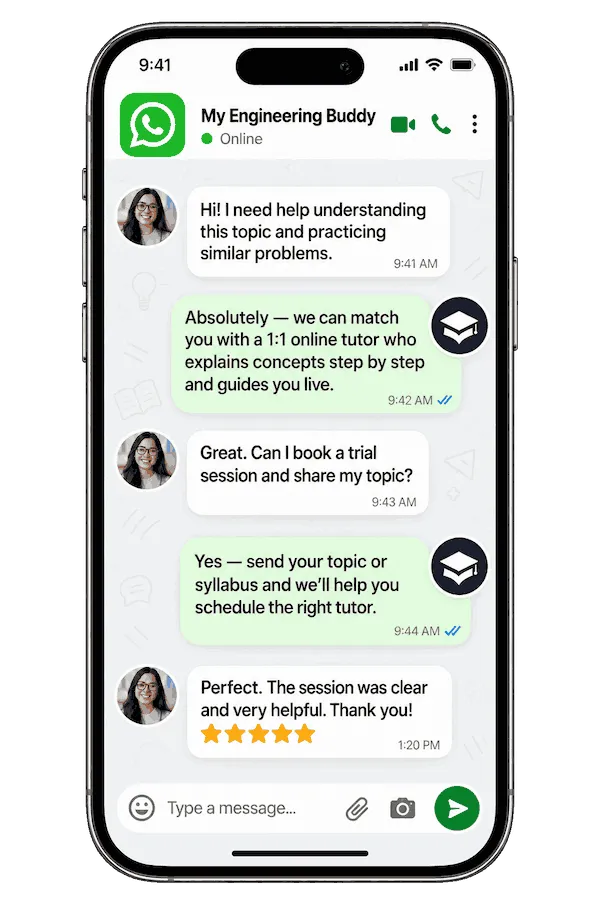
Unlike platforms where you fill out a form and wait days, MEB responds in under a minute, 24/7. Tutor match takes under an hour. The $1 trial means you test before you commit. Everything runs over WhatsApp — no logins, no intake forms.
Study Plans (Pick One That Matches Your Goal)
Catch-up (1–3 weeks): for students with specific gaps — viscosity calculations, hazard assessment structure, or igneous classification — that need closing fast before a submission or exam. Exam prep (4–8 weeks): structured revision across all syllabus tracks, with past paper practice built in from week two. Weekly support: ongoing sessions aligned to your module calendar, covering new content as it arrives. After the diagnostic, the tutor maps the specific sequence — you don’t need to plan it yourself.
Pricing Guide
Volcanology tutoring runs $20–$40/hr for most undergraduate levels. Graduate-level topics — research methods, volcanic geophysics, advanced geochemical modelling — can reach up to $100/hr depending on tutor background and topic complexity.
Rate factors include: your level, how specialised the topic is, your timeline, and tutor availability at your preferred hours.
For students targeting graduate programmes at institutions with strong volcanology research groups — Bristol, ETH Zürich, Michigan Tech, or Auckland — tutors with active research experience in volcanic systems are available at higher rates. Share your target and MEB will match the tier to your goal.
Availability tightens in April–May and October–November. If your exam date is fixed, don’t wait.
Start with the $1 trial — 30 minutes, no registration, no commitment. WhatsApp MEB for a quick quote.
MEB has been matching students to subject-specialist tutors since 2008 — across 2,800+ subjects, with a 4.8/5 rating and 40,000+ verified reviews. The platform was built for students who need the right expert, not just any available tutor.
Source: My Engineering Buddy, 2008–2025.
FAQ
Is Volcanology hard?
Volcanology combines physical chemistry, fluid dynamics, geophysics, and field interpretation. Students who struggle typically hit the quantitative side — viscosity calculations, VEI application, or geochemical discrimination diagrams. That’s exactly where a specialist tutor closes the gap fastest.
How many sessions are needed?
Most students see clear improvement within 8–12 sessions. Students with a specific gap to close before an exam often need fewer — 4–6 focused sessions on a targeted topic can shift exam performance noticeably. The diagnostic session sets the number.
Can you help with homework and assignments?
MEB tutoring is guided learning — you understand the work, then submit it yourself. The tutor explains the method and reasoning; you apply it. See our Academic Integrity policy and Why MEB page for full details on what we help with and what we don’t.
Will the tutor match my exact syllabus or exam board?
Yes. Before matching, MEB asks for your institution, module name, and course outline. Tutors are selected based on familiarity with your specific content — not just general volcanology knowledge.
What happens in the first session?
The tutor runs a short diagnostic — asking you to work through a problem or explain a concept — to identify your real starting point. No time is wasted on topics you already know. The session plan follows from what the diagnostic reveals.
Is online tutoring as effective as in-person?
For volcanology, yes — often more so. Digital pen-pad annotation makes diagram work clearer than a physical whiteboard. Sessions are recorded on request. You get a tutor matched to your exact syllabus, not whoever happens to be local.
Do you cover field-based volcanology or just theory?
MEB tutors support both. For field-based components, sessions focus on interpreting field data — reading stratigraphic logs, analysing sample descriptions, structuring field reports. For theoretical work, the full range of eruption dynamics, geochemistry, and hazard modelling is covered.
Can a volcanology tutor help with dissertation or thesis work?
Yes. MEB supports Masters and PhD students working on volcanic systems research — including literature review structure, methodology sections covering geophysical or geochemical methods, and results interpretation. Tutors with active research backgrounds in volcanology are available for this level.
What if my volcanology module includes seismology or geochemistry?
Common crossover. MEB can provide seismology tutoring and geochemistry tutoring alongside Volcanology support. If your module spans multiple Earth Science disciplines, let MEB know — the tutor match accounts for the full scope.
How do I find a Volcanology tutor in my city?
You don’t need to. MEB’s online tutors cover US, UK, Canada, Australia, Gulf, and Europe — matched by subject expertise and time zone, not geography. Sessions run on Google Meet; tutor quality is the same whether you’re in Houston or Hamburg.
Can I get Volcanology help at midnight?
Yes. MEB operates 24/7 across time zones. WhatsApp MEB at any hour — average response is under a minute. Tutor availability at late hours varies by region, but the match process starts immediately regardless of when you contact us.
How do I get started?
WhatsApp MEB, share your course details, and get matched to a tutor — usually within the hour. The first session is the $1 trial: 30 minutes of live 1:1 tutoring or one full question explained. Three steps: WhatsApp → matched → start trial.
Trust & Quality at My Engineering Buddy
Every MEB tutor goes through subject-specific screening — not a general aptitude test. For volcanology, that means verified knowledge of igneous petrology, volcanic hazard frameworks, and geophysical monitoring methods. Tutors complete a live demo evaluation before being matched to any student, and ongoing session feedback is reviewed to maintain standard. Rated 4.8/5 across 40,000+ verified reviews on Google.
MEB tutoring is guided learning — you understand the work, then submit it yourself. For full details on what we help with and what we don’t, read our Academic Integrity policy and Why MEB.
MEB has served 52,000+ students since 2008 across 2,800+ subjects — including Earth Science, Geomorphology tutoring, and Mineralogy tutoring — across the US, UK, Canada, Australia, Gulf, and Europe. The platform was built specifically for advanced and specialist subjects where generalist tutors fall short.
A common pattern our tutors observe is that students who come to volcanology from a general geology background have strong descriptive knowledge but weak quantitative foundations. Two or three focused sessions on the mathematical side — viscosity, eruption rate, VEI — typically rebalance that within a fortnight.
Explore Related Subjects
Students studying Volcanology often also need support in:
MEB covers 2,800+ subjects — from foundational Earth Science modules to graduate-level volcanic systems research. Expert tutors, matched to your syllabus, available 24/7 across every major time zone.
Source: My Engineering Buddy, 2008–2025.
Next Steps
Before your first session, have ready: your exam board and syllabus (or course outline), a recent past paper attempt or homework you struggled with, and your exam or deadline date. The tutor handles the rest.
- Share your module name, institution, and hardest topic
- Share your availability and time zone
- MEB matches you with a verified Volcanology tutor — usually within 24 hours
The first session starts with a diagnostic so every minute counts from the start.
Visit www.myengineeringbuddy.com for more on how MEB works.
WhatsApp to get started or email [email protected].
Reviewed by Subject Expert
This page has been carefully reviewed and validated by our subject expert to ensure accuracy and relevance.




