Hire Verified & Experienced
Digital Forensics Tutors
Email: [email protected]
4.8/5 40K+ session ratings collected on the MEB platform



Hire The Best Digital Forensics Tutor
Top Tutors, Top Grades. Without The Stress!
Most students who fail digital forensics coursework lose marks not on theory — but on chain of custody errors, misread file signatures, or incomplete acquisition reports.
Digital Forensics Tutor Online
Digital forensics is the recovery, preservation, and analysis of digital evidence from devices and networks for use in legal or investigative contexts, equipping students to apply structured examination methods across criminal, civil, and corporate cases.
If you’ve searched for a Digital Forensics tutor near me and ended up here, you’re in the right place. MEB provides 1:1 online tutoring and homework help in 2,800+ advanced subjects — including Forensic Science and its specialist branches. Your tutor works through your exact course structure, not a generic syllabus. One session can close a gap that weeks of lecture notes haven’t touched.
- 1:1 online sessions tailored to your course or institutional syllabus
- Expert-verified tutors with hands-on digital forensics and cybersecurity backgrounds
- Flexible time zones — US, UK, Canada, Australia, Gulf covered 24/7
- Structured learning plan built after a diagnostic session
- Ethical homework and assignment guidance — you understand the work before you submit
52,000+ students across the US, UK, Canada, Australia, and the Gulf have used MEB since 2008 — including students in Forensic Science subjects like Digital Forensics, Computer Forensics, and Forensic Psychology.
Source: My Engineering Buddy, 2008–2025.
How Much Does a Digital Forensics Tutor Cost?
Most students pay $20–$40/hr for digital forensics tutoring. Graduate-level or specialist topics — such as advanced malware reverse engineering or mobile device forensics — may reach $70–$100/hr. A $1 trial gets you 30 minutes of live 1:1 tutoring or a full explanation of one homework question.
| Level / Need | Typical Rate | What’s Included |
|---|---|---|
| Standard (undergraduate, most modules) | $20–$40/hr | 1:1 sessions, homework guidance |
| Advanced / Graduate / Specialist | $40–$100/hr | Expert tutor, niche depth, research support |
| $1 Trial | $1 flat | 30 min live session or 1 homework question |
Tutor availability tightens around semester deadlines and end-of-year project submissions. Book early if you’re within six weeks of a major assessment.
WhatsApp MEB for a quick quote — average response time under 1 minute.
Who This Digital Forensics Tutoring Is For
Digital forensics covers a wide range of students — from undergraduates writing their first forensic acquisition report to postgraduates working on network intrusion analysis for a dissertation. If your course involves tools like FTK, Autopsy, or Wireshark and the lab work isn’t clicking, a tutor makes the difference fast.
- Undergraduate students in computer science, cybersecurity, or criminal justice taking a digital forensics module
- Students retaking after a failed first attempt — common with report-writing and chain of custody components
- Postgraduate and Masters students needing support with research methodology or tool-specific analysis
- Students with a coursework submission deadline approaching and specific gaps in file system or memory forensics
- Parents supporting an undergraduate through a technically demanding cybersecurity or forensics programme
- Students preparing for professional certifications such as EnCE, CHFI, or GCFE who need structured concept review
Students attending universities including the University of Maryland, Purdue, University of Strathclyde, Macquarie University, and institutions in the UAE and Canada regularly use MEB for digital forensics support. The $1 trial is available regardless of where you’re enrolled.
1:1 Tutoring vs Self-Study vs AI vs YouTube vs Online Courses
Self-study works if you’re disciplined, but digital forensics lab reports and tool outputs don’t self-correct. AI tools explain concepts quickly but can’t walk you through an actual Autopsy case file or tell you exactly where your acquisition methodology went wrong. YouTube handles overviews well — it stops when you hit a specific tool error or a report-structure question. Online courses are structured but move at a fixed pace with no live feedback. 1:1 tutoring with MEB is calibrated to your exact module, catches errors in real time, and focuses the session on what your assessor actually marks — not generic forensics content.
Outcomes: What You’ll Be Able To Do in Digital Forensics
After working with an MEB digital forensics tutor online, students consistently report closing specific technical gaps — not just feeling better prepared. You’ll be able to apply correct acquisition procedures using tools like FTK Imager or dd, analyse file system artefacts including MFT entries and registry hives, explain chain of custody requirements in court-admissible terms, write forensic examination reports that meet institutional or professional standards, and present findings on network traffic analysis using Wireshark in a way that holds up to examiner scrutiny. These aren’t generic outcomes — they map directly to what digital forensics assessors mark you on.
Based on feedback from 40,000+ sessions collected by MEB from 2022 to 2025, 58% of students improved by one full grade after approximately 20 hours of 1:1 tutoring in subjects like Digital Forensics. A further 23% achieved at least a half-grade improvement.
Source: MEB session feedback data, 2022–2025.
Try your first session for $1 — 30 minutes of live 1:1 tutoring or one homework question explained in full. No registration. No commitment. WhatsApp MEB now and get matched within the hour.
What We Cover in Digital Forensics (Syllabus / Topics)

Track 1: Foundations and Evidence Handling
- Principles of digital forensics: identification, preservation, analysis, presentation
- Chain of custody: documentation, handling, and court admissibility standards
- Legal frameworks: search and seizure law, rules of evidence (varies by jurisdiction)
- Write-blocking hardware and software — purpose, correct use, common errors
- Forensic image acquisition: dd, FTK Imager, EnCase — method selection and verification
- Hashing and verification: MD5, SHA-1, SHA-256 — confirming image integrity
- Forensic report writing: structure, objectivity, examiner testimony preparation
Key references include Digital Forensics with Open Source Tools (Altheide & Carvey) and Guide to Computer Forensics and Investigations (Nelson, Phillips & Steuart).
Track 2: File System and Artefact Analysis
- FAT32, NTFS, APFS, and ext4 file system structures — inode tables, MFT entries, allocation
- Deleted file recovery: carving techniques, slack space, unallocated cluster analysis
- Windows artefacts: registry hives, prefetch files, LNK files, event logs
- Browser and email artefacts: history, cache, cookies, PST/OST parsing
- Metadata extraction: EXIF data, document properties, timestamp analysis
- Autopsy and Sleuth Kit: case creation, keyword search, timeline analysis
- Mobile device forensics: logical vs physical acquisition, app data extraction
Recommended reading: The Art of Memory Forensics (Ligh et al.) and File System Forensic Analysis (Carrier) — standard across most university-level modules on this computer forensics track.
Track 3: Network and Memory Forensics
- Packet capture and analysis: Wireshark filters, TCP stream reconstruction
- Network logs: firewall logs, IDS/IPS alerts, DHCP and DNS logs
- Volatile memory acquisition: WinPmem, LiME — live vs dead acquisition tradeoffs
- Memory analysis with Volatility: process listing, network connections, injected code detection
- Malware identification: static vs dynamic analysis, strings, PE header inspection
- Incident response integration: triage, timeline creation, lateral movement tracing
- Cloud forensics: log acquisition from AWS/Azure/GCP, jurisdiction and data sovereignty issues
Core references: The Art of Memory Forensics (Ligh et al.) and Network Forensics: Tracking Hackers Through Cyberspace (Davidoff & Ham). Students working on forensic engineering investigations often overlap with this track.
Platforms, Tools & Textbooks We Support
Digital forensics is tool-heavy. MEB tutors work directly with students using the platforms common to university labs and professional practice. Sessions run on Google Meet with a shared screen so the tutor can see your actual tool output — not just explain it in the abstract.
- Acquisition tools: FTK Imager, dd, EnCase, Guymager
- Analysis platforms: Autopsy, Sleuth Kit, Volatility, Magnet AXIOM
- Network analysis: Wireshark, NetworkMiner, tcpdump
- Mobile forensics: Cellebrite UFED (concept), MOBILedit
- Operating environments: KALI Linux, SIFT Workstation, Windows forensic lab setups
- Report writing: structured report templates aligned to ACPO, NIST, or SWGDE guidelines
What a Typical Digital Forensics Session Looks Like
The tutor opens by checking the previous topic — usually where the student left off on file system artefact analysis or a partially completed acquisition report. The student shares their screen: an Autopsy case file, a Wireshark capture, or a draft report. The tutor uses a digital pen-pad to annotate specific outputs — pointing to MFT entry anomalies or a broken chain of custody step — and asks the student to explain their reasoning before correcting it. The student then attempts a new task: carving deleted files from a practice image, or writing an exhibit note for a specific artefact. The session ends with a precise practice task set and the next topic noted — typically memory forensics or network log interpretation.
At MEB, we’ve found that digital forensics students make the fastest progress when the tutor works directly inside the student’s actual lab environment — not a cleaned-up demo. Seeing the real error message or the actual Autopsy output is what makes correction stick.
How MEB Tutors Help You with Digital Forensics (The Learning Loop)
Diagnose: In the first session, the tutor identifies exactly where understanding breaks down — whether that’s misapplication of hashing during acquisition, confusion over file system structures, or weak report writing that loses marks on evidence presentation.
Explain: The tutor works live problems on screen using a digital pen-pad. For digital forensics, this means walking through actual tool output — annotating an Autopsy timeline, labelling a Wireshark packet, or structuring a chain of custody document step by step.
Practice: The student attempts the same type of problem with the tutor present. In digital forensics, this might mean running an acquisition on a practice image and narrating the process — so the tutor can catch procedural errors before they become assessment errors.
Feedback: The tutor corrects errors step by step and explains exactly why marks would be lost — not just what went wrong, but what the examiner or court would find unacceptable. This is where most students report the biggest shift.
Plan: At the end of each session, the tutor notes the next topic in sequence and sets a specific task. Progress is tracked session to session — not left to the student to self-monitor.
Sessions run over Google Meet. The tutor uses a digital pen-pad or iPad with Apple Pencil to annotate tool outputs and report drafts in real time. Before your first session, have your course syllabus, a recent assignment or lab report you struggled with, and your submission or exam date ready. The first session is also your diagnostic — start with the $1 trial and use those 30 minutes to map exactly where the gaps are.
Students often tell us the first session fixes more than three weeks of re-reading lecture notes — because the tutor finds the actual misunderstanding, not the symptom of it.
Source: My Engineering Buddy, aggregated session feedback.
Tutor Match Criteria (How We Pick Your Tutor)
MEB doesn’t assign whoever is available. Every tutor is matched against four criteria.
Subject depth: The tutor must have demonstrable experience at your level — undergraduate module, postgraduate dissertation, or professional certification prep. A tutor covering basic Autopsy use is not the same as one who can work through Volatility memory analysis or cloud forensics log interpretation.
Tools: Sessions run on Google Meet with a digital pen-pad or iPad and Apple Pencil. The tutor must be familiar with the specific tools your course uses — FTK Imager, Autopsy, Wireshark, Volatility, or others.
Time zone: Matched to your region — US, UK, Gulf, Canada, or Australia. 24/7 availability means you’re not waiting for business hours.
Goals: Whether you need exam preparation, report-writing support, homework guidance, or research-level depth for a dissertation, the tutor is selected to match that specific need.
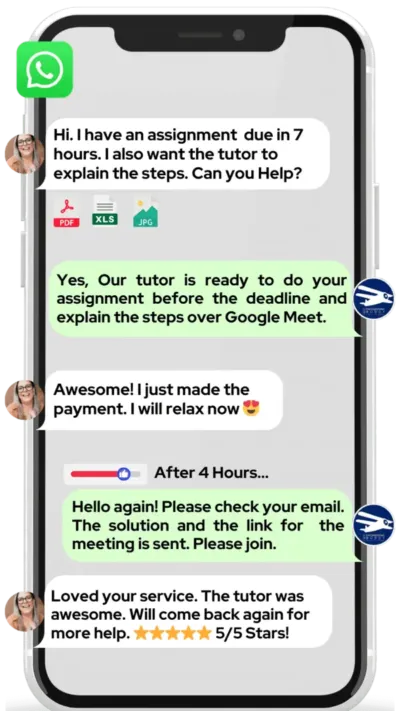
Unlike platforms where you fill out a form and wait, MEB responds in under a minute, 24/7. Tutor match takes under an hour. The $1 trial means you test before you commit. Everything runs over WhatsApp — no logins, no intake forms.
Study Plans (Pick One That Matches Your Goal)
After the diagnostic session, the tutor builds your sequence. Three common structures: a catch-up plan (1–3 weeks) for students with a specific gap to close before a submission deadline; an exam or coursework prep plan (4–8 weeks) for structured coverage of the full module assessment; and weekly ongoing support aligned to your semester timetable and lab schedule. Students working toward certifications like EnCE or CHFI typically use a custom plan built around the certification body’s topic domains. The tutor sets the sequence — you don’t need to plan it yourself.
Pricing Guide
Digital forensics tutoring starts at $20/hr for standard undergraduate modules. Graduate-level support, dissertation guidance, or specialist topics like cloud forensics or malware analysis typically run $50–$100/hr depending on tutor expertise and timeline urgency.
Rate factors include: module level, specific tools required, how close you are to a deadline, and tutor availability. Rates at the higher end apply when you need a tutor with active industry or research experience in digital investigations.
For students targeting competitive graduate programmes or professional roles in law enforcement, corporate investigations, or incident response, tutors with hands-on case or lab backgrounds are available — share your specific goal and MEB will match the tier to your needs.
Availability tightens at the end of semester. If you’re within six weeks of a submission, book now. Start with the $1 trial — 30 minutes, no registration, no commitment. WhatsApp MEB for a quick quote.
Students consistently tell us that the hardest part of getting started is knowing what to ask. That’s exactly what the first session handles. You don’t need to have it figured out — you need to show up with your course outline and your most recent failed attempt.
FAQ
Is Digital Forensics hard?
It’s technically demanding. The combination of file system knowledge, tool proficiency, legal standards, and report writing trips up most students at least once. The tool outputs are often unfamiliar at first — an experienced tutor shortens that learning curve significantly.
How many sessions are needed?
Most students close a specific module gap in 3–6 sessions. Students preparing across a full semester module or a professional certification typically book 10–20 hours. The diagnostic session gives a clearer estimate after the first 30 minutes.
Can you help with homework and assignments?
Yes — MEB tutoring is guided learning. You understand the work, then submit it yourself. This applies to lab reports, acquisition exercises, case analysis write-ups, and coursework. See our Academic Integrity policy and Why MEB page for full details on what we help with and what we don’t.
Will the tutor match my exact syllabus or exam board?
Yes. Before matching, MEB asks for your course outline, institution, and specific assessment components. Whether your module follows NIST guidelines, ACPO principles, or a custom institutional framework, the tutor is matched to your specific requirements — not a generic digital forensics curriculum.
What happens in the first session?
The first session is a diagnostic. The tutor identifies exactly where your understanding breaks down — tools, concepts, report writing, or legal frameworks. From there, the session continues productively and a plan is set for subsequent work. Have your syllabus and a recent piece of work ready.
Is online tutoring as effective as in-person?
For digital forensics, online is often better. Screen sharing lets the tutor see your actual tool environment — your Autopsy case file, your Wireshark capture, your draft report. A whiteboard in a classroom can’t replicate that. MEB tutors use digital pen-pads to annotate outputs in real time.
Can you help at midnight or over a weekend?
Yes. MEB operates 24/7. Students in the US, UK, Gulf, and Australia regularly book sessions outside standard business hours. WhatsApp is the fastest way to reach MEB — average response time is under a minute regardless of the time.
What if I don’t connect with my assigned tutor?
Request a different tutor. MEB will rematch you. The $1 trial exists precisely for this — if the first session doesn’t feel right, you’ve lost $1, not $200. Most students stay with the first match; when they don’t, a new one is arranged within hours.
Do you cover professional certifications like EnCE or CHFI?
Yes. MEB tutors support students preparing for EnCE (EnCase Certified Examiner), CHFI (Computer Hacking Forensic Investigator), GCFE, and related credentials. Preparation focuses on the domain areas specific to each certification’s exam structure, which varies by issuing body.
How do I tell whether my digital forensics report will pass?
Most report failures come down to four issues: incomplete chain of custody documentation, missing hash verification steps, conclusions not supported by the artefact evidence, or incorrect tool methodology descriptions. A tutor can review a draft report and identify these gaps before submission.
Can a tutor help with Autopsy, Wireshark, or Volatility specifically?
Yes. MEB tutors work directly inside these tools during sessions. Screen sharing means the tutor sees your actual case environment — not a hypothetical. Tool-specific help covers case setup, analysis workflow, output interpretation, and documenting findings correctly for your assessment.
How do I get started?
Start with the $1 trial — 30 minutes of live digital forensics tutoring or one assignment question explained in full. Three steps: WhatsApp MEB, get matched with a tutor (usually within an hour), then start your trial session. No registration required.
Trust & Quality at My Engineering Buddy
Every MEB tutor goes through subject-specific vetting — not just a general interview. For digital forensics, that means demonstrated knowledge of acquisition methodology, file system analysis, and forensic report standards, plus a live demo evaluation before they work with any student. Ongoing session feedback is reviewed to keep quality consistent. Rated 4.8/5 across 40,000+ verified reviews on Google. MEB has been operating since 2008 and serves 52,000+ students across the US, UK, Canada, Australia, the Gulf, and Europe.
MEB tutoring is guided learning — you understand the work, then submit it yourself. For full details on what we help with and what we don’t, read our Academic Integrity policy and Why MEB.
MEB covers 2,800+ subjects including the full range of Forensic Science disciplines. Students in forensic toxicology tutoring, forensic pathology help, and financial forensics tutoring regularly work alongside digital forensics students — often across connected coursework modules or shared programme requirements. The same tutor-vetting and diagnostic process applies across every subject. Learn more about our approach at our tutoring methodology page.
MEB has operated since 2008 — before most current tutoring platforms existed. That length of time in one specialist niche produces a tutor network and a feedback loop that newer services simply haven’t had time to build.
Source: My Engineering Buddy, 2008–2025.
Explore Related Subjects
Students studying Digital Forensics often also need support in:
- Forensic Accounting
- Forensic Biology and Serology
- Forensic Chemistry
- Forensic Linguistics
- Forensic DNA Fingerprinting
- Questioned Document Examination
- Toxicology
Next Steps
Getting started takes under a minute. Here’s what to do:
- Share your course outline or syllabus, the specific topic or tool you’re stuck on, and your submission or exam date
- Share your time zone and availability — MEB covers all major regions 24/7
- MEB matches you with a verified digital forensics tutor, usually within an hour
- Your first session opens with a diagnostic — every minute is used on what actually matters for your assessment
Before your first session, have ready:
- Your course syllabus or module guide (or the certification domain list if applicable)
- A recent assignment, lab report, or practice image you struggled with
- Your submission deadline or exam date — the tutor plans around it from session one
Visit www.myengineeringbuddy.com for more on how MEB works.
WhatsApp to get started or email [email protected].
52,000+ Happy Students From Various Universities



How Much For Private 1:1 Tutoring & Hw Help?
Private 1:1 Tutoring and HW help Cost $20 – 35 per hour* on average.
Reviewed by Subject Expert
This page has been carefully reviewed and validated by our subject expert to ensure accuracy and relevance.