

Hire Verified & Experienced
Forensic Physics Tutors
Email: [email protected]
4.8/5 40K+ session ratings collected on the MEB platform



Hire The Best Forensic Physics Tutor
Top Tutors, Top Grades. Without The Stress!
Most students who struggle with Forensic Physics aren’t weak at science — they’ve never been shown how physics connects to real crime scene evidence.
Forensic Physics Tutor Online
Forensic Physics applies physical principles — mechanics, acoustics, optics, and fluid dynamics — to the analysis of crime scenes and legal investigations, equipping students to reconstruct events and interpret physical evidence in court-admissible contexts.
If you’ve searched for a Forensic Physics tutor near me and found nothing useful, you’re not alone. This is a niche field that sits at the intersection of forensic science and applied physics — and most generic tutoring platforms don’t cover it at all. MEB does, with verified tutors who know the specific topics that appear in your course, your exam board, and your lab reports. No waiting, no intake forms — just a live session that starts with where you actually are.
- 1:1 online sessions tailored to your exact course syllabus and university module
- Expert-verified tutors with subject-specific knowledge in forensic and applied physics
- Flexible time zones — US, UK, Canada, Australia, Gulf covered
- Structured learning plan built after a diagnostic in the first session
- Ethical homework and assignment guidance — you understand the work before you submit it
52,000+ students across the US, UK, Canada, Australia, and the Gulf have used MEB since 2008 — including students in Forensic Science subjects like Forensic Physics, forensic chemistry, and forensic ballistics.
Source: My Engineering Buddy, 2008–2025.
How Much Does a Forensic Physics Tutor Cost?
Most Forensic Physics sessions are priced at $20–$40/hr. Graduate-level or highly specialised topics — reconstruction modelling, court-expert preparation — run up to $100/hr. Not sure yet? Start with the $1 trial: 30 minutes live, or one homework question explained in full.
| Level / Need | Typical Rate | What’s Included |
|---|---|---|
| Undergraduate (most modules) | $20–$40/hr | 1:1 sessions, homework guidance |
| Advanced / Graduate-level | $40–$100/hr | Expert tutor, reconstruction modelling |
| $1 Trial | $1 flat | 30 min live session or 1 homework question |
Tutor availability tightens around semester deadlines and dissertation submission windows. Book early if you’re working to a fixed date.
WhatsApp MEB for a quick quote — average response time under 1 minute.
Who This Forensic Physics Tutoring Is For
Forensic Physics sits inside criminology, forensic science, and applied physics programmes at universities across the US, UK, Canada, and Australia. Students arrive at MEB from a wide range of starting points and pressures.
- Undergraduate forensic science students struggling to connect physics theory to crime scene application
- Students with a university conditional offer depending on passing their forensic module this term
- Students 4–6 weeks from an exam with significant gaps in trajectory mechanics or bloodstain pattern analysis still to close
- Masters students needing support with computational reconstruction or acoustic analysis assignments
- Students retaking after a failed first attempt at a forensic physics or applied physics unit
- Parents watching a student’s confidence drop as lab reports and case-study assignments pile up
Students come to MEB from universities including Staffordshire University, Northumbria University, University of New Haven, John Jay College of Criminal Justice, Griffith University, and Simon Fraser University. You don’t need to have the subject figured out before your first session. That’s what the diagnostic is for.
At MEB, we’ve found that Forensic Physics students often know more physics than they think — what’s missing is the bridge between a formula and a real scene. The first session almost always reveals this gap within 20 minutes, and once it’s named, it closes faster than students expect.
1:1 Tutoring vs Self-Study vs AI vs YouTube vs Online Courses
Self-study works if you’re disciplined, but Forensic Physics has too many applied layers — a textbook won’t tell you why your bloodstain spatter angle calculation is off by 12 degrees. AI tools give fast explanations but can’t watch you work through a trajectory problem and catch where your reasoning breaks. YouTube covers concepts well and stops entirely when you’re stuck on a specific lab scenario. Online courses move at a fixed pace with no adjustment for your weak spots. With MEB’s 1:1 online Forensic Physics tutoring, a tutor is live with you — correcting errors on the spot, calibrated to your exact module, not a generic physics syllabus.
Outcomes: What You’ll Be Able To Do in Forensic Physics
After consistent 1:1 sessions, students can solve projectile and trajectory problems in the context of ballistic evidence reconstruction. They can analyze bloodstain patterns using fluid dynamics principles and calculate area of origin with confidence. Students apply acoustic analysis methods to gunshot localisation scenarios and explain the physics behind glass fracture patterns under different impact forces. They write lab reports and case-study analyses that correctly link physical evidence to underlying mechanical principles — the kind of work that holds up in a forensic context.
Based on feedback from 40,000+ sessions collected by MEB from 2022 to 2025, 58% of students improved by one full grade after approximately 20 hours of 1:1 tutoring in subjects like Forensic Physics. A further 23% achieved at least a half-grade improvement.
Source: MEB session feedback data, 2022–2025.
Supporting a student through Forensic Physics? MEB works directly with parents to set up sessions, track progress, and keep coursework on schedule. WhatsApp MEB — average response time is under a minute, 24/7.
Try your first session for $1 — 30 minutes of live 1:1 tutoring or one homework question explained in full. No registration. No commitment. WhatsApp MEB now and get matched within the hour.
What We Cover in Forensic Physics (Syllabus / Topics)

Track 1: Mechanics and Trajectory Analysis
- Projectile motion applied to ballistic evidence and bullet trajectory reconstruction
- Impact angle calculations for bullets, blunt objects, and falls
- Force, momentum, and energy transfer in collision reconstruction
- Vehicle accident reconstruction using kinematics and friction coefficients
- Free fall and terminal velocity in fall-from-height investigations
- Newton’s laws applied to event sequencing in criminal investigations
Core texts include Forensic Physics: Curriculum and Pedagogy by Byrd and Introduction to Forensic Science and Criminalistics by Gaensslen, Harris, and Lee.
Track 2: Fluid Dynamics and Bloodstain Pattern Analysis
- Surface tension, viscosity, and droplet formation in blood
- Impact angle determination from elliptical bloodstain geometry
- Area of origin calculations using stringing and mathematical methods
- Cast-off, arterial spurt, and projected pattern classification
- Void patterns and transfer evidence interpretation
- Environmental factors: surface texture, temperature, and humidity effects on staining
Reference texts include Bloodstain Pattern Analysis by Bevel and Gardner and Scientific Examination of Documents supplementary modules on fluid transfer.
Track 3: Acoustics, Optics, and Physical Evidence Analysis
- Acoustic localisation of gunshots using time-difference-of-arrival methods
- Muzzle blast and shock wave propagation in forensic audio analysis
- Optical analysis: glass fracture patterns, Hertzian cone formation, and directionality
- Fibre and trace evidence examination using microscopy and light physics
- Digital image analysis and enhancement in forensic photography
- Fire scene reconstruction using heat transfer and combustion physics
- Electromagnetic spectrum applications in evidence detection (UV, IR, X-ray)
Texts include Criminalistics: An Introduction to Forensic Science by Saferstein and Physics for Forensic Science by various university press editions.
What a Typical Forensic Physics Session Looks Like
The tutor opens by revisiting the previous topic — usually trajectory mechanics or a bloodstain pattern set the student found difficult. They check what clicked and what didn’t. From there, the session moves into the current problem: maybe it’s calculating the area of origin from a cast-off pattern, or working through a vehicle collision reconstruction using friction and momentum. The tutor uses a digital pen-pad to show working in real time. The student replicates the calculation or explains the reasoning back — this is where errors surface. If the student is off, the tutor steps back to the exact point where the logic broke and rebuilds from there. The session closes with a specific practice problem set and a note on what comes next — often glass fracture analysis or an acoustic localisation scenario.
How MEB Tutors Help You with Forensic Physics (The Learning Loop)
Diagnose: In the first session, the tutor identifies exactly where the breakdown is — whether it’s the underlying physics (often Newtonian mechanics or fluid behaviour) or the forensic application layer on top of it. These are different problems and need different fixes.
Explain: The tutor works through live problems using a digital pen-pad — showing a bloodstain calculation step by step, or reconstructing a projectile path from entry wound data. Nothing is assumed. Everything is shown.
Practice: The student attempts the next problem with the tutor present. Not watching passively — actually working through it, with the tutor intervening only when reasoning goes wrong, not before.
Feedback: Errors are corrected at the exact step where they occur. The tutor explains why that step cost marks — not just what the right answer is. This is where most of the learning happens.
Plan: After each session, the tutor sets the next topic, recommends specific practice questions, and notes what to bring to the following session. There is no ambiguity about what happens next.
Sessions run on Google Meet. The tutor uses a digital pen-pad or iPad with Apple Pencil to work through problems on screen. Before your first session, share your course syllabus or module guide, a recent assignment or lab report you struggled with, and your submission or exam date. The first session is also your diagnostic — start with the $1 trial and that 30 minutes will tell both you and your tutor exactly what to work on.
Students consistently tell us that the moment things shift in Forensic Physics is when they stop memorising formulas and start seeing the physical event behind the evidence. Our tutors are trained to create that shift — it usually happens within the first two or three sessions.
Tutor Match Criteria (How We Pick Your Tutor)
Not every physics tutor knows forensic applications. MEB matches on four criteria specifically.
Subject depth: The tutor must have demonstrable knowledge in forensic physics topics — trajectory reconstruction, BPA fluid dynamics, or acoustic analysis — not just general physics. Level and module fit are verified before matching.
Tools: Every MEB tutor works on Google Meet with a digital pen-pad or iPad and Apple Pencil. Live working is non-negotiable — static slides don’t cut it for problem-based subjects like this.
Time zone: Matched to your region. US, UK, Gulf, Canada, and Australia are all covered across morning, afternoon, and late-night slots.
Goals: Whether you need exam score improvement, help completing a specific lab report, conceptual grounding, or research-level support for a dissertation chapter — the tutor is matched to that goal, not a generic brief.
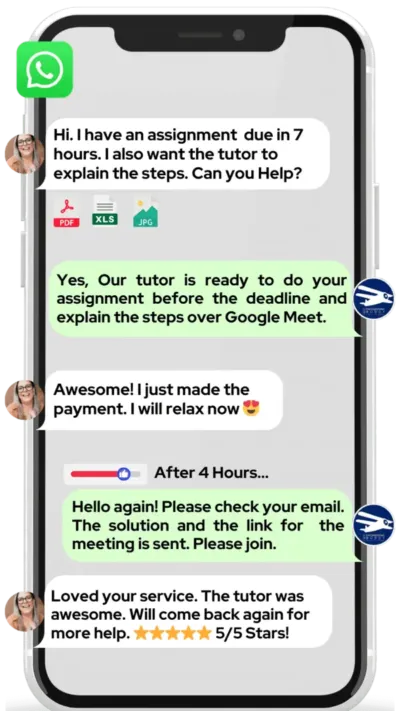
Unlike platforms where you fill out a form and wait, MEB responds in under a minute, 24/7. Tutor match takes under an hour. The $1 trial means you test before you commit. Everything runs over WhatsApp — no logins, no intake forms.
Study Plans (Pick One That Matches Your Goal)
Catch-up (1–3 weeks): for students behind on a module with an upcoming lab submission or test — sessions focus on the highest-yield gaps first. Exam prep (4–8 weeks): structured revision mapped to your paper format, with past question practice built in. Weekly support: ongoing sessions aligned to your semester schedule and coursework deadlines. After the diagnostic, the tutor builds the specific sequence — you choose the pace.
Pricing Guide
Forensic Physics tutoring starts at $20/hr for standard undergraduate modules. Rates rise to $40–$100/hr for graduate-level work, reconstruction modelling, or court-expert preparation. Factors that affect the rate: module complexity, tutor specialism, how quickly you need to start, and your timeline to the deadline.
For students targeting graduate-school admissions or professional forensic roles requiring advanced reconstruction skills, tutors with research or applied forensic backgrounds are available at higher rates — share your specific goal and MEB will match you to the right tier.
Peak semester periods see tutor availability tighten quickly — particularly around April–May and November–December in the US and UK academic calendars. Start with the $1 trial — 30 minutes, no registration, no commitment. WhatsApp MEB for a quick quote.
MEB has operated since 2008 across 2,800+ subjects. In Forensic Physics and related forensic science disciplines, the same structure applies: diagnostic first, then a session plan built around what you actually need — not a generic syllabus walkthrough.
Source: My Engineering Buddy, 2008–2025.
FAQ
Is Forensic Physics hard?
It’s challenging because it combines two demands: solid physics fundamentals and forensic application logic. Students who struggle usually have a gap in one of these, not both. A diagnostic session identifies which — and that’s where tutoring starts.
How many sessions are needed?
Most students working toward a specific exam or submission see meaningful progress in 6–10 sessions of focused 1:1 work. Students using MEB for ongoing weekly support typically continue for a full semester. The first session gives a clearer timeline.
Can you help with homework and assignments?
Yes — MEB tutoring is guided learning. The tutor explains the method and the reasoning; you do the work and submit it yourself. See our Academic Integrity policy and Why MEB page for full details on what we help with and what we don’t.
Will the tutor match my exact syllabus or exam board?
Yes. Share your university, module code, and course outline before the first session. The tutor reviews it in advance and structures the session around your specific content — not a generic forensic physics curriculum.
What happens in the first session?
The tutor runs a short diagnostic — working through 2–3 problems with you to identify exactly where your understanding breaks down. From there, the session covers the highest-priority gap. You leave with a clear plan and a specific practice task.
Is online tutoring as effective as in-person?
For problem-based subjects like Forensic Physics, live online tutoring with a pen-pad is often more effective — the tutor can annotate problems in real time and you can record the session to review later. Geography doesn’t limit which tutor you access.
Can I get Forensic Physics help at midnight?
Yes. MEB operates 24/7 across time zones. WhatsApp MEB at any hour — the average response time is under a minute. Tutor availability varies by time slot, but late-night and early-morning sessions are available for students in the US, Gulf, and Australia.
What if I don’t like my assigned tutor?
WhatsApp MEB and a new match is arranged immediately. No explanation needed. Most students settle with their first tutor — but the option to switch, without friction, is always there.
Do you cover bloodstain pattern analysis specifically?
Yes. BPA is one of the most requested Forensic Physics topics. MEB tutors cover impact angle calculation, area of origin methods, pattern classification, and the fluid dynamics principles behind it — including how to present findings in a lab report or case study.
Can a Forensic Physics tutor help with trajectory and ballistic reconstruction?
Yes. Tutors work through projectile motion, bullet trajectory reconstruction, impact mechanics, and the forensic interpretation of physical evidence. This includes both the physics calculations and how to frame results within a legal or investigative context.
How do I get started?
Three steps: WhatsApp MEB, get matched to a verified Forensic Physics tutor within the hour, start the $1 trial — 30 minutes of live 1:1 tutoring or one homework question explained in full. No registration. No commitment required.
Trust & Quality at My Engineering Buddy
Every MEB tutor goes through subject-specific vetting — not just a general interview. For Forensic Physics, that means demonstrating working knowledge of trajectory mechanics, bloodstain pattern analysis, or acoustic forensics before they run a single session. Tutors are evaluated through live demo sessions and receive ongoing performance feedback tied to student outcomes. Rated 4.8/5 across 40,000+ verified reviews on Google.
MEB tutoring is guided learning — you understand the work, then submit it yourself. For full details on what we help with and what we don’t, read our Academic Integrity policy and Why MEB.
MEB has served 52,000+ students across the US, UK, Canada, Australia, the Gulf, and Europe since 2008, covering 2,800+ subjects. In the Forensic Science category — including Forensic Physics, forensic engineering, and forensic toxicology — tutors are matched for both subject depth and module-level familiarity. See the MEB tutoring methodology for how sessions are structured from diagnostic through to final exam.
A common pattern our tutors observe is that Forensic Physics students underperform not because they lack ability, but because their course never explicitly taught them how to translate a physical principle into a forensic conclusion. That translation layer is exactly what 1:1 sessions address — and it’s teachable.
Explore Related Subjects
Students studying Forensic Physics often also need support in:
- Computer Forensics
- DNA Analysis
- Digital Forensics
- Forensic Biology and Serology
- Forensic Entomology
- Forensic Pathology
- Forensic Psychology
Next Steps
Before your first session, have ready: your exam board and syllabus (or course outline), a recent past paper attempt or homework you struggled with, and your exam or deadline date. The tutor handles the rest.
- Share your module, hardest topic, and current timeline
- Share your availability and time zone
- MEB matches you with a verified Forensic Physics tutor — usually within an hour
The first session starts with a diagnostic so every minute is used well. Visit www.myengineeringbuddy.com for more on how MEB works.
WhatsApp to get started or email [email protected].
52,000+ Happy Students From Various Universities



How Much For Private 1:1 Tutoring & Hw Help?
Private 1:1 Tutoring and HW help Cost $20 – 35 per hour* on average.
Reviewed by Subject Expert
This page has been carefully reviewed and validated by our subject expert to ensure accuracy and relevance.

