

Hire Verified & Experienced
AP Art and Design: 3-D Design Tutors
4.8/5 40K+ session ratings collected on the MEB platform
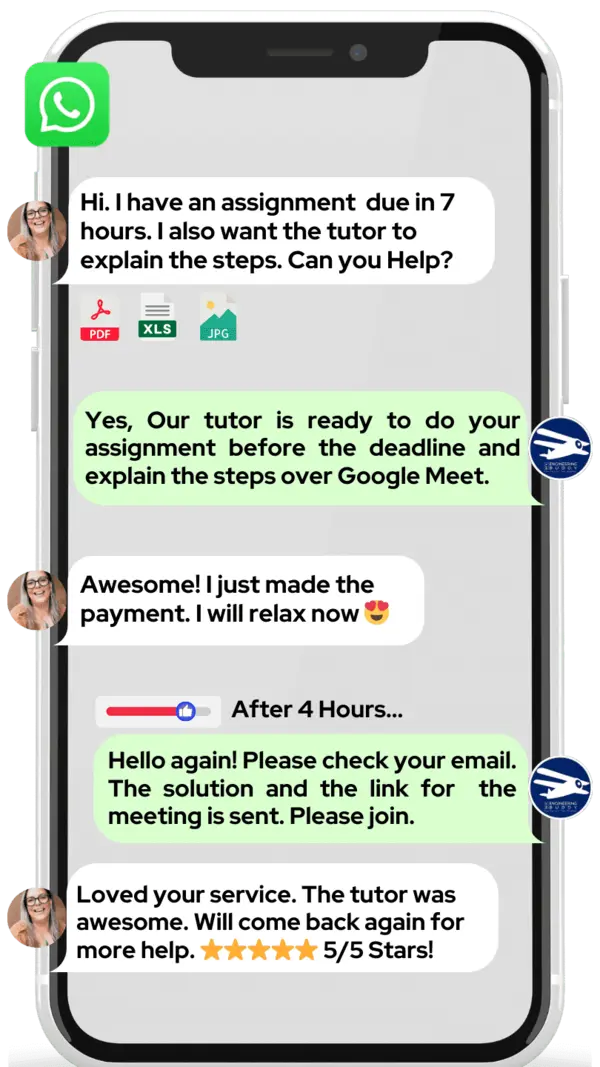



Hire The Best AP Art and Design: 3-D Design Tutor
Top Tutors, Top Grades. Without The Stress!

52,000+ Happy Students From Various Universities




How Much For Private 1:1 Tutoring & Hw Help?
Private 1:1 Tutoring and HW help Cost $20 – 35 per hour* on average.
Most AP Art and Design: 3-D Design portfolios stall not from lack of talent — but because nobody explained the breadth, sustained investigation, or quality requirements clearly enough.
AP Art and Design: 3-D Design Tutor Online
AP Art and Design: 3-D Design is a College Board AP course in which students build a portfolio of three-dimensional artworks demonstrating skill, inquiry, and sustained investigation. An AP Art and Design: 3-D Design tutor helps students develop concept-driven work that meets the portfolio requirements.
MEB connects you with a 1:1 online AP Art and Design: 3-D Design tutor who knows exactly what College Board scorers look for — from sustained investigation to quality pieces. If you’ve been searching for an AP Art and Design: 3-D Design tutor near me but want the flexibility of online sessions across any time zone, MEB is built for that. A tutor who understands the AP portfolio rubric can be the difference between a 3 and a 5.
- 1:1 online sessions tailored to the AP Art and Design: 3-D Design portfolio requirements
- Expert verified tutors with hands-on 3-D art and AP scoring experience
- Flexible time zones — US, UK, Canada, Australia, Gulf
- Structured learning plan built after a diagnostic session
- Ethical homework and assignment guidance — you understand the concept before you submit your work
52,000+ students across the US, UK, Canada, Australia, and the Gulf have used MEB since 2008 — across 2,800+ subjects, from AP Calculus to A Level Music Technology to Data Science.
Source: My Engineering Buddy, 2008–2025.
How Much Does an AP Art and Design: 3-D Design Tutor Cost?
Most sessions run $20–$40/hr depending on tutor experience and how close you are to your portfolio deadline. There is also a $1 trial — 30 minutes of live 1:1 guidance or one homework question explained in full.
| Level / Need | Typical Rate | What’s Included |
|---|---|---|
| Standard (most AP levels) | $20–$35/hr | 1:1 sessions, portfolio and homework guidance |
| Advanced / Specialist | $35–$70/hr | Expert tutor, niche material and media depth |
| $1 Trial | $1 flat | 30 min live session or 1 portfolio/homework question |
Tutor availability tightens significantly in March and April as AP portfolio submission deadlines approach. Book early if your deadline is within eight weeks.
WhatsApp MEB for a quick quote — average response time under 1 minute.
Who This AP Art and Design: 3-D Design Tutoring Is For
This is for students who need more than a classroom teacher with 30 other students to manage. Whether you’re stuck on concept development or unsure how to photograph and present your work for the digital submission, a dedicated tutor moves you faster.
- High school students enrolled in AP Art and Design: 3-D Design who want to strengthen their AP Art and Design: 2-D Design and 3-D portfolio simultaneously
- Students whose sustained investigation lacks a clear through-line and need help articulating it
- Students with a university conditional offer that depends on their AP score — a weak portfolio now puts that offer at risk
- Students who have fallen behind on quality pieces and face a submission deadline within weeks
- Parents watching a creative student’s confidence drop because written components are pulling their score down
- Students progressing toward BFA programmes at schools such as RISD, Pratt, CalArts, the School of the Art Institute of Chicago, or Parsons who want a portfolio that also satisfies AP requirements
1:1 Tutoring vs Self-Study vs AI Tools
Self-study works for gathering inspiration and researching materials, but without feedback on your actual pieces there is no way to know whether your sustained investigation reads as coherent to a scorer. AI tools can explain rubric language quickly, but they cannot look at a photo of your ceramic work and identify why the craftsmanship score will drop, adapt questioning in real time as you explain your concept, or help you plan the sequence of pieces that demonstrates genuine artistic growth. That kind of real-time visual critique is exactly where live human instruction matters most in AP Art and Design: 3-D Design. MEB gives you online flexibility with a structured critique-and-feedback loop calibrated to the College Board AP portfolio requirements.
Outcomes: What You’ll Be Able To Do in AP Art and Design: 3-D Design
After focused 1:1 work with an AP Art and Design: Drawing and 3-D Design-experienced tutor, you will be able to apply the sustained investigation framework to a coherent body of 3-D work. You will analyze your portfolio against the AP quality and breadth criteria and identify which pieces to revise. You will explain your artistic inquiry in written responses clearly enough to support a top score. You will present finished work — sculpture, ceramics, installation, or mixed media — with documentation that meets the digital submission standards.
Supporting a student through AP Art and Design: 3-D Design? MEB works directly with parents to set up sessions, track progress, and keep portfolio work on schedule. WhatsApp MEB — average response time is under a minute, 24/7.
Based on feedback from 40,000+ sessions collected by MEB from 2022 to 2025, 58% of students improved by one full grade after approximately 20 hours of 1:1 tutoring in a single subject. A further 23% achieved at least a half-grade improvement.
Source: MEB session feedback data, 2022–2025.
What We Cover in AP Art and Design: 3-D Design (Syllabus / Topics)

Sustained Investigation
- Developing an inquiry question that drives a cohesive body of work
- Documenting artistic process — sketches, material tests, iteration records
- Writing investigation responses that connect concept to execution
- Building a logical visual and conceptual through-line across 15 works
- Revising the investigation framing when scorers would find it unclear
Recommended reference: The Art of 3-D Design by Louis Wolchonok and the College Board AP Art and Design Course and Exam Description (available at the College Board website).
Selected Works — Craftsmanship and Concept
- Sculpture: additive and subtractive methods, armature construction
- Ceramics: hand-building, coil and slab techniques, surface treatment
- Installation and assemblage: spatial awareness, viewer experience, found materials
- Mixed media and casting: material choice as conceptual decision-making
- Evaluating quality pieces against AP breadth criteria — form, space, structure, material
- Identifying which existing pieces to revise versus replace before submission
Useful references: Sculpture: Principles and Practice by Louis Slobodkin; College Board AP Art and Design portfolio samples and scoring guidelines.
Written Commentary and Portfolio Presentation
- Drafting and refining written responses for the sustained investigation section
- Articulating artistic intent without over-explaining the visual work
- Photographing and documenting 3-D work for digital submission — lighting, angle, scale
- Organising the digital portfolio in the AP scoring interface
- Proofreading written components for clarity and concision
Recommended reference: College Board AP Art and Design portfolio submission guidelines; How to Write About Art by Sylvan Barnet.
What a Typical AP Art and Design: 3-D Design Session Looks Like
The tutor starts by reviewing the piece or written response you worked on since the last session — typically your sustained investigation statement or a specific quality work. You share images or a video of your 3-D piece on screen, and the tutor gives a structured critique using the AP scoring rubric: what reads clearly, what would lose marks for craftsmanship, and what the written response needs to better support the visual work. You then revise or annotate together in real time. The tutor uses a digital pen-pad to mark up composition diagrams or show proportion adjustments. By the end of the session, you have a concrete revision task for the next piece and a clear sense of which portfolio section to prioritise next.
How MEB Tutors Help You with AP Art and Design: 3-D Design (The Learning Loop)
Diagnose: In the first session, the tutor reviews your portfolio progress, reads your current investigation statement, and scores a sample piece against the AP rubric. This gives both of you a clear picture of where marks are being left on the table right now.
Explain: The tutor walks through the exact AP criteria using live annotated examples — your own work or reference portfolio samples — on a shared screen with a digital pen-pad. Nothing stays abstract.
Practice: You attempt a revision of a piece concept or draft a new written response while the tutor is present. You work; the tutor watches and prompts — not the other way around.
Feedback: The tutor identifies exactly why a piece or response would score lower, citing the specific AP descriptor. You leave each session knowing the precise change to make, not just that something “needs work.”
Plan: Each session ends with a written task list — which piece to revise, which new work to begin, what the written commentary needs — so accountability is built into the process, not added later.
Sessions run on Google Meet. The tutor uses a digital pen-pad or iPad with Apple Pencil to annotate your work directly. Before your first session, share your current portfolio images, your investigation statement draft, and your submission deadline. The first session covers a full rubric diagnostic and maps the remaining weeks to your deadline. Start with the $1 trial — 30 minutes of live tutoring that also serves as your first diagnostic.
At MEB, we’ve found that students who share even a rough draft of their investigation statement before the first session make better use of the diagnostic time. It gives the tutor something concrete to respond to, and it usually reveals exactly where the conceptual clarity breaks down.
Tutor Match Criteria (How We Pick Your Tutor)
Not every art tutor knows the AP portfolio system. Here is what MEB checks before matching you.
Subject depth: The tutor must know the AP Art and Design: 3-D Design portfolio requirements specifically — sustained investigation structure, quality versus breadth criteria, and how scorers apply the rubric descriptors.
Tools: All sessions run on Google Meet. The tutor uses a digital pen-pad or iPad with Apple Pencil to annotate your work, mark up composition diagrams, and demonstrate spatial concepts on screen.
Time zone: MEB covers New York, Los Angeles, Chicago, London, Dubai, Toronto, Sydney, Melbourne, and all major US, UK, Gulf, Canadian, Australian, and European time zones — including evenings and weekends.
Learning style: Calibrated from the first session. Some students need direct critique; others need Socratic prompting to arrive at their own solutions. The tutor adjusts.
Communication: Clear English, adapted to the student’s level — whether that is a confident artist who needs rubric translation or a student who needs help articulating ideas they can see but cannot yet write.
Goals: Whether the target is a 5 on the AP exam, completing required quality pieces before the deadline, or strengthening the written commentary, the tutor aligns every session to that specific target.
Unlike platforms where you fill out a form and wait, MEB responds in under a minute, 24/7. Tutor match takes under an hour. The $1 trial means you test before you commit. Everything runs over WhatsApp — no logins, no intake forms.
Study Plans (Pick One That Matches Your Goal)
If your submission is two to three weeks away, the focus is triage — identifying which pieces can be meaningfully improved and which written responses need the most urgent revision. For students four to eight weeks out, the tutor builds a structured weekly plan covering one portfolio section per session. Students who want ongoing support throughout the school year get a weekly session aligned to their course calendar and assignment deadlines. The tutor maps the specific sequence after the first diagnostic session.
Pricing Guide
AP Art and Design: 3-D Design tutoring starts at $20/hr for standard AP-level sessions. Rates go up to $100/hr for tutors with professional studio art or BFA-level teaching backgrounds, particularly for students targeting top art school portfolios alongside their AP submission.
Rate factors include: how close the submission deadline is, the specific media and techniques involved, and tutor availability during peak spring submission periods. Availability is limited in March and April — tutors fill up fast as deadlines converge.
For students targeting programmes at RISD, Parsons, CalArts, or the School of the Art Institute of Chicago, tutors with professional studio and critique backgrounds are available at higher rates — share your specific goal and MEB will match the tier to your target.
Start with the $1 trial — 30 minutes, no registration, no commitment. WhatsApp MEB for a quick quote.
AP Art and Design: 3-D Design asks students to think like artists and write like critics — at the same time. Most students are strong on one side. The tutor’s job is to close the gap before the portfolio locks.
Source: My Engineering Buddy tutoring methodology observations, 2008–2025.
FAQ
Is AP Art and Design: 3-D Design hard?
It is demanding in a specific way. The technical work is manageable with practice, but building a coherent sustained investigation — 15 pieces that tell a single visual story — while writing commentary that holds up to scorer scrutiny is where most students struggle. A tutor addresses both sides.
How many sessions are needed?
Students with six or more weeks before submission typically see clear portfolio improvement in 8–12 sessions. Students closer to the deadline often need intensive work over 3–5 sessions focused on the pieces and written responses that will move the score most. The first diagnostic session sets the plan.
Can you help with AP Art and Design: 3-D Design homework and assignments?
Yes. MEB tutors help you understand rubric requirements, critique your pieces, and work through written responses so you can submit your own work with confidence.
MEB tutoring is guided learning — you understand the work, then submit it yourself. For full details on what we help with and what we don’t, read our Academic Integrity policy and Why MEB.
Will the tutor match my exact AP syllabus and portfolio requirements?
Yes. MEB matches tutors who know the College Board AP Art and Design: 3-D Design portfolio specifications — sustained investigation, quality and breadth criteria, and the digital submission process. Generic art tutors who do not know the AP scoring system are not matched.
What happens in the first session?
The tutor reviews your current portfolio images and investigation statement, scores a sample piece against the AP rubric, identifies the highest-priority gaps, and maps the remaining sessions to your deadline. You leave with a concrete task list for the following week.
Is online tutoring as effective as in-person for a studio subject like 3-D Design?
For portfolio review, rubric guidance, and written commentary work, online sessions are equally effective. The tutor reviews your piece via high-quality images or video, annotates on screen, and gives the same structured critique. Physical making happens in your own studio — the tutor focuses on concept and presentation.
Can I get AP Art and Design: 3-D Design help late at night or at weekends?
Yes. MEB operates across all major time zones and is available evenings and weekends. If a portfolio critique is due Monday morning, you can book a Sunday session. WhatsApp MEB and a tutor match is typically confirmed within the hour, any day of the week.
What if I don’t like my assigned tutor?
Tell MEB over WhatsApp and a replacement match is arranged — usually within the same day. The $1 trial exists precisely so you can assess the fit before committing to a longer plan. No paperwork, no waiting period.
Do you offer group AP Art and Design: 3-D Design sessions?
MEB specialises in 1:1 sessions only. Portfolio critique and concept development work best with individual attention — group settings make it hard to address the specific investigation question and media choices each student is working with.
How do I get started?
Three steps: WhatsApp MEB, get matched with a verified AP Art and Design: 3-D Design tutor within the hour, then start the $1 trial — 30 minutes of live 1:1 portfolio guidance or one assignment question explained in full. No registration required.
Trust & Quality at My Engineering Buddy
Every MEB tutor goes through subject-specific screening before being matched with students. For AP Art and Design: 3-D Design, that means verifying familiarity with the College Board portfolio rubric, sustained investigation framework, and the digital submission process — not just general art experience. Tutors complete a live demo evaluation and are reviewed after each session. Rated 4.8/5 across 40,000+ verified reviews on Google.
MEB tutoring is guided learning — you understand the work, then submit it yourself. We guide; you create and submit. For full details, read our Academic Integrity policy.
MEB has served 52,000+ students across the US, UK, Canada, Australia, Gulf, and Europe in 2,800+ subjects since 2008. Students working on AP Art History tutoring alongside their portfolio often find the critical vocabulary work transfers directly into stronger written commentary. Students also come to MEB for AP Music Theory help and AP Research tutoring — the same structured 1:1 model applies across every subject.
Students consistently tell us that the written commentary section of the AP Art and Design portfolio is where they lose the most marks — not because the work is weak, but because the connection between the concept and the physical piece was never made explicit. That is a fixable problem in two or three focused sessions.
MEB has worked with students preparing AP portfolios across Drawing, 2-D Design, and 3-D Design since 2008. The scoring patterns are consistent — concept clarity and documentation quality are where the gap between a 3 and a 5 almost always lives.
Source: My Engineering Buddy, 2008–2025.
Explore Related Subjects
Students studying AP Art and Design: 3-D Design often also need support in:
- AP Art and Design: 2-D Design
- AP Art and Design: Drawing
- AP Art History
- AP English Language and Composition
- AP Seminar
- AP Research
- AP Psychology
Next Steps
Getting started takes about two minutes.
- Share your current portfolio stage, hardest component, and submission deadline
- Share your availability and time zone
- MEB matches you with a verified AP Art and Design: 3-D Design tutor — usually within the hour
Before your first session, have ready: your current portfolio images and investigation statement draft, a specific piece or written response you are struggling with, and your AP submission deadline. The tutor handles the rest.
Visit www.myengineeringbuddy.com for more on the MEB process.
WhatsApp to get started or email meb@myengineeringbuddy.com.
Try your first session for $1 — 30 minutes of live 1:1 tutoring or one homework question explained in full. No registration. No commitment. WhatsApp MEB now and get matched within the hour.
Reviewed by Subject Expert
This page has been carefully reviewed and validated by our subject expert to ensure accuracy and relevance.

