

Hire Verified & Experienced
Analog Signal Processing Tutors
Email: [email protected]
4.8/5 40K+ session ratings collected on the MEB platform



Hire The Best Analog Signal Processing Tutor
Top Tutors, Top Grades. Without The Stress!
Most students who struggle with Analog Signal Processing don’t lack the math — they lose marks on filter design and op-amp analysis because no one has walked them through the circuit behaviour step by step.
Analog Signal Processing Tutor Online
Analog Signal Processing is the study of continuous-time signals and the circuits that filter, amplify, and transform them. It equips students to design active filters, analyse op-amp configurations, and interpret frequency-domain behaviour in real electronic systems.
MEB connects you with a verified Analog Signal Processing tutor online who works through your actual course material — not generic examples. Whether you’re searching for an Analog Signal Processing tutor near me or need live help at midnight, sessions run 24/7 across the US, UK, Canada, Australia, and the Gulf. You get Electrical Engineering tutoring matched to your syllabus, your exam board, and your timeline.
- 1:1 online sessions aligned to your university course or exam syllabus
- Expert-verified tutors with hands-on circuit design and signal analysis backgrounds
- Flexible time zones — US, UK, Canada, Australia, Gulf covered
- Structured learning plan built after a diagnostic session
- Ethical homework and assignment guidance — you understand the work before you submit
52,000+ students across the US, UK, Canada, Australia, and the Gulf have used MEB since 2008 — including students in Electrical Engineering subjects like Analog Signal Processing, Analog Electronics, and Signals and Systems.
Source: My Engineering Buddy, 2008–2025.
How Much Does an Analog Signal Processing Tutor Cost?
Rates run $20–$40/hr for most undergraduate levels. Graduate and specialist topics can reach $100/hr. The $1 trial gets you 30 minutes of live tutoring or one full homework question explained — no registration required.
| Level / Need | Typical Rate | What’s Included |
|---|---|---|
| Standard (most undergrad levels) | $20–$35/hr | 1:1 sessions, homework guidance |
| Advanced / Graduate / Specialist | $35–$100/hr | Expert tutor, niche circuit depth |
| $1 Trial | $1 flat | 30 min live session or 1 homework question |
Tutor availability tightens around end-of-semester exams. Book early if your deadline is within three weeks.
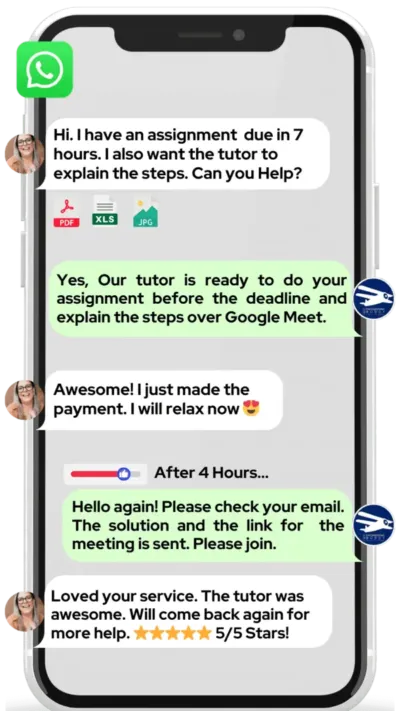
WhatsApp MEB for a quick quote — average response time under 1 minute.
Who This Analog Signal Processing Tutoring Is For
This is for students who know the theory exists but can’t connect it to the circuit on the page. That gap costs marks — fast.
- Undergraduates in Electrical Engineering or Electronics programmes hitting the filter design unit for the first time
- Students retaking after a failed first attempt in an analog circuits or signals module
- Graduate students needing to close gaps in continuous-time signal theory before advanced coursework
- Students with a university conditional offer depending on this grade
- Anyone working through op-amp topologies, Bode plots, or Laplace transforms and losing confidence
- Parents watching a child’s grades drop in a subject that feels abstract and inaccessible
Students come to MEB from universities including MIT, Georgia Tech, University of Toronto, Imperial College London, TU Delft, University of Melbourne, and KAUST — all programmes where Analog Signal Processing sits at the core of the curriculum.
At MEB, we’ve found that the students who struggle most with Analog Signal Processing aren’t weak at mathematics — they’ve never had the Laplace domain and physical circuit behaviour explained side by side, in the same session, on the same problem. One session that does this changes everything.
1:1 Tutoring vs Self-Study vs AI vs YouTube vs Online Courses
Self-study works if you’re disciplined — but Analog Signal Processing has specific problem types (Butterworth filter derivation, op-amp stability margins) where you won’t know you’ve gone wrong until the exam. AI tools answer fast but can’t watch you mis-apply the transfer function and correct you mid-step. YouTube covers Bode plots well right up until you need to derive one for your specific circuit. Online courses run at a fixed pace that rarely matches your exam date. 1:1 tutoring with MEB is calibrated to your exact course, corrects errors in the moment, and builds the analytical instinct that multiple-choice tools cannot.
Outcomes: What You’ll Be Able To Do in Analog Signal Processing
After targeted 1:1 sessions, students solve active filter design problems — Butterworth, Chebyshev, and Sallen-Key topologies — without freezing at the transfer function step. They analyse op-amp circuits including inverting, non-inverting, differentiator, and integrator configurations with confidence. They model frequency response using Bode plots and interpret phase and gain margins correctly. They explain Fourier and Laplace transform applications in the context of real filter circuits. They apply sampling theory and the Nyquist criterion to justify design decisions in coursework and exam answers.
Based on feedback from 40,000+ sessions collected by MEB from 2022 to 2025, 58% of students improved by one full grade after approximately 20 hours of 1:1 tutoring in subjects like Analog Signal Processing. A further 23% achieved at least a half-grade improvement.
Source: MEB session feedback data, 2022–2025.
Supporting a student through Analog Signal Processing? MEB works directly with parents to set up sessions, track progress, and keep coursework on schedule. WhatsApp MEB — average response time is under a minute, 24/7.
What We Cover in Analog Signal Processing (Syllabus / Topics)

Track 1: Signals, Systems, and Transforms
- Continuous-time and discrete-time signal classification
- Fourier series and Fourier transform — derivation and application
- Laplace transform — transfer functions and inverse transforms
- Convolution in time and frequency domains
- System properties: linearity, time-invariance, causality, stability
- Nyquist sampling theorem and aliasing effects
Core texts: Signals and Systems by Oppenheim & Willsky; Signals, Systems and Transforms by Phillips, Parr & Riskin. For Digital Signal Processing tutoring that extends this foundation, MEB covers that separately.
Track 2: Op-Amp Circuits and Active Filter Design
- Ideal and non-ideal op-amp characteristics — gain-bandwidth product, slew rate, input offset
- Inverting, non-inverting, summing, differentiator, and integrator configurations
- First- and second-order active filter design — low-pass, high-pass, band-pass, notch
- Sallen-Key and multiple-feedback filter topologies
- Butterworth and Chebyshev approximations — pole placement and ripple
- Stability analysis — phase margin and gain margin using Bode plots
- Simulation and verification using SPICE-based tools
Core texts: Microelectronic Circuits by Sedra & Smith; Analysis and Design of Analog Integrated Circuits by Gray, Hurst, Lewis & Meyer. Students needing hands-on operational amplifiers help work through these circuits in live sessions with a digital pen-pad.
Track 3: Frequency-Domain Analysis and Circuit Applications
- Bode plot construction — magnitude and phase for first- and second-order systems
- Impedance and admittance in the frequency domain
- Resonance — series and parallel RLC circuit behaviour
- Oscillator circuits — Wien bridge, Colpitts, Hartley topologies
- Noise analysis in analog circuits — thermal noise, shot noise, flicker noise
- Power spectral density and signal-to-noise ratio
Core texts: Electronic Devices and Circuit Theory by Boylestad & Nashelsky; The Art of Electronics by Horowitz & Hill. Students also benefit from circuit analysis tutoring to reinforce the impedance and network analysis steps underpinning this track.
What a Typical Analog Signal Processing Session Looks Like
The tutor opens by checking the previous topic — usually Bode plot construction or a Sallen-Key filter derivation from the last session. If there were errors, those get resolved first, in under ten minutes. Then the student and tutor work through new problems on a shared screen: op-amp stability analysis, Chebyshev filter pole placement, or Laplace-domain transfer function derivation, depending on where the course sits that week. The tutor uses a digital pen-pad to annotate circuit diagrams and frequency-domain sketches live. The student attempts the next problem while the tutor watches — errors caught immediately, not after the submission. The session closes with a specific practice task: three filter design problems from a past paper section, with the next topic (oscillator circuits or noise analysis) noted for the following session.
Students consistently tell us that the moment Analog Signal Processing clicks is when the tutor draws the pole-zero plot and the Bode magnitude response side by side, on the same diagram. That visual connection — abstract math meeting physical circuit behaviour — is almost impossible to get from a textbook alone.
How MEB Tutors Help You with Analog Signal Processing (The Learning Loop)
Diagnose: In the first session, the tutor identifies exactly where understanding breaks down — whether that’s the Laplace transform mechanics, op-amp biasing, or interpreting a transfer function’s frequency response. No time is wasted on topics the student already handles well.
Explain: The tutor works through live problems using a digital pen-pad — drawing circuit topologies, annotating pole-zero plots, and deriving filter responses step by step. Every step is explained before moving forward.
Practice: The student attempts the next problem with the tutor present. This is where most tutoring platforms fail — they explain but don’t watch you try. MEB tutors do both.
Feedback: Every error gets corrected at the step it happens — not at the end. The tutor explains why the mark would be lost and what the examiner’s model answer requires instead.
Plan: After each session, the tutor sets a specific task and notes the next topic. Progress is tracked session to session. If an exam is approaching, the plan shifts to past paper practice on active filter design and frequency-domain analysis.
Sessions run on Google Meet with a digital pen-pad or iPad and Apple Pencil for live circuit sketching. Before your first session, share your course outline or syllabus and any homework or exam question you’ve already attempted. Start with the $1 trial — 30 minutes of live tutoring that also serves as your first diagnostic.
An online Analog Signal Processing tutor who can watch you derive a Butterworth filter in real time and catch the error at step 3 — not after you’ve submitted — is worth more than ten hours of video lectures on the same topic.
Source: My Engineering Buddy, tutoring methodology reflections, 2008–2025.
Whether you need a quick catch-up before a mid-term, structured revision over 4–8 weeks, or ongoing weekly support through the semester, the tutor maps the session plan after the first diagnostic. Students needing support with analog circuits tutoring often start here and extend into filter design within two sessions.
Try your first session for $1 — 30 minutes of live 1:1 tutoring or one homework question explained in full. No registration. No commitment. WhatsApp MEB now and get matched within the hour.
Tutor Match Criteria (How We Pick Your Tutor)
Not every electronics tutor is qualified for Analog Signal Processing. MEB matches on four criteria.
Subject depth: Tutors hold degrees in Electrical Engineering or Electronics Engineering and have worked specifically with analog circuit design, signal processing, or RF systems — not just general electronics.
Tools: Every tutor uses Google Meet and a digital pen-pad or iPad with Apple Pencil. Circuit diagrams, Bode plots, and filter derivations all drawn live on screen.
Time zone: Matched to your region — US Eastern through to Gulf Standard Time. No scheduling friction. Students needing analog communication tutoring or support in adjacent signal processing subjects get routed to tutors who cover the full signals curriculum.
Goals: Whether you need exam preparation, conceptual depth on op-amp stability, homework completion, or research-level support in analog IC design — the tutor is selected to fit that specific objective.
Unlike platforms where you fill out a form and wait, MEB responds in under a minute, 24/7. Tutor match takes under an hour. The $1 trial means you test before you commit. Everything runs over WhatsApp — no logins, no intake forms.
Pricing Guide
Most Analog Signal Processing sessions run $20–$40/hr. Graduate-level work — IC design, advanced noise analysis, research-level filter synthesis — can reach $100/hr depending on the tutor’s background and the problem complexity.
Rate factors include your course level, how niche the topic is (standard op-amp circuits versus switched-capacitor filter design), your timeline, and tutor availability.
Availability drops sharply in the four weeks before end-of-semester exams across US and UK universities. If your exam is within that window, book now.
For students targeting roles at semiconductor companies, RF design firms, or graduate research programmes in analog IC design, tutors with professional industry backgrounds are available at higher rates — share your specific goal and MEB will match the tier to your ambition.
Start with the $1 trial — 30 minutes, no registration, no commitment. WhatsApp MEB for a quick quote.
FAQ
Is Analog Signal Processing hard?
It’s among the more demanding topics in an Electrical Engineering degree. Students who hit a wall usually do so at one of three points: Laplace transform application, op-amp stability analysis, or active filter derivation. All three are teachable with the right worked examples.
How many sessions are needed?
Students with specific exam gaps typically need 6–12 sessions. Those building from a weak foundation in signals and systems often need 15–20 hours before filter design feels solid. The diagnostic session sets a realistic timeline based on your actual starting point.
Can you help with homework and assignments?
Yes — MEB tutoring is guided learning. You understand the work, then submit it yourself. See our Academic Integrity policy and Why MEB page for full details on what we help with and what we don’t.
Will the tutor match my exact syllabus or exam board?
Yes. Share your course code, university, or exam board and the tutor is matched accordingly. MEB covers courses aligned to IEEE curriculum standards, UK university modules, and graduate programmes across the US, Canada, Australia, and Europe.
What happens in the first session?
The tutor runs a diagnostic — a short set of problems covering Laplace transforms, basic op-amp analysis, and frequency-domain interpretation. This identifies your strongest and weakest areas and sets the session plan for the following weeks.
Is online tutoring as effective as in-person?
For circuit-based subjects, yes — provided the tutor uses a digital pen-pad. MEB tutors draw circuits, annotate Bode plots, and derive filter responses live on screen. Students consistently report the experience matches or exceeds in-person whiteboard sessions.
What’s the difference between Analog Signal Processing and Digital Signal Processing?
Analog Signal Processing works with continuous-time signals using physical components — resistors, capacitors, op-amps. Digital Signal Processing operates on discrete sampled values using algorithms. Most EE programmes teach both; ASP typically comes first because it builds the frequency-domain intuition DSP depends on.
Can I get help with SPICE simulation for my filter designs?
Yes. Tutors work through LTSpice tutoring and PSpice alongside the analytical work. If your assignment requires simulating a Butterworth or Sallen-Key filter, the tutor walks through both the hand derivation and the simulation setup in the same session.
Can I get Analog Signal Processing help at midnight?
Yes. MEB operates 24/7. Tutors are available across time zones — a student in Los Angeles, London, or Dubai can book a same-night session. WhatsApp MEB and you’ll typically be matched within the hour, any time of day.
What if I don’t like my assigned tutor?
Request a switch via WhatsApp. MEB will match you with a different tutor, usually within a few hours. The $1 trial exists precisely so you can test the fit before committing to a full session package.
Do you offer group Analog Signal Processing sessions?
MEB specialises in 1:1 tutoring. Group sessions are not offered as a standard product. If you and a course partner want to share a session, contact MEB via WhatsApp — it can sometimes be arranged informally depending on tutor availability.
How do I get started?
Three steps: WhatsApp MEB, share your course details and hardest topic, get matched with a verified tutor. Start with the $1 trial — 30 minutes of live 1:1 tutoring or one full assignment question explained. No registration, no commitment.
Trust & Quality at My Engineering Buddy
Every MEB tutor goes through subject-specific vetting — a live demo session evaluated against the Analog Signal Processing curriculum before they teach a single student. Tutors hold engineering degrees with demonstrable experience in analog circuit design, signal analysis, or related research. Rated 4.8/5 across 40,000+ verified reviews on Google. Ongoing student feedback is reviewed after every session and used to maintain tutor quality over time — not just at onboarding.
MEB tutoring is guided learning — you understand the work, then submit it yourself. For full details on what we help with and what we don’t, read our Academic Integrity policy and Why MEB.
MEB has served 52,000+ students across the US, UK, Canada, Australia, the Gulf, and Europe in 2,800+ subjects since 2008. Electrical Engineering is one of MEB’s largest subject areas — tutors cover everything from foundational circuit design help through to graduate-level integrated circuits tutoring and specialist microelectronics tutoring. Analog Signal Processing sits at the technical core of that catalogue. See our tutoring methodology for how sessions are structured from diagnostic through to exam preparation.
MEB has operated since 2008 — before most online tutoring platforms existed. That track record in engineering subjects, particularly in signals and circuit design, is what makes the tutor matching process reliable rather than random.
Source: My Engineering Buddy, 2008–2025.
A common pattern our tutors observe is that students arrive having memorised the Laplace transform pairs but never having used them to derive a real filter’s transfer function. That specific gap — between formula recall and circuit application — is what the first two MEB sessions are designed to close.
Explore Related Subjects
Students studying Analog Signal Processing often also need support in:
- Electronic Circuit Design
- Semiconductor Devices
- Control Systems
- Communication Systems
- Microelectronics
- Network Theory
- VLSI Design
Next Steps
Getting started takes under five minutes.
- Share your exam board or course code, the topic you’re most stuck on, and your exam or submission date
- Share your availability and time zone
- MEB matches you with a verified Analog Signal Processing tutor — usually within 24 hours, often within the hour
Before your first session, have ready: your course syllabus or exam board specification, a recent past paper attempt or homework question you struggled with, and your exam or deadline date. The tutor handles the rest.
Visit www.myengineeringbuddy.com for more on how MEB works.
WhatsApp to get started or email [email protected].
52,000+ Happy Students From Various Universities





How Much For Private 1:1 Tutoring & Hw Help?
Private 1:1 Tutoring and HW help Cost $20 – 35 per hour* on average.
Reviewed by Subject Expert
This page has been carefully reviewed and validated by our subject expert to ensure accuracy and relevance.
