

Contact MEB Today To Get The Best
ARRT (American Registry Of Radiologic Technologists) Tutoring Online
Email: [email protected]



~1 min
Average Reply Time
~1 hour
To Be Matched With A Tutor
30 Min Trial
75% Find Their Tutor On The 1st Trial
$20-35+/hr
Premium Yet Affordable Learning
Failed the ARRT exam once already? Most candidates who don’t pass cite the same three content areas — and a tutor fixes that in weeks, not months.
ARRT Tutor Online
The ARRT (American Registry of Radiologic Technologists) exam is a national certification assessment required to practice as a radiologic technologist in the US, covering patient care, image production, radiation safety, and equipment operation.
MEB offers 1:1 online tutoring and homework help in 2800+ advanced subjects — including ARRT exam prep. If you’ve searched for an ARRT tutor near me and landed here, you’re in the right place. Our tutors map directly to the ARRT content specifications, work through your weakest content areas first, and give you a realistic picture of where you’ll sit on exam day. No guarantees — but a structured, evidence-based approach that has worked for thousands of health sciences candidates. For broader test preparation tutoring across certification and licensing exams, MEB covers the full spectrum.
- 1:1 online sessions tailored to the current ARRT content specifications
- Expert verified tutors with radiologic sciences and allied health backgrounds
- Flexible time zones — US, UK, Canada, Australia, Gulf
- Structured learning plan built after a diagnostic session
- Ethical homework and assignment guidance — you understand before you submit
52,000+ students across the US, UK, Canada, Australia, and the Gulf have used MEB since 2008 — including students in Test Preparation subjects like ARRT, NCLEX-RN tutoring, and USMLE prep.
Source: My Engineering Buddy, 2008–2025.
How Much Does an ARRT Tutor Cost?
Most ARRT online tutoring sessions run $20–$40/hr depending on the content area and tutor experience level. Specialist tutors with clinical imaging backgrounds may run higher. You can start with the $1 trial — 30 minutes of live prep or one full question explained — before committing to anything.
| Level / Need | Typical Rate | What’s Included |
|---|---|---|
| Standard ARRT prep | $20–$35/hr | 1:1 sessions, content review, practice Q guidance |
| Advanced / Specialist | $35–$70/hr | Clinical imaging expert, niche modality depth |
| $1 Trial | $1 flat | 30 min live session or one full question explained |
Tutor availability tightens in the weeks before common ARRT exam windows. Book early if your date is within six weeks.
WhatsApp MEB for a quick quote — average response time under 1 minute.
Who This ARRT Tutoring Is For
ARRT candidates come to MEB at very different stages. Some are preparing systematically weeks out. Others are staring down a retake after a narrow fail. The common thread: they need targeted help, not another study guide.
- Students retaking after a failed first attempt — especially those who scored just below the passing standard
- Radiography, radiologic technology, and nuclear medicine students completing their clinical programmes at institutions such as Johns Hopkins, Mayo Clinic School of Health Sciences, Thomas Jefferson University, University of Alabama at Birmingham, and Stanford Health Care programmes
- Candidates uncertain which content categories are dragging their score down
- Students 4–6 weeks from their exam date with significant content gaps still to close
- Students who passed didactic coursework but struggle to apply concepts under timed exam conditions
- Anyone who has tried self-study with the ARRT practice tracker and still feels underprepared
If you’re a re-taker who came close — the $1 trial diagnostic alone is worth your time.
1:1 Tutoring vs Self-Study vs AI vs YouTube vs Online Courses
Self-study works if you’re disciplined, but the ARRT content specifications are broad and most candidates underestimate the radiation safety and equipment sections. AI tools give fast explanations but can’t watch you misread a patient care scenario and correct it live. YouTube covers imaging concepts well at the overview level, then stops when you hit a confusing practice question. Online courses are structured but move at a fixed pace regardless of where your gaps actually are. 1:1 tutoring with MEB is calibrated to your specific content profile — the tutor sees your errors in real time and adjusts the session around them.
Outcomes: What You’ll Be Able To Do After ARRT Tutoring
After working with an MEB ARRT tutor, students can apply radiation protection principles accurately across patient, operator, and public exposure scenarios. They can analyze equipment quality control problems and identify the correct corrective action. They can solve image production questions — exposure factors, image receptor systems, digital processing artefacts — without second-guessing. They can explain patient care protocols under time pressure, including contrast reactions and positioning rationale. They can present a structured approach to any ARRT content category, not just the ones they happen to find intuitive.
Based on feedback from 40,000+ sessions collected by MEB from 2022 to 2025, 58% of students improved by one full grade after approximately 20 hours of 1:1 tutoring in subjects like ARRT. A further 23% achieved at least a half-grade improvement.
Source: MEB session feedback data, 2022–2025.
Try your first session for $1 — 30 minutes of live 1:1 tutoring or one homework question explained in full. No registration. No commitment. WhatsApp MEB now and get matched within the hour.
What We Cover in ARRT Exam Prep (Syllabus / Topics)
The ARRT examination in Radiography is structured around four primary content categories. MEB tutors work through all four, with session time weighted toward whichever area the diagnostic session identifies as weakest.
Radiation Protection
- Biological effects of ionizing radiation — stochastic and deterministic
- Patient dose reduction techniques and ALARA principles
- Protective devices: lead aprons, shielding, collimation
- Dose equivalent units — rem, mSv, and when each applies
- Personnel monitoring: dosimeters, TLD badges, placement rules
- Regulatory dose limits for patients, workers, and public
Key references: Radiologic Science for Technologists (Bushong), Principles of Radiographic Imaging (Carlton & Adler).
Equipment Operation and Quality Control
- X-ray tube construction and function — anode, cathode, filament circuits
- Generators: single-phase, three-phase, high-frequency differences
- Automatic exposure control (AEC) — detectors, backup time, density controls
- Fluoroscopic systems and image intensifiers
- Digital radiography: CR vs DR, flat-panel detectors, PACS basics
- Quality control tests — reproducibility, linearity, collimator accuracy
- Artefact identification and corrective action
Key references: Radiographic Imaging and Exposure (Fauber), Digital Radiography (Papp).
Image Production and Evaluation
- Exposure factors: kVp, mAs, time, and their relationship to image quality
- Density, contrast, recorded detail, and distortion — definitions and controlling factors
- Grids: ratio, frequency, Bucky factor, grid cut-off errors
- Image receptor systems: speed, latitude, and noise trade-offs
- Post-processing: windowing, image enhancement, dose indicators
- Scatter radiation control — beam restriction, air gap, filtration
Key references: Essentials of Radiographic Physics and Imaging (Johnston & Fauber), Merrill’s Atlas of Radiographic Positioning (Long et al.).
Patient Care and Education
- Vital signs assessment and monitoring thresholds
- Contrast media: ionic vs non-ionic, adverse reactions and response protocols
- Infection control — standard precautions, transmission-based precautions
- Patient positioning for routine projections across body regions
- Venipuncture fundamentals and IV contrast administration basics
- Medical ethics, informed consent, and scope-of-practice boundaries
Key references: Patient Care in Radiography (Ehrlich & Coakes), Introduction to Radiologic and Imaging Sciences (Orth).

What a Typical ARRT Session Looks Like
The tutor opens by checking the previous session’s focus area — usually something like scatter radiation control or AEC behaviour — and runs two or three quick recall questions to see what stuck. Then the session moves into the planned content: today it might be image receptor systems, working through the CR vs DR distinction and how each affects dose indicators. The student answers a practice question on-screen; the tutor watches the reasoning process, not just the answer. If the student selects the wrong kVp/mAs relationship, the tutor doesn’t just mark it wrong — they trace back to where the logic broke down using the digital pen-pad, annotating the image chain step by step. By the end, the student replicates the correct reasoning unprompted. The session closes with three to five targeted practice questions to complete before next time, and the next content area is noted.
How MEB Tutors Help You with ARRT (The Learning Loop)
Diagnose: In the first session, the tutor runs through a short diagnostic — typically covering one question from each of the four ARRT content categories. This locates the exact sub-topics pulling your performance down, not just the broad category.
Explain: The tutor works through live examples using a digital pen-pad, annotating exposure factor relationships, equipment diagrams, and patient care scenarios directly on screen. You see the reasoning built in real time, not just the answer.
Practice: You attempt questions with the tutor present. The tutor watches your process — not to interrupt, but to catch reasoning errors before they become exam habits.
Feedback: Errors are corrected step by step. The tutor explains exactly where marks are lost in the ARRT scoring context — whether it’s a conceptually wrong answer or a misread scenario stem.
Plan: At the end of each session, the tutor sets a specific content task and notes the next topic in sequence. You know exactly what to work on before the next session.
Sessions run over Google Meet. The tutor uses a digital pen-pad or iPad with Apple Pencil for annotations. Before your first session, have your ARRT content specifications document and any recent practice test results ready — the tutor uses these to build the session plan immediately. Start with the $1 trial — 30 minutes of live ARRT prep that also serves as your first diagnostic.
At MEB, we’ve found that ARRT candidates who struggle most are often strong on image production but lose points consistently in radiation protection and patient care — areas that feel like common sense but carry specific regulatory language the exam tests precisely. Knowing where the language matters is half the preparation.
Tutor Match Criteria (How We Pick Your ARRT Tutor)
Every ARRT tutor match starts with the specifics of your situation — not a generic health sciences tutor pulled from a pool.
Subject depth: Tutors are matched to your exact ARRT modality (Radiography, Nuclear Medicine, Radiation Therapy) and the content categories flagged in your diagnostic.
Tools: All tutors use Google Meet plus a digital pen-pad or iPad with Apple Pencil — essential for annotating imaging diagrams and exposure factor problems live.
Time zone: Matched to your region — US, UK, Gulf, Canada, or Australia — so scheduling doesn’t become a reason sessions slip.
Goals: Whether you’re targeting first-time certification, a retake, or just need to close a specific content gap, the tutor calibration reflects that.
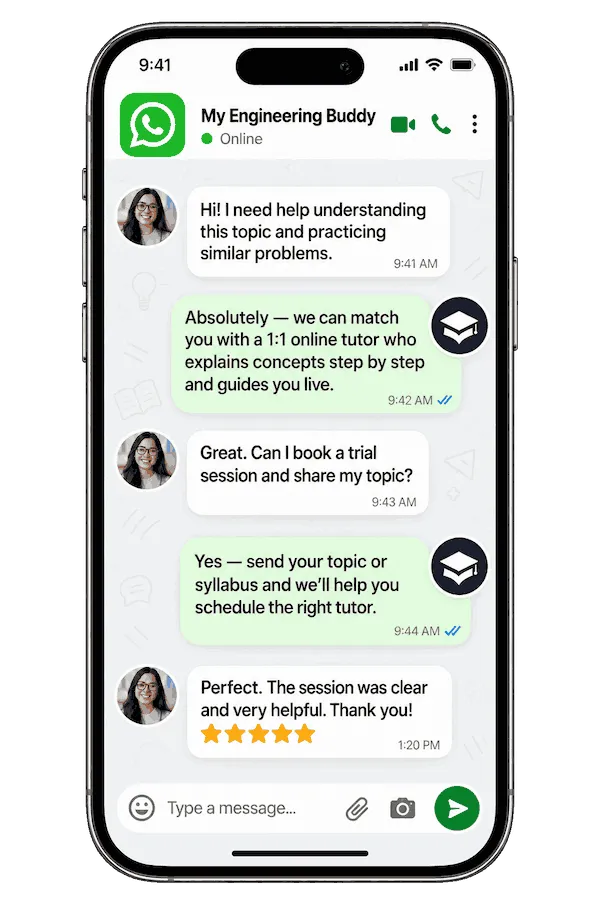
Unlike platforms where you fill out a form and wait, MEB responds in under a minute, 24/7. Tutor match takes under an hour. The $1 trial means you test before you commit. Everything runs over WhatsApp — no logins, no intake forms.
Study Plans (Pick One That Matches Your Goal)
After the diagnostic, the tutor builds a session sequence matched to your timeline. Candidates within one to three weeks of their exam date follow an intensive catch-up plan covering the highest-yield content categories first. Those with four to eight weeks available follow a structured revision sequence across all four ARRT content areas, with weekly progress checks. Ongoing weekly support works well for students balancing clinical rotations with exam preparation across a full semester. The tutor maps the specific order after the first diagnostic session.
Pricing Guide
ARRT tutoring rates start at $20/hr for standard content review and run to $40/hr for most sessions. Tutors with specialist radiologic physics or clinical imaging backgrounds are available at higher rates for candidates who need that depth.
Rate factors include the ARRT modality (Radiography vs Nuclear Medicine vs Radiation Therapy), the complexity of the content area, timeline pressure, and tutor availability. Spots fill quickly in the four to six weeks before high-volume exam windows.
For students targeting competitive residency or advanced clinical programmes, tutors with professional imaging or medical physics backgrounds are available at higher rates — share your specific goal and MEB will match the tier to your needs.
Start with the $1 trial — 30 minutes, no registration, no commitment. WhatsApp MEB for a quick quote.
ARRT tutoring at MEB costs from $20/hr — with a $1 trial session available before any commitment. No registration required. Match in under an hour, 24/7.
Source: My Engineering Buddy pricing, 2025.
Students consistently tell us that the ARRT exam feels manageable once they’ve had someone walk them through the radiation protection regulations at the right level of detail — not textbook definitions, but the way the exam actually tests the distinctions. That shift usually happens in the first two or three sessions.
FAQ
Is the ARRT exam hard?
The pass rate for first-time ARRT Radiography candidates is typically above 80%, but that figure includes graduates from accredited programmes who have been preparing throughout their clinical training. Candidates who underestimate the radiation protection and equipment sections tend to be the ones who don’t pass first time.
How many sessions do I need?
Most ARRT candidates working with an MEB tutor see meaningful improvement within 8 to 12 sessions of focused content work. Retake candidates with specific identified gaps often need fewer. The diagnostic session in week one shapes the exact number.
Can you help with homework and assignments?
Yes — MEB tutoring is guided learning. The tutor explains the material and works through problems with you; you understand the work, then submit it yourself. See our Academic Integrity policy and Why MEB page for full details on what we help with and what we don’t.
Will the tutor match my exact ARRT modality and content specifications?
Yes. MEB tutors are matched to your specific ARRT examination — Radiography, Radiation Therapy, Nuclear Medicine, or a post-primary pathway. The current ARRT content specifications document guides every session plan.
What happens in the first session?
The tutor runs a short diagnostic covering at least one question from each major ARRT content category. This locates your exact weak points. The remainder of the session begins working through the highest-priority content area identified. You leave with a clear plan for the next session.
Is online ARRT tutoring as effective as in-person?
For exam-focused content review, yes. The digital pen-pad annotation, screen-sharing of practice questions, and live question-and-answer format replicate the value of in-person sessions. Candidates in the US, UK, Canada, Australia, and the Gulf all use MEB’s online format successfully.
What is the difference between the ARRT primary and post-primary examinations?
The primary examination certifies entry-level competency in a discipline such as Radiography. Post-primary examinations — including CT, MRI, Mammography, and Cardiac-Interventional Radiography — require existing ARRT certification and cover advanced modality-specific content. MEB tutors are available for both levels.
Can I get help with the ARRT structured education requirement?
MEB tutors can support the content learning that underpins your structured education hours — working through the relevant physics, patient care, and equipment concepts. The structured education documentation itself must be completed through your accredited programme or approved provider.
Can I get ARRT help at midnight?
Yes. MEB operates 24/7 across time zones. WhatsApp MEB at any hour and the average first response is under a minute. Sessions can be booked at short notice for candidates in the US, Gulf, or Australia working across different time zones.
How do I find an ARRT tutor if I’m not in the US?
MEB matches tutors by time zone, not geography. Candidates outside the US — including those in Canada, Australia, the UK, and the Gulf — are matched to tutors available during their local hours. The ARRT content specifications are the same regardless of where you’re sitting the exam.
What if I don’t like my assigned tutor?
Tell MEB via WhatsApp and a replacement is arranged, usually within the same day. The $1 trial exists precisely to let you assess the fit before committing to a full session plan. No awkward process — just message and it’s handled.
How do I get started?
Start with the $1 trial — 30 minutes of live ARRT prep or one full question explained with complete reasoning. WhatsApp MEB, get matched within the hour, and begin your first session. Three steps: WhatsApp → matched → start trial.
Trust & Quality at My Engineering Buddy
Every MEB tutor goes through subject-specific vetting — not a generic screening. ARRT tutors are evaluated on their knowledge of the current content specifications, their ability to explain radiation physics and patient care concepts at exam level, and their performance in a live demo session before they’re matched to any student. Rated 4.8/5 across 40,000+ verified reviews on Google, MEB has been running since 2008 across 2,800+ subjects. That track record matters when you’re picking someone to help you pass a national certification exam.
MEB tutoring is guided learning — you understand the work, then submit it yourself. For full details on what we help with and what we don’t, read our Academic Integrity policy and Why MEB.
MEB serves students in the US, UK, Canada, Australia, the Gulf, and Europe across Test Preparation subjects including ARRT, USMLE tutoring, and NAPLEX help. The platform has been operating since 2008 with over 52,000 students served across those regions.
Our experience across thousands of sessions shows that ARRT candidates who review their content specifications document alongside a tutor — rather than just reading it alone — identify their real weak areas faster and spend less time preparing content that was never going to be their problem. Focused is faster.
Explore Related Subjects
Students studying ARRT often also need support in:
Next Steps
Getting started is straightforward. Share your ARRT modality, the content areas you’re struggling with, and how many weeks you have before your exam date. Share your availability and time zone — MEB covers US, UK, Canada, Australia, and the Gulf. You’ll be matched with a verified ARRT tutor, usually within 24 hours.
Before your first session, have ready:
- Your current ARRT content specifications document (downloadable from the ARRT website)
- A recent practice exam attempt or any questions you’ve struggled with
- Your exam date or target window
The tutor handles the session plan from there. First session starts with a diagnostic so every minute is used on what actually matters for your score.
Visit www.myengineeringbuddy.com for more on how MEB works.
WhatsApp to get started or email [email protected].
Reviewed by Subject Expert
This page has been carefully reviewed and validated by our subject expert to ensure accuracy and relevance.




