




Hire The Best Astronomy Tutor
Top Tutors, Top Grades. Without The Stress!
52,000+ Happy Students From Various Universities





How Much For Private 1:1 Tutoring & Hw Help?
Private 1:1 Tutoring and HW help Cost $20 – 35 per hour* on average.
Most students fail their first Astronomy exam not because the universe is complicated — but because nobody explained stellar evolution or orbital mechanics to them in a way that actually made sense.
Astronomy Tutor Online
Astronomy is the scientific study of celestial objects, space, and the physical universe — covering planetary science, stellar physics, cosmology, and observational techniques. It equips students to analyse data, model orbits, and interpret astronomical phenomena.
MEB offers 1:1 online tutoring and homework help in Astronomy as part of its broader Physics tutoring programme. Whether you’re searching for an astronomy tutor near me or a specialist who knows your exact syllabus, MEB matches you with a verified expert — usually within an hour. Students who commit to consistent sessions see real improvement in problem-solving and conceptual clarity.
- 1:1 online sessions tailored to your exact course or exam board
- Expert-verified tutors with subject-specific knowledge in Astronomy
- Flexible time zones — US, UK, Canada, Australia, Gulf
- Structured learning plan built after a diagnostic session
- Ethical homework and assignment guidance — you understand before you submit
52,000+ students across the US, UK, Canada, Australia, and the Gulf have used MEB since 2008 — including students in Physics subjects like Astronomy, Astrophysics, and Cosmology.
Source: My Engineering Buddy, 2008–2025.
How Much Does an Astronomy Tutor Cost?
Most Astronomy sessions run $20–$40/hr depending on level and topic complexity. Advanced undergraduate or graduate-level Astronomy can reach $100/hr for specialist tutors. You can start with a $1 trial — 30 minutes of live tutoring or a full explanation of one homework question.
| Level / Need | Typical Rate | What’s Included |
|---|---|---|
| Standard (most levels) | $20–$35/hr | 1:1 sessions, homework guidance |
| Advanced / Specialist | $35–$100/hr | Expert tutor, graduate-level depth |
| $1 Trial | $1 flat | 30 min live session or 1 homework question |
Tutor availability tightens considerably during peak exam periods — particularly in April–May for AP students and May–June for A Level and IB candidates. Book early.
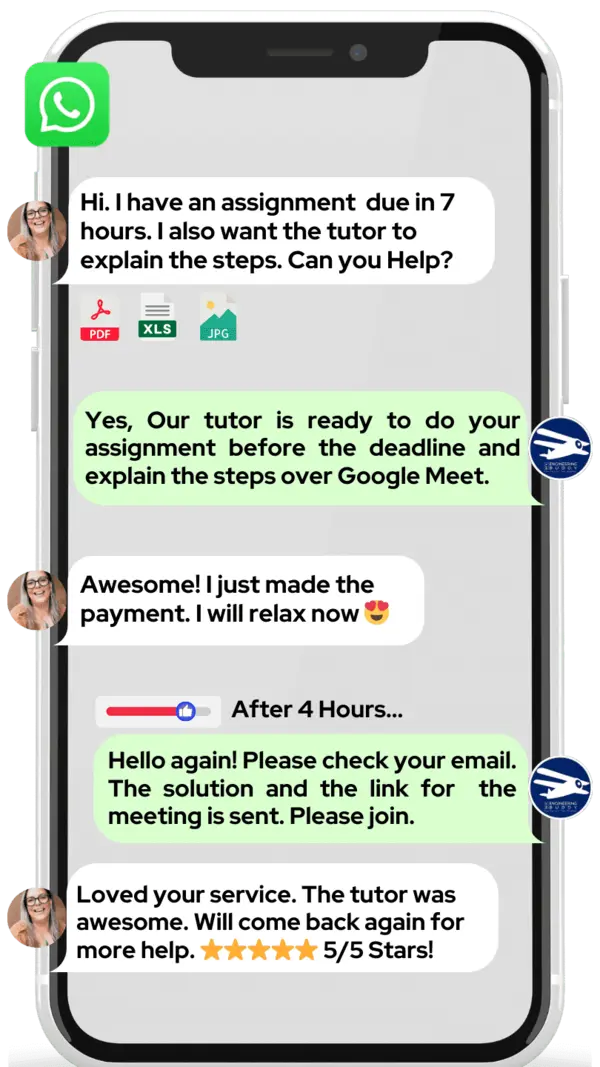
WhatsApp MEB for a quick quote — average response time under 1 minute.
Who This Astronomy Tutoring Is For
Astronomy draws students from a wide range of backgrounds — high school science tracks, undergraduate physics degrees, and graduate research programmes. The gap between understanding a concept in lecture and applying it on a problem set is where most students struggle.
- High school students studying Astronomy as part of AP Physics, A Level Physics, or IB Physics
- Undergraduates in introductory or observational Astronomy courses at universities including MIT, Caltech, Cambridge, the University of Toronto, and ANU
- Graduate students working through stellar dynamics, galactic structure, or observational data reduction
- Students retaking after a failed first attempt in an Astronomy or Physics module
- Students with a university conditional offer that depends on their Physics or Astronomy grade
- Parents watching a student’s confidence drop as lecture material moves from Newtonian mechanics to relativistic and quantum-scale phenomena
If you need orbital and celestial mechanics help or support with a specific exam component, MEB can place you with someone who has taught exactly that material before.
At MEB, we’ve found that Astronomy students often know more than they think — the real problem is translating physical intuition into the mathematical formalism the exam actually rewards. One session spent on dimensional analysis and order-of-magnitude reasoning can unlock three topics at once.
1:1 Tutoring vs Self-Study vs AI vs YouTube vs Online Courses
Self-study works if you’re disciplined — but Astronomy problem sets don’t tell you where your reasoning broke down. AI tools give fast definitions but can’t diagnose why you keep getting the virial theorem wrong. YouTube is excellent for watching a solar system form; it stops there when you’re stuck on flux calculations. Online courses move at a fixed pace regardless of your exam date. 1:1 tutoring with MEB is live, calibrated to your exact syllabus, and corrects errors in real time — which matters when the gap between your current grade and the one you need is two exam sittings away.
Outcomes: What You’ll Be Able To Do in Astronomy
After consistent 1:1 Astronomy tutoring sessions, students can solve multi-step orbital mechanics problems using Kepler’s laws without prompting, analyze stellar spectra to determine temperature, luminosity class, and chemical composition, model the lifecycle of a star from main sequence through to white dwarf or neutron star endpoints, explain the observational evidence for dark matter in galaxy rotation curves, and apply the cosmological redshift equation to calculate recessional velocity and distance for real data sets.
Supporting a student through Astronomy? MEB works directly with parents to set up sessions, track progress, and keep coursework on schedule. WhatsApp MEB — average response time is under a minute, 24/7.
Based on feedback from 40,000+ sessions collected by MEB from 2022 to 2025, 58% of students improved by one full grade after approximately 20 hours of 1:1 tutoring in subjects like Astronomy. A further 23% achieved at least a half-grade improvement.
Source: MEB session feedback data, 2022–2025.
Try your first session for $1 — 30 minutes of live 1:1 tutoring or one homework question explained in full. No registration. No commitment. WhatsApp MEB now and get matched within the hour.
What We Cover in Astronomy (Syllabus / Topics)

Track 1: Solar System and Planetary Science
- Formation and structure of the solar system — nebular hypothesis, protoplanetary discs
- Planetary motion — Kepler’s three laws, orbital periods, elliptical paths
- Gravity and tidal forces — tidal locking, Roche limit, Lagrange points
- Comparative planetology — terrestrial vs gas giant interiors, atmospheric dynamics
- Small bodies — comets, asteroids, Kuiper Belt objects, meteorites
- Space missions and observational data — Voyager, Cassini, New Horizons data sets
Core texts: The Solar System by Freedman & Kaufmann; An Introduction to the Solar System by Rothery, Gilmour & Sephton.
Track 2: Stellar Physics and Galactic Astronomy
- Stellar structure — hydrostatic equilibrium, nuclear fusion, energy transport
- The HR diagram — main sequence, giants, white dwarfs, neutron stars
- Stellar evolution — protostars through to endpoints (white dwarf, neutron star, black hole)
- Stellar spectra — blackbody radiation, spectral classification (OBAFGKM), absorption lines
- Binary systems — eclipsing, spectroscopic, and visual binaries; mass determination
- Galactic structure — spiral arms, the Milky Way, disc and halo components
- Dark matter evidence — rotation curves, gravitational lensing, cluster dynamics
Core texts: Universe by Freedman, Geller & Kaufmann; An Introduction to Modern Astrophysics by Carroll & Ostlie (standard undergraduate reference).
Track 3: Cosmology and Observational Techniques
- The Big Bang model — cosmic microwave background, nucleosynthesis, timeline
- Hubble’s Law and cosmological redshift — recession velocity, distance ladders
- Dark energy and the accelerating expansion — Type Ia supernovae as standard candles
- Observational tools — telescopes across the electromagnetic spectrum (optical, radio, X-ray, infrared)
- Coordinate systems — RA and declination, ecliptic and galactic coordinates
- Data reduction basics — signal-to-noise, photometry, astrometry
Core texts: Observational Astronomy by Birney, Gonzalez & Oesper; Cosmology by Ryden.
MEB tutors have worked through Carroll & Ostlie chapter by chapter with undergraduate students at institutions across the US, UK, Canada, and Australia — including students who started with no calculus background and needed the maths rebuilt alongside the physics.
Source: My Engineering Buddy tutor records, 2008–2025.
What a Typical Astronomy Session Looks Like
The tutor opens by reviewing whatever the student last worked on — usually stellar evolution or orbital mechanics, since those are where most misconceptions sit. The student shares their screen or a photo of their problem set. They work through a flux or luminosity calculation together, with the tutor writing on a digital pen-pad so the algebra is visible in real time. When the student makes a conceptual error — say, confusing apparent magnitude with absolute magnitude — the tutor stops, explains the distinction, and has the student rework the step themselves before moving on. The session closes with one or two problems assigned as independent practice, and the next topic — often the HR diagram or cosmological redshift — is noted so both sides arrive prepared.
Need help with classical mechanics tutoring alongside your Astronomy course? MEB handles the overlap.
How MEB Tutors Help You with Astronomy (The Learning Loop)
Diagnose: In the first session, the tutor identifies where understanding breaks down — whether that’s the mathematics of Kepler’s second law, the physics of hydrostatic equilibrium in stellar interiors, or interpreting an HR diagram under exam conditions.
Explain: The tutor works through live examples on a digital pen-pad — showing each algebraic step in a luminosity or redshift calculation, not just the answer. Astronomy requires both physical intuition and clean mathematical execution, and the tutor addresses both.
Practice: The student attempts the next problem while the tutor observes. This is not optional. Students who passively watch worked examples do not retain the method.
Feedback: The tutor identifies exactly where marks were lost — whether it’s a missing unit conversion, an incorrect sign in a gravitational potential calculation, or a misread question. Feedback is step-specific, not general.
Plan: At the end of each session, the tutor sets the next topic and assigns specific practice problems. Progress through the syllabus is tracked so no section arrives as a surprise on exam day.
Sessions run over Google Meet. The tutor uses a digital pen-pad or iPad with Apple Pencil so all working is visible. Before your first session, share your course outline or past paper. The first session is diagnostic — it establishes your baseline before any topic teaching begins. Start with the $1 trial — 30 minutes of live tutoring that also serves as your first diagnostic.
Students consistently tell us that Astronomy clicks differently when someone shows them the calculation live rather than just describing the concept. Seeing the redshift formula derived step by step — with units tracked throughout — removes the mystery faster than re-reading the textbook chapter three times.
Tutor Match Criteria (How We Pick Your Tutor)
Not every Physics tutor is the right fit for Astronomy. MEB matches on specifics.
Subject depth: Tutors are matched to your exact level — AP, A Level, IB, introductory undergraduate, or graduate — and to the specific syllabus or exam board your course follows.
Tools: All tutors use Google Meet with a digital pen-pad or iPad and Apple Pencil. Astronomy tutoring requires visible working — no text-chat-only sessions.
Time zone: Matched to your region. US, UK, Gulf, Canada, and Australia time zones are all covered, including late-evening slots.
Goals: Whether you need exam score improvement, conceptual depth in general relativity tutoring, homework completion support, or research-level guidance, the tutor is selected for your specific goal — not assigned at random.
Unlike platforms where you fill out a form and wait, MEB responds in under a minute, 24/7. Tutor match takes under an hour. The $1 trial means you test before you commit. Everything runs over WhatsApp — no logins, no intake forms.
Study Plans (Pick One That Matches Your Goal)
After the diagnostic session, your tutor builds a specific session sequence. Most students fall into one of three plans: a catch-up sprint of 1–3 weeks targeting the two or three topics causing the most damage before an upcoming exam; a structured 4–8 week exam preparation block working through the full syllabus in order of difficulty and exam weighting; or ongoing weekly support running alongside lectures and coursework deadlines throughout the semester. The tutor determines the right sequence — not a generic schedule.
Pricing Guide
Astronomy tutoring at MEB starts at $20/hr for school-level and introductory undergraduate work. Advanced topics — stellar interiors, cosmological models, observational data reduction — typically run $35–$70/hr. Specialist graduate-level or research support can reach $100/hr.
Rate factors include level, topic complexity, timeline urgency, and tutor availability. Availability drops sharply during AP and A Level exam windows — April through June is the most constrained period each year.
For students targeting places in astrophysics programmes at competitive universities, tutors with active research or observatory backgrounds are available at higher rates — share your specific goal and MEB will match the tier to your ambition.
Start with the $1 trial — 30 minutes, no registration, no commitment. WhatsApp MEB for a quick quote.
A common pattern our tutors observe is that students who book one session “just to try it” before an exam end up wishing they had started four weeks earlier. The diagnostic alone — identifying which topics to deprioritise — saves hours of unfocused revision.
FAQ
Is Astronomy hard?
Astronomy is mathematically demanding — it draws on calculus, physics, and data analysis simultaneously. Most students find the conceptual side accessible but struggle when the maths has to be applied under exam conditions. A tutor who works through problems live closes that gap faster than self-study.
How many sessions are needed?
Students with a specific exam 4–6 weeks out typically need 8–12 sessions. Those with broader gaps or a full semester ahead benefit from weekly ongoing support. The first diagnostic session produces a concrete session count recommendation.
Can you help with homework and assignments?
Yes. MEB tutoring is guided learning — you understand the work, then submit it yourself. See our Academic Integrity policy and Why MEB page for full details on what we help with and what we don’t.
Will the tutor match my exact syllabus or exam board?
Yes. Astronomy is taught across AP, A Level, IB, and various undergraduate and graduate frameworks. Share your exam board or course code when you message MEB and the tutor will be matched to that specific syllabus.
What happens in the first session?
The first session is a diagnostic. The tutor identifies your strongest and weakest areas, asks you to work through one or two problems live, and builds the session plan from what they observe. No topic teaching begins until the baseline is established.
Is online tutoring as effective as in-person?
For Astronomy, yes — provided the tutor uses a pen-pad or tablet so all working is visible. Google Meet with shared screen and a digital pen replicates the whiteboard experience. Many students find it easier to focus without commuting.
Can I get Astronomy help at midnight or on weekends?
Yes. MEB operates 24/7. Tutors span multiple time zones, and late-evening or weekend slots are available for students in the US, UK, Gulf, and Australia. WhatsApp MEB and the team will confirm a tutor and time slot within the hour.
What’s the difference between Astronomy and Astrophysics at university?
Astronomy typically covers observational methods, celestial mechanics, and broad survey content. Astrophysics is more mathematically intensive — focusing on the physical processes driving stellar and galactic phenomena. Many degree programmes overlap substantially. MEB tutors cover both. If you need astrophysics homework help, MEB has specialist tutors for that too.
Do you cover telescope use and observational lab components?
Yes. Tutors help with observational lab reports, data reduction, coordinate systems, magnitude calculations, and interpreting CCD or photometric data. If your course has a practical observational component, share the lab brief before the session so the tutor can prepare.
How do I find an Astronomy tutor in my city?
MEB is fully online — all sessions run over Google Meet, so location doesn’t limit your options. Students across the US, Canada, UK, Australia, and the Gulf access the same pool of verified Astronomy tutors. No local availability constraints.
What if I need help with the maths behind Astronomy — not just the concepts?
This is one of the most common requests. Many Astronomy students need their calculus, vectors, or differential equations rebuilt alongside the astronomy content. MEB tutors routinely cover the supporting maths — from flux integrals to tensor notation for relativity — within the same session. You can also get dedicated computational physics tutoring if numerical methods are the gap.
How do I get started?
Start with the $1 trial: 30 minutes of live tutoring or one homework question explained in full. Three steps: WhatsApp MEB with your subject and exam date, get matched with a verified Astronomy tutor, then start your trial session — usually within 24 hours.
Trust & Quality at My Engineering Buddy
Every MEB Astronomy tutor goes through a screening process that includes a subject-knowledge assessment, a live demo session, and ongoing review based on student feedback after each session. Tutors hold relevant degrees — most at postgraduate level — and many have observatory, research, or professional science backgrounds in addition to teaching experience. Rated 4.8/5 across 40,000+ verified reviews on Google.
MEB tutoring is guided learning — you understand the work, then submit it yourself. For full details on what we help with and what we don’t, read our Academic Integrity policy and Why MEB.
MEB has been running since 2008 and serves students in the US, UK, Canada, Australia, the Gulf, and across Europe — across 2,800+ subjects in Physics and adjacent fields. Students using MEB for Astronomy frequently also need support in quantum mechanics tutoring, special relativity help, and statistical mechanics tutoring. See our tutoring methodology for how sessions are structured from first diagnostic to final exam.
The European Space Agency supports Astronomy education at every level — from school outreach to graduate research programmes. MEB tutors align session content to the same observational and theoretical frameworks taught in accredited university programmes.
Source: European Space Agency, Education.
Explore Related Subjects
Students studying Astronomy often also need support in:
- Galactic and Space Dynamics
- Particle Physics
- Nuclear Physics
- Thermal Physics
- Waves and Optics
- Modern Physics
- Atomic Physics
Next Steps
Before your first session, have ready: your exam board and syllabus (or course outline), a recent past paper attempt or homework question you struggled with, and your exam or deadline date. The tutor handles the rest.
- Share your exam board, hardest component, and current timeline
- Share your availability and time zone
- MEB matches you with a verified Astronomy tutor — usually within 24 hours
First session starts with a diagnostic so every minute is used well. Visit www.myengineeringbuddy.com for more on how MEB works.
WhatsApp to get started or email meb@myengineeringbuddy.com.
Reviewed by Subject Expert
This page has been carefully reviewed and validated by our subject expert to ensure accuracy and relevance.
