

Hire Verified & Experienced
Behavioral Neuroscience Tutors
Email: [email protected]
4.8/5 40K+ session ratings collected on the MEB platform



Hire The Best Behavioral Neuroscience Tutor
Top Tutors, Top Grades. Without The Stress!
Behavioral neuroscience is one of those courses where the biology and the psychology collide — and students who stall usually stall at exactly that intersection.
Behavioral Neuroscience Tutor Online
Behavioral neuroscience is the scientific study of the biological mechanisms — neural, hormonal, and genetic — that underlie behavior, cognition, and emotion, equipping students to analyze brain-behavior relationships using empirical research methods.
MEB offers 1:1 online tutoring and homework help in 2,800+ advanced subjects, including behavioral neuroscience. Whether you’re working through a psychology program at undergraduate or graduate level, our verified tutors know the material at the depth your course demands. Searching for a behavioral neuroscience tutor near me? Online sessions with MEB work across every time zone — you get the same rigorous, personalized help regardless of where you are.
- 1:1 online sessions tailored to your exact course syllabus and institution
- Expert-verified tutors with subject-specific knowledge in neuroscience and psychology
- Flexible scheduling across US, UK, Canada, Australia, and the Gulf
- Structured learning plan built after an initial diagnostic session
- Ethical homework and assignment guidance — you understand the work, then submit it yourself
52,000+ students across the US, UK, Canada, Australia, and the Gulf have used MEB since 2008 — including students in Psychology subjects like Behavioral Neuroscience, biopsychology, and neuropsychology.
Source: My Engineering Buddy, 2008–2025.
How Much Does a Behavioral Neuroscience Tutor Cost?
Most behavioral neuroscience tutoring at MEB runs $20–$40/hr depending on level and topic complexity. Graduate-level or highly specialized sessions — covering computational neuroscience, electrophysiology methods, or advanced neuroimaging analysis — can reach $100/hr. The $1 trial gives you 30 minutes of live tutoring or a full explanation of one homework question before you commit to anything.
| Level / Need | Typical Rate | What’s Included |
|---|---|---|
| Undergraduate (most levels) | $20–$35/hr | 1:1 sessions, homework guidance |
| Graduate / Specialist | $35–$100/hr | Expert tutor, advanced topic depth |
| $1 Trial | $1 flat | 30 min live session or 1 homework question |
Tutor availability tightens around end-of-semester deadlines and final exam periods. Book early if your timeline is close.
WhatsApp MEB for a quick quote — average response time under 1 minute.
Who This Behavioral Neuroscience Tutoring Is For
Behavioral neuroscience sits at the intersection of biology, psychology, and neuroscience — which means the gaps students carry into it vary widely. Some need help with the neuroanatomy. Others get lost when the research methods layer on top.
- Undergraduate students in psychology, neuroscience, or cognitive science programs struggling with brain-behavior mapping or lab report write-ups
- Graduate students at universities such as UCLA, University of Toronto, University College London, University of Amsterdam, or University of Melbourne working through advanced coursework or thesis chapters
- Students retaking after a failed first attempt — particularly those who lost marks on the neurotransmitter systems or research methods sections
- Students with a university conditional offer depending on this grade, where one module result changes everything
- Parents watching a child’s confidence drop alongside their grades in a course they expected to find manageable
- Students needing structured experimental psychology grounding to make sense of behavioral neuroscience research design
1:1 Tutoring vs Self-Study vs AI vs YouTube vs Online Courses
Self-study works if you’re disciplined — but behavioral neuroscience requires feedback on your reasoning, not just your recall. AI tools give fast answers and can’t tell why you keep confusing dopaminergic and serotonergic pathways in context. YouTube is good for visual overviews of brain structures, but stops when you need to work through a specific experimental design critique. Online courses move at a fixed pace with no adjustment for your actual gaps. 1:1 tutoring with MEB is live, built around your exact course materials, and corrects errors in the moment — which matters when those errors cost you marks on mechanism questions.
Outcomes: What You’ll Be Able To Do in Behavioral Neuroscience
After working with an online behavioral neuroscience tutor at MEB, you’ll be able to explain the neural substrates of reward and addiction with reference to dopamine pathway function, analyze the methodology and conclusions of landmark lesion and neuroimaging studies, apply knowledge of hormonal influences on behavior to interpret real experimental findings, write coherent lab reports that link biological evidence to behavioral outcomes, and present arguments about brain lateralization or the role of the amygdala in fear conditioning with accuracy and confidence.
Based on feedback from 40,000+ sessions collected by MEB from 2022 to 2025, 58% of students improved by one full grade after approximately 20 hours of 1:1 tutoring in subjects like Behavioral Neuroscience. A further 23% achieved at least a half-grade improvement.
Source: MEB session feedback data, 2022–2025.
Not sure if tutoring will close your gap in time? Start with the $1 trial — it doubles as a diagnostic that shows exactly where your understanding breaks down.
At MEB, we’ve found that students who struggle with behavioral neuroscience rarely have a memory problem — they have a conceptual mapping problem. They can list brain regions but can’t connect them to function under exam conditions. That’s what 1:1 sessions fix fastest.
What We Cover in Behavioral Neuroscience (Syllabus / Topics)

Neural Foundations of Behavior
- Neuroanatomy: cortical regions, limbic system, basal ganglia, brainstem
- Neurotransmitter systems: dopamine, serotonin, GABA, glutamate, acetylcholine
- Action potential generation, synaptic transmission, and receptor pharmacology
- Hormonal regulation of behavior: cortisol, oxytocin, testosterone, estrogen
- Genetics and epigenetics in behavioral predisposition
- Neural plasticity and experience-dependent change
Core texts include Kolb & Whishaw’s An Introduction to Brain and Behavior and Bear, Connors & Paradiso’s Neuroscience: Exploring the Brain.
Behavioral Systems and Disorders
- Reward circuitry, motivation, and addiction: mesolimbic dopamine pathway
- Stress response systems: HPA axis, sympathoadrenal activation, allostatic load
- Sleep, circadian rhythms, and their behavioral consequences
- Aggression, fear, and the role of the amygdala
- Mood disorders and anxiety: neurobiological models and pharmacological targets
- Neurodevelopmental conditions: ADHD, autism spectrum, schizophrenia — neural correlates
Recommended reading: Pinel & Barnes’s Biopsychology and Stahl’s Essential Psychopharmacology for the pharmacology thread.
Research Methods in Behavioral Neuroscience
- Lesion studies, single-unit recording, and optogenetics — design and interpretation
- Neuroimaging methods: fMRI, PET, EEG — what each measures and what each cannot
- Animal models: translational validity, ethical considerations, species selection
- Experimental design: between-subjects vs within-subjects, controls, confounds
- Statistical analysis in neuroscience research: ANOVA, regression, signal detection theory
- Critical reading of primary literature — identifying methodological limitations
Students frequently use Cozby & Bates’s Methods in Behavioral Research alongside journal articles from Science Magazine for current empirical examples.
What a Typical Behavioral Neuroscience Session Looks Like
The tutor opens by checking what happened with the previous topic — say, synaptic transmission or the HPA axis stress response — asking you to explain it back rather than just confirm you read it. From there, you and the tutor work through the specific material causing difficulty on screen: maybe it’s distinguishing between the functions of the hippocampus and amygdala in memory and fear, or working out why an fMRI study’s conclusions don’t fully support its methodology. The tutor uses a digital pen-pad to annotate diagrams, trace neural pathways, and mark up your written answers in real time. You replicate the reasoning on screen. By the end of the session, you have a concrete practice task — a past exam question or a lab report section to draft — and the next topic is already mapped. Nothing is left open-ended.
How MEB Tutors Help You with Behavioral Neuroscience (The Learning Loop)
Diagnose: In the first session, the tutor identifies exactly where your understanding breaks — whether that’s at the level of neuroanatomy, neurotransmitter function, research design, or exam technique. Students often arrive thinking they have a “memory” problem; the diagnostic usually reveals a conceptual gap instead.
Explain: The tutor works through live examples on Google Meet using a digital pen-pad or iPad with Apple Pencil — drawing neural circuits, annotating study designs, walking through mechanism questions step by step. No slides you’ve already seen. Live explanation, built around your specific confusion.
Practice: You attempt the problem or question with the tutor present. This is where most self-study approaches fail — there’s no one to catch the reasoning error before it gets reinforced.
Feedback: The tutor works through every error with you, showing exactly where marks would be lost under exam conditions and why. Behavioral neuroscience exam questions often reward mechanism over fact recall — this feedback targets that directly.
Plan: Each session ends with a clear next-topic sequence and a specific task. Progress is tracked, accountability is built in, and the plan adjusts if you move faster or slower than expected.
Sessions run over Google Meet. Before your first session, share your course syllabus or module outline, a recent assignment or past exam question you struggled with, and your exam or submission date. The tutor takes it from there. Start with the $1 trial — 30 minutes of live tutoring that also serves as your first diagnostic.
Students consistently tell us that the moment behavioral neuroscience starts making sense is when they stop treating it as two subjects — biology and psychology — and start seeing it as one. Our tutors have been making that connection explicit since 2008.
Tutor Match Criteria (How We Pick Your Tutor)
Match quality determines whether sessions actually move your grade. Here’s what MEB checks before assigning a behavioral neuroscience tutor.
Subject depth: Tutors are verified at the level of your course — undergraduate systems neuroscience is a different challenge from a graduate seminar on neural correlates of decision-making. The match reflects that distinction.
Tools: Every tutor uses Google Meet with a digital pen-pad or iPad and Apple Pencil — essential for working through brain diagrams and annotating research papers live.
Time zone: Matched to your region — US, UK, Canada, Australia, or Gulf — so scheduling works without negotiation.
Goals: Whether you need to pass one specific exam, close a conceptual gap fast, or get ongoing cognitive psychology and behavioral neuroscience support through a full semester, the tutor is matched to that aim.
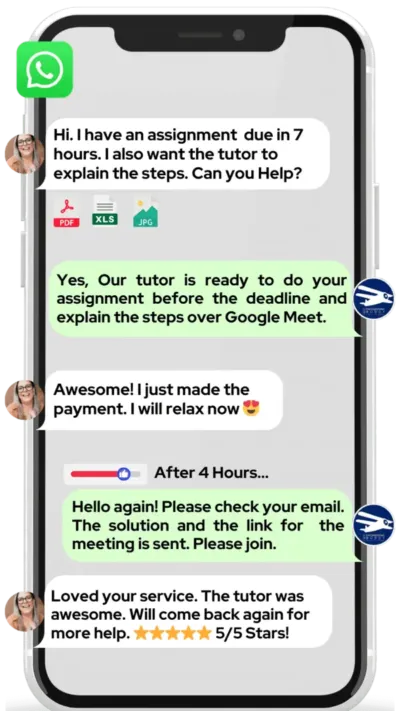
Unlike platforms where you fill out a form and wait, MEB responds in under a minute, 24/7. Tutor match takes under an hour. The $1 trial means you test before you commit. Everything runs over WhatsApp — no logins, no intake forms.
Study Plans (Pick One That Matches Your Goal)
After the diagnostic, your tutor builds the session sequence around one of three plans: a catch-up plan (1–3 weeks) for students with urgent gaps before an exam or submission; an exam prep plan (4–8 weeks) working through the full syllabus systematically with past paper practice; or ongoing weekly support aligned to your semester schedule and assignment deadlines. The tutor sets the specific sequence — you don’t need to figure out what to cover first.
Pricing Guide
Behavioral neuroscience tutoring at MEB starts at $20/hr for standard undergraduate-level sessions. Graduate coursework, thesis support, and specialized topics — computational neuroscience, advanced neuroimaging analysis, statistical methods in behavioral research — run higher, up to $100/hr depending on tutor expertise and timeline.
Rate factors include course level, topic complexity, how quickly you need results, and tutor availability in your time zone.
For students targeting graduate programs at competitive research universities or pursuing careers in clinical neuropsychology or academic research, tutors with professional research backgrounds are available at higher rates — share your specific goal and MEB will match the tier to your ambition.
Start with the $1 trial — 30 minutes, no registration, no commitment. WhatsApp MEB for a quick quote.
MEB has been running since 2008. 18 years of tutoring data across 2,800+ subjects — including behavioral neuroscience, psychopharmacology, and sensation and perception — shapes how tutors are matched and how sessions are structured.
Source: My Engineering Buddy, 2008–2025.
FAQ
Is behavioral neuroscience hard?
It’s demanding because it requires holding biological detail and psychological theory simultaneously. Students who struggle most are usually strong in one area but not both. A tutor who covers both sides — not just one — makes the biggest difference here.
How many sessions are needed?
For a single exam or assignment, 3–6 sessions often close the key gaps. For a full semester of developmental psychology and behavioral neuroscience support, weekly sessions work better. The diagnostic session gives you a clearer number specific to your starting point.
Can you help with homework and assignments?
MEB tutoring is guided learning — you understand the work, then submit it yourself. Tutors explain the concepts, walk through the reasoning, and help you identify what’s missing in your answer. See our Academic Integrity policy and Why MEB page for full details on what we help with and what we don’t.
Will the tutor match my exact syllabus or exam board?
Yes. When you contact MEB via WhatsApp, share your institution, module name, and any course materials. Tutor matching is done against your specific syllabus — not a generic neuroscience overview. This applies whether you’re at a US, UK, Canadian, Australian, or Gulf university.
What happens in the first session?
The tutor runs a short diagnostic to locate exactly where your understanding breaks down — usually 10–15 minutes. The rest of the session addresses the most pressing gap directly. You leave with a clear picture of what to work on next and how long it should take.
Is online tutoring as effective as in-person?
For behavioral neuroscience — where so much depends on diagram work and annotating brain structures — a digital pen-pad on Google Meet often works better than a whiteboard in a room. Real-time annotation, screen sharing, and the ability to pull up fMRI data or journal articles mid-session make online sessions genuinely effective.
Can I get behavioral neuroscience help at midnight?
MEB operates 24/7. WhatsApp the team at any hour and you’ll typically get a response within a minute. Session scheduling depends on tutor availability in your time zone, but late-night and early-morning slots are common, particularly for students in the Gulf, Australia, and Asia-Pacific.
What if I don’t like my assigned tutor?
Tell MEB via WhatsApp and a different tutor is matched — usually within the hour. No explanation required. The $1 trial exists precisely so you can assess fit before committing to a longer block of sessions. If the match isn’t right, we fix it.
Do you help with the animal model and research ethics sections of behavioral neuroscience?
Yes. These are commonly underestimated sections. Tutors cover translational validity of animal models, ethical frameworks for neuroscience research, and how to critique methodology in primary literature — all areas that appear in assessments and are often handled poorly under exam conditions.
What’s the difference between behavioral neuroscience and biopsychology — and does it matter for my course?
The terms overlap significantly. Biopsychology emphasizes the psychological interpretation of biological findings; behavioral neuroscience places more weight on the neural mechanisms themselves. Whether the distinction matters for your course depends on your institution’s framing. Your tutor will align to whichever angle your syllabus prioritizes — share your module outline and MEB handles the rest.
How do I get started with a behavioral neuroscience tutor?
Three steps: WhatsApp MEB with your course details and timeline, get matched with a verified tutor — usually within 24 hours — then start the $1 trial: 30 minutes of live tutoring or one assignment question explained in full. No registration required.
Trust & Quality at My Engineering Buddy
Every MEB tutor goes through subject-specific screening before taking sessions. This includes a live demo evaluation, review of academic or professional background, and ongoing feedback monitoring after sessions begin. Tutors covering behavioral neuroscience hold degrees in neuroscience, psychology, cognitive science, or related fields — many have postgraduate research experience. Rated 4.8/5 across 40,000+ verified reviews on Google.
MEB tutoring is guided learning — you understand the work, then submit it yourself. For full details on what we help with and what we don’t, read our Academic Integrity policy and Why MEB.
MEB has served 52,000+ students across the US, UK, Canada, Australia, the Gulf, and Europe since 2008 — covering 2,800+ subjects. In Psychology, that includes behavioral neuroscience alongside abnormal psychology tutoring, health psychology help, and social psychology tutoring. See how MEB structures sessions in our tutoring methodology overview.
A common pattern our tutors observe is that behavioral neuroscience marks are lost not on factual recall, but on mechanism explanation — students know what the amygdala does but can’t articulate how it does it under exam time pressure. We fix that gap specifically.
Explore Related Subjects
Students studying Behavioral Neuroscience often also need support in:
- Animal Behaviour
- Child Development
- Evolutionary Psychology
- Mental Health
- Psychopathology
- Quantitative Psychology
- Psychometrics
Next Steps
When you contact MEB, have these ready:
- Your institution, course name, and module syllabus (or a course outline)
- A recent assignment, lab report, or past paper question you struggled with
- Your exam date or submission deadline and your current availability
MEB matches you with a verified behavioral neuroscience tutor — usually within 24 hours. The first session starts with a diagnostic so every minute is used on what actually matters.
Visit www.myengineeringbuddy.com for more on how MEB works.
WhatsApp to get started or email [email protected].
52,000+ Happy Students From Various Universities




How Much For Private 1:1 Tutoring & Hw Help?
Private 1:1 Tutoring and HW help Cost $20 – 35 per hour* on average.
Reviewed by Subject Expert
This page has been carefully reviewed and validated by our subject expert to ensure accuracy and relevance.
