




~1 min
Average Reply Time
~1 hour
To Be Matched With A Tutor
1 Trial
75% Find Their Tutor On The 1st Trial
$1
Your First 30 Minutes
Hire The Best Circuit Analysis Tutor
Top Tutors, Top Grades. Without The Stress!



Related Subjects
Most students don’t fail Circuit Analysis because it’s impossible. They fail because KVL clicked in week two and everything after it didn’t.
Circuit Analysis Tutor Online
Circuit Analysis is the study of electrical circuits using laws, theorems, and methods — including KVL, KCL, Thevenin’s theorem, and phasor analysis — to determine voltages, currents, and power in DC and AC systems. It forms the analytical foundation of electrical and electronics engineering.
If you’ve searched for a Circuit Analysis tutor near me, you already know the problem: the theory looks manageable on paper until the exam puts three dependent sources in a mesh network and the answer doesn’t converge. MEB connects you with a 1:1 online Electrical Engineering tutor who knows your exact syllabus, spots where your method breaks down, and stays on the problem with you until it makes sense. One outcome you can expect: fewer careless errors and a sharper instinct for which technique to apply first.
- 1:1 online sessions tailored to your course, lab component, and exam board
- Expert-verified tutors with undergraduate or postgraduate depth in circuit theory
- Flexible time zones — US, UK, Canada, Australia, Gulf, Europe
- Structured learning plan built after a diagnostic session
- Ethical homework and assignment guidance — you understand the work before you submit it
52,000+ students across the US, UK, Canada, Australia, and the Gulf have used MEB since 2008 — including students in Electrical Engineering subjects like Circuit Analysis, Analog Electronics, and Signals and Systems.
Source: My Engineering Buddy, 2008–2025.
How Much Does a Circuit Analysis Tutor Cost?
Most Circuit Analysis tutoring at MEB runs $20–$40/hr, covering everything from first-year DC fundamentals to graduate-level two-port network analysis. Niche or advanced topics — think RF circuit analysis or transistor-level amplifier design — can reach $70–$100/hr. New students start with the $1 trial before committing to a package.
| Level / Need | Typical Rate | What’s Included |
|---|---|---|
| Standard (first/second year) | $20–$35/hr | 1:1 sessions, homework guidance |
| Advanced / Specialist | $35–$100/hr | Expert tutor, graduate-level depth |
| $1 Trial | $1 flat | 30 min live session or 1 homework question |
Tutor availability tightens significantly around end-of-semester exam periods. Book early if you have a fixed deadline.
WhatsApp MEB for a quick quote — average response time under 1 minute.
Who This Circuit Analysis Tutoring Is For
Circuit Analysis sits at the junction of abstract theory and applied problem-solving. Students either grasp the logic early or find themselves compounding errors week by week without realising why.
- Undergraduates in Electrical, Electronics, or Computer Engineering hitting their first or second circuit theory module
- Students retaking after a failed first attempt — where the gaps are now specific and fixable
- Students with a university conditional offer depending on this grade
- Graduate students needing to consolidate AC analysis or Laplace-domain circuit methods before advanced coursework
- Students 4–6 weeks from an exam with significant gaps still to close in node/mesh analysis or frequency response
- Parents watching a child’s confidence drop alongside their grades in a core engineering module
MEB has worked with students at MIT, Georgia Tech, Imperial College London, University of Toronto, UNSW Sydney, TU Delft, and ETH Zurich — among many others.
Start with the $1 trial — a genuine diagnostic session, not a sales call.
1:1 Tutoring vs Self-Study vs AI vs YouTube vs Online Courses
Self-study works if you’re disciplined — but Circuit Analysis errors often go undetected until exam day. AI tools can simplify KVL in seconds but can’t watch you set up a node equation wrong and correct it live. YouTube covers the clean examples; it stops working the moment your circuit has a dependent source nobody covered. Online courses move at a fixed pace and don’t care that you’re still shaky on superposition. 1:1 tutoring with MEB is live, calibrated to your exact course, and corrects the specific error in your working — not a worked example that looks similar.
In Circuit Analysis specifically, the difference shows up fastest in problems that combine two or three techniques at once.
Outcomes: What You’ll Be Able To Do in Circuit Analysis
After structured 1:1 sessions, you’ll be able to apply KVL and KCL confidently to multi-loop DC networks without losing sign conventions mid-problem. You’ll analyse AC circuits using phasor notation and calculate impedance, phase angle, and real versus reactive power. You’ll apply Thevenin’s and Norton’s theorems to reduce complex networks and solve for load conditions. You’ll model first- and second-order transient responses in RC, RL, and RLC circuits — and explain what each time-constant means physically. You’ll use Laplace transforms for circuit analysis and interpret transfer functions in the frequency domain.
Try your first session for $1 — 30 minutes of live 1:1 tutoring or one homework question explained in full. No registration. No commitment. WhatsApp MEB now and get matched within the hour.
Based on feedback from 40,000+ sessions collected by MEB from 2022 to 2025, 58% of students improved by one full grade after approximately 20 hours of 1:1 tutoring in subjects like Circuit Analysis. A further 23% achieved at least a half-grade improvement.
Source: MEB session feedback data, 2022–2025.
What We Cover in Circuit Analysis (Syllabus / Topics)

DC Circuit Analysis
- Kirchhoff’s Voltage Law (KVL) and Kirchhoff’s Current Law (KCL)
- Node voltage method and mesh current method
- Superposition theorem, Thevenin’s theorem, Norton’s theorem
- Source transformation and maximum power transfer
- Dependent sources: voltage-controlled and current-controlled types
- DC operating point analysis and resistive ladder networks
Core texts include Nilsson & Riedel’s Electric Circuits and Hayt & Kemmerly’s Engineering Circuit Analysis (McGraw-Hill).
AC Circuit Analysis & Frequency Domain
- Phasor representation of sinusoidal voltages and currents
- Impedance of resistors, capacitors, and inductors in AC circuits
- AC power: real power, reactive power, apparent power, and power factor
- Resonance in series and parallel RLC circuits
- Frequency response and Bode plots
- Two-port network parameters: Z, Y, h, and ABCD parameters
- Mutual inductance and transformer circuit models
Recommended: Alexander & Sadiku’s Fundamentals of Electric Circuits (McGraw-Hill) and Dorf & Svoboda’s Introduction to Electric Circuits (Wiley).
Transient Analysis & Laplace Methods
- First-order RC and RL transient responses — time-constant interpretation
- Second-order RLC circuits: overdamped, critically damped, underdamped cases
- Laplace transform method for circuit analysis
- Transfer functions and their relation to circuit behaviour
- Initial and final value theorems in circuit context
- Convolution and impulse response in linear circuits
Supports courses using Lathi’s Linear Systems and Signals or Van Valkenburg’s Network Analysis (Prentice Hall).
What a Typical Circuit Analysis Session Looks Like
The tutor opens by checking the previous session’s topic — usually mesh analysis or phasor circuits — and asking you to walk through one problem you attempted. That attempt tells them more than ten minutes of explanation would. From there, you and the tutor work through new problems on screen: the tutor sketches the circuit on a digital pen-pad, labels nodes, and writes the KVL or KCL equations step by step while you follow and question. You then replicate the method on a similar problem while the tutor watches — catching sign errors, missed terms, or wrong impedance expressions before they become habits. The session closes with two or three practice problems assigned from your course sheet and a note on what comes next: typically frequency response or Laplace-domain analysis.
How MEB Tutors Help You with Circuit Analysis (The Learning Loop)
Diagnose: In the first session, the tutor identifies exactly where the method breaks down — often it’s not KVL itself but how dependent sources get treated inside a mesh loop, or how the phasor diagram gets set up for a parallel RLC. That’s where sessions start.
Explain: The tutor works through live problems on a digital pen-pad via Google Meet — showing each algebraic step, not just the answer. For network theory and two-port parameters, this visual approach makes the matrix structure click faster than any textbook.
Practice: You attempt the next problem with the tutor present. The goal isn’t to get it right immediately — it’s to catch the error at the moment it happens rather than after the exam.
Feedback: The tutor explains specifically why a step lost marks: wrong reference direction, missing imaginary part, incorrect initial condition. Generic “check your working” advice isn’t given here.
Plan: Each session ends with a clear topic progression. If you need to reach Laplace methods in four weeks, the tutor maps exactly what has to happen in sessions two, three, and four to get there.
Sessions run over Google Meet. The tutor uses a digital pen-pad or iPad with Apple Pencil for circuit sketching and equation work. Before your first session, share your course syllabus or module outline, one problem you couldn’t finish, and your exam or assignment date. The first session covers diagnosis and at least one full worked topic. Start with the $1 trial — 30 minutes of live tutoring that also serves as your first diagnostic.
At MEB, we’ve found that the biggest time-waster in Circuit Analysis tutoring is re-explaining what the student already understands. The first session diagnostic exists to skip that entirely and go straight to the gap.
Tutor Match Criteria (How We Pick Your Tutor)
Not every engineer can teach circuit analysis well. MEB matches on four criteria.
Subject depth: The tutor must have covered your exact level — first-year DC fundamentals, AC and frequency domain, or graduate Laplace and network theory. Exam board and university syllabus fit matter.
Tools: Every tutor uses Google Meet plus a digital pen-pad or iPad with Apple Pencil. Circuit diagrams are drawn live, not shared as static images.
Time zone: Matched to your region — US, UK, Gulf, Canada, or Australia — so sessions run at hours that don’t wreck your sleep before an exam.
Goals: Whether you need exam score improvement, homework guidance for weekly problem sets, or conceptual depth for a research-adjacent course, the tutor is selected for that specific aim.
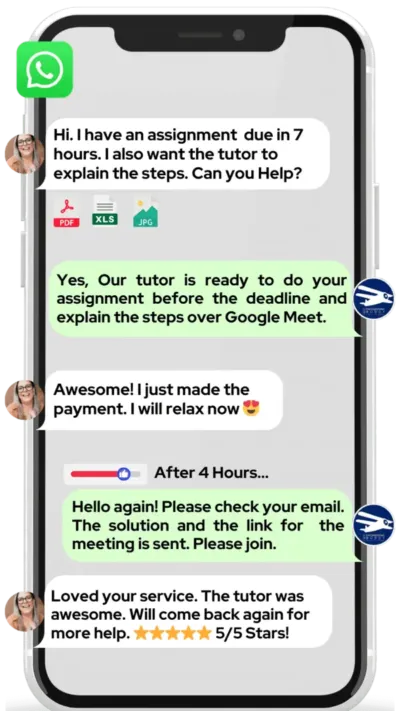
Unlike platforms where you fill out a form and wait, MEB responds in under a minute, 24/7. Tutor match takes under an hour. The $1 trial means you test before you commit. Everything runs over WhatsApp — no logins, no intake forms.
Study Plans (Pick One That Matches Your Goal)
Three plans cover most Circuit Analysis students. Catch-up (1–3 weeks): for students behind on node/mesh methods or AC analysis with an exam approaching fast. Exam prep (4–8 weeks): structured revision across all circuit topics aligned to your specific exam date and paper format. Weekly support: ongoing sessions timed to your semester schedule, covering each new topic as it’s introduced in lectures. After the first diagnostic, the tutor builds the specific session sequence — these are starting frameworks, not rigid packages.
Pricing Guide
Circuit Analysis tutoring starts at $20/hr for standard undergraduate levels. Graduate-level work — network synthesis, advanced two-port analysis, or Laplace-domain design problems — typically runs $50–$100/hr depending on tutor expertise and topic complexity. Rate factors include your level, the complexity of the specific circuit topic, your timeline, and tutor availability.
Availability shrinks fast in the four weeks before end-of-semester exams at US and UK universities. If you’re working to a fixed date, book early.
For students targeting admission to graduate programmes at institutions like MIT, Stanford, or Imperial College London, tutors with research or industry backgrounds in circuit design are available at higher rates — share your specific goal and MEB will match the tier to your ambition.
Start with the $1 trial — 30 minutes, no registration, no commitment. WhatsApp MEB for a quick quote.
Circuit Analysis is the gateway course for analog circuits, power electronics, and digital electronics — students who close the gaps here move through the rest of their programme with noticeably less friction.
Source: My Engineering Buddy, 2008–2025.
FAQ
Is Circuit Analysis hard?
It’s one of the most failure-prone core modules in electrical engineering. The concepts aren’t abstract — but the methods compound. A shaky foundation in KVL makes everything from phasors to Laplace transforms harder. Most students who struggle have one or two fixable gaps, not a general inability.
How many sessions are needed?
Most students see measurable improvement within 5–8 focused sessions. Students who start early in the semester — before gaps compound — typically need fewer. Those arriving two weeks before an exam usually need intensive daily or every-other-day sessions to close specific gaps in time.
Can you help with homework and assignments?
MEB tutoring is guided learning — you understand the work, then submit it yourself. The tutor explains the method, works through a similar example, and checks your reasoning. See our Academic Integrity policy and Why MEB page for full details on what we help with and what we don’t.
Will the tutor match my exact syllabus or exam board?
Yes. When you contact MEB, share your university, module code if you have it, and your current topic. The tutor is matched to that exact scope — not assigned generically as an “electronics tutor.”
What happens in the first session?
The tutor runs a short diagnostic — usually two or three problems covering different methods — to locate exactly where the method breaks down. From there, the session moves directly into the first gap. No time is spent re-covering material you already handle correctly.
Is online tutoring as effective as in-person?
For Circuit Analysis specifically, the digital pen-pad format is often better than a physical whiteboard — the tutor can annotate directly on your circuit diagram and you keep a copy of every worked problem after the session. The limiting factor is your internet connection, not the format.
What’s the difference between node voltage and mesh current methods — and when should I use which?
Node voltage works best when the circuit has fewer nodes than meshes. Mesh current is cleaner when loops are clearly defined and there are no floating voltage sources. Your MEB tutor will show you how to read a circuit and choose the faster method before writing a single equation — this alone saves exam time.
Can MEB help with circuit simulation homework using SPICE or LTspice?
Yes. If your course requires simulation alongside hand analysis — verifying Thevenin equivalents in LTspice or checking transient responses — the tutor covers both the analytical method and the simulation workflow. The Institute of Physics has noted the growing role of simulation in undergraduate circuit education.
Do you offer group Circuit Analysis sessions?
MEB sessions are 1:1 only. Group tutoring creates pacing problems — one student’s confusion slows another’s progress. For Circuit Analysis, where errors are often individual and method-specific, 1:1 is the only format MEB offers.
Can I get Circuit Analysis help at midnight or on weekends?
Yes. MEB operates across time zones 24/7. Students in the Gulf, Australia, and the US West Coast regularly book late-night or weekend sessions. WhatsApp MEB at any hour and you’ll typically have a tutor match within an hour.
How does a Circuit Analysis tutor help if I’m preparing for a department final with a specific professor’s problem style?
Share past papers or problem sets from your course. MEB tutors work from your actual materials — not generic textbook problems. If your professor favours dependent-source mesh problems or complex RLC frequency response questions, that’s what the sessions focus on.
How do I get started?
Start with the $1 trial — 30 minutes of live tutoring or one problem explained in full. Three steps: WhatsApp MEB, get matched with a verified Circuit Analysis tutor, start your trial session. No registration, no forms, no commitment beyond $1.
Trust & Quality at My Engineering Buddy
Every MEB tutor in Circuit Analysis is screened through a subject-specific vetting process: written assessment on circuit theory, a live demo session evaluated by an MEB reviewer, and ongoing feedback monitoring after each student session. Tutors hold undergraduate or postgraduate degrees in Electrical Engineering, Electronics Engineering, or a closely related field. Many have industry experience in circuit design or electronic circuit design. Rated 4.8/5 across 40,000+ verified reviews on Google.
MEB tutoring is guided learning — you understand the work, then submit it yourself. For full details on what we help with and what we don’t, read our Academic Integrity policy and Why MEB.
MEB has served 52,000+ students across the US, UK, Canada, Australia, the Gulf, and Europe since 2008, covering 2,800+ subjects. Within Electrical Engineering, that includes Circuit Analysis, Electrical Circuits, Control Systems, and Power Systems. Tutors are matched to the specific subject, level, and exam board — not assigned from a general pool. See our tutoring methodology for how sessions are structured and quality is maintained.
Students consistently tell us that the biggest shift in Circuit Analysis happens not when they learn a new theorem — but when they stop second-guessing the sign on a mesh current. That moment of certainty is what the first few sessions are designed to produce.
Explore Related Subjects
Students studying Circuit Analysis often also need support in:
- Semiconductor Devices
- Operational Amplifiers
- Electromagnetic Field Theory
- Microelectronics
- Integrated Circuits (IC)
- VLSI Design
- Embedded Systems
A common pattern our tutors observe is that students who reinforce Circuit Analysis fundamentals early in the semester consistently handle the later modules — power electronics, control theory, digital circuits — with far less revision time at the end.
Next Steps
Ready to get started? Here’s what to do:
- Share your module name, university, and current topic (e.g. AC phasors, Laplace methods)
- Share your availability and time zone
- MEB matches you with a verified Circuit Analysis tutor — usually within the hour
- Your first session opens with a diagnostic so every minute goes toward the right gap
Before your first session, have ready: your course syllabus or module outline, a recent problem set or homework question you couldn’t finish, and your exam or assignment deadline date. The tutor handles the rest.
The Institute of Physics supports rigorous analytical training in circuit methods as part of core physics and engineering education — consistent with how MEB structures its Circuit Analysis tutoring sessions.
Source: Institute of Physics
Visit www.myengineeringbuddy.com for more on how MEB works.
WhatsApp to get started or email [email protected].
52,000+ Happy Students From Various Universities






Reviewed by Subject Expert
This page has been carefully reviewed and validated by our subject expert to ensure accuracy and relevance.
