




~1 min
Average Reply Time
~1 hour
To Be Matched With A Tutor
30 Min Trial
75% Find Their Tutor On The 1st Trial
$20-35+/hr
Premium Yet Affordable Learning
Hire The Best Contract Law Tutor
Offer, acceptance, consideration, breach — and you’re three weeks from your exam with none of it clicking. That’s the exact situation a Contract Law tutor from MEB is built for.
Contract Law Tutor Online
Contract Law governs legally binding agreements between parties, covering formation, terms, performance, breach, and remedies. Studied at undergraduate and graduate level in common law and civil law systems, it equips students to analyse, draft, and dispute contractual obligations.
MEB offers 1:1 online tutoring and academic guidance in 2,800+ advanced subjects — including Law and its specialist branches. If you’ve searched for a Contract Law tutor near me, you’ll find that online delivery through MEB gives you access to verified subject specialists regardless of where you are — US, UK, Canada, Australia, or the Gulf. Sessions are built around your exact syllabus, not a generic outline.
- 1:1 online sessions tailored to your course, module, or exam board
- Expert verified tutors with degrees and teaching experience in Contract Law
- Flexible time zones — matched to students in the US, UK, Canada, Australia, and Gulf
- Structured learning plan built after a diagnostic session in your first hour
- Ethical academic guidance — you understand the work before you submit it
52,000+ students across the US, UK, Canada, Australia, and the Gulf have used MEB since 2008 — including students in Law subjects like Contract Law, Tort Law, and Business Law.
Source: My Engineering Buddy, 2008–2025.
How Much Does a Contract Law Tutor Cost?
Most Contract Law sessions run $20–$40/hr. Graduate and specialist modules — unjust enrichment, comparative contract law, commercial contracts — may reach $60–$100/hr depending on tutor expertise. The $1 trial gets you 30 minutes of live tutoring or a full explanation of one homework question before you commit to anything.
| Level / Need | Typical Rate | What’s Included |
|---|---|---|
| Undergraduate (most modules) | $20–$40/hr | 1:1 sessions, problem questions, essay guidance |
| Graduate / LLM level | $40–$70/hr | Advanced doctrine, comparative frameworks, dissertation support |
| Specialist / Niche topics | Up to $100/hr | Commercial contracts, cross-jurisdictional issues, expert tutor |
| $1 Trial | $1 flat | 30 min live session or one homework question explained in full |
Tutor availability tightens significantly around end-of-semester deadlines and bar exam prep windows. Book early if your exam or submission is within six weeks.
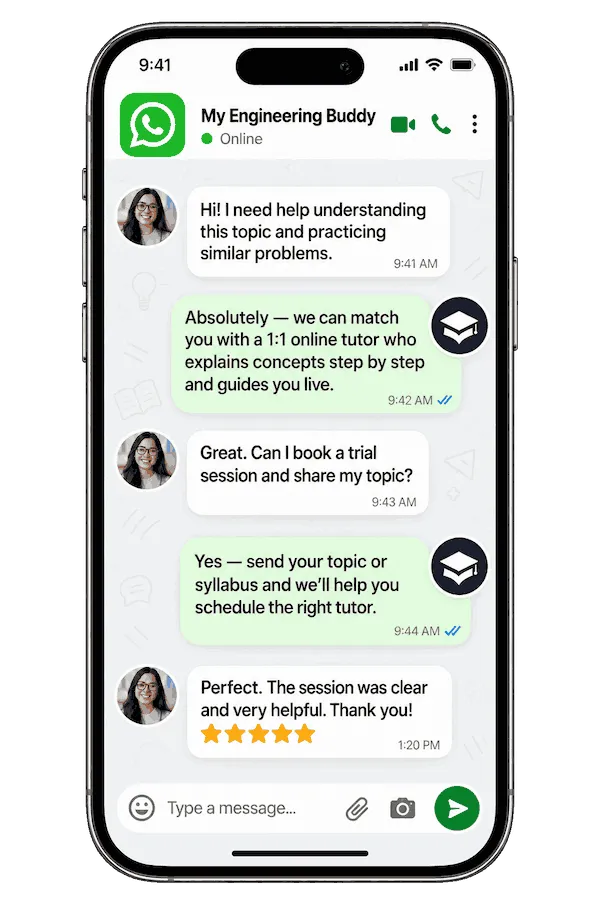
WhatsApp MEB for a quick quote — average response time under 1 minute.
Who This Contract Law Tutoring Is For
Contract Law trips up students at every level — first-years trying to untangle offer and acceptance, final-year LLB students writing 3,000-word problem questions under time pressure, and LLM students working through comparative and commercial contract doctrine for the first time.
- First and second year law students struggling to apply doctrine to problem questions
- Students retaking after a failed first attempt who need to close specific gaps fast
- Students with a conditional offer who need a confirmed grade this semester
- LLB and LLM students facing a coursework submission deadline with unclear feedback from their last attempt
- Students 4–6 weeks from exams who still can’t reliably distinguish void, voidable, and unenforceable contracts
- Parents watching a student’s confidence drop alongside their law grades
Students working through Contract Law alongside Tort Law tutoring or Civil Law help often find that the overlapping doctrine reinforces both subjects at once — tutors at MEB are briefed on your full course load, not just one module.
The $1 trial is available regardless of level or urgency. It’s the fastest way to find out whether MEB’s approach works for you.
1:1 Tutoring vs Self-Study vs AI vs YouTube vs Online Courses
Self-study works if you’re disciplined — but contract law doctrine requires feedback on application, not just reading. AI tools explain rules quickly and can’t tell you why your problem question answer missed the legal issue. YouTube covers the basics of consideration or promissory estoppel but stops when your specific fact pattern gets complicated. Online courses are structured but move at one speed regardless of where you’re stuck. 1:1 tutoring with MEB is calibrated to your exact module — your tutor works from your syllabus, your past papers, and your actual written answers, catching errors in the moment rather than a week later when the exam is closer.
Outcomes: What You’ll Be Able To Do in Contract Law
After working with a Contract Law tutor through MEB, you’ll be able to apply the IRAC framework to problem questions with confidence — identifying the legal issue, stating the rule accurately, and applying it to the specific facts without missing key elements. You’ll analyse offer and acceptance scenarios involving postal rules, electronic contracts, and counter-offers without confusing the sequence. You’ll explain the distinction between conditions, warranties, and innominate terms and articulate the remedial consequences of each. You’ll write under timed exam conditions with a clear structure that examiners can follow and mark. You’ll present arguments on misrepresentation, duress, and undue influence with the precision the cases require.
Based on feedback from 40,000+ sessions collected by MEB from 2022 to 2025, 58% of students improved by one full grade after approximately 20 hours of 1:1 tutoring in subjects like Contract Law. A further 23% achieved at least a half-grade improvement.
Source: MEB session feedback data, 2022–2025.
Supporting a student through Contract Law? MEB works directly with parents to set up sessions, track progress, and keep coursework on schedule. WhatsApp MEB — average response time is under a minute, 24/7.
What We Cover in Contract Law (Syllabus / Topics)

Formation and Validity of Contracts
- Offer and acceptance — rules, revocation, postal rule, electronic contracts
- Consideration — adequacy vs sufficiency, past consideration, promissory estoppel
- Intention to create legal relations — social, domestic, and commercial agreements
- Capacity — minors, mental incapacity, corporations
- Certainty and completeness of terms
- Privity of contract and third-party rights
Core texts include Chitty on Contracts (general reference), McKendrick’s Contract Law: Text, Cases and Materials, and Treitel on the Law of Contract. Tutors work from the edition your course uses.
Terms, Breach, and Remedies
- Express and implied terms — statute, custom, business efficacy
- Classification of terms — conditions, warranties, innominate terms
- Exclusion clauses and the Unfair Contract Terms Act / consumer protection frameworks
- Breach — actual and anticipatory breach, repudiation
- Damages — remoteness (Hadley v Baxendale), mitigation, expectation and reliance loss
- Specific performance, injunctions, and restitution
- Frustration and common mistake
Tutors reference Poole’s Casebook on Contract Law and Andrews on Contract Law alongside your module’s prescribed reading list.
Vitiating Factors and Advanced Doctrine
- Misrepresentation — fraudulent, negligent, innocent; rescission and damages under the Misrepresentation Act 1967
- Duress — economic duress, threats, and the adequacy of alternatives
- Undue influence — actual and presumed; the role of independent advice
- Unconscionable bargains and inequality of bargaining power
- Unjust enrichment and restitutionary claims
Graduate and LLM students often work from Burrows’ A Restatement of the English Law of Contract and Legal Theory texts that contextualise doctrine within broader private law frameworks.
At MEB, we’ve found that Contract Law students who struggle most are rarely confused about the rules themselves — they’re confused about how to structure their answer under time pressure. Tutors spend a significant portion of early sessions on problem question technique, not just doctrine revision.
What a Typical Contract Law Session Looks Like
Your tutor opens by checking your previous topic — say, the postal rule and its limits in electronic contract scenarios. You share your attempted problem question answer on screen. The tutor reads through it, marks where the legal issue was missed or the rule was misapplied, and then works through a model answer live using a digital pen-pad so you can see exactly how the argument is constructed. You then attempt a parallel question with the tutor watching in real time. By the end of the session, the tutor has identified whether the gap is doctrinal knowledge or answer structure, sets a timed practice question for before next session, and flags the next topic — typically conditions vs innominate terms or the remoteness test for damages.
How MEB Tutors Help You with Contract Law (The Learning Loop)
Diagnose: In the first session, the tutor reviews a past paper attempt or a homework answer you’ve already submitted. They identify whether the issue is doctrinal — you don’t know the rule — or structural — you know the rule but can’t apply it to facts under time pressure. These are different problems and need different solutions.
Explain: The tutor works through live examples on Google Meet using a digital pen-pad. For Contract Law, this usually means building a sample IRAC answer in front of you — annotating the fact pattern, pulling out the legal issues, applying the correct test, and showing where marks are won and lost.
Practice: You attempt a problem question or essay plan with the tutor present. The tutor doesn’t write it for you — they watch your reasoning in real time and redirect when you go off track.
Feedback: The tutor goes through your answer step by step. Not just “this is wrong” — but specifically which element of the legal test you applied incorrectly and what the examiner’s mark scheme would deduct for it.
Plan: At the end of each session, the tutor sets the next topic in sequence, links it to your exam date or submission deadline, and tracks which areas are solid versus which need another session. No two students get the same sequence.
Sessions run on Google Meet. Tutors use a digital pen-pad or iPad with Apple Pencil to annotate cases and build model answers in real time. Before your first session, share your module handbook, a recent past paper, and your exam date. The first session doubles as a diagnostic. Start with the $1 trial — 30 minutes of live tutoring that also serves as your diagnostic.
Students consistently tell us that seeing a model problem question built from scratch — live, annotated, with each step explained — does more in one session than three weeks of re-reading their lecture notes. Contract Law is a skill subject, not a memory subject. The way you practice it changes the outcome.
Contract Law demands more than case recall — it requires structured legal argument under time pressure. MEB tutors train students in both the doctrine and the technique, which is why the grade improvements tend to be significant and consistent.
Source: My Engineering Buddy, 2008–2025.
Tutor Match Criteria (How We Pick Your Tutor)
Not every law tutor covers every module at the same depth. MEB matches based on four factors.
Subject depth: Your tutor holds a law degree at or above the level you’re studying — LLB tutors for undergraduate modules, LLM or practising solicitors/barristers for graduate and commercial contract work. Exam board and jurisdiction matter: a tutor familiar with English common law doctrine is not automatically the right match for a student studying under Scots law or a US contracts course.
Tools: Every session runs on Google Meet with a digital pen-pad or iPad and Apple Pencil. Tutors annotate cases, build model answers, and mark your work in real time — not via email after the session.
Time zone: Tutors are matched to your region — US, UK, Gulf, Canada, or Australia — so session times are practical, not a compromise.
Goals: Whether you need exam score improvement, help with a specific coursework piece, or ongoing weekly support through the semester, the match reflects your stated priority — not a default package.
Unlike platforms where you fill out a form and wait, MEB responds in under a minute, 24/7. Tutor match takes under an hour. The $1 trial means you test before you commit. Everything runs over WhatsApp — no logins, no intake forms.
Study Plans (Pick One That Matches Your Goal)
After the diagnostic session, your tutor builds a specific sequence. Three common structures: Catch-up (1–3 weeks) — for students behind on a module or facing a fast-approaching deadline, focusing only on the topics most likely to appear; Exam prep (4–8 weeks) — structured revision covering the full syllabus with timed practice questions and mock marking; Weekly support — ongoing alignment to your semester, covering each topic as your lectures progress and tackling homework before submission. The tutor decides the sequence after seeing your current work, not before.
Pricing Guide
Contract Law tutoring starts at $20/hr for standard undergraduate modules. Graduate and LLM-level work typically runs $40–$70/hr. Niche or highly specialist topics — international commercial contracts, comparative contract law across jurisdictions, pre-bar review — can reach $100/hr depending on tutor background and timeline.
Rate factors include your level, the complexity of the topic, how quickly you need sessions, and tutor availability in your time zone. Availability tightens in the weeks before end-of-semester exams and bar prep windows.
For students targeting top law school placements, bar admission, or LLM programmes at leading institutions, tutors with practising legal backgrounds are available at higher rates — share your specific goal and MEB will match the tier to your ambition.
Start with the $1 trial — 30 minutes, no registration, no commitment. WhatsApp MEB for a quick quote.
FAQ
Is Contract Law hard?
Most students find Contract Law harder than expected — not because the rules are obscure, but because applying them to unseen fact patterns under exam conditions is a skill that takes structured practice to develop. The doctrine is learnable. The technique needs coaching.
How many sessions are needed?
Students closing specific gaps before an exam typically see improvement in 4–8 sessions. Students working through the full module from the start of semester usually benefit from weekly sessions across 10–14 weeks. The tutor gives a clearer estimate after the first diagnostic.
Can you help with practice exercises?
MEB tutoring is guided learning — the tutor explains the relevant doctrine, works through the structure with you, and helps you understand what the question is asking. You write and submit the work yourself. See our Academic Integrity policy and Why MEB page for full details on what we help with and what we don’t.
Will the tutor match my exact syllabus or exam board?
Yes. MEB matches tutors to your specific institution’s module, jurisdiction, and exam format. A student on an English common law LLB needs a different tutor than one studying the US UCC or a civil law system. Share your course outline at the start and the tutor works from it directly.
What happens in the first session?
The tutor reviews a piece of your existing work — a past paper attempt, a homework question, or a set of lecture notes — to identify where the gaps are. The session is diagnostic first, then active teaching. You leave with a clear sense of what to fix and in what order.
Is online tutoring as effective as in-person?
For Contract Law, yes. The subject is text and argument-based — the tutor annotates cases, builds model answers, and marks your work on screen in real time. Students consistently report that live, annotated walkthroughs of problem questions on Google Meet are as effective as working in person, often more efficient.
What’s the difference between a void and a voidable contract, and why do students keep confusing them?
A void contract has no legal effect from the start — neither party can enforce it. A voidable contract is valid until one party elects to rescind it. Students confuse them because the consequences look similar until remedies are discussed. Tutors typically address this distinction in the first or second session.
Do I need to know case names for my Contract Law exam?
It depends on your exam board and institution. Most UK law exams expect you to cite cases accurately — Carlill, Hadley v Baxendale, Donoghue v Stevenson in adjacent subjects. US contracts courses vary by professor. Your tutor confirms what your specific exam requires and builds a case recall strategy around that.
Can you help with IRAC structure for Contract Law problem questions?
Yes — this is one of the most common reasons students seek a Contract Law tutor. IRAC (Issue, Rule, Application, Conclusion) is taught differently across institutions. Tutors work from your marked feedback, identify where your structure breaks down, and rebuild it through timed practice with immediate correction.
Can you help with a Contract Law essay question, not just problem questions?
Yes. Essay questions in Contract Law require a different skill — sustained argument, critical engagement with doctrine, and a clear thesis. Tutors help with essay planning, argument sequencing, and how to engage with academic debate without losing the thread of your answer.
How do I get started?
Start with the $1 trial: 30 minutes of live 1:1 tutoring or one homework question explained in full. Three steps: WhatsApp MEB, get matched with a verified Contract Law tutor — usually within the hour — then start your trial session.
Can I get Contract Law help late at night or on weekends?
MEB operates 24/7 across time zones. Students in the US, UK, Gulf, Australia, and Canada regularly book sessions outside standard business hours. WhatsApp MEB at any time and you’ll have a response in under a minute.
Trust & Quality at My Engineering Buddy
Every MEB tutor goes through subject-specific screening before taking on students. For Contract Law, that means verifying their law degree level and jurisdiction, assessing their knowledge of current doctrine across the major topic areas, and running a live demo session evaluation. Ongoing student feedback is reviewed after every session — tutors with declining ratings are flagged and reviewed before they take on new students. Rated 4.8/5 across 40,000+ verified reviews on Google.
MEB tutoring is guided learning — you understand the work, then submit it yourself. For full details on what we help with and what we don’t, read our Academic Integrity policy and Why MEB.
MEB has been serving students since 2008 across the US, UK, Canada, Australia, Gulf, and Europe — 52,000+ students across 2,800+ subjects. In Law, that includes Contract Law, Property Law tutoring, Constitutional Law help, and Administrative Law tutoring among many others. The platform is built for serious students who need expert-matched support, not a generic study service.
A common pattern our tutors observe is that students arrive having memorised the key cases but unable to deploy them under timed exam conditions. Getting the doctrine right and getting the exam technique right are two separate challenges. MEB tutors are trained to address both, not just one.
Explore Related Subjects
Students studying Contract Law often also need support in:
- Criminal Law
- Family Law
- Intellectual Property Law
- Labour Laws
- Jurisprudence
- Legal Research
- Banking Law and Practice
Next Steps
To get the most from your first session, have the following ready:
- Your module handbook or course outline — including the exam board or institution name
- A recent past paper attempt or homework question you struggled with
- Your exam date or assignment deadline
Share your hardest topic, your current timeline, and your time zone. MEB matches you with a verified Contract Law tutor — usually within 24 hours, often within the hour. The first session starts with a diagnostic so every minute counts.
Visit www.myengineeringbuddy.com for more on how MEB works.
WhatsApp to get started or email [email protected].
Try your first session for $1 — 30 minutes of live 1:1 tutoring or one homework question explained in full. No registration. No commitment. WhatsApp MEB now and get matched within the hour.
Reviewed by Subject Expert
This page has been carefully reviewed and validated by our subject expert to ensure accuracy and relevance.



