

Hire Verified & Experienced
Electronics Tutors
Email: [email protected]
4.8/5 40K+ session ratings collected on the MEB platform



Hire The Best Electronics Tutor
Top Tutors, Top Grades. Without The Stress!





Most students don’t fail Electronics because they’re not smart enough. They fail because no one ever explained why a transistor switches — just told them to memorize the equation.
Electronics Tutor Online
Electronics is the branch of engineering that studies the behavior of electrons in semiconductor devices and circuits — covering diodes, transistors, amplifiers, and ICs — equipping students to design, analyze, and troubleshoot active and passive electronic systems.
Finding a reliable Electronics tutor near me is harder than it sounds. Most tutors either know the theory or the lab work — rarely both at the depth your course demands. MEB connects you with verified Electrical and Electronics specialists and electronics engineering tutors who have worked through the exact syllabuses and exam papers your course requires. One diagnostic session, one matched tutor, and you’re moving forward.
- 1:1 online sessions tailored to your course, exam board, and level
- Expert-verified tutors with postgraduate subject-specific knowledge
- Flexible time zones — US, UK, Canada, Australia, Gulf covered
- Structured learning plan built after a diagnostic session
- Ethical homework and assignment guidance — you understand the work before you submit
52,000+ students across the US, UK, Canada, Australia, and the Gulf have used MEB since 2008 — including students in Electrical Engineering subjects like Electronics, Analog Electronics, and Digital Electronics.
Source: My Engineering Buddy, 2008–2025.
How Much Does an Electronics Tutor Cost?
Most Electronics tutoring sessions run between $20 and $40 per hour depending on level and topic complexity. Graduate-level or highly specialized work goes up to $100/hr. Not sure whether to commit? Start with the $1 trial — 30 minutes of live tutoring or one homework question explained in full, before you spend anything more.
| Level / Need | Typical Rate | What’s Included |
|---|---|---|
| Standard (A Level, IB, AP, early undergrad) | $20–$35/hr | 1:1 sessions, homework guidance, past paper practice |
| Advanced / Graduate / Specialist | $35–$100/hr | Expert tutor, niche depth, research-level support |
| $1 Trial | $1 flat | 30 min live session or one homework question solved |
Tutor availability tightens sharply in the weeks before end-of-semester exams and submission deadlines. Book early if you’re working to a fixed date.
WhatsApp MEB for a quick quote — average response time under 1 minute.
Who This Electronics Tutoring Is For
Electronics catches students off-guard. The jump from Ohm’s law to BJT biasing to op-amp stability analysis is steep, and most courses don’t slow down for the students who didn’t grasp the last module. If any of the situations below match yours, MEB can help.
- Students retaking after a failed first attempt in a circuits or semiconductor module
- Students with a university conditional offer depending on their Electronics grade this term
- Students 4–6 weeks from an exam with significant gaps in amplifier theory, signal analysis, or device physics still to close
- Undergraduates stuck on circuit analysis or semiconductor devices assignments with a deadline approaching
- Parents watching a student’s confidence drop alongside their grades in an Electronics or electrical circuits module
- Graduate students needing research-level support in microelectronics or mixed-signal design
Students at universities including MIT, Georgia Tech, Imperial College London, TU Delft, the University of Toronto, ETH Zurich, and the University of Melbourne have used MEB for Electronics support at undergraduate and postgraduate level.
1:1 Tutoring vs Self-Study vs AI vs YouTube vs Online Courses
Self-study works if you’re disciplined, but Electronics has too many interdependent concepts — a gap in transistor biasing breaks everything downstream. AI tools give fast explanations but can’t follow your schematic or catch the sign error in your KVL loop in real time. YouTube covers the basics well; it stops being useful the moment you’re debugging a specific circuit topology for your coursework. Online courses move at a fixed pace regardless of where you’re stuck. 1:1 tutoring with MEB is calibrated to your exact Electronics module — the tutor sees your work, corrects errors on the spot, and doesn’t move on until the concept is solid.
Outcomes: What You’ll Be Able To Do in Electronics
After focused 1:1 sessions, students consistently report being able to analyze BJT and MOSFET amplifier circuits from DC operating point through to AC small-signal response. You’ll apply Kirchhoff’s laws and Thevenin/Norton equivalents to multi-loop networks without freezing. You’ll solve op-amp feedback configurations — inverting, non-inverting, summing, and integrator topologies — and explain why gain-bandwidth product limits real designs. You’ll model diode behavior in rectifier and clipping circuits, and present your reasoning in exam conditions with enough clarity to earn method marks even when the final answer isn’t exact.
Based on feedback from 40,000+ sessions collected by MEB from 2022 to 2025, 58% of students improved by one full grade after approximately 20 hours of 1:1 tutoring in subjects like Electronics. A further 23% achieved at least a half-grade improvement.
Source: MEB session feedback data, 2022–2025.
Supporting a student through Electronics? MEB works directly with parents to set up sessions, track progress, and keep coursework on schedule. WhatsApp MEB — average response time is under a minute, 24/7.
Try your first session for $1 — 30 minutes of live 1:1 tutoring or one homework question explained in full. No registration. No commitment. WhatsApp MEB now and get matched within the hour.
What We Cover in Electronics (Syllabus / Topics)

Track 1: Semiconductor Devices and Diode Circuits
- p-n junction theory: depletion region, built-in potential, forward and reverse bias
- Diode models: ideal, constant-voltage drop, piecewise-linear
- Rectifier circuits: half-wave, full-wave, bridge; ripple and filter capacitor sizing
- Zener diode regulation: load regulation, line regulation, breakdown behavior
- BJT device physics: minority carrier injection, current gain β, Early effect
- MOSFET operation: threshold voltage, saturation vs triode regions, body effect
- Small-signal models: hybrid-π model for BJT, MOSFET small-signal equivalent
Core texts: Sedra & Smith Microelectronic Circuits (7th ed.), Neamen Semiconductor Physics and Devices (4th ed.), Streetman & Banerjee Solid State Electronic Devices.
Track 2: Amplifier Analysis and Op-Amp Circuits
- Single-stage BJT amplifiers: common-emitter, common-base, common-collector bias and gain
- MOSFET amplifiers: common-source, common-gate, common-drain configurations
- Frequency response: Miller effect, dominant pole, gain-bandwidth product
- Differential amplifiers: tail current source, common-mode rejection ratio (CMRR)
- Op-amp fundamentals: virtual short, inverting and non-inverting topologies, slew rate
- Active filters: Butterworth, Sallen-Key first and second order, filter design from specifications
- Feedback theory: loop gain, stability, phase margin, Bode plot interpretation
- Instrumentation amplifiers and precision rectifiers
Core texts: Razavi Design of Analog CMOS Integrated Circuits, Horowitz & Hill The Art of Electronics (3rd ed.), Franco Design with Operational Amplifiers and Analog Integrated Circuits.
Track 3: Digital Electronics and Mixed-Signal Systems
- Logic gates, Boolean algebra, Karnaugh maps, and combinational circuit minimization
- Sequential circuits: flip-flops, registers, counters, state machine design
- ADC and DAC fundamentals: sampling theorem, quantization error, SNR for n-bit converters
- CMOS logic: noise margins, propagation delay, power dissipation, fan-out
- Memory types: SRAM, DRAM, Flash — architecture and read/write cycles
- Programmable logic: FPGA design concepts and hardware description language basics
- Interfacing analog and digital subsystems: sample-and-hold, anti-aliasing filters
Core texts: Mano & Ciletti Digital Design (6th ed.), Rabaey, Chandrakasan & Nikolic Digital Integrated Circuits (2nd ed.), Wakerly Digital Design: Principles and Practices.
The IEC — the International Electrotechnical Commission — sets the global standards that underpin electronic component specifications, safety testing, and circuit classification. Understanding these standards matters increasingly at upper-undergraduate and professional level.
Source: International Electrotechnical Commission.
What a Typical Electronics Session Looks Like
The tutor opens by checking the previous topic — usually something like BJT Q-point calculation or op-amp feedback stability — and asks the student to talk through their attempt before anything else. From there, the session moves into the current problem: say, designing a common-emitter amplifier for a specified voltage gain and input impedance. Both tutor and student work through the schematic on a shared screen, with the tutor using a digital pen-pad to annotate the small-signal equivalent circuit in real time. The student replicates each step, explains the reasoning aloud, and the tutor flags the moment understanding breaks down — not at the end of the problem, but mid-step. The session closes with a specific practice task: three similar circuits to attempt before the next session, and the next topic noted — typically frequency response or feedback topology.
How MEB Tutors Help You with Electronics (The Learning Loop)
Diagnose: In the first session, the tutor identifies exactly where your understanding breaks down — not just the topic, but the specific step. That might be the transition from large-signal to small-signal modeling, or the point where feedback loop gain analysis starts feeling circular.
Explain: The tutor works through live examples on Google Meet using a digital pen-pad or iPad with Apple Pencil. Every step is narrated. You see why the equation is set up a certain way, not just what the answer is.
Practice: You attempt the next problem yourself, with the tutor present but not intervening unless you ask. This is where real learning happens — making the mistake in a low-stakes environment instead of in the exam.
At MEB, we’ve found that the students who progress fastest in Electronics are the ones who can explain a concept back to the tutor — not just solve a problem when walked through it. The diagnostic session is designed specifically to find that gap between recognition and recall.
Feedback: Step-by-step error correction follows each practice attempt. The tutor doesn’t just mark it wrong — they show exactly which step introduced the error, why it costs marks, and how to catch it yourself in future.
Plan: Each session ends with a concrete next-topic and a short practice task. Progress is tracked across sessions so nothing falls through the gaps as new material builds on older concepts.
Sessions run on Google Meet. The tutor uses a digital pen-pad or iPad with Apple Pencil for live circuit drawing and equation work. Before your first session, share your syllabus or course outline, a recent attempt at a past paper question you found difficult, and your exam or assignment deadline. The first session covers your diagnostic and sets the topic sequence. Start with the $1 trial — 30 minutes of live tutoring that also serves as your first diagnostic.
Tutor Match Criteria (How We Pick Your Tutor)
Not every Electronics tutor fits every student. MEB matches on four criteria.
Subject depth: The tutor holds postgraduate-level knowledge in the specific Electronics area you need — device physics, analog design, digital systems, or mixed-signal work — and has taught at your level before.
Tools: Every tutor uses Google Meet with a digital pen-pad or iPad and Apple Pencil. For simulation-heavy work, tutors proficient in LTspice, Multisim, or PSpice are available.
Time zone: Matched to your region — US, UK, Canada, Australia, or Gulf — so sessions happen at hours that don’t wreck your sleep schedule.
Goals: Whether you need exam score improvement, conceptual depth for a research project, or consistent homework guidance through the semester, the tutor is briefed before the first session.
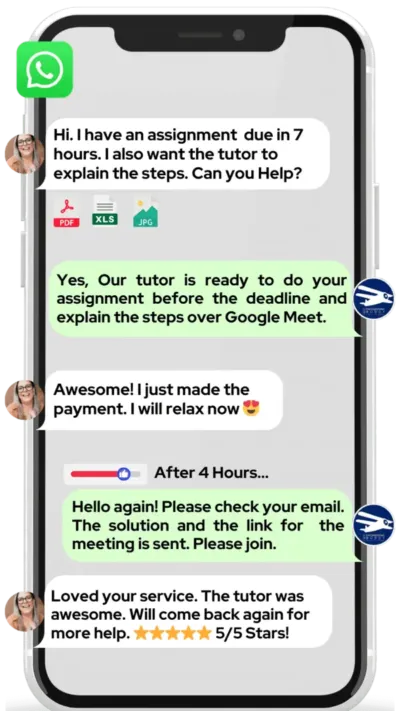
Unlike platforms where you fill out a form and wait days for a response, MEB responds in under a minute, 24/7. Tutor match takes under an hour. The $1 trial means you test before you commit. Everything runs over WhatsApp — no logins, no intake forms.
Study Plans (Pick One That Matches Your Goal)
After the diagnostic session, the tutor builds a specific sequence — but most Electronics students fall into one of three patterns. Catch-up (1–3 weeks): identify the 2–3 topics causing the most damage and drill them before the next assessment. Exam prep (4–8 weeks): systematic coverage of all exam-weight topics, past paper practice, and timed question sets calibrated to your exam board. Weekly support: ongoing sessions aligned to your lecture schedule, with homework guidance and progress check-ins each week.
Pricing Guide
Electronics tutoring starts at $20/hr for standard undergraduate and school-level work. Graduate-level support — think VLSI design, mixed-signal IC analysis, or advanced control loops in power electronics — runs up to $100/hr. Rate factors include your level, how specialized the topic is, how soon you need a tutor, and tutor availability in your time zone.
Availability is tightest in the four weeks before end-of-semester exam periods. Students who book early get consistent tutor allocation.
For students targeting top graduate programs or professional engineering certification, tutors with industry R&D or IC design backgrounds are available at higher rates — share your specific goal and MEB will match the tier to your ambition.
Start with the $1 trial — 30 minutes, no registration, no commitment. WhatsApp MEB for a quick quote.
FAQ
Is Electronics hard?
Electronics is demanding because every topic builds directly on the last. If small-signal models aren’t solid, amplifier analysis falls apart. Most students struggle not because the material is impossible but because one foundational gap compounds through the whole module. A tutor finds and fixes that gap first.
How many sessions are needed?
Students with a specific gap — say, BJT biasing or op-amp stability — often see clear progress in 4–6 sessions. Students preparing for a full module exam typically work over 8–15 sessions. The tutor confirms a realistic estimate after the diagnostic.
Can you help with homework and assignments?
Yes. MEB tutoring is guided learning — you understand the work, then submit it yourself. The tutor explains the method, not the final answer. See our Academic Integrity policy and Why MEB page for full details on what we help with and what we don’t.
Will the tutor match my exact syllabus or exam board?
Yes. When you WhatsApp MEB, share your course name, university or school, and exam board if applicable. The tutor is matched specifically to that syllabus — not assigned generically to “Electronics” and left to figure it out in the first session.
What happens in the first session?
The tutor runs a short diagnostic — usually 10–15 minutes of targeted questions — to locate the specific breakdown point in your understanding. The rest of the session addresses the highest-priority gap and sets the topic plan going forward.
Is online tutoring as effective as in-person?
For Electronics, often more so. The tutor shares screen, draws circuits live with a digital pen-pad, and can pull up datasheets or simulation outputs instantly. Students in the US, UK, Canada, Australia, and the Gulf consistently report the same depth of explanation as face-to-face sessions.
Can I get help with Electronics at midnight?
Yes. MEB operates 24/7 across all time zones. If you’re a student in the US working late before a submission deadline, or a student in the Gulf with a morning exam, WhatsApp MEB at any hour and a tutor match is typically completed within an hour.
What if I don’t like my assigned tutor?
Tell MEB immediately over WhatsApp. Tutor replacement is straightforward — no forms, no delay. The goal is a productive match, and MEB has enough depth in Electronics to reassign without disrupting your session schedule.
Do you cover simulation tools like LTspice or Multisim in sessions?
Yes. If your coursework requires circuit simulation, MEB tutors proficient in LTspice, Multisim, or PSpice can walk through schematic entry, operating point analysis, transient and AC sweeps, and interpreting simulation output alongside the underlying theory.
What’s the difference between Electronics and Electrical Engineering tutoring?
Electronics focuses on semiconductor devices, active circuits, signal processing, and IC design. Electrical Engineering covers a broader scope including power systems, machines, and electromagnetics. Many students need both — MEB covers the full range across all sub-disciplines.
How do I get started?
WhatsApp MEB, share your course details, and get matched to a tutor — usually within an hour. Your first session is the $1 trial: 30 minutes of live tutoring or one question explained in full. Three steps: WhatsApp → matched → start trial.
What’s the best way to prepare for an end-of-semester Electronics exam?
Start with past papers to identify your weakest 2–3 topics, then target those first with a tutor rather than reviewing everything linearly. Most Electronics exams weight amplifier analysis, network theorems, and semiconductor device questions heavily — confirm the exact weighting with your course outline and focus there.
Trust & Quality at My Engineering Buddy
Every MEB tutor goes through subject-specific screening before being matched to students. That includes a live demo session evaluated against technical and pedagogical criteria, degree and postgraduate qualification verification, and ongoing review based on student feedback after every session. Rated 4.8/5 across 40,000+ verified reviews on Google. For Electronics, tutors hold relevant postgraduate degrees or professional engineering experience — not just general STEM backgrounds.
MEB tutoring is guided learning — you understand the work, then submit it yourself. For full details on what we help with and what we don’t, read our Academic Integrity policy and Why MEB.
MEB has been serving students across the US, UK, Canada, Australia, the Gulf, and Europe since 2008 — 2,800+ subjects, 52,000+ students. Within Electrical Engineering, subjects including Analog Circuits and Signals and Systems are among the most frequently requested alongside Electronics. The MEB tutoring methodology is built around the diagnostic-first approach that makes every session productive from minute one.
Electronics engineering principles are standardized globally through bodies like the IEC, ensuring that the circuit theory and device models your tutor covers map directly to the standards used in professional engineering practice worldwide.
Source: My Engineering Buddy, internal subject coverage data, 2025.
Students consistently tell us that the moment Electronics clicks is when they stop treating transistor models as formulas to memorize and start treating them as physical behavior to reason about. That shift — from recall to reasoning — is what MEB sessions are specifically designed to accelerate.
Explore Related Subjects
Students studying Electronics often also need support in:
- Microelectronics
- Integrated Circuits (IC)
- Operational Amplifiers
- Digital Signal Processing
- Embedded Systems
- Microcontrollers
- Communication Systems
- Power Electronics
Next Steps
When you WhatsApp MEB, have the following ready: your exam board or course name, the specific topic or component you’re stuck on, your exam or assignment deadline, and your availability and time zone. The more specific you are, the faster the tutor match.
- Share your exam board, hardest component, and current timeline
- Share your availability and time zone
- MEB matches you with a verified Electronics tutor — usually within an hour
- First session starts with a diagnostic so every minute is used well
Before your first session, have ready: your exam board and syllabus or course outline, a recent past paper attempt or homework question you struggled with, and your exam or deadline date. The tutor handles the rest.
Visit www.myengineeringbuddy.com for more on how MEB works.
WhatsApp to get started or email [email protected].
52,000+ Happy Students From Various Universities






How Much For Private 1:1 Tutoring & Hw Help?
Private 1:1 Tutoring and HW help Cost $20 – 35 per hour* on average.
Reviewed by Subject Expert
This page has been carefully reviewed and validated by our subject expert to ensure accuracy and relevance.
