

Hire Verified & Experienced
Forecasting Tutors
4.8/5 40K+ session ratings collected on the MEB platform



Hire The Best Forecasting Tutor
Top Tutors, Top Grades. Without The Stress!
52,000+ Happy Students From Various Universities





How Much For Private 1:1 Tutoring & Hw Help?
Private 1:1 Tutoring and HW help Cost $20 – 35 per hour* on average.
Most students lose marks not because they can’t do the math — but because they misread which forecasting model the question is actually asking for.
Forecasting Tutor Online
Forecasting is the quantitative discipline of predicting future outcomes using historical data, statistical models, and time series methods. It equips students to build, evaluate, and communicate data-driven predictions across business, economics, engineering, and health contexts.
If you’re searching for a Forecasting tutor near me, MEB connects you with verified tutors who know the difference between exponential smoothing and ARIMA — and when your course expects you to use each. Our 1:1 online tutoring and homework help in Statistics and its applied branches covers every major forecasting framework taught at undergraduate and graduate level. One session can close the gap between a model you copied and a model you actually understand.
- 1:1 online sessions tailored to your course syllabus and software environment
- Expert verified tutors with subject-specific knowledge in time series, regression, and demand forecasting
- Flexible time zones — US, UK, Canada, Australia, Gulf
- Structured learning plan built after a diagnostic session
- Ethical homework and assignment guidance — you understand the work before you submit it
52,000+ students across the US, UK, Canada, Australia, and the Gulf have used MEB since 2008 — including students in Statistics subjects like Forecasting, Time Series Analysis, and Regression Analysis.
Source: My Engineering Buddy, 2008–2025.
How Much Does a Forecasting Tutor Cost?
Most Forecasting tutoring sessions run at $20–$40/hr, depending on level and topic complexity. Graduate-level or specialist forecasting work — ARIMA modelling, machine learning integration, financial time series — can reach up to $100/hr. You can test the fit with a $1 trial before committing to anything.
| Level / Need | Typical Rate | What’s Included |
|---|---|---|
| Standard (undergraduate) | $20–$35/hr | 1:1 sessions, homework guidance |
| Advanced / Graduate | $35–$100/hr | Expert tutor, specialist depth |
| $1 Trial | $1 flat | 30 min live session or 1 homework question |
Tutor availability tightens around semester finals and dissertation submission windows. Book early if you’re working to a fixed deadline.
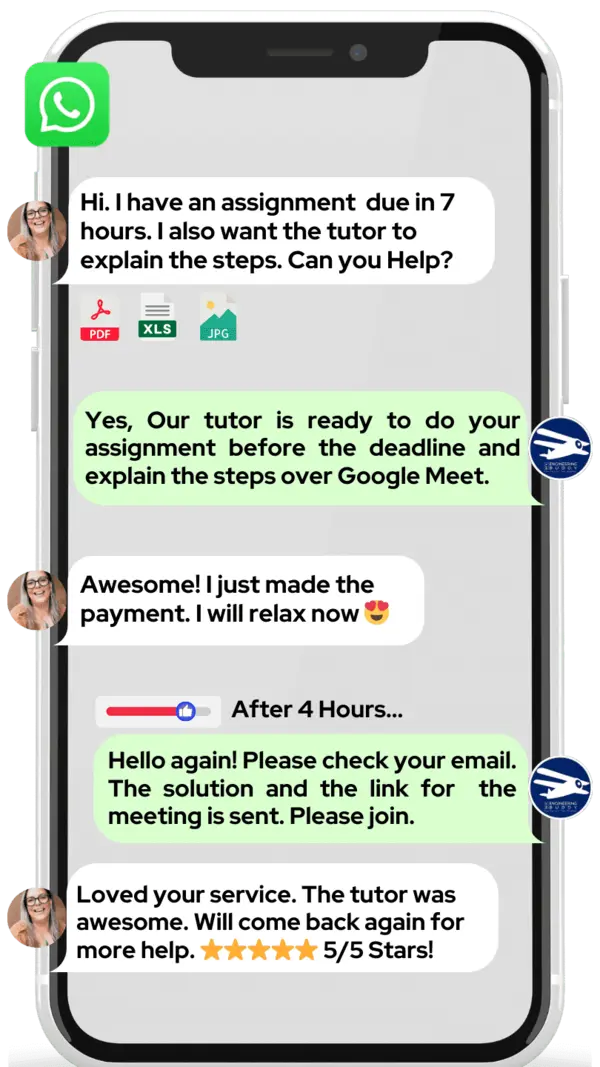
WhatsApp MEB for a quick quote — average response time under 1 minute.
Who This Forecasting Tutoring Is For
Forecasting draws students from economics, business, engineering, data science, and public health — all using slightly different tools and language for the same core methods. If your course requires you to produce forecasts and you’re not confident the model you’ve chosen is the right one, that’s exactly the gap MEB closes.
- Undergraduate students in business, economics, or engineering dealing with time series or regression assignments
- Graduate and MBA students working on demand forecasting, financial modelling, or operations research
- PhD and Masters students building forecasting components into dissertations or research papers
- Students who failed a forecasting module on the first attempt and need to resit with a clearer foundation
- Students with a dissertation submission or coursework deadline approaching and specific model-selection gaps still open
- Parents watching a child’s confidence drop alongside their quantitative grades
Students from universities including MIT, LSE, University of Toronto, University of Melbourne, NYU, Warwick, and ETH Zürich have worked with MEB tutors on forecasting coursework.
1:1 Tutoring vs Self-Study vs AI vs YouTube vs Online Courses
Self-study works if you’re disciplined, but forecasting has too many model-choice decisions for a textbook alone to catch your specific errors. AI tools explain ARIMA syntax fast but can’t watch you misspecify a model in real time and stop you. YouTube covers exponential smoothing well at a surface level — it stops when your actual dataset doesn’t behave. Online courses are structured but move at a fixed pace that rarely matches your exam date. A 1:1 Forecasting tutor online from MEB works through your actual assignment data, catches the reasoning errors before they cost marks, and adjusts each session to what you genuinely don’t know yet.
Outcomes: What You’ll Be Able To Do in Forecasting
After working with an online Forecasting tutor through MEB, you’ll be able to select and justify the right forecasting model for a given dataset — not just apply one by default. You’ll solve ARIMA identification problems using ACF and PACF plots without guessing. You’ll analyze forecast accuracy using MAE, RMSE, and MAPE and explain what each metric means for your specific context. Apply decomposition methods to separate trend, seasonality, and residuals from a real time series. Present forecast intervals with correct interpretation, not just point estimates — a distinction that separates strong coursework from weak.
At MEB, we’ve found that Forecasting students almost always know more than they think — the problem is usually model selection, not the underlying maths. One session spent on how to read an ACF plot properly can unlock the next three topics at once.
Based on feedback from 40,000+ sessions collected by MEB from 2022 to 2025, 58% of students improved by one full grade after approximately 20 hours of 1:1 tutoring in subjects like Forecasting. A further 23% achieved at least a half-grade improvement.
Source: MEB session feedback data, 2022–2025.
What We Cover in Forecasting (Syllabus / Topics)

Time Series Methods
- Stationarity, differencing, and the ADF test
- Autocorrelation (ACF) and partial autocorrelation (PACF) analysis
- AR, MA, ARMA, and ARIMA model identification and estimation
- Seasonal ARIMA (SARIMA) for seasonal data
- Exponential smoothing: simple, Holt’s, and Holt-Winters methods
- Forecast accuracy evaluation: MAE, RMSE, MAPE, and AIC/BIC model comparison
- Residual diagnostics and Ljung-Box test
Core texts: Hyndman & Athanasopoulos Forecasting: Principles and Practice (3rd ed.), Box, Jenkins, Reinsel & Ljung Time Series Analysis.
Regression-Based Forecasting
- Simple and multiple linear regression for prediction
- Polynomial and piecewise regression models
- Distributed lag models and dynamic regression
- Structural breaks and intervention analysis
- Cross-validation and out-of-sample forecast evaluation
- Forecast combination and ensemble methods
Core texts: Wooldridge Introductory Econometrics, Greene Econometric Analysis.
Demand and Business Forecasting
- Qualitative methods: Delphi, expert judgement, and scenario analysis
- Sales and demand forecasting frameworks
- Inventory and supply chain forecasting applications
- Judgement adjustment of statistical forecasts
- Forecasting in R with the
forecastandfablepackages - Forecasting in Python with
statsmodelsandProphet
Core texts: Armstrong Principles of Forecasting, Makridakis, Wheelwright & Hyndman Forecasting: Methods and Applications.
What a Typical Forecasting Session Looks Like
The tutor opens by checking where you left off — usually the ACF/PACF identification problem or whichever model-selection step you were stuck on. From there, you and the tutor work through a live dataset together: the tutor walks through the reasoning on screen using a digital pen-pad, then you replicate the steps on your own data while the tutor watches for the exact moment the logic breaks down. Topics covered in a single session commonly include ARIMA order selection, seasonal decomposition, or forecast error interpretation — whichever your assignment or exam is actually testing. The session closes with a concrete practice task and a note of which topic opens the next one. Nothing is left vague.
How MEB Tutors Help You with Forecasting (The Learning Loop)
Diagnose: In the first session, the tutor identifies exactly where the breakdown is — whether that’s model identification, software implementation in R or Python, or interpreting output that looks correct but isn’t. This diagnostic shapes every session that follows.
Explain: The tutor works through live problems on screen with a digital pen-pad. You see the reasoning built step by step — not just the answer. If a Holt-Winters decomposition has three parameters to set, the tutor shows you how to choose each one, not just what the textbook says.
Practice: You attempt problems with the tutor present. The moment you make an assumption you can’t justify — like defaulting to ARIMA(1,1,1) without checking — the tutor stops you and asks why. That’s where the real learning happens.
Feedback: Errors are corrected step by step, with a clear explanation of which marks would have been lost in an exam or assignment and why. Vague feedback doesn’t appear here.
Plan: At the end of each session, the tutor notes the next topic in sequence and sets a specific practice task. Whether you need a quick catch-up before a deadline, structured revision over 4–8 weeks, or ongoing weekly support through the semester, the tutor maps the session plan after the first diagnostic.
Sessions run over Google Meet with a digital pen-pad or iPad and Apple Pencil. Before your first session, have your course syllabus or assignment brief ready, along with any dataset or past paper question you’re working on. Start with the $1 trial — 30 minutes of live tutoring that also serves as your first diagnostic.
Try your first session for $1 — 30 minutes of live 1:1 tutoring or one homework question explained in full. No registration. No commitment. WhatsApp MEB now and get matched within the hour.
Tutor Match Criteria (How We Pick Your Tutor)
Not every Statistics tutor is the right fit for Forecasting. Here’s what MEB checks before making the match.
Subject depth: The tutor must have worked with Forecasting at your specific level — undergraduate econometrics, graduate time series, or applied business forecasting all require different emphasis. Syllabus and exam board fit are confirmed before the match is made.
Tools: Every MEB tutor works over Google Meet with a digital pen-pad or iPad and Apple Pencil. If your course uses R, Python, or EViews, the tutor is matched on software capability, not just subject knowledge.
Time zone: Matched to your region — US, UK, Gulf, Canada, or Australia — so sessions happen at hours that don’t require you to set a 3am alarm.
Goals: Whether you need to pass a resit, hit a specific grade for a conditional offer, or develop genuine conceptual depth for a dissertation, the tutor is matched to that specific target — not assigned generically.
Unlike platforms where you fill out a form and wait, MEB responds in under a minute, 24/7. Tutor match takes under an hour. The $1 trial means you test before you commit. Everything runs over WhatsApp — no logins, no intake forms.
Study Plans (Pick One That Matches Your Goal)
After the first diagnostic, your tutor builds a session sequence specific to your timeline and gaps. Most students fall into one of three patterns: a short catch-up sprint of one to three weeks focused on closing the highest-priority model gaps before a deadline; a structured four-to-eight week exam prep plan working through ARIMA, regression, and accuracy evaluation in sequence; or ongoing weekly support aligned to semester pacing and coursework submissions. The tutor decides the order — you just need to show up with your current work and your exam date.
Pricing Guide
Forecasting tutoring starts at $20/hr for standard undergraduate-level sessions. Graduate-level work — multivariate time series, state-space models, machine learning integration — runs higher, up to $100/hr depending on tutor background and topic depth. Rate factors include your level, the complexity of the specific models involved, your timeline, and tutor availability.
Tutor availability tightens around semester finals and dissertation submission periods. If you have a fixed exam or submission date, book earlier rather than later.
For students targeting research positions, finance roles, or graduate programmes at universities with strong quantitative requirements, tutors with professional forecasting and econometrics backgrounds are available at higher rates — share your specific goal and MEB will match the tier to your ambition.
Start with the $1 trial — 30 minutes, no registration, no commitment. WhatsApp MEB for a quick quote.
Students who work through model selection errors in the first two sessions consistently report that the rest of the course becomes manageable. The problem is rarely the maths — it’s knowing which tool to reach for and why.
Source: My Engineering Buddy tutor observation data, 2008–2025.
FAQ
Is Forecasting hard?
It’s genuinely demanding — model selection requires both statistical intuition and familiarity with your specific dataset. Most students find ARIMA identification and seasonal decomposition the steepest parts. With a tutor working through your actual data, those sticking points clear faster than self-study allows.
How many sessions are needed?
Most students need four to eight sessions to close significant gaps — around two to three for model identification and one to two each for accuracy evaluation and software implementation. Students with a dissertation forecasting component often continue for a full semester on a weekly basis.
Can you help with homework and assignments?
Yes. MEB tutoring is guided learning — you understand the work, then submit it yourself. See our Academic Integrity policy and Why MEB page for full details on what we help with and what we don’t. Tutors explain the reasoning; the submission is always yours.
Will the tutor match my exact syllabus or exam board?
Yes. Before the match is confirmed, MEB checks that the tutor has specific experience with your course level and framework — whether that’s an undergraduate econometrics module, an MBA forecasting elective, or a graduate time series unit with a specific software requirement.
What happens in the first session?
The tutor runs a short diagnostic — asking you to talk through a recent problem or assignment — to identify exactly where the breakdown is. From there, the session moves directly into working on the highest-priority gap. No generic introductions. Every minute is used.
Is online tutoring as effective as in-person?
For quantitative subjects like Forecasting, online tutoring with a digital pen-pad is often more effective. The tutor can annotate your actual output, step through model diagnostics on screen, and share R or Python code in real time — things that are harder to do at a whiteboard.
What’s the difference between ARIMA and exponential smoothing, and which should I use?
ARIMA models autocorrelation structure in stationary series; exponential smoothing weights recent observations more heavily without requiring stationarity. The right choice depends on your data’s behaviour and your course’s assessment criteria — a tutor can walk through the decision logic using your specific dataset.
My forecasting model produces reasonable-looking output but I keep losing marks — why?
Usually it’s one of three things: wrong model order chosen without diagnostic justification, residuals not checked for autocorrelation, or forecast intervals reported incorrectly. These are the most common mark-losers in forecasting assignments and the first things an MEB tutor checks.
Can you help with forecasting in R or Python specifically?
Yes. MEB tutors cover the forecast and fable packages in R, as well as statsmodels and Prophet in Python. If your course specifies a software environment, confirm it on WhatsApp when you reach out and MEB will match accordingly.
Can I get Forecasting help at midnight?
Yes. MEB operates 24/7 across time zones. If you’re in the US, Gulf, or Australia with a deadline the next morning, WhatsApp MEB — average response time is under a minute regardless of the hour. Tutor matching and session start can happen the same night.
Do you offer group Forecasting sessions?
No. Every session is 1:1 — one student, one tutor, one session focused entirely on your specific gaps and dataset. Group sessions would mean the tutor can’t pause on your ARIMA diagnostic or step through your specific residual plots. That’s not how MEB works.
How do I get started?
Start with the $1 trial — 30 minutes of live tutoring or one homework question explained in full. WhatsApp MEB, get matched within the hour, and start the trial. Three steps: message, match, start.
Trust & Quality at My Engineering Buddy
Every MEB tutor goes through subject-specific vetting before being matched to a student. That means a live demo session evaluated by MEB, verification of degree-level or professional experience in the subject area, and ongoing feedback review after sessions. Rated 4.8/5 across 40,000+ verified reviews on Google. Tutors covering Forecasting are assessed on their ability to explain model selection decisions, not just produce correct output — because that’s what your assignments and exams are actually testing.
MEB tutoring is guided learning — you understand the work, then submit it yourself. For full details on what we help with and what we don’t, read our Academic Integrity policy and Why MEB.
MEB has been serving students in the US, UK, Canada, Australia, the Gulf, and Europe since 2008 — across 2,800+ subjects. Statistics and its applied fields are among the most requested areas on the platform. Students working on Bayesian statistics tutoring, predictive modeling help, and time series analysis tutoring regularly move between these subjects and Forecasting in the same semester. MEB’s tutoring methodology is built for exactly that kind of interconnected coursework.
Students consistently tell us that the biggest shift happens when they stop treating forecasting models as black boxes and start understanding what each parameter is actually measuring. That shift usually happens in the second or third session — not after weeks of re-reading the textbook.
Explore Related Subjects
Students studying Forecasting often also need support in:
- ANOVA
- Linear Regression
- Monte Carlo Simulation
- Decision Theory
- Causal Inference
- Computational Statistics
- Value at Risk (VaR)
A common pattern our tutors observe is that students who book early in the semester — before the first major assignment — close the gap in half the sessions compared to students who arrive two weeks before the exam. Timing matters more than most students expect.
Source: My Engineering Buddy tutor observation data, 2008–2025.
Next Steps
When you WhatsApp MEB, share your exam board or course name, the specific forecasting topics you’re finding hardest, and your current deadline or exam date. Include your time zone and availability — the tutor match usually happens within 24 hours.
Before your first session, have ready:
- Your course syllabus or assignment brief
- A recent homework or past paper question you struggled with
- Your exam or submission deadline date
The tutor handles the rest. First session starts with a diagnostic so every minute is used well. Visit www.myengineeringbuddy.com for more on how MEB works.
WhatsApp to get started or email meb@myengineeringbuddy.com.
Reviewed by Subject Expert
This page has been carefully reviewed and validated by our subject expert to ensure accuracy and relevance.
