

Hire Verified & Experienced
Instructional design Tutors
Email: [email protected]
4.8/5 40K+ session ratings collected on the MEB platform



Hire The Best Instructional design Tutor
Top Tutors, Top Grades. Without The Stress!
Most students hit a wall in instructional design not because they lack ideas — but because they can’t map a learning objective to the right assessment strategy. That gap costs grades.
Instructional Design Tutor Online
Instructional design is the systematic process of planning, developing, and evaluating learning experiences. It applies frameworks such as ADDIE and Bloom’s Taxonomy to align learning objectives, instructional strategies, and assessments for measurable outcomes.
If you’ve searched for an instructional design tutor near me, you already know the problem: most general tutoring platforms don’t carry subject-specialist depth here. MEB’s 1:1 online tutoring and homework help covers the full instructional design stack — from needs analysis through summative evaluation — with tutors who have applied these frameworks in real educational settings. One session won’t rewrite your grade; twenty hours of structured work very often does.
- 1:1 online sessions tailored to your course syllabus — ADDIE, SAM, UbD, or whatever framework your programme requires
- Expert-verified tutors with subject-specific knowledge in learning theory and curriculum design
- Flexible time zones — US, UK, Canada, Australia, Gulf
- Structured learning plan built after a diagnostic session
- Ethical homework and assignment guidance — you understand the work, then submit it yourself
52,000+ students across the US, UK, Canada, Australia, and the Gulf have used MEB since 2008 — including students in social science subjects like instructional design, education policy, and sociology of education.
Source: My Engineering Buddy, 2008–2025.
How Much Does an Instructional Design Tutor Cost?
Most instructional design sessions run $20–$40/hr. Graduate-level or specialist work — say, advanced eLearning theory or doctoral-level curriculum evaluation — can reach $70–$100/hr. The $1 trial gets you 30 minutes of live tutoring or a full explanation of one homework question before you commit to anything.
| Level / Need | Typical Rate | What’s Included |
|---|---|---|
| Standard (undergrad / taught postgrad) | $20–$40/hr | 1:1 sessions, assignment guidance |
| Advanced / Specialist (PhD, eLearning R&D) | $40–$100/hr | Expert tutor, niche depth |
| $1 Trial | $1 flat | 30 min live session or 1 homework question |
Tutor availability tightens significantly during end-of-semester submission periods. Book early if you have a known deadline.
WhatsApp MEB for a quick quote — average response time under 1 minute.
Who This Instructional Design Tutoring Is For
This isn’t a service for students who need someone to explain a single concept once. It’s for people who need to genuinely understand how learning systems are designed — and demonstrate that understanding under assessment pressure.
- Undergraduates in education, psychology, or instructional technology programmes struggling with design frameworks
- Masters students working on curriculum development or eLearning design projects
- PhD candidates whose research touches on learning theory, instructional scaffolding, or training effectiveness
- Students retaking after a failed first attempt — especially common where ADDIE application or needs-analysis assignments were poorly structured
- Students with a coursework submission deadline approaching and significant conceptual gaps still to close
- University faculty and academic administrators designing or reviewing programme structures
Students come from universities across the US, UK, Canada, Australia, and the Gulf — including programmes at institutions like Columbia, UCL, Michigan, Queensland, and NYU. MEB has worked with students from across the full range of instructional design programmes, from introductory undergraduate modules to doctoral-level curriculum research.
The $1 trial is also used by students who just want to check whether the tutor actually knows the material before committing to a session block.
1:1 Tutoring vs Self-Study vs AI vs YouTube vs Online Courses
Self-study works if you’re disciplined, but instructional design is a subject where you can read ADDIE five times and still write a flawed design document — because the gap is application, not definition. AI tools give fast explanations but can’t review your actual design blueprint and tell you why your learning objectives aren’t measurable. YouTube covers the theory well; it stops the moment you need feedback on your specific assignment structure. Online courses are well-structured but locked to a fixed pace with no personalisation. 1:1 tutoring with MEB is live, calibrated to your exact course framework, and corrects the specific errors in your design thinking in real time — not after you’ve already submitted.
Outcomes: What You’ll Be Able To Do in Instructional Design
After structured 1:1 work, students can write precise, measurable learning objectives using Bloom’s Taxonomy action verbs at the correct cognitive level. They can apply the ADDIE or SAM model to a real course design scenario without confusing analysis with evaluation. They can explain how formative and summative assessments should align to stated objectives — and defend those choices in a viva or written assignment. Most importantly, they can critique an existing instructional design and propose evidence-based improvements, which is the core competency examiners test at postgraduate level.
Try your first session for $1 — 30 minutes of live 1:1 tutoring or one homework question explained in full. No registration. No commitment. WhatsApp MEB now and get matched within the hour.
Based on feedback from 40,000+ sessions collected by MEB from 2022 to 2025, 58% of students improved by one full grade after approximately 20 hours of 1:1 tutoring in subjects like instructional design. A further 23% achieved at least a half-grade improvement.
Source: MEB session feedback data, 2022–2025.
What We Cover in Instructional Design (Syllabus / Topics)

Track 1: Instructional Design Frameworks and Models
- ADDIE model — analysis, design, development, implementation, evaluation
- SAM (Successive Approximation Model) and its iterative design cycles
- Understanding by Design (UbD) / backward design
- Dick and Carey systems model
- Gagne’s Nine Events of Instruction
- Merrill’s First Principles of Instruction
Core texts for this track include Dick, Carey & Carey’s The Systematic Design of Instruction and Morrison, Ross, Kalman & Kemp’s Designing Effective Instruction.
Track 2: Learning Theory and Cognitive Foundations
- Behaviorist, cognitivist, and constructivist learning theories
- Bloom’s Taxonomy — original and revised, cognitive and affective domains
- Cognitive Load Theory and its implications for eLearning design
- Scaffolding, zone of proximal development, and worked examples
- Motivation models — ARCS (Keller) and self-determination theory
- Universal Design for Learning (UDL) principles
Standard references include Mayer’s Multimedia Learning and Smith and Ragan’s Instructional Design, which tutors reference directly when working through assignment rubrics.
Track 3: Needs Analysis, Assessment Design, and Evaluation
- Conducting a training needs analysis — performance gap identification
- Writing SMART learning objectives mapped to Bloom’s action verbs
- Formative vs summative assessment alignment
- Kirkpatrick’s Four-Level Evaluation Model
- Rapid prototyping and storyboarding for eLearning modules
- Usability testing and learner feedback integration
Students working on evaluation assignments frequently use Kirkpatrick and Kirkpatrick’s Transferring Learning to Behavior alongside programme-specific rubrics provided by their institution.
What a Typical Instructional Design Session Looks Like
The tutor opens by reviewing the previous topic — often a needs analysis task or a half-drafted set of learning objectives. If the student has a specific assignment, they share the brief on screen and the tutor walks through the rubric line by line before touching the content. For framework application — say, mapping an ADDIE phase to a real scenario — the tutor works the first example using a digital pen-pad, narrating each decision, then asks the student to replicate the logic for a parallel scenario with the tutor watching. Sessions close with a concrete task: write three measurable objectives for a specific module, or draft the evaluation section of a design document using Kirkpatrick Level 2 criteria. Next topic is noted before the session ends.
How MEB Tutors Help You with Instructional Design (The Learning Loop)
Diagnose: In the first session, the tutor identifies where the student’s thinking breaks down — usually either at the needs analysis stage (confusing wants with needs) or at objective-writing (vague verbs, no performance condition). This shapes every session that follows.
Explain: Live worked examples using a digital pen-pad. The tutor doesn’t just define ADDIE — they take a real scenario and build a design document on screen, step by step, with reasoning narrated at each decision point.
Practice: The student attempts a parallel design task while the tutor is present. This is not a homework assignment — it’s supervised application, which is where the actual learning happens.
At MEB, we’ve found that instructional design students consistently struggle with the same two things: writing objectives that are genuinely measurable, and distinguishing analysis from evaluation. Fixing both in session — with immediate correction — cuts the usual learning curve significantly.
Feedback: The tutor reviews the student’s attempt in real time. Errors are corrected at the level of reasoning, not just output — so the student understands why a particular objective fails, not just that it does.
Plan: Each session ends with a clear next step: which model component to draft, which past assignment to revisit, which evaluation criteria to apply. Progress is tracked across sessions.
Sessions run over Google Meet with a digital pen-pad or iPad and Apple Pencil for live annotation. Before the first session, share your course syllabus, the specific assignment brief, and any feedback you’ve already received on previous submissions. The first session covers a diagnostic review and produces a concrete task list for the weeks ahead. Start with the $1 trial — 30 minutes of live tutoring that also serves as your first diagnostic.
Students consistently tell us that the moment things click in instructional design is when they stop treating ADDIE as a checklist and start seeing it as a decision framework. That shift usually happens in session 3 or 4, not from reading alone.
Tutor Match Criteria (How We Pick Your Tutor)
Not every tutor who knows learning theory can teach instructional design at postgraduate level. Here’s what MEB looks for:
Subject depth: Tutors are matched by the specific framework your course uses — ADDIE, SAM, UbD, or Gagné — and by the level of your programme (undergraduate module vs masters dissertation vs PhD research).
Tools: Every tutor uses Google Meet with a digital pen-pad or iPad and Apple Pencil for live annotation — essential for working through design documents and storyboards in real time.
Time zone: Matched to your region — US, UK, Gulf, Canada, or Australia — so sessions can run at hours that don’t require you to be awake at 3am.
Goals: Whether you need to pass a specific assignment, build a complete eLearning module, or develop research skills for a dissertation chapter, the tutor match reflects that goal — not just the subject name.
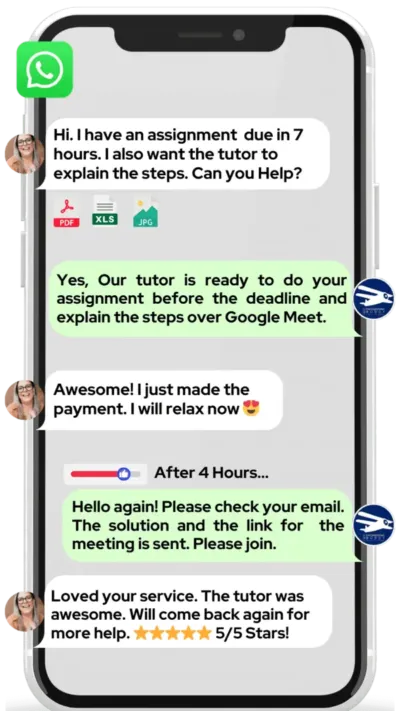
Unlike platforms where you fill out a form and wait, MEB responds in under a minute, 24/7. Tutor match takes under an hour. The $1 trial means you test before you commit. Everything runs over WhatsApp — no logins, no intake forms.
Study Plans (Pick One That Matches Your Goal)
Catch-up (1–3 weeks): for students behind on a submission with specific framework gaps to close before the deadline. Exam prep (4–8 weeks): structured revision across all design model components ahead of a final assessment. Weekly support: ongoing, aligned to semester milestones and coursework deadlines — most common for students on taught masters programmes. The tutor builds the specific session sequence after the first diagnostic, not before it.
Pricing Guide
Standard instructional design tutoring runs $20–$40/hr for undergraduate and taught postgrad levels. Doctoral-level support or specialist eLearning development work can reach $100/hr depending on tutor background and topic complexity. Rate factors include your programme level, the complexity of the specific framework you’re working with, your timeline, and tutor availability.
Availability is limited during end-of-semester and dissertation submission periods — book as early as you can if you have a fixed deadline.
For students targeting top education research programmes or professional instructional design certifications, tutors with industry backgrounds in eLearning development and corporate training design are available at higher rates. Share your specific goal and MEB will match the tier to your target.
Start with the $1 trial — 30 minutes, no registration, no commitment. WhatsApp MEB for a quick quote.
MEB has worked with students across instructional design, special education, and social policy — subjects that share a focus on structured intervention design and measurable outcomes.
Source: My Engineering Buddy, 2008–2025.
FAQ
Is instructional design hard?
It’s conceptually demanding because it requires applying abstract frameworks to specific real-world design problems. The theory is manageable; the difficulty is in knowing which model to use when, and writing objectives precise enough to survive scrutiny. That’s exactly where 1:1 instructional design tutoring closes the gap fastest.
How many sessions are needed?
Students closing a single assignment gap typically need 3–6 sessions. Those working through a full module or dissertation chapter usually book 10–20 hours over a semester. The first diagnostic session produces a clearer estimate specific to your situation and course requirements.
Can you help with homework and assignments?
Yes — MEB tutoring is guided learning. The tutor works through the concept, the framework application, and the assignment structure with you. You understand the work, then submit it yourself. See our Academic Integrity policy and Why MEB page for full details on what we help with and what we don’t.
Will the tutor match my exact syllabus or exam board?
Yes. Tutors are matched to your specific course framework — whether that’s ADDIE-based curriculum at a US university, UbD at a UK institution, or a corporate instructional design certification. Share your course outline at booking and the match reflects it.
What happens in the first session?
The tutor reviews your course brief, any existing work or feedback you’ve received, and identifies the specific gaps in your framework understanding. The session ends with a concrete task and a session plan for the weeks ahead. Nothing is wasted.
Is online tutoring as effective as in-person?
For instructional design specifically, yes — because the work is document-based. Reviewing a design blueprint, annotating a storyboard, and correcting a needs analysis on screen is actually more efficient than working from paper. The digital pen-pad makes live annotation clear and precise.
Can I get instructional design help at midnight or on weekends?
Yes. MEB operates 24/7 across all time zones. Students in the Gulf, Australia, and the US West Coast regularly book sessions outside standard business hours. WhatsApp response time is typically under a minute regardless of when you message.
What’s the difference between ADDIE and SAM, and which should I be learning?
ADDIE is a sequential, phase-by-phase model best suited to structured course development. SAM is iterative, built for faster eLearning prototyping. Which one applies depends entirely on your course framework and assignment brief — the tutor clarifies this in session one and builds the work plan around the correct model.
What if I don’t like my assigned tutor?
Request a switch via WhatsApp. MEB re-matches you, usually within the hour. The $1 trial exists precisely so you can assess the tutor fit before committing to a block of sessions. No pressure, no awkward exit process.
Do you offer group instructional design sessions?
No. Every session is 1:1. Group tutoring requires a fixed pace and shared problems — neither works well for instructional design, where each student’s assignment brief, course framework, and conceptual gaps are different.
How do I find an instructional design tutor in my city?
You don’t need to. All sessions run online over Google Meet, so location is irrelevant. Students in New York, London, Dubai, Toronto, and Sydney all access the same tutor pool. The session experience is identical regardless of where you are.
How do I get started?
WhatsApp MEB, share your course name and what you’re currently stuck on, and MEB matches you with a verified tutor — usually within the hour. The first session is the $1 trial: 30 minutes of live tutoring or one assignment question explained in full. Three steps: WhatsApp, matched, start.
Trust & Quality at My Engineering Buddy
MEB tutors in instructional design hold degrees in education, educational psychology, instructional technology, or curriculum studies — and many have worked as instructional designers in higher education or corporate training environments. Every tutor goes through a subject-specific vetting process: a live demo session evaluated against MEB’s internal rubric, ongoing review based on student feedback, and a minimum qualification threshold matched to the level they teach. Rated 4.8/5 across 40,000+ verified reviews on Google.
MEB tutoring is guided learning — you understand the work, then submit it yourself. For full details on what we help with and what we don’t, read our Academic Integrity policy and Why MEB.
MEB has served 52,000+ students across the US, UK, Canada, Australia, Gulf, and Europe since 2008, covering 2,800+ subjects. In the social science and education space, that includes students working on sociology of education coursework, education policy analysis, and development studies research — subjects that share significant conceptual overlap with instructional design. The tutoring methodology is explained fully on our tutoring methodology page.
A common pattern our tutors observe is that instructional design students arrive knowing the vocabulary — ADDIE, scaffolding, formative assessment — but struggle to apply these concepts to a specific design brief under time pressure. That application gap is exactly what 1:1 sessions close.
Explore Related Subjects
Students studying instructional design often also need support in:
- Psychology
- Social work
- Citizenship education
- Social constructivism
- Anthropology
- Family and consumer science
- Criminology
Next Steps
Before your first session, have ready: your course syllabus or module outline, a recent assignment you struggled with or feedback you received on a previous submission, and your submission or exam date. The tutor handles the rest.
- Share your course framework (ADDIE, UbD, SAM, or other), your hardest component, and your current timeline
- Share your availability and time zone
- MEB matches you with a verified instructional design tutor — usually within 24 hours
First session starts with a diagnostic so every minute is used well. Visit www.myengineeringbuddy.com for more on how MEB works.
WhatsApp to get started or email [email protected].
52,000+ Happy Students From Various Universities






How Much For Private 1:1 Tutoring & Hw Help?
Private 1:1 Tutoring and HW help Cost $20 – 35 per hour* on average.
Reviewed by Subject Expert
This page has been carefully reviewed and validated by our subject expert to ensure accuracy and relevance.
