

Hire Verified & Experienced
SAS (software) Tutors
Email: [email protected]
4.8/5 40K+ session ratings collected on the MEB platform



Hire The Best SAS (software) Tutor
Top Tutors, Top Grades. Without The Stress!
Most SAS errors don’t come from bad data — they come from not knowing which procedure to use or why the output looks nothing like what the textbook shows.
SAS (software) Tutor Online
SAS (Statistical Analysis System) is a software suite used for advanced data management, statistical analysis, and predictive modelling. It equips users to run procedures like PROC REG, PROC MEANS, and PROC LOGISTIC across research, business, and academic contexts.
MEB connects you with a 1:1 online SAS (software) tutor who knows the software from the inside — not someone who glanced at a tutorial. Whether you’re searching for a SAS (software) tutor near me or need flexible online sessions at odd hours, MEB matches you with a tutor who fits your course, your dataset, and your deadline. Our statistical software tutoring covers the full spectrum of analytical tools, with SAS as one of the most-requested platforms we support.
- 1:1 online sessions tailored to your specific SAS procedures and coursework
- Expert-verified tutors with hands-on SAS experience in research and industry
- Flexible time zones — US, UK, Canada, Australia, Gulf covered
- Structured learning plan built after a diagnostic session
- Guided project support — we explain the logic, you run the code and submit
52,000+ students across the US, UK, Canada, Australia, and the Gulf have used MEB since 2008 — including students working in statistical software subjects like SAS, Stata tutoring, and RStudio help.
Source: My Engineering Buddy, 2008–2025.
How Much Does a SAS (software) Tutor Cost?
SAS tutoring at MEB starts at $20–$40/hr for most undergraduate and graduate-level needs. Specialist sessions covering advanced SAS/STAT, SAS/ETS, or survival analysis can run higher. Before committing to a package, you can test the match with a $1 trial — 30 minutes of live 1:1 tutoring or one project question explained in full.
| Level / Need | Typical Rate | What’s Included |
|---|---|---|
| Standard (undergrad / taught postgrad) | $20–$35/hr | 1:1 sessions, code walkthroughs, project guidance |
| Advanced / Specialist (PhD, SAS/ETS, clinical trials) | $35–$100/hr | Expert tutor, niche procedures, research-level depth |
| $1 Trial | $1 flat | 30 min live session or one full project question explained |
Tutor availability tightens around semester-end submission windows and qualifying exam periods — book early if you have a fixed deadline.
WhatsApp MEB for a quick quote — average response time under 1 minute.
Who This SAS (software) Tutoring Is For
SAS is used across graduate programmes, research units, and corporate analytics teams. The students who reach MEB tend to be capable — they just hit a wall with syntax, output interpretation, or knowing which procedure maps to which research question.
- Graduate students running their first multivariate analysis or dissertation dataset
- Students whose quantitative methods module relies on SAS but received minimal instruction
- Students with a university conditional offer depending on passing a stats-heavy course
- PhD candidates using SAS/STAT or SAS/ETS for thesis analysis and facing committee deadlines
- Professionals transitioning from Excel or SPSS who need SAS fluency fast
- Parents supporting a student whose confidence in their stats module has visibly dropped
Students come from universities across the US, UK, Canada, and Australia — including programmes at institutions like Harvard, UCL, University of Toronto, University of Michigan, and Melbourne. You don’t need to be at a top school for SAS to feel impossible. You just need someone who can explain it clearly.
1:1 Tutoring vs Self-Study vs AI vs YouTube vs Online Courses
Self-study works if you’re disciplined, but SAS error messages are famously opaque — you can lose hours without knowing if you’re even looking in the right place. AI tools like ChatGPT can generate SAS syntax, but they can’t see your actual dataset or diagnose why your PROC MIXED output doesn’t match your model specification. YouTube covers PROC REG basics well, but stops the moment your data structure gets unusual. Online courses give you structure, not answers to your specific problem. A 1:1 SAS tutor on MEB looks at your exact code, your output window, and your assignment brief — and fixes what’s actually wrong, in the session.
Outcomes: What You’ll Be Able To Do in SAS (software)
After working with an MEB SAS tutor, students consistently move from confusion to control. You’ll be able to write clean SAS programs using DATA step logic and apply the right procedure — PROC GLM, PROC LOGISTIC, PROC SURVEYSELECT — without second-guessing yourself. You’ll be able to interpret output tables accurately, identify which statistics matter for your analysis, and explain your methodology in writing or in front of a committee. You’ll be able to manage messy real-world datasets using PROC SORT, PROC TRANSPOSE, and macro variables. You’ll apply SAS/STAT procedures to your specific research design, whether that’s a randomised controlled trial, a longitudinal study, or a cross-sectional survey.
Based on feedback from 40,000+ sessions collected by MEB from 2022 to 2025, 58% of students improved by one full grade after approximately 20 hours of 1:1 tutoring in subjects like SAS (software). A further 23% achieved at least a half-grade improvement.
Source: MEB session feedback data, 2022–2025.
Try your first session for $1 — 30 minutes of live 1:1 tutoring or one homework question explained in full. No registration. No commitment. WhatsApp MEB now and get matched within the hour.
What We Cover in SAS (software) (Syllabus / Topics)

Data Management and the DATA Step
- Reading raw data with INFILE and INPUT statements
- Creating and modifying variables with assignment statements and IF-THEN-ELSE
- Merging and appending datasets using MERGE and SET
- PROC SORT, PROC FORMAT, and PROC TRANSPOSE for data preparation
- Macro variables and %LET, %DO loops for reusable code
- Handling missing data, dates, and character variables correctly
Key references: The Little SAS Book by Delwiche & Slaughter; SAS Programming for Researchers and Social Scientists by Allison.
Statistical Procedures (SAS/STAT)
- Descriptive statistics with PROC MEANS and PROC FREQ
- Simple and multiple regression using PROC REG
- ANOVA and factorial designs with PROC GLM and PROC MIXED
- Logistic regression with PROC LOGISTIC — binary and multinomial outcomes
- Survival analysis using PROC LIFETEST and PROC PHREG
- Factor analysis and structural equation foundations with PROC FACTOR
- Interpreting output: parameter estimates, fit statistics, confidence intervals
Key references: Applied Statistics and the SAS Programming Language by Cody & Smith; Logistic Regression Using SAS by Allison.
Time Series and Econometric Procedures (SAS/ETS)
- PROC ARIMA for ARIMA modelling and Box-Jenkins identification
- PROC AUTOREG for regression with autocorrelated errors
- PROC VARMAX for vector autoregression
- Forecasting with PROC FORECAST and PROC ESM
- Cointegration and error correction models
Key references: SAS/ETS User’s Guide (SAS Institute); Forecasting: Principles and Practice by Hyndman & Athanasopoulos (for conceptual grounding alongside SAS output).
At MEB, we’ve found that most SAS errors stem from one of three things: a misunderstood data structure, the wrong procedure for the research question, or output that looks fine but is being misread. A tutor who has spent years in SAS catches all three — usually within the first 20 minutes of a session.
What a Typical SAS (software) Session Looks Like
The tutor opens by reviewing what you worked on last time — say, why your PROC LOGISTIC model produced unexpected odds ratios. You share your screen and pull up the SAS program editor. The tutor walks through your DATA step line by line, spots where a variable is being coded as character instead of numeric, and shows you how to fix it using an INPUT statement override. You replicate the correction yourself. Then you run PROC LOGISTIC together, and the tutor explains each column of the output — what the Wald chi-square tells you, what the confidence interval means for your specific hypothesis. By the end, you have a working model, a clear note on what went wrong, and a specific task: recode one more variable and re-run before the next session. Sessions use Google Meet with a digital pen-pad for annotation directly on your output.
How MEB Tutors Help You with SAS (software) (The Learning Loop)
Diagnose: In the first session, your tutor identifies exactly where you’re stuck — wrong procedure selection, DATA step logic errors, output misinterpretation, or conceptual gaps in the underlying statistics. This isn’t a generic assessment; it’s a look at your actual code and your actual assignment.
Explain: The tutor works through the correct approach live — writing the SAS program on screen, running it, and narrating every decision. If your research design calls for PROC MIXED rather than PROC GLM, the tutor explains why — not just what to type. Get EViews tutoring if your course also covers time series in that platform.
Practice: You write the next program yourself while the tutor watches. Errors surface immediately. The tutor doesn’t take over — they prompt you to find the fix, which is how the knowledge sticks.
Feedback: Every output is reviewed together. The tutor shows you what a marker or committee would question, what the numbers actually mean, and where your write-up might misrepresent the SAS results.
Plan: At the end of each session, the tutor sets one concrete task — a specific procedure to run, a dataset to clean, a section to write — and flags the next topic. You arrive at the following session with something done, not just questions.
Sessions run over Google Meet. Tutors use a digital pen-pad or iPad with Apple Pencil to annotate directly on your SAS output window. Before your first session, have your course syllabus or assignment brief ready, plus any SAS code you’ve already written — even if it’s broken. That’s exactly what the first session is for. Start with the $1 trial — 30 minutes of live tutoring that also serves as your first diagnostic.
Students consistently tell us that the moment things click in SAS is when they stop thinking about syntax and start thinking about their data structure. That shift usually happens in session two or three — once the tutor has shown them how SAS reads a dataset from top to bottom before it runs a single procedure.
Tutor Match Criteria (How We Pick Your Tutor)
MEB doesn’t assign whoever is free. Every SAS tutor is matched on four criteria.
Subject depth: The tutor must have direct SAS experience at your level — whether that’s undergrad biostatistics, a graduate econometrics module using SAS/ETS, or a clinical trial analysis using PROC PHREG. We check this before matching, not after.
Tools: All tutors use Google Meet with a digital pen-pad or iPad and Apple Pencil — so annotation happens on your actual code and output, not on a whiteboard.
Time zone: Matched to your region — US, UK, Canada, Australia, Gulf. No scheduling gymnastics.
Goals: Whether you need to pass a methods exam, finish a dissertation chapter, or build SAS fluency for a research role, the match accounts for your actual objective — not a generic “SAS student” profile.
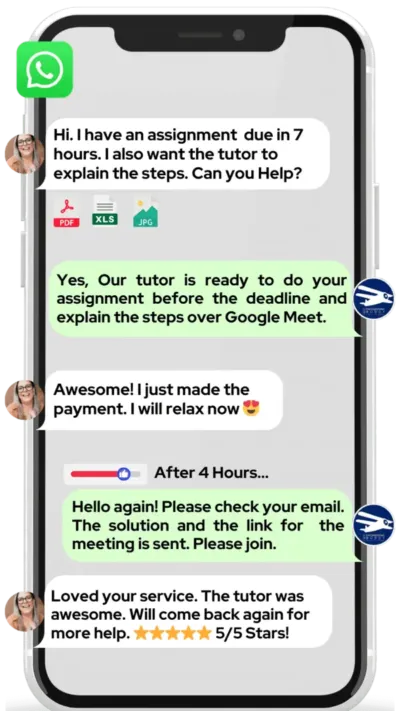
Unlike platforms where you fill out a form and wait, MEB responds in under a minute, 24/7. Tutor match takes under an hour. The $1 trial means you test before you commit. Everything runs over WhatsApp — no logins, no intake forms.
Pricing Guide
SAS tutoring rates run $20–$40/hr for standard undergraduate and taught postgraduate work. Graduate research, clinical trial analysis, SAS/ETS modelling, and macro programming at an advanced level can reach $100/hr depending on tutor background and topic complexity.
Rate factors include: your level, the specific SAS module (Base SAS vs SAS/STAT vs SAS/ETS), how quickly you need sessions, and tutor availability in your time zone.
Availability tightens around semester-end deadlines and dissertation submission windows. If you have a fixed date, get in touch early.
For students targeting research positions, academic publishing, or roles at organisations where SAS is a required tool — think pharmaceutical companies, central banks, government statistical agencies — tutors with professional or clinical research backgrounds are available at higher rates. Share your specific goal and MEB will match the tier to what you need.
Start with the $1 trial — 30 minutes, no registration, no commitment. WhatsApp MEB for a quick quote.
FAQ
Is SAS difficult to learn?
SAS has a steeper syntax curve than R or Python for new users. The DATA step logic and procedure-based structure take time to internalise. Most students find it manageable once they understand how SAS reads and processes datasets — a tutor shortens that learning curve significantly.
How many sessions will I need?
Most students see a clear improvement within 5–8 sessions. Dissertation-level or research analysis work typically needs 10–20 hours depending on dataset complexity and how much statistical background you’re bringing in. The first session diagnostic gives you a realistic picture.
Can you help with SAS projects and portfolio work?
Yes — MEB tutors walk through your project requirements, help you select the right procedures, and explain the output so you can interpret and write it up correctly. MEB provides guided learning support. All project work is produced and submitted by the student. See our Policies page for details.
Will the tutor match my exact course or syllabus?
Yes. When you message MEB, share your course name, institution, and what you’re working on. Tutors are matched specifically — a biostatistics SAS module is matched differently than an econometrics module using SAS/ETS or a clinical research programme using PROC PHREG.
What happens in the first session?
The tutor reviews your code, assignment brief, or dataset — whichever is most relevant. They identify your specific gaps, explain the correct approach live, and set a concrete task before the session ends. No generic introductions. The first session is working time.
Is online tutoring as effective as in-person for SAS?
For a software subject like SAS, online is arguably better. Your tutor can see your actual SAS interface, annotate directly on your output, and share corrected code in real time. In-person tutoring can’t replicate that level of screen-level interaction without the same setup.
What’s the difference between Base SAS, SAS/STAT, and SAS/ETS — and does MEB cover all three?
Base SAS covers data management and basic descriptive procedures. SAS/STAT handles advanced statistical modelling. SAS/ETS focuses on time series and econometric analysis. MEB tutors are available across all three modules — specify which your course uses when you message.
Can I get SAS help late at night or at weekends?
Yes. MEB operates 24/7 across time zones. Tutors are available in US evening hours, UK late-night, and Gulf morning slots. Message via WhatsApp and MEB will confirm availability — typical response time is under a minute regardless of hour.
SAS vs R vs Python — should I even be learning SAS?
If your course, programme, or employer specifies SAS, the comparison is secondary — you need it. SAS remains standard in pharmaceutical research, government statistics, and clinical trials. If your institution or field uses it, fluency matters. An MEB tutor helps you get there efficiently without switching tools mid-project.
Do you offer group SAS sessions?
MEB focuses on 1:1 sessions — every session is calibrated to one student’s code, dataset, and gaps. Group sessions don’t allow the tutor to work through your specific error log or output. If you have a study group, each member can book independently at MEB’s standard rates.
How do I get started?
Message MEB on WhatsApp. Describe your course, what you’re stuck on, and your deadline. MEB matches you with a verified SAS tutor — usually within the hour. Your first session starts for $1: 30 minutes of live tutoring or one question explained from start to finish.
Trust & Quality at My Engineering Buddy
Every MEB tutor goes through a screening process that includes a live demo session evaluated against subject-specific criteria. SAS tutors are assessed on their knowledge of the DATA step, their ability to select and interpret the correct SAS/STAT or SAS/ETS procedure, and their experience with research-level datasets. Tutors hold relevant degrees and, in many cases, have worked in industries where SAS is a production tool — pharmaceutical trials, government statistics, financial analysis. Ongoing session feedback is reviewed after every tutoring block. Rated 4.8/5 across 40,000+ verified reviews on Google.
MEB provides guided learning support. All project work is produced and submitted by the student. For full details on what we help with and what we don’t, read our Academic Integrity policy and Why MEB.
MEB has served 52,000+ students since 2008 across the US, UK, Canada, Australia, Gulf, and Europe in 2,800+ subjects. Within statistical software alone, students working on JASP tutoring, JMP help, and SmartPLS tutoring regularly reach MEB alongside SAS students — often when their course uses multiple platforms and one isn’t clicking. You can read more about how sessions are structured on our tutoring methodology page.
Explore Related Subjects
Students studying SAS (software) often also need support in:
- AMOS
- Excel
- Mathematica
- Orange Software
- Regression Analysis of Time Series (RATS)
- StatCrunch
- StatsDirect
- Gnuplot
Next Steps
When you message MEB, have the following ready:
- Your course name and the specific SAS procedures or topics giving you trouble
- Any SAS code you’ve written — working or broken — and the output or error log
- Your deadline or exam date and your availability by time zone
Before your first session, also have ready: your assignment brief or course outline, a recent piece of work you struggled with, and your SAS version or access method (SAS Studio, SAS OnDemand, desktop install). The tutor handles the rest.
MEB matches you with a verified SAS tutor — usually within 24 hours, often faster. The first session starts with a diagnostic so every minute is used on what actually matters for your project or exam.
Visit www.myengineeringbuddy.com for more on how MEB works.
WhatsApp to get started or email [email protected].
A common pattern our tutors observe is that SAS students who work through even three focused sessions stop avoiding their output window. They start reading the log before they panic. That shift — from avoidance to engagement — is usually what turns a borderline pass into a solid result.
52,000+ Happy Students From Various Universities






How Much For Private 1:1 Tutoring & Hw Help?
Private 1:1 Tutoring and HW help Cost $20 – 35 per hour* on average.
Reviewed by Subject Expert
This page has been carefully reviewed and validated by our subject expert to ensure accuracy and relevance.
