




~1 min
Average Reply Time
~1 hour
To Be Matched With A Tutor
1 Trial
75% Find Their Tutor On The 1st Trial
$1
Your First 30 Minutes
Hire The Best O-Level Computer Science (2210) Tutor
Top Tutors, Top Grades. Without The Stress!
Related Subjects
Paper 1 theory questions tripping you up? Algorithm traces going wrong every time? An O-Level Computer Science (2210) tutor who knows the Cambridge 2210 syllabus inside out makes the difference between guessing and actually understanding what the examiner wants.
O-Level Computer Science (2210) Tutor Online
O-Level Computer Science (2210) is a Cambridge IGCSE-equivalent qualification assessing programming logic, computer systems, data representation, and problem-solving. It equips students to write pseudocode, design algorithms, and understand how hardware and software interact.
MEB connects students with a verified O-Level Computer Science (2210) tutor online who has worked with the Cambridge 2210 syllabus directly. Whether you’re lost on binary arithmetic, stuck on database concepts, or need structured Paper 2 coding practice, MEB matches you to a tutor who has seen exactly those gaps before. If you’re searching for an O-Level Computer Science (2210) tutor near me, online tutoring delivers the same depth — scheduled around your time zone. Browse the full O-Level tutoring catalogue or go straight to CS help below.
- 1:1 online sessions built around the Cambridge 2210 syllabus and your specific paper components
- Expert-verified tutors with hands-on knowledge of pseudocode, Python, and Cambridge marking schemes
- Flexible scheduling across US, UK, Canada, Australia, and Gulf time zones
- Structured session plan built after a first diagnostic covering theory and practical gaps
- Ethical homework and assignment guidance — you understand the work, then submit it yourself
52,000+ students across the US, UK, Canada, Australia, and the Gulf have used MEB since 2008 — including students in O-Level subjects like O-Level Computer Science (2210), O-Level Mathematics (Syllabus D), and O-Level Physics.
Source: My Engineering Buddy, 2008–2025.
How Much Does an O-Level Computer Science (2210) Tutor Cost?
Rates for O-Level Computer Science (2210) tutoring start at $20–$35/hr for standard syllabus support. More specialist help — covering advanced algorithms, database design, or intensive pre-exam revision — runs $35–$70/hr. Not sure it’s worth it? Start with the $1 trial first.
| Level / Need | Typical Rate | What’s Included |
|---|---|---|
| Standard (most students) | $20–$35/hr | 1:1 sessions, theory + pseudocode guidance |
| Advanced / Exam Intensive | $35–$70/hr | Expert tutor, past-paper drills, marking scheme focus |
| $1 Trial | $1 flat | 30 min live session or one full homework question explained |
Tutor slots fill up fast in the October–November and May–June Cambridge exam windows. Book early.
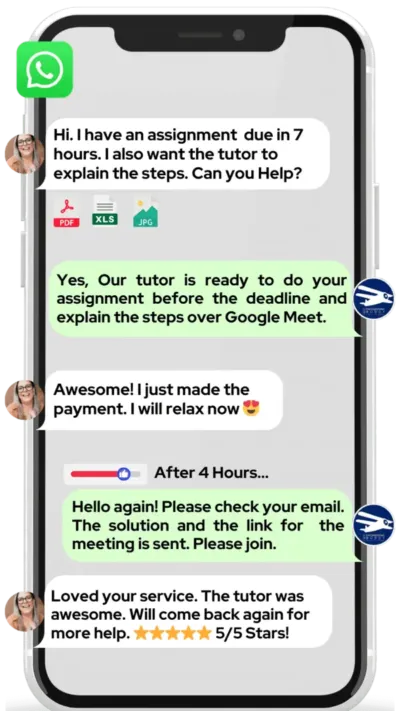
WhatsApp MEB for a quick quote — average response time under 1 minute.
Who This O-Level Computer Science (2210) Tutoring Is For
Most students who come to MEB for O-Level Computer Science (2210) help are not beginners who’ve never seen a computer. They’ve sat through lessons, attempted past papers, and still can’t reliably trace through an algorithm or explain the fetch-decode-execute cycle in enough detail to score full marks.
- Students who understand coding basics but freeze on Paper 1 theory questions
- Students retaking after a failed first attempt and needing a structured gap-fill plan
- Students with a conditional school place or sixth-form entry depending on this grade
- Students 4–6 weeks from the Cambridge exam with data representation or networking still unclear
- Parents watching a child’s confidence drop alongside their Computer Science marks
- Students who need guided homework and assignment support — understand it, then submit it yourself
Students who succeed after MEB tutoring often go on to A Level Computer Science, IB Computer Science, or undergraduate computing programmes at universities including Imperial College London, the University of Toronto, and the University of Melbourne.
1:1 Tutoring vs Self-Study vs AI vs YouTube vs Online Courses
Self-study works if you’re disciplined — but O-Level CS theory gaps don’t fix themselves. AI tools explain concepts instantly but can’t watch you trace an algorithm and catch where your logic breaks. YouTube covers fetch-decode-execute well; it stops when you’re stuck on a specific pseudocode question at 11 pm. Online courses are structured but move at one fixed pace. With MEB’s 1:1 O-Level Computer Science (2210) tutoring, the tutor sees exactly where your Paper 1 answers lose marks and corrects it live — on your actual past-paper attempt, not a generic worked example.
Outcomes: What You’ll Be Able To Do in O-Level Computer Science (2210)
After focused 1:1 sessions, students can solve algorithm tracing questions without losing track of variable states. They can explain the purpose of registers, buses, and memory within the von Neumann model with enough precision to score full marks. They can write and correct pseudocode using Cambridge’s accepted syntax — not just Python logic that the examiner won’t credit. They can apply Boolean logic and truth tables to circuit diagrams. They can present structured answers to Paper 1 questions on data transmission, security, and ethics that hit the mark-scheme points directly.
Supporting a student through O-Level Computer Science (2210)? MEB works directly with parents to set up sessions, track progress, and keep coursework on schedule. WhatsApp MEB — average response time is under a minute, 24/7.
“Based on feedback from 40,000+ sessions collected by MEB from 2022 to 2025, 58% of students improved by one full grade after approximately 20 hours of 1:1 tutoring in subjects like O-Level Computer Science (2210). A further 23% achieved at least a half-grade improvement.”
Source: MEB session feedback data, 2022–2025.
What We Cover in O-Level Computer Science (2210) (Syllabus / Topics)
Cambridge O-Level Computer Science (2210) is examined across two papers. Paper 1 (Theory, 75 marks) covers written knowledge of systems, data, and concepts. Paper 2 (Problem-Solving and Programming, 75 marks) tests algorithm design, pseudocode, and programming constructs. Both papers are assessed at the end of the course.
| Component | Description | Weighting |
|---|---|---|
| Paper 1 — Theory | Short-answer and structured questions on systems, data, networks, security, ethics | 50% |
| Paper 2 — Problem-Solving & Programming | Algorithm design, pseudocode, flowcharts, and programming constructs | 50% |
Track 1: Computer Systems and Data Representation
- Binary, denary, and hexadecimal number systems — conversion and arithmetic
- Data storage units: bits, bytes, kilobytes through to terabytes
- Von Neumann architecture: CPU, ALU, registers, control unit, buses
- Fetch-decode-execute cycle and its role in program execution
- Input, output, and storage devices — types and appropriate use cases
- Operating systems: functions, memory management, process scheduling
- Logic gates, Boolean expressions, and truth tables
Key texts: Cambridge IGCSE and O Level Computer Science (Hodder Education, Watson & Williams); O Level Computer Science (Cambridge University Press, Langfield & Duddell).
Track 2: Networking, Security, and Ethics
- Network types: LAN, WAN, client-server, peer-to-peer
- Network hardware: routers, switches, NICs, access points
- Data transmission: packet switching, protocols, TCP/IP basics
- Cybersecurity threats: malware, phishing, brute force, and denial-of-service
- Security methods: firewalls, encryption, authentication, access levels
- Ethical, legal, and environmental impacts of computing
- Privacy, intellectual property, and digital communication responsibilities
Key texts: Cambridge IGCSE Computer Science (Cambridge University Press, Sylvester & Lau); Computer Science for Cambridge O Level (Pearson, various editions).
Track 3: Algorithm Design and Programming
- Pseudocode conventions for Cambridge 2210 — exactly as the mark scheme expects
- Flowchart construction and trace tables for algorithm verification
- Programming constructs: sequence, selection (IF/CASE), iteration (FOR/WHILE/REPEAT)
- Arrays, procedures, functions, and parameter passing
- File handling: reading, writing, and appending data
- Sorting algorithms: bubble sort, insertion sort — step-by-step tracing
- Searching algorithms: linear search and binary search with worked examples
Key texts: Cambridge IGCSE and O Level Computer Science Coursebook (Cambridge University Press, Langfield); Problem Solving with Algorithms and Data Structures (Miller & Ranum, for deeper understanding).

Platforms, Tools & Textbooks We Support
O-Level Computer Science (2210) tutoring at MEB uses tools that match the Cambridge assessment environment directly. Tutors work with students across the following:
- Google Meet with shared screen for live pseudocode writing and trace-table work
- Digital pen-pad for annotating flowcharts and algorithm steps in real time
- Cambridge-style pseudocode editors (plain text environments that match Paper 2 expectations)
- Python 3 for students practising programming constructs beyond pseudocode
- Cambridge Assessment International Education past papers and mark schemes
- Hodder Education and Cambridge University Press approved textbooks (see Track notes above)
What a Typical O-Level Computer Science (2210) Session Looks Like
The tutor opens by checking the previous topic — say, binary-to-hexadecimal conversion or the role of the control unit. If the student got it, they move forward. If not, the tutor works through two or three targeted questions using a digital pen-pad before moving on. The core of the session tackles the student’s current weak point: tracing through a bubble sort algorithm, writing a WHILE loop in Cambridge pseudocode, or constructing a truth table for a three-input Boolean expression. The student attempts the problem first; the tutor watches and notes exactly where reasoning breaks down. A concrete practice task — usually two past-paper questions — is set for before the next session, with the next topic agreed in advance.
At MEB, we’ve found that students who struggle with O-Level Computer Science (2210) Paper 1 theory almost always have the same root problem: they’ve memorised definitions without connecting them to how the system actually functions. One session spent tracing the fetch-decode-execute cycle with a tutor who asks “why” at every step changes that faster than two weeks of reading.
How MEB Tutors Help You with O-Level Computer Science (2210) (The Learning Loop)
Diagnose: In the first session, the tutor asks the student to attempt a Paper 1 theory question and a short pseudocode task cold. This reveals whether gaps sit in conceptual understanding, Cambridge-specific notation, or exam technique — and the session plan is built from that, not from a generic template.
Explain: The tutor works through the problem live using a digital pen-pad — annotating binary conversions, drawing memory diagrams, or writing pseudocode line by line. Nothing is just told; everything is shown and reasoned out loud so the student can follow the logic, not just copy the answer.
Practice: The student then attempts a similar question with the tutor watching. This is the part most self-study misses. Errors surface in real time — a misplaced ENDIF, a wrong bit-shift direction — and the tutor catches them before they become habits.
Feedback: The tutor goes through the student’s attempt step by step, explaining exactly which mark-scheme points were hit, which were missed, and why. “You got the definition right but didn’t link it to the effect on performance — that’s the second mark” is the level of precision students need.
Plan: Each session ends with a clear next step: two specific past-paper questions to attempt, one topic to review, and the focus for the next session. No vague “keep practising.” The tutor tracks progress across sessions and adjusts the plan as gaps close.
Sessions run over Google Meet. The tutor uses a digital pen-pad or iPad with Apple Pencil for real-time annotation. Before your first session, share your Cambridge 2210 syllabus, a recent past-paper attempt or homework question you found difficult, and your exam date. The first session starts with the diagnostic — 30 minutes that map exactly where the teaching needs to focus. Start with the $1 trial — 30 minutes of live tutoring that also serves as your first diagnostic.
Students consistently tell us that the moment an O-Level Computer Science (2210) concept clicks is almost always during a live session — not while reading a textbook or watching a video. The difference is that someone caught the exact wrong assumption and corrected it before it compounded.
Source: My Engineering Buddy tutor feedback summaries, 2022–2025.
Try your first session for $1 — 30 minutes of live 1:1 tutoring or one homework question explained in full. No registration. No commitment. WhatsApp MEB now and get matched within the hour.
Tutor Match Criteria (How We Pick Your Tutor)
Not every CS tutor knows Cambridge 2210 pseudocode conventions. MEB matches on specifics.
Subject depth: Tutors are verified against the Cambridge 2210 syllabus — Paper 1 theory, Paper 2 pseudocode and programming constructs, and the Cambridge marking conventions students actually get graded on.
Tools: Every tutor uses Google Meet with screen sharing and a digital pen-pad or iPad with Apple Pencil. No static PDFs, no talking-head explanations without annotation.
Time zone: Matched to your region — US, UK, Gulf, Canada, or Australia. Early morning or late evening slots are available.
Goals: Whether you need to close specific Paper 1 knowledge gaps, build Paper 2 pseudocode fluency, or get guided help with homework, the tutor is briefed on your exact target before session one.
Unlike platforms where you fill out a form and wait, MEB responds in under a minute, 24/7. Tutor match takes under an hour. The $1 trial means you test before you commit. Everything runs over WhatsApp — no logins, no intake forms.
Study Plans (Pick One That Matches Your Goal)
After the diagnostic session, your tutor builds the specific sequence — but the overall shape depends on your timeline. Catch-up (1–3 weeks): rapid gap-fill on the two or three topics costing the most marks, with daily past-paper questions. Exam prep (4–8 weeks): full Paper 1 and Paper 2 revision in structured order, with timed practice and mark-scheme review built in. Weekly support: ongoing sessions aligned to your school timetable, covering new content as it’s taught and reinforcing it before assessments. The tutor adjusts the plan as gaps close — it’s not a fixed schedule.
Pricing Guide
O-Level Computer Science (2210) tutoring starts at $20–$40/hr for standard syllabus support. Tutors with deeper exam board experience or intensive pre-exam availability may charge up to $70/hr. Rate factors include syllabus complexity, how close the exam date is, and tutor availability in your time zone.
Cambridge exam windows (May–June and October–November) fill tutor slots fast. Students who book 6–8 weeks ahead consistently get first-choice availability.
For students targeting top sixth forms, selective secondary programmes, or A Level Computer Science entry with strong predicted grades, tutors with professional software development or computer science research backgrounds are available at higher rates — share your specific goal and MEB matches the tier to your target.
Start with the $1 trial — 30 minutes, no registration, no commitment. WhatsApp MEB for a quick quote.
A common pattern our tutors observe is that students who book too late — inside two weeks of the Cambridge exam — run out of time to consolidate Paper 2 pseudocode skills properly. Four to six weeks gives enough sessions to cover both papers and still have time to practise on past papers under timed conditions.
FAQ
Is O-Level Computer Science (2210) hard?
It’s manageable with the right approach. Most students struggle with Paper 1 theory precision and Paper 2 pseudocode syntax — not the underlying ideas. A tutor who knows the Cambridge mark scheme closes those gaps faster than self-study alone. Get O-Level Computer Science tutoring to target those gaps specifically.
How many sessions are needed?
Students with 8–10 weeks before the exam typically do 2 sessions per week — around 16–20 hours total. Students with specific Paper 1 or Paper 2 gaps and 3–4 weeks available often need 8–12 focused sessions. The tutor sets the plan after the diagnostic.
Can you help with homework and assignments?
Yes — MEB tutoring is guided learning. The tutor explains the concept, walks through a similar example, and supports you as you attempt the work yourself. You understand the solution, then submit it yourself. See our Academic Integrity policy and Why MEB page for full details on what we help with and what we don’t.
Will the tutor match my exact syllabus or exam board?
Yes. MEB tutors are matched specifically to Cambridge O-Level Computer Science (2210) — including the 2210 pseudocode conventions, Paper 1 theory structure, and Paper 2 question formats. Share your syllabus version and the tutor aligns to it from session one.
What happens in the first session?
The tutor runs a short diagnostic: one Paper 1 theory question and one pseudocode task attempted cold. This identifies whether gaps are conceptual, notation-based, or exam-technique related. The session plan is built from that, not a generic template. The first 30 minutes double as your $1 trial.
Is online tutoring as effective as in-person?
For O-Level Computer Science (2210), yes — often more so. Pseudocode and algorithm tracing work extremely well on a shared digital whiteboard. The tutor annotates in real time, the student types responses, and past-paper questions are reviewed together on screen with no quality loss versus a physical desk.
Can I get O-Level Computer Science (2210) help at midnight?
MEB operates across time zones — US, UK, Gulf, Australia — which means tutors are available late evenings and early mornings depending on your location. WhatsApp MEB any time; average response is under a minute and tutor availability is confirmed immediately.
What if I don’t like my assigned tutor?
WhatsApp MEB and a different tutor is matched — usually within an hour. No forms, no waiting period. The $1 trial exists precisely so you test compatibility before committing to a full session block.
Do you cover both Paper 1 and Paper 2 in the same sessions?
Yes, but the split depends on your diagnostic. Most students need more time on Paper 2 pseudocode in the early sessions, shifting toward Paper 1 theory consolidation closer to the exam. The tutor adjusts the balance based on which paper poses the greater risk to your grade.
What’s the difference between pseudocode and actual Python — and does it matter for the exam?
Cambridge 2210 Paper 2 requires Cambridge pseudocode, not Python. Syntax differences matter: IF/ENDIF structure, array declaration, and OUTPUT formatting are all assessed against Cambridge conventions. Students who code only in Python often lose marks for pseudocode notation. Your tutor will drill the Cambridge-specific format.
How do I find an O-Level Computer Science (2210) tutor near me?
Location rarely matters for CS tutoring — shared screen and digital pen-pad replicate everything a physical whiteboard does. MEB matches you to a verified Cambridge 2210 tutor regardless of city. WhatsApp MEB with your time zone and exam date — matched within the hour.
How do I get started?
Three steps: WhatsApp MEB with your exam board, current topic gaps, and exam date. MEB matches you to a verified Cambridge 2210 tutor — usually within an hour. Your first session is the $1 trial: 30 minutes live or one full question explained. No registration, no commitment.
Trust & Quality at My Engineering Buddy
Every MEB tutor goes through a multi-stage screening: degree or professional qualification verification, a live demo session reviewed by the MEB team, and ongoing session feedback monitoring. Tutors covering O-Level Computer Science (2210) are checked specifically against the Cambridge 2210 syllabus — not just general CS knowledge. MEB is Rated 4.8/5 across 40,000+ verified reviews on Google, across subjects including O-Level Additional Mathematics tutoring and O-Level Physics help.
MEB tutoring is guided learning — you understand the work, then submit it yourself. For full details on what we help with and what we don’t, read our Academic Integrity policy and Why MEB.
MEB has served 52,000+ students across the US, UK, Canada, Australia, the Gulf, and Europe since 2008 — across 2,800+ subjects. The O-Level category is one of MEB’s most active, with tutors covering O-Level Chemistry tutoring, O-Level Economics help, and dozens of other Cambridge subjects. Tutoring methodology follows a structured diagnostic-to-mastery approach — see MEB’s tutoring methodology for details.
Our experience across thousands of sessions shows that O-Level Computer Science (2210) students who bring a specific past-paper question to session one — rather than a general request to “go over everything” — make measurably faster progress. Precision in what you need fixed leads to precision in how the tutor fixes it.
MEB has operated since 2008 across 2,800+ subjects. O-Level Computer Science (2210) sits within a broader Cambridge O-Level catalogue that includes subjects like O-Level Biology, O-Level Statistics, and O-Level Business Studies — all covered by the same verified-tutor network.
Source: My Engineering Buddy, 2008–2025.
Explore Related Subjects
Students studying O-Level Computer Science (2210) often also need support in:
- O-Level Statistics
- O-Level Biology
- O-Level Business Studies
- O-Level Design & Technology
- O-Level Combined Science
- O-Level Global Perspectives
- O-Level Accounting
Next Steps
Getting started takes under five minutes.
- Share your Cambridge 2210 exam board, which paper component is causing the most trouble, and your exam date
- Share your available time slots and time zone
- MEB matches you with a verified O-Level Computer Science (2210) tutor — usually within 24 hours
- Your first session opens with a diagnostic so every minute of tutoring is targeted
Before your first session, have ready: your Cambridge 2210 syllabus or course outline, a recent past-paper attempt or homework question you struggled with, and your exam or deadline date. The tutor handles the rest.
Visit www.myengineeringbuddy.com for more on how MEB works.
WhatsApp to get started or email [email protected].
52,000+ Happy Students From Various Universities



Reviewed by Subject Expert
This page has been carefully reviewed and validated by our subject expert to ensure accuracy and relevance.

