

Hire Verified & Experienced
AP World History: Modern Tutors
4.8/5 40K+ session ratings collected on the MEB platform
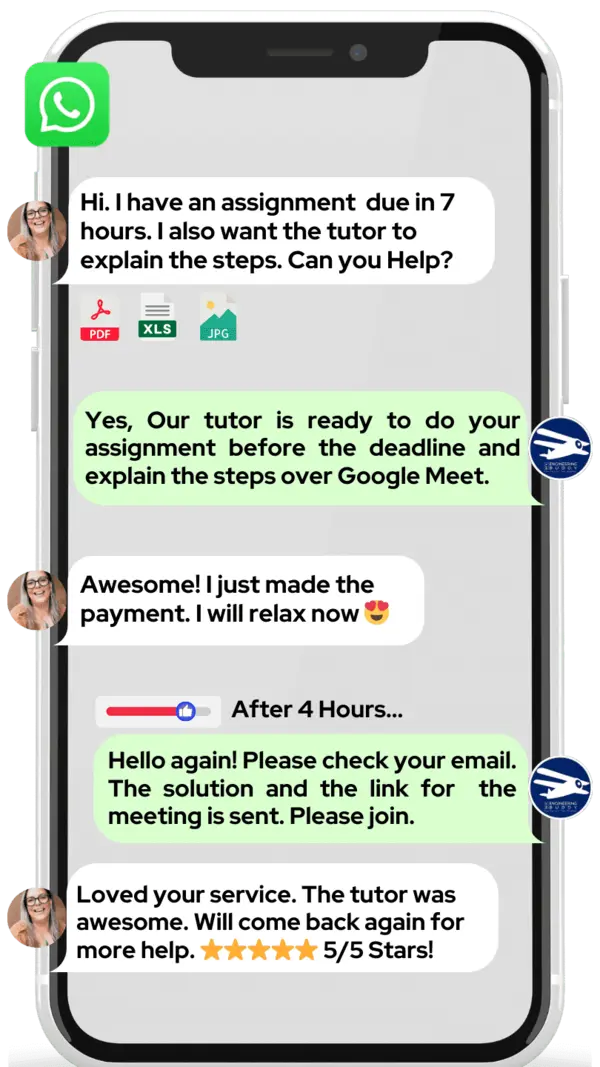



Hire The Best AP World History: Modern Tutor
Top Tutors, Top Grades. Without The Stress!


52,000+ Happy Students From Various Universities






How Much For Private 1:1 Tutoring & Hw Help?
Private 1:1 Tutoring and HW help Cost $20 – 35 per hour* on average.
Most students who struggle with AP World History: Modern don’t lack effort — they lack a system for connecting 1,200 years of cause and effect under timed exam conditions.
AP World History: Modern Tutor Online
AP World History: Modern is a College Board AP course and exam covering global history from c. 1200 CE to the present. It equips students to analyze historical causation, continuity and change over time, and cross-cultural interaction across six thematic areas using evidence-based writing.
Finding a qualified AP World History: Modern tutor near me used to mean local availability or expensive test-prep centers. MEB connects you with a verified online AP World History: Modern tutor — one who knows the College Board rubric, the long-essay and document-based question formats, and the specific periods the exam emphasizes. Sessions run over Google Meet, one-to-one, scheduled around US, UK, Canadian, Australian, and Gulf time zones.
- 1:1 online sessions tailored to the AP World History: Modern College Board syllabus
- Expert AP US History tutoring and AP World History: Modern tutors with exam-specific knowledge
- Flexible scheduling across US, UK, Canada, Australia, and Gulf time zones
- Structured learning plan built after a diagnostic session
- Ethical homework and essay guidance — you understand the argument before you write it
52,000+ students across the US, UK, Canada, Australia, and the Gulf have used MEB since 2008 — across 2,800+ subjects, from AP Calculus to A Level Music Technology to Data Science.
Source: My Engineering Buddy, 2008–2025.
How Much Does an AP World History: Modern Tutor Cost?
Most AP World History: Modern tutoring sessions run $20–$40 per hour. Tutors with deep College Board grader experience or specialist knowledge of particular periods sit toward the higher end. The $1 trial gets you 30 minutes of live 1:1 tutoring or one complete homework question explained — no registration required.
| Level / Need | Typical Rate | What’s Included |
|---|---|---|
| Standard (most AP levels) | $20–$35/hr | 1:1 sessions, essay and DBQ guidance |
| Advanced / Specialist | $35–$70/hr | Expert tutor, College Board rubric depth |
| $1 Trial | $1 flat | 30 min live session or 1 full homework question |
Tutor availability drops sharply in April and May when AP exam season peaks. Book ahead if your exam date is within six weeks.
WhatsApp MEB for a quick quote — average response time under 1 minute.
Who This AP World History: Modern Tutoring Is For
AP World History: Modern draws in students from across the grade spectrum — high achievers chasing a 5, and students who found Period 3 or the DBQ format genuinely confusing. The tutor adjusts to wherever you actually are, not where you’re supposed to be.
- High school students enrolled in AP World History: Modern who want structured exam prep
- Students whose university conditional offer depends on achieving a 4 or 5 on this exam
- Students who can write a decent paragraph but consistently lose marks on LEQ and SAQ rubric points
- Students retaking the AP exam after a 2 or 3 who need a different approach this time
- Students heading to Georgetown, NYU, McGill, University of Toronto, LSE, or University of Sydney who want AP credit to count
- Parents supporting a student whose DBQ scores have not improved despite multiple practice attempts
1:1 Tutoring vs Self-Study vs AI Tools
Self-study works for some students — especially those who are already disciplined and just need content review. But without feedback, it’s easy to repeat the same essay structure mistakes across ten practice DBQs without realising the rubric issue. AI tools can summarize the causes of World War I or explain the Columbian Exchange quickly, but they cannot read your specific LEQ draft, identify where you lost the complexity point, and show you how to fix that argument in real time. That requires a person who knows the College Board rubric cold. MEB’s 1:1 AP World History: Modern tutoring combines online flexibility with a structured feedback loop calibrated to the exact exam format — period by period, essay type by essay type.
Outcomes: What You’ll Be Able To Do in AP World History: Modern
After working with an MEB AP World History: Modern tutor, students can analyze causation and continuity across Periods 1 through 9, write a College Board-compliant thesis for both the LEQ and DBQ, apply sourcing and contextualization to primary documents without prompting, explain the cross-cultural consequences of the Mongol Empire or the Industrial Revolution using specific evidence, and present a coherent argument under timed conditions without losing the complexity point.
Supporting a student through AP World History: Modern? MEB works directly with parents to set up sessions, track progress, and keep essay practice on schedule. WhatsApp MEB — average response time is under a minute, 24/7.
Based on feedback from 40,000+ sessions collected by MEB from 2022 to 2025, 58% of students improved by one full grade after approximately 20 hours of 1:1 tutoring in a single subject. A further 23% achieved at least a half-grade improvement.
Source: MEB session feedback data, 2022–2025.
What We Cover in AP World History: Modern (Syllabus / Topics)
MEB AP World History: Modern tutors cover all nine periods and all six themes defined by the College Board, with particular focus on the essay types that account for the majority of exam marks. The College Board publishes the full AP World History: Modern course and exam description at AP Central — check there for the most current period breakdowns and scoring guidelines.
Periods 1–4: The Pre-Modern and Early Modern World (c. 1200–1750)
- The Mongol Empire and its effects on trade, disease spread, and cultural exchange
- The growth of Islam and its role in cross-regional commerce and scholarship
- The Columbian Exchange — biological, cultural, and demographic consequences
- European maritime empires and their systems of labor exploitation
- The role of the Silk Roads, Indian Ocean trade, and trans-Saharan routes
- State-building: Ming China, the Ottoman Empire, the Mughal Empire
Recommended texts: Traditions and Encounters by Bentley, Ziegler & Streets (McGraw-Hill); Ways of the World by Strayer & Nelson.
Periods 5–7: Industrialization, Imperialism, and Global Conflict (c. 1750–1900)
- Causes and consequences of the Industrial Revolution in Britain and beyond
- Atlantic Revolutions — American, French, Haitian, Latin American independence movements
- Abolitionism, the end of the Atlantic slave trade, and new labor systems
- European colonialism in Africa and Asia — motives, methods, and resistance
- Nationalism as a political force in 19th-century Europe and beyond
- The role of technology in reshaping global power from 1750 to 1900
Recommended texts: Ways of the World by Strayer & Nelson; The Earth and Its Peoples by Bulliet et al.
Periods 8–9: The 20th Century to the Present (c. 1900–Present)
- Causes and global impact of World War I and World War II
- The Cold War — ideological conflict, proxy wars, decolonization movements
- Globalization, international institutions, and economic interdependence since 1945
- Environmental consequences of industrialization and population growth
- The rise of nationalism and independence movements across Asia, Africa, and the Middle East
- Technological change and its social consequences from 1900 to the present
Recommended texts: Traditions and Encounters by Bentley et al.; AP World History: Modern review guides by Barron’s or Princeton Review.

AP Exam Format: Assessment Components
The AP World History: Modern exam has four scored components. Mastering each format type is where most students gain or lose their overall score.
| Section | Component | Approx. Weight |
|---|---|---|
| Section I, Part A | Multiple Choice Questions (MCQ) | 40% |
| Section I, Part B | Short Answer Questions (SAQ) | 20% |
| Section II, Part A | Document-Based Question (DBQ) | 25% |
| Section II, Part B | Long Essay Question (LEQ) | 15% |
At MEB, we’ve found that students who drill individual rubric points — thesis, evidence, reasoning — in isolation before combining them into full essays make faster, more measurable progress than those who simply write practice essays and hope the score improves.
What a Typical AP World History: Modern Session Looks Like
The tutor opens by checking where the previous session ended — usually the sourcing point on a DBQ document set or a specific LEQ period. From there, the student and tutor work through a real practice question on screen: the tutor annotates a document on a digital pen-pad, pointing out what “audience” and “historical situation” actually require in the rubric, then asks the student to apply the same reasoning to the next document independently. The session closes with a specific task — one timed SAQ on Period 6, for example — and the next topic is flagged based on where the current gaps are.
How MEB Tutors Help You with AP World History: Modern (The Learning Loop)
Diagnose: In the first session the tutor reviews a recent practice essay or MCQ set. They identify whether the issue is content knowledge, historical reasoning skills, or exam technique — these require different fixes and a good tutor does not treat them the same way.
Explain: The tutor works through a model DBQ or LEQ on screen using a digital pen-pad. Every rubric point is named explicitly — complexity, contextualization, sourcing — so the student sees exactly where marks come from.
Practice: The student attempts the next question with the tutor present. No hints until the student has committed to an answer. That friction is deliberate.
Feedback: The tutor marks the attempt against the College Board rubric in real time, explaining precisely why each point was or was not earned. “Your thesis takes a position but doesn’t explain how or why” is the kind of note that changes the next draft.
Plan: Each session ends with a clear next topic, a specific practice task, and a note on which period or skill to prioritize before the following session.
Sessions run over Google Meet with a digital pen-pad or iPad and Apple Pencil. Before your first session, share a recent essay attempt or past paper result. The first session covers the diagnostic and at least one full worked example. Start with the $1 trial — 30 minutes of live tutoring that also serves as your first diagnostic. Whether you need a quick catch-up before the May exam, structured revision over six weeks, or ongoing weekly support through the school year, the tutor maps the session plan after that first conversation.
Students consistently tell us that the moment the DBQ “clicked” was when a tutor showed them the scoring rubric and a real response side by side — not when they read another chapter of the textbook. The rubric is the target. Work backwards from it.
Tutor Match Criteria (How We Pick Your Tutor)
Not every tutor who knows world history can teach the AP exam format. MEB matches on specifics.
Subject depth: Tutors hold degrees in history, political science, or related fields and have direct experience with the AP World History: Modern College Board syllabus — including the specific periods and essay types on the current exam.
Tools: All sessions use Google Meet with a digital pen-pad or iPad and Apple Pencil for live document annotation and essay markup.
Time zone: MEB covers New York, Los Angeles, Chicago, London, Dubai, Toronto, Sydney, and Melbourne — evenings and weekends included. If your exam is in six weeks and you need sessions four days a week, that is a scheduling conversation MEB has every April.
Learning style: Calibrated in the first session. Some students need content reinforcement; others need pure exam technique. The tutor adjusts after the diagnostic, not after three sessions of guessing.
Communication: Clear English adapted to the student’s level. No jargon where plain language works.
Goals: Whether the target is a 5 for college credit, a 4 to meet an admissions condition, or simply not failing the May exam, the tutor builds sessions around that specific target.
Unlike platforms where you fill out a form and wait, MEB responds in under a minute, 24/7. Tutor match takes under an hour. The $1 trial means you test before you commit. Everything runs over WhatsApp — no logins, no intake forms.
Study Plans (Pick One That Matches Your Goal)
A catch-up plan covers the highest-yield periods and essay skills in one to three weeks — useful if your exam is close and your DBQ score has not moved. An exam prep plan runs four to eight weeks, working through all nine periods with timed practice and weekly essay feedback. Ongoing weekly support aligns sessions to your school’s pacing, coursework deadlines, and practice exam schedule. The tutor builds the specific sequence after the first diagnostic — no two students get the same plan.
Pricing Guide
AP World History: Modern tutoring runs $20–$40/hr for the majority of students. Tutors with specific College Board grader experience or graduate-level history backgrounds are available at higher rates.
Rate factors include the student’s current level, how close the exam date is, and how many sessions per week are needed. Availability in April and early May is limited — this is the busiest period and tutors fill up fast.
For students targeting top universities where AP credit decisions matter — Georgetown, NYU, McGill, University of Toronto — tutors with research and teaching backgrounds in world history are available at higher rates. Share your specific goal and MEB will match the right tier to your target score.
Start with the $1 trial — 30 minutes, no registration, no commitment. WhatsApp MEB for a quick quote.
FAQ
Is AP World History: Modern hard?
It covers more than 800 years of global history and requires written analysis under timed conditions — that combination is genuinely demanding. The content volume is manageable with structure. The essay formats — DBQ, LEQ, SAQ — are where most students lose marks and where targeted tutoring makes the clearest difference.
How many sessions does a student typically need?
Students focusing on exam technique for a specific essay type often see measurable improvement in four to six sessions. Students working through content gaps across multiple periods typically need eight to fifteen sessions. The first diagnostic session gives a much clearer estimate than any general answer.
Can you help with homework and assignments?
Yes. MEB tutors explain the historical reasoning behind essay prompts, help students understand document-based question sources, and work through SAQ and LEQ structures. MEB tutoring is guided learning — you understand the work, then submit it yourself. For full details on what we help with and what we don’t, read our Academic Integrity policy and Why MEB.
Will the tutor match my exact AP World History: Modern syllabus and exam board?
Yes. MEB tutors work specifically with the College Board AP World History: Modern course description, including current period weightings and the updated DBQ and LEQ rubrics. Before the first session, share your practice exam results or any specific areas your teacher has flagged.
What happens in the first session?
The tutor runs a diagnostic — reviewing a recent essay attempt or MCQ set to identify whether the gaps are in content knowledge, historical reasoning, or exam technique. That distinction shapes the entire plan. The session covers at least one full worked example before it ends.
Is online tutoring as effective as in-person for AP World History: Modern?
For document annotation, essay markup, and rubric walkthrough — the core skills in AP World History: Modern — a digital pen-pad on Google Meet works at least as well as a whiteboard in person. The research on 1:1 instruction shows the mechanism is the feedback loop, not the room.
Can I get AP World History: Modern help late at night or on weekends?
Yes. MEB tutors cover multiple time zones — including US evenings, UK mornings, and Gulf afternoons — and weekend sessions are standard during exam season. WhatsApp MEB at any hour and the response typically comes within a minute.
What if I don’t click with my assigned tutor?
Say so via WhatsApp. MEB reassigns without a form or a waiting period. The $1 trial exists precisely so you can test the match before committing to a full session block. No tutor assignment is permanent until you decide it works.
Do you offer group AP World History: Modern sessions?
No. All MEB sessions are 1:1. Group sessions dilute the feedback loop that makes tutoring worth the cost — especially for essay marking, where the correction needs to be specific to your argument, not a generic rubric walkthrough.
How do I get started?
Three steps: WhatsApp MEB, get matched with a verified AP World History: Modern tutor within the hour, then start the $1 trial — 30 minutes of live tutoring or one full homework question explained. No registration. No commitment required.
Trust & Quality at My Engineering Buddy
Every MEB tutor goes through a subject-specific screening process — a live demo evaluation, a review of their academic and professional background, and ongoing quality checks based on session feedback. Tutors covering AP World History: Modern hold degrees in history, international relations, or related disciplines and are assessed on their knowledge of the College Board exam format specifically. Rated 4.8/5 across 40,000+ verified reviews on Google, MEB has been matching students with tutors since 2008.
MEB tutoring is guided learning — you understand the work, then submit it yourself. For full details on what we help with and what we don’t, read our Academic Integrity policy and our tutoring methodology. We guide. You submit your own work.
MEB serves students across the US, UK, Canada, Australia, Gulf, and Europe in 2,800+ subjects since 2008. Students preparing for related AP exams often also use AP European History tutoring, AP Human Geography help, and AP Comparative Government and Politics tutoring alongside their world history preparation.
Explore Related Subjects
Students studying AP World History: Modern often also need support in:
- AP US History
- AP European History
- AP African American Studies
- AP Seminar
- AP Research
- AP English Language and Composition
- AP Economics
Next Steps
Getting started takes less than five minutes.
- Share your exam board (College Board AP), your hardest component (DBQ, LEQ, content gaps), and your exam date
- Share your availability and time zone — evenings, weekends, and short-notice sessions are all available
- MEB matches you with a verified AP World History: Modern tutor, usually within 24 hours
Before your first session, have ready: your College Board course outline or AP class syllabus, a recent practice essay or past paper attempt you struggled with, and your May exam date. The tutor handles the rest.
Visit www.myengineeringbuddy.com to learn more about how MEB matches tutors and what the first session covers.
Try your first session for $1 — 30 minutes of live 1:1 tutoring or one homework question explained in full. No registration. No commitment. WhatsApp MEB now and get matched within the hour.
WhatsApp to get started or email meb@myengineeringbuddy.com.
Reviewed by Subject Expert
This page has been carefully reviewed and validated by our subject expert to ensure accuracy and relevance.

