




~1 min
Average Reply Time
~1 hour
To Be Matched With A Tutor
1 Trial
75% Find Their Tutor On The 1st Trial
$1
Your First 30 Minutes
Hire The Best Conic Sections Tutor
Top Tutors, Top Grades. Without The Stress!
Related Subjects
Parabolas, ellipses, hyperbolas — and the exam question that makes most students freeze solid. MEB matches you with a verified Conic Sections tutor in under an hour.
Conic Sections Tutor Online
Conic Sections is the study of curves formed by intersecting a plane with a double cone — producing parabolas, ellipses, hyperbolas, and circles. It is taught across precalculus, Algebra 2, A Level Mathematics, and IB Mathematics courses, equipping students to model real-world trajectories, orbits, and engineering curves.
If you’ve searched for a Conic Sections tutor near me and ended up with a generic platform that can’t tell a directrix from a focus, MEB is different. We match students with subject-specific tutors across Geometry and its subfields — tutors who know exactly which exam board you’re on, which equations you’re expected to derive, and where marks actually go missing. One focused block of 1:1 sessions can close a gap that months of classroom instruction left open.
- 1:1 online sessions tailored to your course syllabus and exam board
- Expert tutors verified for subject-specific depth in Conic Sections
- Flexible time zones — US, UK, Canada, Australia, Gulf
- Structured learning plan built after a diagnostic session
- Ethical homework and assignment guidance — you understand before you submit
52,000+ students across the US, UK, Canada, Australia, and the Gulf have used MEB since 2008 — including students in Geometry subjects like Conic Sections, Analytic Geometry, and Coordinate Geometry.
Source: My Engineering Buddy, 2008–2025.
How Much Does a Conic Sections Tutor Cost?
Most Conic Sections tutoring sessions run $20–$40/hr. Advanced or specialist support — for graduate-level analytic geometry or engineering applications — reaches up to $100/hr. Not sure where you fall? Start with the $1 trial and let the tutor assess your level in the first 30 minutes.
| Level / Need | Typical Rate | What’s Included |
|---|---|---|
| Standard (most levels) | $20–$35/hr | 1:1 sessions, homework guidance |
| Advanced / Specialist | $35–$100/hr | Expert tutor, niche depth, graduate-level |
| $1 Trial | $1 flat | 30 min live session or 1 homework question explained |
Tutor availability tightens in the six weeks before AP, A Level, and IB exam windows. Book early if your exam is inside that range.
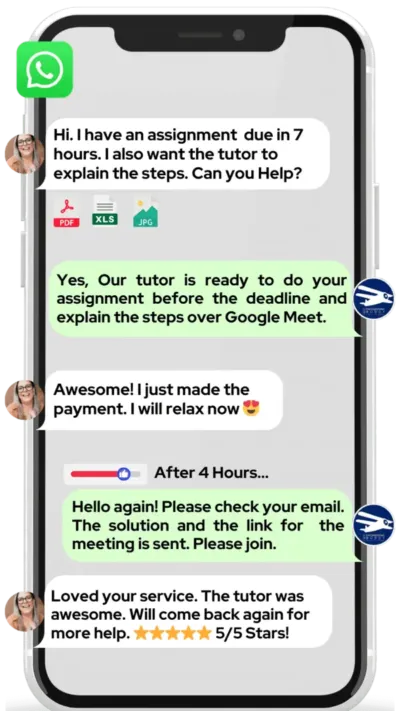
WhatsApp MEB for a quick quote — average response time under 1 minute.
Who This Conic Sections Tutoring Is For
Conic Sections sits at the intersection of algebra and geometry, and it trips up students at nearly every level — from Algebra 2 and precalculus right through to university analytic geometry. If the standard classroom pace left gaps, 1:1 tutoring closes them faster than any other format.
- Precalculus and Algebra 2 students who can plot a parabola but can’t derive its equation from scratch
- AP Precalculus and AP Calculus students needing to handle conics in both standard and parametric form
- A Level and IB Mathematics students working through loci, eccentricity, and polar-form conics
- Students 4–6 weeks from an exam with significant gaps still to close in hyperbola and ellipse equations
- Students with a university conditional offer depending on this grade — this is exactly the scenario MEB was built for
- Parents watching a child’s confidence drop alongside their grades as the topic shifts from circles to full conic families
- University students at institutions such as MIT, UC Berkeley, Imperial College London, University of Toronto, UNSW, and TU Delft encountering conics in engineering mathematics or physics courses
Supporting a student through Conic Sections? MEB works directly with parents to set up sessions, track progress, and keep coursework on schedule. WhatsApp MEB — average response time is under a minute, 24/7.
1:1 Tutoring vs Self-Study vs AI vs YouTube vs Online Courses
Self-study works if you’re disciplined — but Conic Sections is the kind of topic where a single sign error in completing the square derails everything downstream. AI tools give fast equation checks but can’t watch you work and catch the moment you misplace the centre coordinates. YouTube covers the standard forms well and stops there. Online courses move at a fixed pace that won’t wait while you’re stuck on the focal chord of a hyperbola. 1:1 tutoring with MEB is live, calibrated to your exact syllabus, and corrects the specific error you keep making — not a hypothetical one.
Outcomes: What You’ll Be Able To Do in Conic Sections
After a structured block of sessions, you’ll solve standard-form and general-form equations for all four conic types without needing to look up the formula. You’ll analyze a given conic by completing the square, extract its vertices, foci, directrices, and asymptotes accurately, and explain why each element exists geometrically. You’ll apply the eccentricity definition to classify curves and model physical scenarios — satellite orbits, projectile paths, and parabolic reflectors — using the correct conic equation. You’ll present worked solutions under exam conditions at the pace your specific paper demands.
Based on feedback from 40,000+ sessions collected by MEB from 2022 to 2025, 58% of students improved by one full grade after approximately 20 hours of 1:1 tutoring in subjects like Conic Sections. A further 23% achieved at least a half-grade improvement.
Source: MEB session feedback data, 2022–2025.
Students consistently tell us that Conic Sections felt manageable the moment they stopped trying to memorise four separate formula sets and started seeing all four curves as variations of a single algebraic identity. That shift takes about one session to land — and it changes everything that follows.
What We Cover in Conic Sections (Syllabus / Topics)

Track 1: Foundations — Circles, Parabolas, and Standard Forms
- Deriving the standard form of a circle from its centre and radius
- Completing the square to convert general form to standard form
- Identifying vertex, focus, and directrix of a parabola
- Relating the focal parameter p to the equation y = (1/4p)x²
- Graphing parabolas opening in all four directions
- Real-world applications: parabolic dishes, projectile paths
Textbooks used: Precalculus by Sullivan (Pearson), Precalculus: Mathematics for Calculus by Stewart, Redlin & Watson.
Track 2: Ellipses and Hyperbolas
- Standard form of an ellipse: identifying semi-major axis, semi-minor axis, and foci
- The relationship c² = a² − b² and what it means geometrically
- Standard form of a hyperbola and its two orientations
- Asymptotes of a hyperbola: derivation and graphing
- Eccentricity as a unified measure across all conic types
- Translating conics: shifted centre problems and h,k form
- Distinguishing ellipses from hyperbolas by sign in the general equation
Textbooks used: Algebra and Trigonometry by Blitzer (Pearson), Mathematics for the IB Diploma: Analysis and Approaches HL by Haese.
Track 3: Advanced Conics — Rotation, Polar Form, and Parametric Equations
- Rotating axes to eliminate the Bxy term: the rotation-of-axes formulas
- Using the discriminant B² − 4AC to classify a conic without graphing
- Polar-form equations of conics using focus-directrix definition
- Parametric representations of ellipses and hyperbolas
- Identifying conics from parametric equations
- Applications in orbital mechanics: Kepler’s first law and elliptical orbits
Textbooks used: Calculus: Early Transcendentals by Stewart, Further Pure Mathematics by Bostock & Chandler (A Level Further Maths).
What a Typical Conic Sections Session Looks Like
The tutor opens by checking the previous session’s task — usually a set of completing-the-square problems for ellipses or hyperbolas. From there, you work through a live problem together on screen: the tutor writes on a digital pen-pad while narrating each algebraic step, pausing when the equation branches in a direction you haven’t seen before. You’ll tackle a mixed question that might ask you to find the foci, the eccentricity, and the asymptotes of a single rotated conic — the kind of multi-part question that appears on A Level Further Mathematics and AP Calculus exams. When you get a step wrong, the tutor stops and unpacks exactly why the sign flipped or the axis label switched. The session closes with a specific set of practice questions — typically two or three past-paper items — and a note of what the next session will open with.
How MEB Tutors Help You with Conic Sections (The Learning Loop)
Diagnose: In the first session, the tutor works through a short set of problems covering each conic type to map precisely where your understanding breaks down — whether that’s the algebraic manipulation, the geometric interpretation, or the link between the two.
Explain: The tutor works live problems on a digital pen-pad, showing every intermediate step. For Conic Sections, this typically means slowing down at completing the square and at the moment the standard form reveals the foci — the two points where most students lose the thread.
Practice: You attempt a parallel problem while the tutor watches. No moving on until you can reproduce the method independently. This is the step that separates MEB sessions from watching a recorded lesson.
Feedback: Errors are corrected step by step, with an explanation of why that particular mistake costs marks on your specific exam. A sign error in the b² term of a hyperbola equation isn’t abstract — it means a wrong asymptote, a wrong eccentricity, and a lost follow-through mark.
Plan: Each session ends with a clear progression note: which topic is next, what to practise before the following session, and how far along the revision schedule you are.
Sessions run on Google Meet with a digital pen-pad or iPad and Apple Pencil. Before your first session, have your syllabus or exam board specification, a recent homework or past-paper attempt, and your exam date. The first session doubles as your diagnostic. Start with the $1 trial — 30 minutes of live tutoring that sets the direction for everything that follows.
Try your first session for $1 — 30 minutes of live 1:1 tutoring or one homework question explained in full. No registration. No commitment. WhatsApp MEB now and get matched within the hour.
Tutor Match Criteria (How We Pick Your Tutor)
Not every mathematics tutor is a Conic Sections tutor. Here is what MEB checks.
Subject depth: Tutors are verified specifically for Conic Sections — covering the exam board (Edexcel, AQA, Cambridge, IB, College Board), syllabus level (precalculus through to advanced analytic geometry), and the exact topics the student is stuck on.
Tools: Every tutor uses Google Meet with a digital pen-pad or iPad and Apple Pencil. Written working is visible in real time — not described verbally.
Time zone: Matched to the student’s region. US, UK, Gulf, Canada, and Australia are all covered without unsociable session times.
Goals: The match accounts for whether you need exam-score improvement, deeper conceptual understanding, homework completion support, or research-level analytic geometry. A student chasing a conditional offer gets a different tutor profile than a curious undergraduate.
Unlike platforms where you fill out a form and wait, MEB responds in under a minute, 24/7. Tutor match takes under an hour. The $1 trial means you test before you commit. Everything runs over WhatsApp — no logins, no intake forms.
Study Plans (Pick One That Matches Your Goal)
Catch-up (1–3 weeks): for students with specific gaps in one or two conic types — usually hyperbolas or the rotation-of-axes content — before a test or mock. Exam prep (4–8 weeks): structured revision working through all four conic families with past-paper practice, timed question sets, and mark-scheme analysis. Weekly support: ongoing sessions aligned to the school or university semester, keeping pace with coursework deadlines and topic progression. After the first diagnostic, the tutor builds the specific sequence. No two plans look identical.
Pricing Guide
Conic Sections tutoring runs $20–$40/hr for most precalculus, A Level, IB, and undergraduate students. Graduate-level analytic geometry or specialist engineering-mathematics support reaches up to $100/hr. Rate factors include level, topic complexity, your timeline, and tutor availability.
Availability contracts sharply in the six weeks before AP exam season and A Level/IB exam windows. If your exam falls in that window, book before it does.
For students targeting top-tier engineering or mathematics programmes at universities such as Caltech, ETH Zurich, or Cambridge, tutors with research or professional backgrounds in geometry and applied mathematics are available at higher rates — share your specific goal and MEB will match the tier to your ambition.
Start with the $1 trial — 30 minutes, no registration, no commitment. WhatsApp MEB for a quick quote.
MEB has run sessions across 2,800+ subjects since 2008 — from foundational precalculus through to graduate-level differential and Projective Geometry tutoring. Students in Conic Sections consistently return for the next topic because the first block of sessions actually works.
Source: My Engineering Buddy, 2008–2025.
At MEB, we’ve found that students who struggle with Conic Sections are almost never struggling with mathematics — they’re struggling with one missing algebraic step that was never properly explained. Find that step, fix it, and the entire topic unlocks within two or three sessions.
FAQ
Is Conic Sections hard?
It’s harder than it looks at first — not because the concepts are deep, but because errors compound fast. A wrong sign in completing the square shifts the centre, which makes the foci wrong, which makes the eccentricity wrong. One 1:1 session usually locates the root error and resolves it.
How many sessions are needed?
Most students working on a specific exam unit need 6–12 sessions. Students covering all four conic types from scratch typically need 10–16. The diagnostic session sets the exact number based on your current level and deadline.
Can you help with homework and assignments?
Yes — MEB tutoring is guided learning. The tutor explains the method, you work through the problem, and you submit it yourself. See our Academic Integrity policy and Why MEB page for full details on what we help with and what we don’t.
Will the tutor match my exact syllabus or exam board?
Yes. Edexcel, AQA, Cambridge (A Level and IGCSE), IB Mathematics (AA and AI), College Board AP, and university-level analytic geometry are all covered. Share your board and syllabus when you message MEB and the match accounts for it from the start.
What happens in the first session?
The tutor runs a short diagnostic covering each conic type — enough to identify exactly where your understanding breaks down. From there the session shifts into live worked problems on whichever topic needs the most immediate attention. Nothing is wasted.
Is online tutoring as effective as in-person?
For Conic Sections specifically, yes — the digital pen-pad means every algebraic step is written and visible in real time. Students working on equation derivation and graph sketching often find the digital format clearer than a physical whiteboard because they can scroll back through worked steps.
Do I need to be strong in algebra before starting Conic Sections?
Completing the square and factoring are the two algebraic tools you need most. If those are shaky, the tutor covers them in the first session before moving into the conic equations. You don’t need to pre-prepare — the diagnostic identifies the gaps.
What’s the difference between Conic Sections at precalculus level and at A Level Further Mathematics level?
Precalculus focuses on standard forms, graphing, and basic applications. A Level Further Mathematics adds rotation of axes, polar-form conics, parametric equations, and eccentricity proofs. The tutor adjusts the session content precisely to your level and exam board — no overlap, no gaps.
Can I get help with Conic Sections at midnight or on weekends?
Yes. MEB operates 24/7 across all time zones. WhatsApp the team at any hour — average response time is under one minute. Tutors are available across US, UK, Gulf, Canada, and Australia time zones including evenings and weekends.
What if I don’t connect with my assigned tutor?
Tell MEB via WhatsApp and a replacement is arranged immediately. The $1 trial exists precisely so you can assess the fit before committing to a full session block. No pressure, no forms, no waiting.
How do I get started?
Start with the $1 trial: 30 minutes of live tutoring or one homework question explained in full. Three steps — WhatsApp MEB, get matched with a verified Conic Sections tutor within the hour, then start your trial session. No registration required.
How do I find a Conic Sections tutor for a specific university course or engineering module?
Message MEB on WhatsApp with your course name, university, and the specific conic topics causing difficulty. MEB matches you with a tutor who has worked at that level — often within the hour. University-level analytic geometry and engineering-mathematics conics are both covered.
Trust & Quality at My Engineering Buddy
Every MEB tutor goes through subject-specific screening — not a general mathematics test, but one focused on the exact topics and exam boards relevant to their stated expertise. Tutors complete a live demo evaluation and are reviewed after every session block. Rated 4.8/5 across 40,000+ verified reviews on Google. MEB has been operating since 2008, and the tutors working on Euclidean Geometry tutoring and related geometry subjects are held to the same standard as those covering every other subject in the 2,800+ catalogue.
MEB tutoring is guided learning — you understand the work, then submit it yourself. For full details on what we help with and what we don’t, read our Academic Integrity policy and Why MEB.
MEB serves students across the US, UK, Canada, Australia, the Gulf, and Europe in subjects spanning all of Geometry — from foundational Conic Sections through to Differential Geometry help and Computational Geometry tutoring. The platform has served 52,000+ students since 2008. See how MEB structures its sessions at our tutoring methodology page.
18 years. 52,000+ students. 4.8/5 on Google. MEB has been the tutor-matching service that serious mathematics students rely on when the exam is close and the gap is real.
Source: My Engineering Buddy, 2008–2025.
Our experience across thousands of sessions shows that Conic Sections is one of the topics where students most often arrive having been told they understand it — because they can copy a worked example — but cannot yet solve an unfamiliar question independently. That gap is exactly what 1:1 tutoring is designed to close.
Explore Related Subjects
Students studying Conic Sections often also need support in:
Next Steps
Getting started takes three minutes, not three forms.
- Share your exam board, the specific conic topics giving you trouble, and your exam or deadline date
- Share your availability and time zone
- MEB matches you with a verified Conic Sections tutor — usually within the hour
- Your first session opens with a diagnostic so every minute from there is used well
Before your first session, have ready:
- Your exam board and syllabus or course outline
- A recent past-paper attempt or homework question you struggled with
- Your exam or deadline date
The tutor handles the rest. Visit www.myengineeringbuddy.com for more on how MEB works.
WhatsApp to get started or email [email protected].
52,000+ Happy Students From Various Universities



Reviewed by Subject Expert
This page has been carefully reviewed and validated by our subject expert to ensure accuracy and relevance.

