

Hire Verified & Experienced
Biochemistry Tutors
Email: [email protected]
4.8/5 40K+ session ratings collected on the MEB platform



Hire The Best Biochemistry Tutor
Top Tutors, Top Grades. Without The Stress!





Enzyme kinetics at 11 pm, a lab report due Thursday, and you still can’t balance the Michaelis-Menten equation — sound familiar?
Biochemistry Tutor Online
Biochemistry is the study of the chemical processes that occur within and among living organisms — covering metabolism, molecular biology, enzyme function, and cell signalling. A Biochemistry tutor helps students master these mechanisms at AP, A Level, undergraduate, and graduate level, equipping them to interpret experimental data and apply core concepts to real biological problems.
MEB offers 1:1 online tutoring and homework help in 2800+ advanced subjects, including a full roster of verified Biochemistry tutor online specialists. Searching for a Biochemistry tutor near me? Every MEB session runs over Google Meet — no commute, no scheduling friction, and full coverage across US, UK, Canada, Australia, and Gulf time zones. Your tutor is matched to your exact course and level, not just the subject name.
- 1:1 online sessions tailored to your specific course or syllabus
- Expert verified tutors with subject-specific Biochemistry knowledge
- Flexible time zones — US, UK, Canada, Australia, Gulf covered
- Structured learning plan built after a diagnostic session
- Ethical homework and assignment guidance — you understand before you submit
52,000+ students across the US, UK, Canada, Australia, and the Gulf have used MEB since 2008 — across 2,800+ subjects, from AP Calculus to A Level Music Technology to Data Science.
Source: My Engineering Buddy, 2008–2025.
How Much Does a Biochemistry Tutor Cost?
Most Biochemistry tutoring sessions at MEB run $20–$40 per hour. Graduate-level and highly specialised topics — structural biology, enzyme kinetics at research depth, or metabolomics — can reach up to $100/hr. A $1 trial gets you 30 minutes of live tutoring or one homework question explained in full, no registration required.
| Level / Need | Typical Rate | What’s Included |
|---|---|---|
| AP / A Level / First Year Undergrad | $20–$35/hr | 1:1 sessions, homework guidance |
| Upper Undergrad / Graduate | $35–$70/hr | Expert tutor, research-level depth |
| $1 Trial | $1 flat | 30 min live session or 1 homework question |
Tutor availability tightens considerably during April–May and October–November exam windows. Book early if you’re working to a fixed deadline.
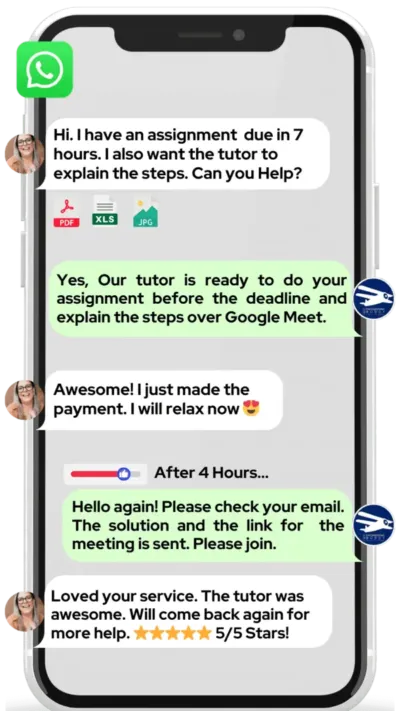
WhatsApp MEB for a quick quote — average response time under 1 minute.
Who This Biochemistry Tutoring Is For
MEB’s Biochemistry tutoring covers students at every stage — from AP and A Level through to PhD coursework. If the subject makes sense in a lecture and falls apart the moment you try a problem set, that’s exactly what 1:1 sessions are designed to fix.
- AP Biology and AP Chemistry students tackling biochemical processes for the first time
- A Level and IB students working through enzyme kinetics, respiration pathways, and DNA structure
- First and second year undergraduates at universities such as UCL, University of Toronto, ANU, and Michigan State who need ongoing weekly support
- Graduate students working through metabolomics, proteomics, or signalling cascades for coursework or qualifying exams
- Students who failed or narrowly passed their first attempt and need to resit — a conditional university offer is on the line and there is no margin for a second miss
- Parents watching a student’s confidence erode as exam dates approach and self-study isn’t closing the gap
- Students needing ethical biological sciences homework help aligned to their specific course
1:1 Tutoring vs Self-Study vs AI Tools
Self-study works if the material is clear and you can check your own reasoning — but Biochemistry is full of mechanisms where a small conceptual error repeats silently across every subsequent topic. AI tools can generate a passable explanation of the citric acid cycle in seconds, but they cannot watch you draw a metabolic pathway, catch the moment you misplace a phosphate group, or push back on your reasoning about allosteric regulation in real time. That live diagnostic correction — catching the specific error before it becomes a habit — is where 1:1 molecular biology tutoring and Biochemistry instruction earns its value. MEB sessions run online with the same structured feedback loop you’d get in person, calibrated to your exact syllabus.
Outcomes: What You’ll Be Able To Do in Biochemistry
After working through a structured set of MEB Biochemistry sessions, students can solve multi-step enzyme kinetics problems including Michaelis-Menten and inhibition graphs without prompting. They apply metabolic pathway logic — glycolysis, the TCA cycle, oxidative phosphorylation — to interpret experimental data correctly. Students explain gene expression mechanisms from transcription through post-translational modification with the precision exam mark schemes require. They analyse Western blot, gel electrophoresis, and PCR results in the context of a given research question. They write lab reports and data interpretation sections that address the actual biological mechanisms, not just surface descriptions.
Supporting a student through Biochemistry? MEB works directly with parents to set up sessions, track progress, and keep coursework on schedule. WhatsApp MEB — average response time is under a minute, 24/7.
Based on feedback from 40,000+ sessions collected by MEB from 2022 to 2025, 58% of students improved by one full grade after approximately 20 hours of 1:1 tutoring in a single subject. A further 23% achieved at least a half-grade improvement.
Source: MEB session feedback data, 2022–2025.
What We Cover in Biochemistry (Syllabus / Topics)
MEB tutors cover three core tracks. Most students need at least two. The tutor maps which tracks apply after the first diagnostic session.

Track 1: Molecular Foundations
- Amino acid structure, peptide bonds, and protein folding (primary through quaternary structure)
- Enzyme kinetics: Michaelis-Menten kinetics, Km, Vmax, inhibition types
- Nucleic acid structure — DNA double helix, RNA types, base pairing rules
- DNA replication, transcription, and translation mechanisms
- Post-translational modification: phosphorylation, glycosylation, ubiquitination
- Membrane structure and transport — lipid bilayer, channel proteins, active vs passive transport
Core texts for this track include Lehninger Principles of Biochemistry (Nelson & Cox) and Biochemistry (Berg, Tymoczko & Gatto) — both widely used across US and UK undergraduate courses.
Track 2: Metabolism and Bioenergetics
- Glycolysis — step-by-step mechanism, ATP yield, regulatory enzymes
- Citric acid cycle (TCA / Krebs): intermediates, cofactors, energy capture
- Oxidative phosphorylation and electron transport chain
- Fatty acid oxidation (beta-oxidation) and fatty acid synthesis
- Amino acid catabolism and the urea cycle
- Metabolic integration — fed vs fasted state, hormonal regulation of fuel use
- Thermodynamics: free energy, coupled reactions, ATP hydrolysis
Recommended texts: Harper’s Illustrated Biochemistry for clinical context and Stryer’s Biochemistry for mechanistic depth — both standard across US, Canadian, and Australian medical and science programmes.
Track 3: Techniques, Data Interpretation, and Applied Biochemistry
- Gel electrophoresis — SDS-PAGE, agarose gels, interpretation of banding patterns
- Western blotting, ELISA, and immunoprecipitation principles
- PCR and RT-PCR: design, controls, quantitative analysis
- Spectrophotometry and enzyme activity assays
- Recombinant DNA technology — cloning, restriction enzymes, expression systems
- Reading and interpreting primary literature figures in a Biochemistry context
Students on lab-heavy courses benefit from Molecular Cloning: A Laboratory Manual (Sambrook & Russell) alongside their departmental lab manuals. For online cell biology tutoring that overlaps with these techniques, MEB covers that too.
Biochemistry sits at the junction of chemistry and biology, which means students who struggle often have a gap in one of those foundations — not in Biochemistry itself. Finding that gap early changes everything.
Source: My Engineering Buddy tutoring methodology, 2008–2025.
What a Typical Biochemistry Session Looks Like
The tutor opens by checking the previous topic — usually something like enzyme inhibition or a metabolic pathway the student attempted since the last session. If there was a problem set, the student shares their working on screen and the tutor identifies exactly where the reasoning went off. From there, the session moves to the scheduled topic — say, the electron transport chain or gel electrophoresis data interpretation. The tutor works through a problem on a digital pen-pad, narrating each step, then asks the student to replicate the process or explain a variation. Errors get corrected in real time, not at the end. The session closes with a specific practice task — two to three problems from a past paper or textbook — and the next topic is noted so the student can do a light read before the following session.
At MEB, we’ve found that the biggest time sink in Biochemistry tutoring isn’t the hard topics — it’s undoing a small misunderstanding about enzyme kinetics or membrane potential that a student has been carrying for three weeks without realising it. Catching it early cuts revision time roughly in half.
How MEB Tutors Help You with Biochemistry (The Learning Loop)
Diagnose: In the first session, the tutor asks the student to attempt a representative problem — often a Michaelis-Menten calculation or a pathway-completion question. The errors reveal which conceptual gaps are driving the wider difficulty, not just which topics haven’t been covered yet.
Explain: The tutor works through a live example on a digital pen-pad, annotating each step. For metabolic pathways, this means drawing the mechanism rather than describing it — students who have watched a tutor build the TCA cycle from scratch, step by step, retain it differently than students who have only read it.
Practice: The student attempts a similar problem while the tutor watches. No looking away, no moving on. This is where most of the session’s value is created.
Feedback: The tutor goes through errors step by step — not just marking something wrong, but explaining which part of the mechanism was misapplied and why that specific error would cost marks on a mark scheme.
Plan: At the end of each session, the tutor sets a specific practice task and flags the next topic. There is a running log of what has been covered and what remains.
All sessions run over Google Meet with a digital pen-pad or iPad and Apple Pencil for annotations. Before the first session, share your course syllabus or exam board, any recent homework or past paper you’ve attempted, and your exam or submission date. The tutor takes it from there. Start with the $1 trial — 30 minutes of live tutoring that also serves as your first diagnostic.
Tutor Match Criteria (How We Pick Your Tutor)
Not every Biochemistry tutor is right for every student. MEB matches on six criteria.
Subject depth: The tutor must have studied or taught Biochemistry at the level you need — AP and A Level students are matched differently from students in a graduate metabolomics module.
Tools: Every tutor uses Google Meet and a digital pen-pad or iPad with Apple Pencil. For data analysis components, screen sharing of software such as GraphPad or Excel is standard.
Time zone: MEB covers New York, Los Angeles, Chicago, London, Dubai, Toronto, Sydney, and Melbourne — evenings and weekends included. No time zone is underserved.
Learning style: The tutor calibrates pace and explanation style from the first session. A student who needs visual pathway diagrams gets that. A student who needs mark-scheme precision gets that.
Communication: Clear English, adapted to the student’s level. No jargon-heavy explanations for students still building vocabulary.
Goals: Whether the goal is a specific exam grade, completing a lab report section, or gaining conceptual depth for a qualifying exam, the tutor works to that target — not a generic syllabus checklist.
Unlike platforms where you fill out a form and wait, MEB responds in under a minute, 24/7. Tutor match takes under an hour. The $1 trial means you test before you commit. Everything runs over WhatsApp — no logins, no intake forms.
Study Plans (Pick One That Matches Your Goal)
The tutor builds the specific session sequence after the diagnostic, but the framework depends on your timeline. A catch-up plan (1–3 weeks) closes the most critical gaps — enzyme kinetics, key pathways, or techniques — before an upcoming exam or submission. An exam prep plan (4–8 weeks) works through the full syllabus with past paper practice built in from week two. Weekly ongoing support runs alongside your semester, with sessions tied to current coursework and lecture content. Tell MEB your deadline and the tutor maps it from there.
Pricing Guide
Biochemistry tutoring at MEB starts at $20/hr for standard undergraduate levels. Most students pay between $20 and $40 per hour. Graduate-level work — qualifying exam prep, advanced metabolomics, research-methods support — is available up to $100/hr depending on tutor background and topic complexity.
Rate factors include academic level, topic depth, session frequency, and tutor availability. Rates at the higher end reflect tutors with research or industry backgrounds in fields such as pharmaceutical biochemistry or structural biology.
For students targeting medical school, PhD programmes, or professional research roles, tutors with active research experience are available at higher rates — share your specific goal and MEB will match the tier to your ambition.
Peak exam periods — particularly April through May and October through November — see reduced tutor availability. Book early. Start with the $1 trial — 30 minutes, no registration, no commitment. WhatsApp MEB for a quick quote.
FAQ
Is Biochemistry hard?
For most students, yes — not because the concepts are inaccessible, but because the subject sits across both chemistry and biology. A gap in either foundation compounds quickly. With 1:1 metabolism tutoring or Biochemistry-specific help, most students find their footing within three to four sessions.
How many sessions are needed?
Depends on the goal. Closing a specific gap before an exam typically takes 4–8 sessions. Building solid coverage of a full Biochemistry module from scratch usually takes 12–20 sessions, depending on how many tracks are involved and the student’s starting point.
Can you help with homework and assignments?
Yes — guided explanation, not completion. The tutor works through the logic with you until you can complete the work yourself. MEB tutoring is guided learning — you understand the work, then submit it yourself. For full details on what we help with and what we don’t, read our Academic Integrity policy and Why MEB.
Will the tutor match my exact syllabus or exam board?
Yes. MEB tutors are matched to your specific course — AP Biology, A Level Chemistry with Biochemistry components, IB Biology HL, or a named university module. Syllabus and exam board details are collected before the match is made.
What happens in the first session?
The tutor asks you to attempt a problem or explain a topic from your current unit. That reveals the actual gap — not just where you think you’re stuck. The rest of the session addresses the most urgent issue. It also functions as your diagnostic for the session plan going forward.
Is online tutoring as effective as in-person?
For Biochemistry, yes — and sometimes more so. Digital pen-pads let tutors draw metabolic pathways, annotate enzyme diagrams, and mark up student work in real time. Students in New York, London, Dubai, and Sydney report the same session quality as face-to-face. The research supports it: see Freeman et al. 2014, PNAS on active learning outcomes in STEM.
Can I get Biochemistry help at midnight?
Yes. MEB operates 24/7 across all time zones. WhatsApp response time averages under one minute. If you’re working late on an enzyme kinetics problem set or a lab report due the next morning, message MEB and a tutor can be matched within the hour.
What if I don’t like my assigned tutor?
Request a different match immediately — no explanation needed. MEB keeps several tutors available for each subject level precisely for this reason. The $1 trial is also designed so you test before committing to a regular schedule.
Do you offer group Biochemistry sessions?
MEB specialises in 1:1 sessions only. Group dynamics slow down the diagnostic process and make it harder to address one student’s specific gap. Everything is calibrated to one student’s syllabus, learning pace, and exam date.
How do I get started?
Three steps: WhatsApp MEB with your course level and exam date, get matched with a verified tutor within the hour, then start with the $1 trial — 30 minutes of live Biochemistry tutoring or one full question explained. No registration. No intake form.
Trust & Quality at My Engineering Buddy
Every MEB tutor goes through subject-specific screening before taking a session. That includes a live demo evaluation, degree verification in a relevant discipline — Biochemistry, Molecular Biology, Chemistry, or a closely related field — and review of ongoing session feedback. Rated 4.8/5 across 40,000+ verified reviews on Google. MEB has been running since 2008 and serves 52,000+ students across the US, UK, Canada, Australia, and the Gulf. See how tutor selection and session structure work in detail at MEB’s tutoring methodology.
MEB tutoring is guided learning — you understand the work, then submit it yourself. For full details on what we help with and what we don’t, read our Academic Integrity policy.
MEB covers 2,800+ subjects from AP and A Level through to PhD level, serving students across North America, Europe, Australia, and the Gulf since 2008. Students who need support in adjacent areas often also work with MEB on genetics tutoring, immunology homework help, and microbiology assignment help.
Students consistently tell us that the session structure — diagnostic first, then explanation, then student-led practice — is what makes the difference. Reading a textbook tells you what is true. Working a problem with a tutor who can stop you mid-step tells you where you go wrong.
MEB has served students from over 50 countries since 2008. The demand for specialist Biochemistry support — from AP level through to PhD qualifying exams — has grown every year since 2015, driven by rising enrolment in pre-med and life sciences programmes.
Source: My Engineering Buddy internal enrolment data, 2008–2025.
Explore Related Subjects
Students studying Biochemistry often also need support in:
- Biology
- Cell Biology
- Molecular Biology
- Genetics
- Human Physiology
- Microbiology
- Structural Biology
- Metabolism
Next Steps
Getting started takes three minutes, not three days.
- Share your exam board or course name, your hardest topic right now, and your exam or deadline date
- Share your time zone and available session slots
- MEB matches you with a verified Biochemistry tutor — usually within the hour
Before your first session, have ready:
- Your exam board and syllabus, or your course outline
- A recent past paper attempt or a homework problem you couldn’t finish
- Your exam or submission deadline date — the tutor plans the session sequence around it
The first session starts with a diagnostic so every minute is used on what actually matters. Visit www.myengineeringbuddy.com for more on how the MEB process works.
WhatsApp to get started or email [email protected].
Try your first session for $1 — 30 minutes of live 1:1 tutoring or one homework question explained in full. No registration. No commitment. WhatsApp MEB now and get matched within the hour.
52,000+ Happy Students From Various Universities






How Much For Private 1:1 Tutoring & Hw Help?
Private 1:1 Tutoring and HW help Cost $20 – 35 per hour* on average.
Reviewed by Subject Expert
This page has been carefully reviewed and validated by our subject expert to ensure accuracy and relevance.

