

Hire Verified & Experienced
FE Chemical Tutors
Email: [email protected]
4.8/5 40K+ session ratings collected on the MEB platform



Hire The Best FE Chemical Tutor
Top Tutors, Top Grades. Without The Stress!
The FE Chemical exam has a first-attempt pass rate under 60%. If you’ve already tried once, or you’re six weeks out and still shaky on thermodynamics, you need a tutor — not another YouTube playlist.
FE Chemical Tutor Online
The FE Chemical exam is a computer-based licensure test administered by NCEES, assessing competency across chemical engineering fundamentals including thermodynamics, mass transfer, reaction kinetics, and process design for engineers seeking PE licensure.
MEB connects you with a verified FE Chemical tutor near me — wherever you’re based — for 1:1 online sessions built around the NCEES FE Chemical exam blueprint. Whether you’re sitting the exam in eight weeks or retaking after a failed attempt, an FE (Fundamentals of Engineering) tutoring specialist from MEB will work through your exact weak areas, not a generic syllabus. One session won’t fix everything. A structured plan will.
- 1:1 online sessions tailored to the NCEES FE Chemical exam blueprint
- Expert-verified tutors with chemical engineering backgrounds and PE exam experience
- Flexible time zones — US, UK, Canada, Australia, Gulf
- Structured learning plan built after a diagnostic session
- Ethical homework and assignment guidance — you understand the work, then submit it yourself
52,000+ students across the US, UK, Canada, Australia, and the Gulf have used MEB since 2008 — including engineers preparing for FE (Fundamentals of Engineering) exams like FE Chemical, FE Mechanical, and FE Civil.
Source: My Engineering Buddy, 2008–2025.
How Much Does a FE Chemical Tutor Cost?
Most FE Chemical tutoring sessions at MEB run $20–$40/hr. Specialist tutors with professional PE or industry backgrounds may run higher — up to $100/hr for niche, graduate-level needs. Before committing, you can test the match with a $1 trial: 30 minutes of live 1:1 tutoring or one full exam question explained in detail.
| Level / Need | Typical Rate | What’s Included |
|---|---|---|
| Standard FE Chemical prep | $20–$35/hr | 1:1 sessions, topic focus, homework guidance |
| Advanced / PE-track specialist | $35–$100/hr | Expert tutor, process design depth, exam strategy |
| $1 Trial | $1 flat | 30 min live session or one full exam question explained |
Tutor availability tightens in the months before NCEES exam windows. Book early if you have a fixed exam date.
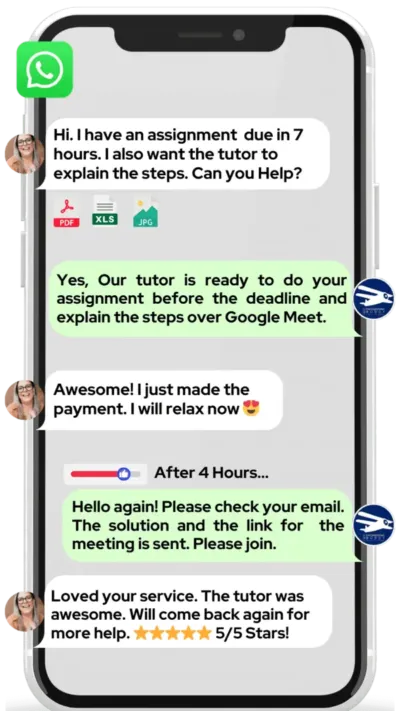
WhatsApp MEB for a quick quote — average response time under 1 minute.
Who This FE Chemical Tutoring Is For
The FE Chemical exam covers eight broad knowledge areas and 110 questions in five hours and twenty minutes. Most candidates underestimate how much ground that is. This tutoring is for engineers who want to pass — on schedule.
- Students retaking after a failed first attempt, with specific gaps to close
- Final-year chemical engineering undergraduates preparing for their first sitting
- Engineers who graduated years ago and need to rebuild foundational knowledge
- Students 4–6 weeks from an exam with significant gaps still to close in thermodynamics or mass transfer
- Anyone working through NCEES practice problems and hitting walls on reaction kinetics or process design
- Parents supporting a student whose confidence has dropped after a failed attempt
Students preparing for FE Chemical come from programs at universities across the US including Georgia Tech, University of Michigan, Purdue, UT Austin, and Carnegie Mellon, as well as international programs in Canada, the UK, and the Gulf. The exam itself is the same regardless of institution — the tutor focuses on the NCEES blueprint, not your university’s course structure.
1:1 Tutoring vs Self-Study vs AI vs YouTube vs Online Courses
Self-study works if you have 12+ weeks and strong discipline — but the FE Chemical blueprint is wide and most candidates misjudge which topics carry the most weight. AI tools give fast definitions but can’t watch you misapply the Rachford-Rice equation and stop you. YouTube covers concepts well and stops exactly when problems get specific. Online courses move at a fixed pace regardless of where your gaps actually are. With MEB, a tutor watches you work through an energy balance live, spots the step where you go wrong, and fixes it before it costs you marks on exam day. That’s what none of the other formats can do for FE Chemical specifically.
Outcomes: What You’ll Be Able To Do in FE Chemical
After a structured block of FE Chemical tutoring, you’ll be able to solve multi-step thermodynamics problems using the NCEES reference handbook under timed conditions. You’ll analyze heat and mass transfer scenarios without defaulting to formula-hunting. You’ll model phase equilibria and apply Raoult’s Law and activity coefficients with confidence. You’ll explain reaction kinetics — rate laws, reactor design equations — well enough to answer conceptual questions, not just plug-and-chug. You’ll apply process safety and material balance principles to the kind of integrated problems that catch most candidates off guard.
Based on feedback from 40,000+ sessions collected by MEB from 2022 to 2025, 58% of students improved by one full grade after approximately 20 hours of 1:1 tutoring in subjects like FE Chemical. A further 23% achieved at least a half-grade improvement.
Source: MEB session feedback data, 2022–2025.
Start with the $1 trial — 30 minutes of live tutoring that also functions as your first diagnostic.
Students consistently tell us that the NCEES reference handbook feels useless until someone shows them how to navigate it under exam conditions. That’s one of the first things MEB tutors work on — not the equations themselves, but the strategy of knowing exactly where to look when the clock is running.
What We Cover in FE Chemical (Syllabus / Topics)

Mathematics, Probability & Engineering Sciences
- Differential equations and linear algebra applied to process models
- Numerical methods: Newton-Raphson, Euler integration
- Probability distributions and statistical process control basics
- Vectors, matrices, and systems of equations
- Statics and dynamics as tested in the FE Chemical blueprint
Core texts: Advanced Engineering Mathematics by Kreyszig; NCEES FE Chemical Practice Exam (official).
Thermodynamics, Heat Transfer & Mass Transfer
- First and second law applications to open and closed systems
- Phase equilibria: Raoult’s Law, activity coefficients, VLE diagrams
- Heat exchanger design: LMTD method, NTU-effectiveness
- Distillation, absorption, and extraction — McCabe-Thiele method
- Fick’s Law and diffusion in binary systems
- Psychrometrics and drying operations
Core texts: Chemical Engineering Thermodynamics by Smith, Van Ness & Abbott; Transport Phenomena by Bird, Stewart & Lightfoot.
Reaction Engineering, Process Design & Safety
- Rate laws, reaction order, Arrhenius equation
- CSTR, PFR, and batch reactor design equations
- Material and energy balances on reacting systems
- Process flow diagrams and piping & instrumentation diagrams (P&IDs)
- Process control basics: PID controllers, block diagrams
- Hazard analysis, HAZOP concepts, and process safety fundamentals
- Environmental regulations and waste treatment basics as tested by NCEES
Core texts: Elements of Chemical Reaction Engineering by Fogler; Chemical Process Safety by Crowl & Louvar.
What a Typical FE Chemical Session Looks Like
The tutor opens by checking the previous session’s topic — usually a specific area like equilibrium flash calculations or CSTR design — and asking you to attempt a problem cold before any instruction. From there, you and the tutor work through NCEES-style problems on a shared screen, with the tutor annotating energy balances and phase diagrams using a digital pen-pad so you can see the reasoning step by step. You replicate the method, and the tutor watches where your logic breaks. The session closes with two or three timed practice questions set as independent work, and a note on which topic opens next time. No session ends without a concrete task and a clear next topic.
How MEB Tutors Help You with FE Chemical (The Learning Loop)
Diagnose: In the first session, the tutor works through a short set of NCEES-style problems with you to identify exactly which knowledge areas are costing you marks — thermodynamics misconceptions, NCEES handbook navigation gaps, or timing issues under exam conditions.
Explain: The tutor works through problems live using a digital pen-pad, showing every step of a heat exchanger design or a reactor sizing calculation. You see the method, not just the answer.
Practice: You attempt the next problem while the tutor watches. This is where most of the learning happens. Passive observation of correct methods doesn’t transfer — you have to produce the work yourself.
Feedback: The tutor identifies exactly where your reasoning went wrong — whether you misread a VLE diagram, applied the wrong reactor design equation, or skipped a unit conversion. You know why marks are lost, not just that they are.
Plan: At the end of every session, the tutor sets the next topic, notes which areas are closed, and adjusts the plan if the exam date has moved or a new weak area has surfaced.
Sessions run on Google Meet. The tutor uses a digital pen-pad or iPad with Apple Pencil for live working. Before your first session, share your exam date, your most recent NCEES practice score or attempt result, and the two or three topics where you’re losing the most time. The first session covers diagnostic problems across those areas and sets the full session plan from there. Whether you need a quick catch-up in the final three weeks, structured revision over six to eight weeks, or ongoing weekly support through a semester, the tutor maps the sequence after that first diagnostic.
At MEB, we’ve found that FE Chemical candidates almost always overestimate their thermodynamics and underestimate how much time they lose navigating the NCEES reference handbook. We build handbook fluency into the first two sessions — it’s not glamorous, but it’s where the marks are.
Tutor Match Criteria (How We Pick Your Tutor)
Not every chemical engineer is the right tutor for the FE Chemical exam. MEB matches on four criteria.
Subject depth: The tutor must have a chemical engineering degree and demonstrable experience with the NCEES FE Chemical blueprint — not just general chemistry or process engineering knowledge.
Tools: Every tutor works on Google Meet with a digital pen-pad or iPad and Apple Pencil. If they can’t annotate live, they’re not matched to this exam.
Time zone: Matched to your region — US, UK, Gulf, Canada, or Australia — so session times actually work for your schedule.
Goals: The tutor is briefed on your exam date, your previous attempt result if applicable, and which knowledge areas the diagnostic flags as priority. Unlike platforms where you fill out a form and wait days, MEB responds in under a minute, 24/7. Tutor matching takes under an hour. The $1 trial means you test the match before committing to a full block of sessions. Everything runs over WhatsApp — no logins, no intake forms.
MEB has served students in 2,800+ subjects since 2008 — rated 4.8/5 across tens of thousands of verified reviews. Response time: under 1 minute. Tutor match: under an hour.
Source: My Engineering Buddy, 2008–2025.
Study Plans (Pick One That Matches Your Goal)
The tutor builds the exact sequence after the diagnostic, but most FE Chemical candidates fall into one of three plans. Catch-up (1–3 weeks): high-priority topics only — thermodynamics, mass transfer, reaction engineering — with timed practice from session one. Exam prep (4–8 weeks): full blueprint coverage, one to two sessions per week, with past NCEES problems integrated from week two. Weekly support: ongoing sessions aligned to your university coursework, building exam readiness over a full semester. All three start with the same diagnostic.
Pricing Guide
FE Chemical tutoring at MEB runs $20–$40/hr for most candidates. Engineers targeting the exam with specific professional backgrounds — or those who need a tutor with PE licensure themselves — can access specialist tutors at up to $100/hr. Rate factors include the knowledge area, your timeline, and tutor availability.
For students targeting licensure and PE pathways at competitive engineering firms or government agencies, tutors with active professional engineering backgrounds are available at higher rates — share your specific goal and MEB will match the tier to what you actually need.
Availability tightens before NCEES exam windows. Book ahead if you have a fixed date. Start with the $1 trial — 30 minutes, no registration, no commitment. WhatsApp MEB for a quick quote.
Try your first session for $1 — 30 minutes of live 1:1 tutoring or one homework question explained in full. No registration. No commitment. WhatsApp MEB now and get matched within the hour.
FAQ
Is the FE Chemical exam hard?
It’s wide, not impossibly deep. The NCEES FE Chemical exam covers eight knowledge areas in 110 questions over five hours twenty minutes. Most candidates who fail do so because of weak thermodynamics fundamentals or poor handbook navigation — not because the individual topics are beyond them.
How many sessions do most FE Chemical candidates need?
Candidates with a recent degree and one or two specific weak areas typically need 8–12 sessions. Retakers with multiple gaps, or those who graduated several years ago, usually need 15–20 sessions to close the gap reliably. The diagnostic sets the number more precisely.
Can you help with FE Chemical homework and assignments?
MEB tutoring is guided learning — you understand the work, then submit it yourself. See our Academic Integrity policy and Why MEB page for full details on what we help with and what we don’t. Tutors work through problems with you, explain the method, and watch you apply it.
Will the tutor match my exact exam blueprint?
Yes. The tutor works from the current NCEES FE Chemical specification — not a generic chemical engineering syllabus. If the blueprint version has recently been updated, flag that at the start of the first session and the tutor will confirm which version applies to your exam date.
What happens in the first FE Chemical session?
The tutor runs a short diagnostic — typically four to six NCEES-style problems across different knowledge areas — to identify where your marks are being lost. From that, a session plan is built. The first session is working time, not an interview.
Is online FE Chemical tutoring as effective as in-person?
For an exam done on a computer, online tutoring is the correct format. You practice in the same environment you’ll sit the exam in. Live annotation on a shared screen with a digital pen-pad replicates whiteboard problem-solving without any loss of clarity.
Does MEB offer help specifically for FE Chemical retakers?
Retakers are a significant share of MEB’s FE Chemical students. The diagnostic identifies which knowledge areas failed you the first time. The plan then prioritises those areas without wasting sessions on topics you already passed. Retakers often need fewer total sessions than first-timers if the gaps are specific.
Can I use MEB tutoring alongside the NCEES official practice exam?
That’s the recommended approach. The tutor integrates NCEES official practice problems from week two onward. Seeing where you go wrong on official material — and correcting it live — is more effective than working through unofficial question banks alone.
Can I get FE Chemical help at short notice — even late at night?
WhatsApp MEB any time. Average response is under a minute. Tutor matching typically takes under an hour, and sessions can often be scheduled the same day. Late-night and weekend availability is common across MEB’s tutor network in US, UK, and Gulf time zones.
What if I don’t get along with my assigned FE Chemical tutor?
Tell MEB immediately over WhatsApp and a replacement is arranged — usually the same day. The $1 trial exists precisely so you can assess the match before committing to a full block. No long-term contract means no friction in switching.
How do I get started with FE Chemical tutoring?
Three steps: WhatsApp MEB, share your exam date and which NCEES knowledge areas are giving you trouble, and start the $1 trial — 30 minutes of live 1:1 tutoring that also serves as your diagnostic. Matched within the hour.
What’s the difference between FE Chemical and FE Other Disciplines?
The FE Other Disciplines exam is a broader generalist exam covering multiple engineering fields without deep chemical-specific content. FE Chemical is specific to chemical engineering graduates and includes thermodynamics, mass transfer, reaction kinetics, and process design at a depth not found in the generalist version.
Trust & Quality at My Engineering Buddy
Every MEB tutor goes through subject-specific vetting — a live demo evaluation, degree verification, and review of their professional or teaching background. For FE Chemical, that means chemical engineering qualifications and familiarity with the current NCEES exam blueprint. Rated 4.8/5 across 40,000+ verified reviews on Google. Ongoing session feedback is reviewed and tutors are removed if quality drops. You’re not matched with whoever is available — you’re matched with someone who can actually move your score.
MEB tutoring is guided learning — you understand the work, then submit it yourself. For full details on what we help with and what we don’t, read our Academic Integrity policy and Why MEB.
MEB has been running since 2008, serving 52,000+ students across the US, UK, Canada, Australia, Gulf, and Europe in 2,800+ subjects. The FE (Fundamentals of Engineering) category includes specialists in FE Electrical and Computer tutoring, FE Environmental tutoring, and FE Industrial and Systems help — all following the same NCEES-aligned, diagnostic-first approach. See our tutoring methodology for how the learning loop is structured across every subject.
MEB covers the full FE exam family — from FE Chemical to FE Mechanical and FE Civil — with subject-specific tutors matched to the NCEES blueprint your exam actually uses.
Source: My Engineering Buddy, 2008–2025.
A common pattern our tutors observe is that FE Chemical candidates arrive with solid university transcripts and still struggle with the exam format. The NCEES exam rewards speed and handbook fluency — not just subject knowledge. We train for both, from session one.
Explore Related Subjects
Students studying FE Chemical often also need support in:
- FE Mechanical
- FE Civil
- FE Electrical and Computer
- FE Environmental
- FE Industrial and Systems
- FE Other Disciplines
Next Steps
Before your first session, have ready: your NCEES exam date, your most recent practice exam score or attempt result, and the two or three knowledge areas where you’re losing the most time. The tutor handles the rest.
- Share your exam date, hardest topics, and current practice score
- Share your availability and time zone
- MEB matches you with a verified FE Chemical tutor — usually within the hour
First session starts with a diagnostic so every minute counts. Visit www.myengineeringbuddy.com for more on how MEB works.
WhatsApp to get started or email [email protected].
52,000+ Happy Students From Various Universities



How Much For Private 1:1 Tutoring & Hw Help?
Private 1:1 Tutoring and HW help Cost $20 – 35 per hour* on average.
Reviewed by Subject Expert
This page has been carefully reviewed and validated by our subject expert to ensure accuracy and relevance.

