




~1 min
Average Reply Time
~1 hour
To Be Matched With A Tutor
1 Trial
75% Find Their Tutor On The 1st Trial
$1
Your First 30 Minutes
Hire The Best HSC Investigating Science Tutor
Top Tutors, Top Grades. Without The Stress!
Related Subjects
Most students don’t fail HSC Investigating Science because they’re bad at science — they fail because they can’t structure an investigation report or justify their methodology under exam conditions.
HSC Investigating Science Tutor Online
HSC Investigating Science is a Year 11–12 NSW NESA course that develops scientific thinking through inquiry, experimental design, and data analysis, equipping students to conduct and evaluate investigations across all science disciplines.
If you’re searching for an HSC Investigating Science tutor near me, MEB connects you with verified 1:1 online tutors matched to the exact NSW NESA syllabus — from working scientifically skills to depth studies. Our HSC tutoring covers every subject in the course, and Investigating Science is one of the most practical and high-stakes among them. Book a session today and start closing the gaps before your next assessment.
- 1:1 online sessions tailored to the NSW NESA Investigating Science syllabus
- Expert-verified tutors with science research and teaching backgrounds
- Flexible time zones — Australia, US, UK, Canada, Gulf
- Structured learning plan built after a diagnostic session
- Ethical homework and assignment guidance — you understand before you submit
52,000+ students across Australia, the US, the UK, Canada, and the Gulf have used MEB since 2008 — including students in HSC Science subjects like HSC Biology, HSC Chemistry, and HSC Physics.
Source: My Engineering Buddy, 2008–2025.
How Much Does a HSC Investigating Science Tutor Cost?
Most HSC Investigating Science tutoring sessions run $20–$40/hr. Your first session costs $1 — 30 minutes of live 1:1 tutoring or one assignment question explained in full.
| Level / Need | Typical Rate | What’s Included |
|---|---|---|
| Standard (Year 11–12) | $20–$35/hr | 1:1 sessions, depth study guidance, working scientifically skills |
| Advanced / Specialist | $35–$70/hr | Expert tutor, complex investigation design, data analysis depth |
| $1 Trial | $1 flat | 30 min live session or 1 assignment question fully explained |
Tutor availability tightens significantly in August–October as HSC exam periods approach. Locking in a consistent tutor now avoids scrambling later.
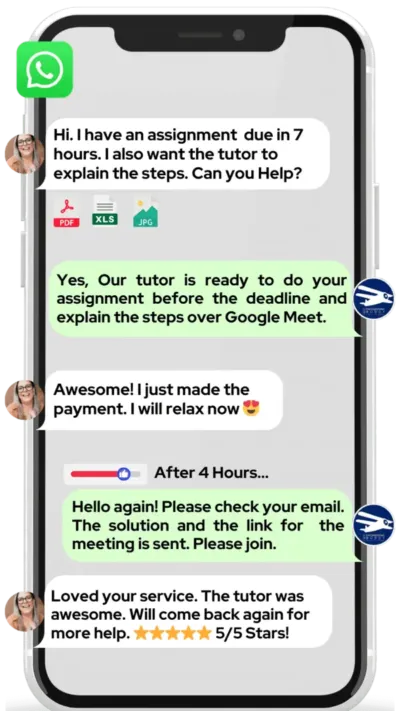
WhatsApp MEB for a quick quote — average response time under 1 minute.
Who This HSC Investigating Science Tutoring Is For
Investigating Science attracts students who chose it as an alternative to a content-heavy science, but the course is not easy. The depth study and the “Working Scientifically” skills component catch many students off guard — especially those who assumed practical work would carry them through.
- Students struggling to justify experimental design choices in reports
- Students with a university conditional offer depending on their ATAR, with Investigating Science as a contributing subject
- Students 4–6 weeks from an exam with significant gaps in data analysis or scientific thinking skills
- Students who need to complete a depth study but don’t know where to start
- Parents watching a student’s confidence drop as investigation reports keep getting marked down
- Students who also take HSC Science Extension and need support across both inquiry-based courses simultaneously
Students at schools including the University of Sydney, UNSW, University of Melbourne, Monash, University of Queensland, Australian National University, and University of Western Australia often reach MEB after receiving feedback that their scientific reasoning is underdeveloped.
1:1 Tutoring vs Self-Study vs AI vs YouTube vs Online Courses
Self-study works if you’re disciplined, but Investigating Science requires feedback on reasoning — not just content recall. AI tools give fast answers but can’t read your specific investigation design and tell you what NESA markers will penalise. YouTube covers the theory well and stops the moment you need someone to critique your method section. Online courses move at a fixed pace regardless of your depth study topic. 1:1 tutoring with MEB is calibrated to your exact NESA syllabus module, your depth study question, and the specific skills component you’re dropping marks on.
Outcomes: What You’ll Be Able To Do in HSC Investigating Science
After structured 1:1 sessions, students can apply the Working Scientifically skills framework accurately across all six skill areas — questioning, planning, conducting, processing, analysing, and communicating. You’ll analyse primary and secondary data sets with appropriate statistical tools, write a depth study report that meets NESA’s quality of evidence criteria, explain the relationship between reliability and validity in your own experimental design, and present scientific arguments with the precision that distinguishes Band 5 from Band 6 responses.
Based on feedback from 40,000+ sessions collected by MEB from 2022 to 2025, 58% of students improved by one full grade after approximately 20 hours of 1:1 tutoring in subjects like HSC Investigating Science. A further 23% achieved at least a half-grade improvement.
Source: MEB session feedback data, 2022–2025.
Supporting a student through HSC Investigating Science? MEB works directly with parents to set up sessions, track progress, and keep coursework on schedule. WhatsApp MEB — average response time is under a minute, 24/7.
What We Cover in HSC Investigating Science (Syllabus / Topics)

Working Scientifically Skills
- Questioning and predicting — formulating testable hypotheses
- Planning investigations — variables, controls, ethical considerations
- Conducting investigations — safe and accurate data collection
- Processing data and information — tables, graphs, statistical analysis
- Analysing data — identifying trends, sources of error, uncertainty
- Problem solving and communicating — scientific reports, peer review
Key references: Investigating Science Stage 6 Syllabus (NESA), Scientific Investigation Skills by Tanner & Tanner, Biology: A Global Approach (Campbell et al.) for methods context.
Modules 1–4: Course Content
- Module 1: Cause and Effect — Observing — observation vs inference, patterns in data
- Module 2: Cause and Effect — Inferences and Generalisations — experimental vs correlational studies
- Module 3: Scientific Models and Theories — how models are built, tested, and revised
- Module 4: Technologies and Measurement — precision, accuracy, instrumentation, calibration
- Longitudinal vs cross-sectional study designs
- Critical evaluation of published scientific claims
Key references: Investigating Science in Focus (Deschamp et al.), Excel HSC Investigating Science, NESA past papers for Modules 1–4.
Depth Study
- Selecting a researchable question within a chosen science context
- Designing a valid and reliable investigation (primary or secondary)
- Collecting and recording data systematically
- Evaluating evidence quality, sources of error, and limitations
- Writing the depth study report to NESA marking criteria
- Connecting depth study findings to broader scientific principles
Key references: NESA Depth Study Guidelines, Investigating Science in Focus (Deschamp et al.), school-specific depth study task sheets.
At MEB, we’ve found that the biggest mark losses in Investigating Science happen in the depth study — not because students did poor experiments, but because they couldn’t articulate why their method was fit for purpose. That’s a writing and reasoning skill, and it’s entirely teachable.
What a Typical HSC Investigating Science Session Looks Like
The tutor opens by reviewing your previous session’s focus — say, identifying controlled variables in a past paper scenario from Module 2. From there, you and the tutor work through a specific problem on screen: drafting your depth study risk assessment, processing a data set using appropriate statistical measures, or writing a response to a “evaluate the method” exam question. The tutor uses a digital pen-pad to annotate your work directly, showing exactly where NESA markers would deduct marks and why. You rewrite or re-explain the reasoning in your own words. The session closes with a concrete task — a draft section of your depth study report or three targeted past paper questions — and the next session topic is set.
How MEB Tutors Help You with HSC Investigating Science (The Learning Loop)
Diagnose: In the first session, the tutor reviews a recent assessment or past paper attempt, identifies whether your gaps are in experimental design reasoning, data analysis technique, or scientific report writing, and maps which NESA Working Scientifically outcomes need the most work.
Explain: The tutor works through a live example — constructing a valid hypothesis for a Module 3 scenario, or calculating percentage uncertainty in a data set — using a digital pen-pad so you see the thinking process, not just the answer.
Practice: You attempt the next problem with the tutor present. For Investigating Science, this often means drafting a method section or interpreting a graph and stating a conclusion with appropriate hedging language.
Feedback: The tutor marks your attempt against NESA criteria in real time — explaining exactly which skill descriptor you missed and how a Band 6 response would phrase the same idea differently.
Plan: Each session ends with a clear next step: which module to tackle, which depth study section to draft, and what to prepare before the following session.
Sessions run on Google Meet. The tutor uses a digital pen-pad or iPad with Apple Pencil. Before your first session, share your school’s depth study task sheet, your most recent marked assessment, and your exam date. The first session functions as your diagnostic — the tutor builds the session plan from what you bring. Start with the $1 trial — 30 minutes of live tutoring that also serves as your first diagnostic.
Students consistently tell us that Investigating Science feels abstract until someone shows them how a marker actually reads a depth study. Once they see the marking criteria applied to their own writing, the whole course clicks into place.
MEB tutors work across the full NESA science suite — from HSC Biology tutoring and HSC Chemistry help to Investigating Science and Science Extension, with the same 1:1 diagnostic-first approach on every subject.
Source: My Engineering Buddy, 2008–2025.
Tutor Match Criteria (How We Pick Your Tutor)
Not every science tutor can teach Investigating Science well. The course is less about content knowledge and more about scientific reasoning and inquiry methodology — which requires a tutor with actual research or investigation design experience.
Subject depth: Tutors are matched based on familiarity with the NSW NESA Investigating Science syllabus specifically — including the Working Scientifically outcomes and depth study requirements, not just general science knowledge.
Tools: Every tutor uses Google Meet plus a digital pen-pad or iPad with Apple Pencil — essential for annotating your depth study drafts and investigation reports live.
Time zone: Matched to your location — Australia, US, UK, Canada, Gulf — so sessions don’t require you to work at 2am.
Goals: Whether you need to lift your depth study from a passing mark to a Band 6, close gaps in scientific reasoning for the written exam, or get ongoing weekly support through the semester, the tutor is matched to that specific goal.
Unlike platforms where you fill out a form and wait, MEB responds in under a minute, 24/7. Tutor match takes under an hour. The $1 trial means you test before you commit. Everything runs over WhatsApp — no logins, no intake forms.
Study Plans (Pick One That Matches Your Goal)
After the diagnostic session, your tutor builds the specific sequence. Three common plans for Investigating Science students: a catch-up plan (1–3 weeks) for students behind on depth study drafts or with a major assessment due; an exam prep plan (4–8 weeks) of structured weekly sessions covering all four modules and past paper practice; and ongoing weekly support aligned to your school’s assessment schedule from Term 1 through the HSC exam. The tutor adjusts the sequence after seeing your diagnostic results — nothing is fixed before that first session.
Pricing Guide
HSC Investigating Science tutoring starts at $20/hr for standard Year 11–12 support. Graduate-level or highly specialised tutors run up to $100/hr — though Investigating Science rarely requires that tier. Rate factors include your current level, depth study complexity, how close you are to your assessment deadline, and tutor availability.
For students targeting Band 6 or top ATAR ranks, tutors with science research backgrounds are available at higher rates — share your specific goal and MEB will match the tier to your ambition.
Tutor availability drops sharply in the September–October HSC exam window. Book early. Start with the $1 trial — 30 minutes, no registration, no commitment. WhatsApp MEB for a quick quote.
FAQ
Is HSC Investigating Science hard?
It’s harder than students expect. The exam rewards scientific reasoning and precise written expression — not just factual recall. Students who struggle most are those who underestimate the depth study and leave the Working Scientifically skills to the last few weeks.
How many sessions are needed?
Most students see measurable improvement in specific skills — depth study writing, data analysis — within 6–8 sessions. Closing broader gaps across all four modules typically takes 15–20 hours of 1:1 work spread over a term.
Can you help with homework and assignments?
Yes — MEB tutoring is guided learning. The tutor explains the concepts, walks through the method, and helps you understand what a strong response looks like. You write and submit your own work. See our Academic Integrity policy and Why MEB page for full details on what we help with and what we don’t.
Will the tutor match my exact syllabus or exam board?
Yes. Tutors are matched specifically to the NSW NESA Investigating Science syllabus — including your school’s depth study task requirements. Before your first session, share your task sheet and most recent assessment so the tutor prepares accordingly.
What happens in the first session?
The tutor reviews a recent piece of your work — a marked assessment, a depth study draft, or a past paper attempt — and identifies exactly where your marks are being lost. The session plan for subsequent weeks comes directly from that diagnostic review.
Is online tutoring as effective as in-person?
For Investigating Science specifically, online tutoring has a clear advantage: the tutor can annotate your depth study document live on screen, share past paper mark schemes in real time, and track your report across multiple drafts without needing to be in the same room.
What’s the difference between Investigating Science and Science Extension?
Investigating Science is a standalone Year 11–12 course focused on scientific thinking and inquiry across all science contexts. HSC Science Extension is an additional one-unit course for students already doing a science subject, requiring an original research proposal and review of literature. They share inquiry skills but differ significantly in scope and assessment.
Can I get HSC Investigating Science help at short notice — even on weekends?
Yes. MEB operates 24/7. WhatsApp MEB any time and a tutor match typically happens within the hour. Weekend and late-night sessions are available for students facing imminent depth study deadlines or assessments early the following week.
Does the depth study count toward my HSC mark, and can a tutor help with it?
The depth study is a school-based assessment task that contributes to your internal assessment mark — which counts 50% toward your HSC mark. Tutors help you understand investigation design, data analysis, and how to write your report to NESA criteria. You conduct and submit the work yourself.
Do you offer group HSC Investigating Science sessions?
MEB specialises in 1:1 tutoring — not group sessions. The course requires personalised feedback on your specific depth study and your own gaps in Working Scientifically skills, which group sessions can’t provide effectively.
How do I get started?
WhatsApp MEB, get matched with a verified Investigating Science tutor — usually within the hour — then start your $1 trial: 30 minutes of live 1:1 tutoring or one assignment question explained in full. Three steps, no forms, no waiting.
Trust & Quality at My Engineering Buddy
Every MEB tutor is screened through a multi-stage process: subject knowledge assessment, a live demo session evaluated by a senior MEB reviewer, and ongoing feedback monitoring after every session. Tutors hold relevant degrees and, for Investigating Science, are selected for direct experience with scientific inquiry, experimental design, and NESA-specific marking criteria. Rated 4.8/5 across 40,000+ verified reviews on Google.
MEB tutoring is guided learning — you understand the work, then submit it yourself. For full details on what we help with and what we don’t, read our Academic Integrity policy and Why MEB.
MEB has served 52,000+ students across the US, UK, Canada, Australia, Gulf, and Europe in 2,800+ subjects since 2008. Within the HSC science suite specifically, the platform covers HSC Physics tutoring, HSC Earth and Environmental Science help, and Investigating Science — all with the same 1:1 diagnostic-first methodology. Read more about how sessions are structured at MEB’s tutoring methodology page.
A common pattern our tutors observe is that students who start Investigating Science sessions in Term 2 — rather than waiting until Term 3 — have enough time to apply feedback across two or three depth study drafts. That iteration is what separates a Band 5 from a Band 6.
MEB has been matching students with subject-specialist tutors since 2008 — across HSC Mathematics Advanced tutoring, HSC English Advanced help, and every science subject in the HSC suite, including Investigating Science.
Source: My Engineering Buddy, 2008–2025.
Explore Related Subjects
Students studying HSC Investigating Science often also need support in:
- HSC Geography
- HSC Design and Technology
- HSC Food Technology
- HSC Engineering Studies
- HSC Industrial Technology
- HSC Information Processes and Technology
Next Steps
When you contact MEB, share your exam board (NSW NESA), your hardest component — depth study, Working Scientifically skills, or a specific module — and your current timeline. Include your availability and time zone. MEB matches you with a verified Investigating Science tutor, usually within 24 hours.
Before your first session, have ready:
- Your NESA syllabus and your school’s depth study task sheet
- A recent past paper attempt or a piece of marked assessment work
- Your HSC exam date or internal assessment deadline
The tutor handles the rest — the session plan, the resource selection, and the progression sequence all come from your diagnostic.
Visit www.myengineeringbuddy.com for more on how MEB works.
WhatsApp to get started or email [email protected].
Try your first session for $1 — 30 minutes of live 1:1 tutoring or one homework question explained in full. No registration. No commitment. WhatsApp MEB now and get matched within the hour.
52,000+ Happy Students From Various Universities



Reviewed by Subject Expert
This page has been carefully reviewed and validated by our subject expert to ensure accuracy and relevance.

