




~1 min
Average Reply Time
~1 hour
To Be Matched With A Tutor
1 Trial
75% Find Their Tutor On The 1st Trial
$1
Your First 30 Minutes
Hire The Best Lighting Design Tutor
Top Tutors, Top Grades. Without The Stress!
Related Subjects
Your lighting calculations were right. Your tutor showed you the lux levels were wrong. That’s what a second pair of eyes does.
Lighting Design Tutor Online
Lighting Design is the applied study of how natural and artificial light shapes built environments — covering photometric principles, fixture selection, control systems, and energy compliance. A Lighting Design tutor helps students master calculations, software output, and design rationale across architecture, interior design, and building engineering programmes.
MEB connects you with a 1:1 online Lighting Design tutor near me — wherever you are and whatever your deadline. Whether you are working through photometric calculations, struggling with a studio lighting scheme, or trying to make sense of LEED or BREEAM lighting credits, a verified architecture tutor or specialist lighting tutor will work through it with you directly. Sessions start from $20/hr.
- 1:1 online sessions tailored to your course syllabus and studio briefs
- Expert verified tutors with subject-specific knowledge in lighting design and building science
- Flexible time zones — US, UK, Canada, Australia, Gulf
- Structured learning plan built after a diagnostic session
- Ethical homework and assignment guidance — you understand the work before you submit it
52,000+ students across the US, UK, Canada, Australia, and the Gulf have used MEB since 2008 — across 2,800+ subjects, from AP Calculus to A Level Music Technology to Data Science.
Source: My Engineering Buddy, 2008–2025.
How Much Does a Lighting Design Tutor Cost?
Most Lighting Design tutoring sessions run $20–$40/hr. Graduate-level work — thesis lighting studies, advanced simulation, or LEED-specific consultation — can reach up to $100/hr depending on tutor background and topic depth. You can test the service first: the $1 trial gives you 30 minutes of live 1:1 tutoring or a full explanation of one homework question.
| Level / Need | Typical Rate | What’s Included |
|---|---|---|
| Standard (most undergraduate levels) | $20–$35/hr | 1:1 sessions, homework and assignment guidance |
| Advanced / Graduate / Specialist | $35–$100/hr | Expert tutor, thesis support, niche simulation depth |
| $1 Trial | $1 flat | 30 min live session or 1 homework question explained in full |
Tutor availability tightens significantly around end-of-semester studio deadlines and finals. Book early if your submission window is within four weeks.
WhatsApp MEB for a quick quote — average response time under 1 minute.
Who This Lighting Design Tutoring Is For
Lighting Design sits at the intersection of physics, architecture, and environmental engineering. Students often hit a wall when calculation methods and design rationale need to work together under a tight studio deadline. MEB tutoring is built for exactly that pressure.
- Undergraduate architecture and interior design students working through photometric calculations and lighting scheme assignments
- Building science and environmental engineering students tackling daylighting, lux targets, or energy compliance coursework
- Students with a university conditional offer depending on their final year grade — and a lighting studio module that isn’t going the way they planned
- Graduate and postgraduate students developing lighting strategies for thesis or capstone projects
- Students whose programmes reference tools like DIALux, Radiance, or Revit’s lighting workflow and who need guided support in those environments
- Parents supporting a first or second-year student whose confidence in the technical side of lighting has dropped sharply before their next critique
Students in this subject have progressed to programmes and firms including Cornell AAP, the Bartlett, TU Delft, ETH Zürich, RMIT, and University of Toronto. MEB works with students at all those levels.
1:1 Tutoring vs Self-Study vs AI Tools
Self-study works for motivated students — but Lighting Design has enough calculation-heavy content that it is easy to apply the wrong formula repeatedly without knowing it. AI tools can explain what correlated colour temperature means or walk through the inverse square law in seconds, but they cannot review your actual DIALux output, spot that your grid spacing is off, or tell you why your lux contour plot is failing the brief. That gap matters when your studio critique is two weeks away. MEB tutors work through your specific file, your specific numbers, and your specific submission — on screen, live, with a digital pen-pad. That is what changes the result.
Outcomes: What You’ll Be Able To Do in Lighting Design
After working with an MEB Lighting Design tutor, you will be able to apply the inverse square law and point-by-point calculation method to real floor plans without second-guessing your inputs. You will analyse daylight factors and interpret climate-based daylight modelling results well enough to defend your design decisions in a critique. You will model and troubleshoot a complete interior lighting scheme in DIALux or a comparable tool, adjusting fixture placement and mounting height until lux targets are met. You will explain LEED v4 and BREEAM lighting credit requirements clearly in a written submission. You will present your lighting rationale — technical and experiential — in a format your tutors and examiners expect.
Based on feedback from 40,000+ sessions collected by MEB from 2022 to 2025, 58% of students improved by one full grade after approximately 20 hours of 1:1 tutoring in a single subject. A further 23% achieved at least a half-grade improvement.
Source: MEB session feedback data, 2022–2025.
Supporting a student through Lighting Design? MEB works directly with parents to set up sessions, track progress, and keep coursework on schedule. WhatsApp MEB — average response time is under a minute, 24/7.
What We Cover in Lighting Design (Syllabus / Topics)
Track 1: Photometric Fundamentals and Calculations
- Luminous flux, luminous intensity, illuminance, and luminance — definitions and units
- Inverse square law and cosine law applications to real room geometries
- Lumen method and point-by-point calculation method
- Coefficient of utilisation (COU), light loss factor (LLF), and room cavity ratio
- Colour temperature, colour rendering index (CRI), and spectral power distribution
- Glare metrics — UGR calculations and IES/CIE standards
Core texts for this track include The IESNA Lighting Handbook (Illuminating Engineering Society) and Fundamentals of Lighting by Susan M. Winchip.
Track 2: Daylighting and Environmental Performance
- Daylight factor method and Climate-Based Daylight Modelling (CBDM)
- Useful Daylight Illuminance (UDI), Daylight Autonomy (DA), and Annual Sunlight Exposure (ASE)
- Window-to-wall ratio, glazing transmittance, and shading device analysis
- Passive daylighting strategies — toplighting, sidelighting, light shelves
- LEED v4 daylighting credits (EQc7) and BREEAM Hea 01 requirements
- Integration of daylighting data into Radiance, DIVA for Rhino, or EnergyPlus workflows
Recommended references include Daylighting: Natural Light in Architecture by Derek Phillips and the OECD Education at a Glance framing of built environment programme outcomes.
Track 3: Lighting Design Practice and Software
- Lighting scheme design process — brief analysis, concept, technical development, documentation
- DIALux and DIALux evo — room setup, fixture import, calculation grids, false colour output
- Revit lighting analysis workflows and integration with BIM models
- Lighting control systems — dimming protocols, occupancy sensing, DALI and KNX basics
- Emergency lighting — BS 5266, NFPA 101, and egress path compliance
- Lighting for specific environments — healthcare, education, retail, hospitality
- Sustainability metrics — lighting power density (LPD), energy use intensity (EUI), ASHRAE 90.1
Useful references include Architectural Lighting Design by Jason Livingston and the IES RP series for specific application types. Students working in BIM-integrated environments should also explore BIM tutoring alongside this track.

Platforms, Tools & Textbooks We Support
Lighting Design programmes at most universities require students to work across specialist simulation and BIM-integrated tools. MEB tutors support sessions directly within the platforms you are already using for your coursework.
- DIALux and DIALux evo
- Radiance and DIVA for Rhino
- Revit (lighting analysis and BIM integration)
- AGi32
- EnergyPlus / OpenStudio (daylighting modules)
- AutoCAD (lighting layout and documentation)
- Rhino + Grasshopper (parametric daylighting studies)
What a Typical Lighting Design Session Looks Like
The tutor opens by checking where you got to with the lux calculation or daylighting model from the previous session — specifically whether the grid spacing and room cavity ratio were set correctly. From there, you work through the live problem together: the tutor annotates directly on screen using a digital pen-pad while you follow along in your own DIALux file or calculation sheet. You might be adjusting fixture mounting height to hit a 500-lux target on a work plane, or fixing why your CBDM output is showing ASE values that exceed the LEED threshold. When the method is clear, you replicate the steps yourself while the tutor watches and corrects in real time. The session closes with a specific practice task — one calculation to run independently, or one scheme adjustment to make before the next session — and the next topic is noted so you come in prepared.
How MEB Tutors Help You with Lighting Design (The Learning Loop)
Diagnose: In the first session, the tutor asks you to walk through a recent calculation or show your current scheme. They are looking for which step breaks down — whether it is the lumen method setup, the glare metric interpretation, or how you are reading simulation output.
Explain: The tutor works through the correct method on screen using a digital pen-pad, annotating the calculation or the software interface step by step. You see the reasoning, not just the answer.
Practice: You attempt the next problem yourself — same method, different room or fixture type — while the tutor watches. This is where the gap between understanding and doing gets closed.
Feedback: The tutor identifies exactly where your calculation diverged or why your scheme output is not meeting the brief. They explain why that step costs marks, not just that it is wrong.
Plan: At the end of each session, the tutor sets the next topic and a specific task. You know what you are working on before the next session starts. There is no ambiguity about what comes next.
Sessions run on Google Meet. The tutor uses a digital pen-pad or iPad with Apple Pencil for annotation. Before your first session, share your course brief or assignment spec, a recent attempt at a calculation or scheme, and your submission or exam date. The first session uses all of that to run a focused diagnostic. Whether you need a quick catch-up in the week before a submission, structured help over four to eight weeks building from photometric basics through to simulation outputs, or ongoing weekly support through a full semester, the tutor maps the session plan after that first diagnostic.
Start with the $1 trial — 30 minutes of live tutoring that also serves as your first diagnostic.
At MEB, we’ve found that Lighting Design students almost always know more than they think they do. The calculation is usually right in principle — what breaks down is one input assumption, applied consistently across every problem. Finding that assumption in the first session changes everything that follows.
Tutor Match Criteria (How We Pick Your Tutor)
Not every tutor with an architecture degree knows lighting calculation. MEB matches on specifics.
Subject depth: The tutor must have direct experience with the level and strand of your course — undergraduate studio, building science, graduate thesis, or software-specific support. A tutor who knows lumen method but has never used DIALux is not the right match for a software-heavy brief.
Tools: Sessions run on Google Meet. The tutor uses a digital pen-pad or iPad with Apple Pencil to annotate calculations and mark up simulation outputs live. For software-heavy sessions, screen sharing is standard.
Time zone: MEB covers New York, Los Angeles, Chicago, London, Dubai, Toronto, Sydney, Melbourne, and all standard US, UK, Gulf, Canadian, Australian, and European time zones — including evenings and weekends.
Learning style: Calibrated from the first session. Some students need the full derivation before they trust a formula. Others want to run the numbers and understand why afterwards. The tutor adjusts to what actually works for you.
Communication: Clear English, adapted to your level. No assumption that you already know the vocabulary.
Goals: Whether you are chasing a specific grade, trying to pass a submission, building depth for a thesis, or just trying to stop losing marks on the same calculation error — the tutor matches the session structure to that target.
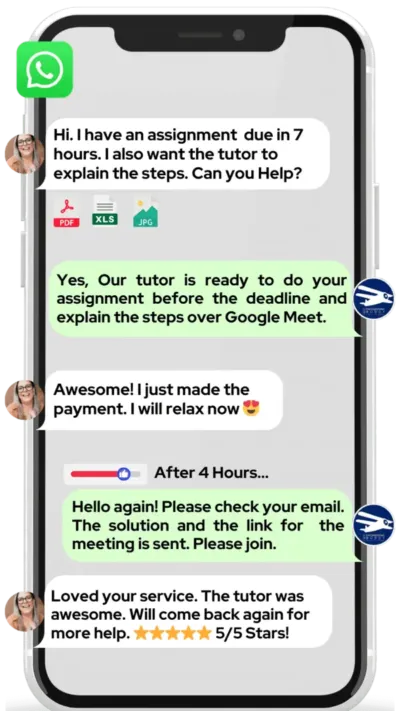
Unlike platforms where you fill out a form and wait, MEB responds in under a minute, 24/7. Tutor match takes under an hour. The $1 trial means you test before you commit. Everything runs over WhatsApp — no logins, no intake forms.
Students consistently tell us that the tutor match is what makes the difference. A tutor who has run a lighting scheme for a real building — and knows where the LEED submission goes wrong — explains things in a way a general architecture tutor simply cannot.
Study Plans (Pick One That Matches Your Goal)
The tutor builds your exact session sequence after the first diagnostic — but here is how most students frame their starting point. Catch-up (1–3 weeks): one specific gap — a calculation method, a software output you cannot interpret — closed before a submission. Exam or crit prep (4–8 weeks): structured work from photometric basics through to full scheme documentation, timed to your review date. Weekly support: ongoing through the semester, aligned to your studio briefs and coursework deadlines as they land.
Pricing Guide
Lighting Design tutoring starts at $20/hr for most undergraduate-level sessions. Rate factors include your level of study, the complexity of the topic (basic lux calculations versus full CBDM simulation or thesis-level energy analysis), your timeline, and tutor availability in your time zone.
For students targeting competitive graduate programmes — Cornell AAP, the Bartlett, TU Delft, ETH Zürich — or roles in specialist lighting consultancies, tutors with professional practice backgrounds in lighting design, building physics, or sustainable architecture are available at higher rates. Share your specific goal and MEB will match the right tier to your ambition.
Availability tightens around end-of-semester studio deadlines. Book before the final four weeks if your submission window is approaching.
Start with the $1 trial — 30 minutes, no registration, no commitment. WhatsApp MEB for a quick quote.
FAQ
Is Lighting Design hard?
The conceptual side is accessible — most students grasp the principles quickly. The difficulty is in the calculation workflow: getting lumen method inputs right, interpreting simulation output, and meeting compliance thresholds simultaneously. Those are exactly the gaps a tutor closes fastest.
How many sessions are needed?
Most students working on a specific assignment or calculation gap need three to five sessions. Students building from fundamentals through to full scheme documentation typically work over eight to twelve sessions. The first diagnostic session gives you a clearer picture of what is actually needed.
Can you help with homework and assignments?
Yes — MEB tutors explain the method and work through the reasoning with you. You do the work and submit it yourself. MEB tutoring is guided learning — you understand the work, then submit it yourself. For full details on what we help with and what we don’t, read our Academic Integrity policy and Why MEB.
Will the tutor match my exact syllabus or exam board?
Yes. MEB matches tutors to your specific course, programme level, and software environment. Whether your course references CIBSE guides, ASHRAE 90.1, IES standards, or LEED v4 requirements, the tutor is briefed on your exact brief before the first session.
What happens in the first session?
The tutor runs a focused diagnostic — asking you to walk through a recent attempt, reviewing where the calculation or scheme breaks down. From that, they build the session sequence. You leave the first session with a clear picture of the two or three things that will change your results fastest.
Is online tutoring as effective as in-person?
For Lighting Design specifically, online tutoring has a practical advantage: the tutor can annotate your actual DIALux file or calculation sheet in real time over screen share. That is harder to replicate sitting next to someone at a desk. The feedback loop is the same.
Can I get Lighting Design help late at night or on weekends?
Yes. MEB operates 24/7. Studio deadlines do not respect business hours, and neither do MEB tutors. WhatsApp MEB at any hour — response time is typically under a minute, and tutor matching for a same-day session is common.
What if I don’t like my assigned tutor?
Request a different match. MEB does not lock you into a tutor. If the communication style, pace, or depth is not working after the first session, WhatsApp MEB and a new tutor is matched — usually within the hour.
Do you offer help specifically with DIALux or lighting simulation software?
Yes. MEB has tutors who work directly in DIALux, DIALux evo, Radiance, DIVA for Rhino, AGi32, and Revit’s lighting workflows. Software sessions involve screen sharing and live annotation — not just verbal guidance. Bring your actual project file.
How do I get started?
Three steps: WhatsApp MEB with your course brief and deadline, get matched with a verified Lighting Design tutor within the hour, then start the $1 trial — 30 minutes of live tutoring or one homework question explained in full. No registration. No forms.
Trust & Quality at My Engineering Buddy
Every MEB tutor goes through subject-specific screening: a written application, a live demo session evaluated against a structured rubric, and an ongoing feedback review based on student ratings after every session. Tutors hold degrees in architecture, building engineering, interior design, or closely related disciplines — and are selected for experience with the specific tools, standards, and course types they are matched to. MEB has served 52,000+ students across the US, UK, Canada, Australia, the Gulf, and Europe since 2008. Rated 4.8/5 across 40,000+ verified reviews on Google.
MEB tutoring is guided learning — you understand the work, then submit it yourself. For full details on what we help with and what we don’t, read our Academic Integrity policy and Why MEB.
MEB covers 2,800+ subjects across architecture, engineering, design, and the sciences. Students working alongside Lighting Design often also need support with sustainable architecture tutoring, building science help, or architectural design and drafting tutoring. Learn more about how MEB tutors are selected and how sessions are structured at our tutoring methodology page.
MEB has operated since 2008 — 18 years of subject-specific tutor matching, diagnostic-first sessions, and a $1 trial that means you test the match before you spend anything significant.
Source: My Engineering Buddy, 2008–2025.
Try your first session for $1 — 30 minutes of live 1:1 tutoring or one homework question explained in full. No registration. No commitment. WhatsApp MEB now and get matched within the hour.
Explore Related Subjects
Students studying Lighting Design often also need support in:
- Architecture
- Interior Design
- Architectural AutoCAD
- Lumion
- Ekistics
- Landscape Architecture
- Urban Design and Planning
Next Steps
Getting started takes three minutes. Here is what to have ready before your first session:
- Your course brief, syllabus, or assignment spec — and the specific section you are stuck on
- A recent calculation attempt, scheme draft, or homework question you struggled with
- Your submission deadline or exam date, and your available time zones
MEB matches you with a verified Lighting Design tutor — usually within 24 hours, often within the hour. The first session starts with a focused diagnostic so no session time is wasted on topics you already know.
Visit www.myengineeringbuddy.com for more on how the MEB process works, from tutor matching through to session structure.
WhatsApp to get started or email [email protected].
A common pattern our tutors observe is that students come in thinking they have a software problem — they cannot get DIALux to produce the right output. In most cases it is a calculation input assumption that is wrong. Fix the assumption first. The software follows.
52,000+ Happy Students From Various Universities




Reviewed by Subject Expert
This page has been carefully reviewed and validated by our subject expert to ensure accuracy and relevance.
