




~1 min
Average Reply Time
~1 hour
To Be Matched With A Tutor
30 Min Trial
75% Find Their Tutor On The 1st Trial
$20-35+/hr
Premium Yet Affordable Learning
Hire The Best Lumion Tutor

Your renders look flat, your lighting is wrong, and the deadline is in three days — a Lumion tutor fixes that faster than any tutorial.
Lumion Tutor Online
Lumion is a real-time 3D visualization and rendering software used by architecture, landscape, and urban design students to produce photorealistic walkthroughs, animations, and still renders from CAD or BIM models. A Lumion tutor online helps you move from imported geometry to polished, submission-ready visuals.
MEB offers 1:1 online tutoring and project help in Lumion for students at every level — from first-year architecture students struggling with materials and lighting to final-year students preparing a portfolio render. If you’ve searched for a Lumion tutor near me and come up empty, MEB connects you with a verified specialist online, usually within the hour.
- 1:1 online sessions tailored to your course brief and submission format
- Expert verified tutors with hands-on Lumion and architectural visualization experience
- Flexible time zones — US, UK, Canada, Australia, Gulf
- Structured session plan built after a short diagnostic of your current project
- Guided project support — we explain the workflow, you build the render
52,000+ students across the US, UK, Canada, Australia, and the Gulf have used MEB since 2008 — across 2,800+ subjects, from AP Calculus to A Level Music Technology to Data Science.
Source: My Engineering Buddy, 2008–2025.
How Much Does a Lumion Tutor Cost?
Most Lumion tutoring sessions run $20–$40 per hour. Graduate-level or highly specialized rendering support can reach up to $100/hr depending on tutor experience and project complexity. A $1 trial gets you 30 minutes of live 1:1 tutoring or one full project question explained — no registration required.
| Level / Need | Typical Rate | What’s Included |
|---|---|---|
| Undergraduate / Standard | $20–$35/hr | 1:1 sessions, project guidance, workflow review |
| Advanced / Portfolio / Specialist | $35–$70/hr | Expert tutor, complex lighting rigs, animation |
| $1 Trial | $1 flat | 30 min live session or one project question explained |
Tutor availability tightens around architecture portfolio deadlines and end-of-semester crits. Book early if your submission date is within two weeks.
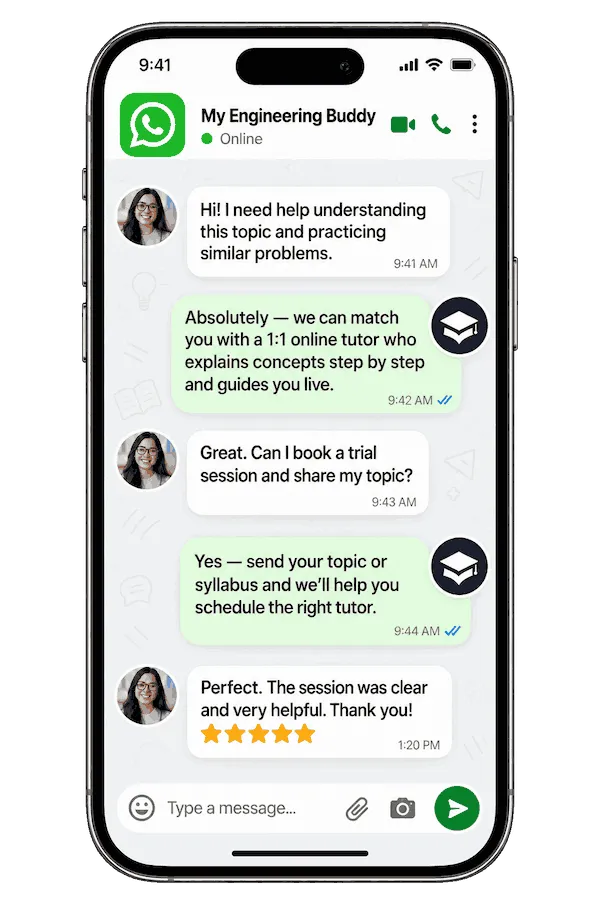
WhatsApp MEB for a quick quote — average response time under 1 minute.
Who This Lumion Tutoring Is For
This is for architecture, landscape, and urban design students who need to produce professional-quality renders but are running out of time. It’s also for students who’ve imported a model, hit a wall with materials or sky settings, and need someone to walk through it with them live.
- Undergraduate architecture students preparing studio presentation renders
- Students with a final portfolio submission deadline approaching in under two weeks and renders that still aren’t working
- Postgraduate students producing visualizations for thesis or dissertation projects
- Students transitioning from SketchUp or Revit who need to learn Lumion’s workflow from scratch
- Students working on landscape architecture tutoring projects that require site-specific environmental renders
- Students at universities including the Bartlett, ETH Zürich, TU Delft, Rice, USC, and the University of Melbourne who use Lumion as part of their core design studio software
1:1 Tutoring vs Self-Study vs AI Tools
Self-study through YouTube tutorials works — up to a point. The problem is you can spend an hour watching someone else’s workflow and still not know why your rain effect looks pixelated on your specific model. AI tools can explain what a material parameter does, but they cannot look at your actual Revit import, identify why your glass is rendering opaque, and walk you through the fix in real time. That kind of live, screen-level diagnosis is what makes Lumion hard to learn solo. MEB tutors share your screen, see your exact project, and correct the specific mistake — not a generic version of it. Sessions run over Google Meet, flexible across US, UK, Gulf, and Australian time zones.
Outcomes: What You’ll Be Able To Do in Lumion
After working with a Lumion tutor online through MEB, you’ll be able to apply realistic material textures to imported CAD and BIM geometry without the render breaking. You’ll analyze your scene’s lighting setup and correct artificial light placement for both daytime and night-time renders. Students learn to model environmental context — trees, water, moving people — and present animated walkthroughs that hold up in a live crit. You’ll explain your visualization choices in a portfolio review and apply Lumion’s effects stack to produce final images that match the quality your programme expects.
Supporting a student through Lumion? MEB works directly with parents to set up sessions, track progress, and keep project work on schedule. WhatsApp MEB — average response time is under a minute, 24/7.
Based on feedback from 40,000+ sessions collected by MEB from 2022 to 2025, 58% of students improved by one full grade after approximately 20 hours of 1:1 tutoring in a single subject. A further 23% achieved at least a half-grade improvement.
Source: MEB session feedback data, 2022–2025.
What We Cover in Lumion (Syllabus / Topics)

Track 1: Core Visualization Workflow
- Importing models from Revit, SketchUp, AutoCAD, and Rhino
- Applying and editing materials — reflectivity, roughness, and bump maps
- Setting up sun position, time of day, and sky conditions
- Using the Effects panel — fog, depth of field, color correction
- Producing high-resolution still renders for portfolio and crit submission
- Troubleshooting common import errors and geometry gaps
Useful references: Lumion 3D Best Practices by Tom Byrne; Lumion’s official knowledge base for version-specific workflows.
Track 2: Animation and Walkthrough Production
- Setting up camera paths for architectural walkthroughs
- Keyframe animation for sun movement and time-of-day sequences
- Adding animated people, vehicles, and water to context scenes
- Exporting video renders at presentation-ready resolution
- Syncing animation pacing to narration or music for competition submissions
- Rendering efficiency — balancing quality settings against render time
Useful references: Lumion’s official tutorial library; Architectural Visualization in Lumion workshop materials from Chaos Group events.
Track 3: Landscape and Site Visualization
- Placing and editing terrain using Lumion’s landscape tools
- Populating sites with trees, planting, and ecological context
- Water effects — rivers, pools, rainfall, and reflective surfaces
- Producing renders that communicate masterplan context at multiple scales
- Integrating Lumion output with InDesign boards for urban design and planning help portfolios
- Seasonal and lighting variation renders for environmental design reviews
Useful references: Landscape Architecture: A Very Short Introduction by Ian Thompson (context); Lumion Nature Library documentation for plant placement tools.
At MEB, we’ve found that students who bring a specific broken render to the first session — not a general question — make the fastest progress. The tutor can diagnose exactly what went wrong, fix it live, and build the rest of the session around why it happened.
Platforms, Tools & Textbooks We Support
Lumion tutoring at MEB covers all current Lumion versions (Lumion 12 through Lumion 2024) and integrates with the software students are already using in their architecture programmes. Tutors work with students across the full design-to-render pipeline.
- Lumion 12, Lumion 2023, Lumion 2024
- Revit (BIM import and linked file workflows)
- SketchUp (direct export and .SKP file import)
- AutoCAD and Rhino (via .DWG and .3DM formats)
- Adobe Photoshop (post-processing Lumion stills)
- Adobe Premiere Pro (editing Lumion animation exports)
- InDesign (assembling final portfolio boards with Lumion renders)
What a Typical Lumion Session Looks Like
The tutor opens by checking what you worked on since the last session — usually a materials problem or a lighting setup you were refining. You share your screen over Google Meet and pull up your current Lumion project. If your glass facade is rendering as a solid wall, the tutor walks through the material settings panel with you, adjusts the opacity and reflectivity values, and explains exactly which slider controls what. You replicate the change on your own model while the tutor watches. By the end of the session, you have a corrected render, a clear understanding of why it failed, and a specific task — usually getting your animated camera path set up — ready for next time.
How MEB Tutors Help You with Lumion (The Learning Loop)
Diagnose: In the first session, the tutor reviews your imported model, your current render output, and your submission brief. They identify whether the problem is the import, the materials, the lighting, or the effects stack — before spending time on the wrong fix.
Explain: The tutor works through the correct approach live on screen, using screen sharing and a digital pen-pad to annotate directly on your Lumion viewport. Nothing is abstract — every setting is shown in context.
Practice: You apply the fix yourself while the tutor watches. This matters. Students who type the settings themselves retain the process; students who watch the tutor do it forget within 48 hours.
Feedback: The tutor reviews your output, identifies what’s still off — a reflection that’s too sharp, a sky that’s too grey for the brief — and explains the adjustment with the reasoning behind it, not just the click path.
Plan: At the end of each session, the tutor sets a specific task and notes which topic comes next. Sessions build on each other rather than repeating the same ground.
All sessions run over Google Meet. The tutor uses a digital pen-pad or iPad with Apple Pencil to annotate your screen directly. Before your first session, share your project file format, your Lumion version, and your submission date. The first session covers a diagnostic run-through of your current file and fixes the most critical blocking issue first. Start with the $1 trial — 30 minutes of live tutoring that also serves as your first diagnostic.
Students consistently tell us that the moment things click in Lumion is when they stop copying settings and start understanding what each parameter is actually doing to the light in the scene. That shift usually happens in the second or third session.
Tutor Match Criteria (How We Pick Your Tutor)
Not every architecture visualization tutor is right for every project. Here’s what MEB matches on.
Subject depth: Tutors have hands-on Lumion experience specific to the level and project type — undergraduate studio renders are different from postgraduate competition entries or BIM tutoring workflows that feed directly into Lumion.
Tools: All tutors use Google Meet with screen sharing. For Lumion, screen sharing is the primary tool — the tutor sees your exact scene and viewport, not a description of it.
Time zone: MEB covers New York, Los Angeles, Chicago, London, Dubai, Toronto, Sydney, Melbourne, and all major US, UK, Gulf, Canadian, Australian, and European time zones, including evenings and weekends.
Learning style: The tutor calibrates from the first session — whether you need step-by-step walkthrough or higher-level conceptual explanation depends on where you are in the programme.
Communication: Clear English, adapted to your level. No jargon without explanation.
Goals: Whether you’re fixing one broken render, building a full portfolio visualization set, or learning Lumion from scratch for a new course, the tutor structures sessions around that specific goal.
Unlike platforms where you fill out a form and wait, MEB responds in under a minute, 24/7. Tutor match takes under an hour. The $1 trial means you test before you commit. Everything runs over WhatsApp — no logins, no intake forms.
Study Plans (Pick One That Matches Your Goal)
Catch-up (1–3 weeks): for students with a crit or submission in under three weeks who have broken renders, unfinished animations, or a workflow they’ve never fully understood. Sessions are daily or every other day, focused on the blocking issue first. Exam prep (4–8 weeks): structured sessions across the full Lumion pipeline, from clean import to final render output, aligned to your studio brief and submission format. Weekly support: ongoing sessions through the semester, timed around studio deadlines and portfolio reviews. The tutor builds the specific session sequence after the first diagnostic.
Pricing Guide
Lumion tutoring runs $20–$40/hr for most undergraduate and postgraduate levels. Specialist tutors with professional visualization studio backgrounds — for competition renders, high-end portfolio work, or advanced animation — are available at higher rates up to $100/hr.
Rate factors include your Lumion version, project complexity, how close your deadline is, and tutor availability. Availability tightens sharply in the weeks before end-of-semester crits and portfolio reviews.
For students targeting top architecture schools, conservatoires, or professional visualization roles, tutors with industry rendering and real-project backgrounds are available at higher rates — share your specific goal and MEB will match the tier to your ambition.
Start with the $1 trial — 30 minutes, no registration, no commitment. WhatsApp MEB for a quick quote.
MEB has offered the $1 trial since 2008 — because the fastest way to know a tutor is right for your Lumion project is to work with them for 30 minutes, not read a profile for 30 minutes.
Source: My Engineering Buddy, 2008–2025.
FAQ
Is Lumion hard to learn?
The interface is approachable but the real difficulty is in getting professional results — correct lighting, realistic materials, and clean exports. Most students hit specific technical walls rather than struggling with the whole software. A tutor shortens that process significantly by targeting exactly where you’re stuck.
How many sessions will I need?
Students fixing a single render issue often need just one or two sessions. Students learning Lumion from scratch for a semester-long studio project typically work through six to twelve sessions spread over the term. The tutor assesses this after the first diagnostic and gives you a realistic estimate.
Can you help with projects and portfolio work?
Yes. MEB provides guided project support — the tutor explains the workflow, identifies why your current output isn’t working, and helps you understand the fix. You produce and submit all work yourself. See our Policies page for details.
Will the tutor match my exact software version and project brief?
Yes. When you contact MEB, share your Lumion version and your studio brief or submission format. MEB matches you with a tutor who has direct experience with that version and project type — not a generalist who will figure it out alongside you.
What happens in the first session?
The tutor reviews your current project file, your render output, and your deadline. They identify the most critical blocking issue and fix it live with you. By the end of the first session you’ll have a corrected output and a clear plan for the remaining sessions.
Are online sessions as effective as in-person for software like Lumion?
For software tutoring, online is often more effective — screen sharing means the tutor sees your exact file, your settings, and your output without having to be in the room. There’s no travel time, sessions fit around studio hours, and you can record the session for review afterward.
Can I get Lumion help at midnight or on weekends?
Yes. MEB operates 24/7 across all time zones. Architecture students frequently work through the night before a crit. WhatsApp MEB at any hour — average first response is under a minute, and tutor availability extends through evenings and weekends in all major regions.
What if I don’t get on with my assigned tutor?
Request a different tutor via WhatsApp. MEB will rematch you, usually within the hour. The $1 trial is specifically designed to let you test the fit before committing to a block of sessions — no contract, no obligation.
Do you offer help with Lumion for landscape and urban design projects, not just buildings?
Yes. MEB tutors cover site visualization, terrain editing, planting and water effects, and masterplan renders — not just architectural building models. Students in landscape architecture and urban design and planning use Lumion for site-scale work and MEB tutors are matched accordingly.
How do I get started?
WhatsApp MEB, share your Lumion version, project type, and deadline. MEB matches you with a verified tutor — usually within the hour. Your first session is the $1 trial: 30 minutes of live 1:1 tutoring or one project question explained in full. Three steps: WhatsApp, get matched, start your trial.
Try your first session for $1 — 30 minutes of live 1:1 tutoring or one homework question explained in full. No registration. No commitment. WhatsApp MEB now and get matched within the hour.
Trust & Quality at My Engineering Buddy
Every MEB tutor goes through subject-specific screening before taking any session. That means a live demo evaluation — not just a CV review — followed by ongoing feedback monitoring tied to student session ratings. Tutors have degrees and, in many cases, professional visualization or architecture practice experience relevant to the software level they teach. Rated 4.8/5 across 40,000+ verified reviews on Google.
MEB provides guided learning support. All project work is produced and submitted by the student. See our Policies page for details.
MEB has served 52,000+ students across the US, UK, Canada, Australia, the Gulf, and Europe since 2008 — in 2,800+ subjects. Students working on architecture visualization often also need support in architectural AutoCAD tutoring, BIM tutoring, and architectural design drafting help — MEB covers all three. Visit www.myengineeringbuddy.com for more on how the platform and tutor matching work.
MEB’s tutoring methodology is built around a five-step learning loop — diagnose, explain, practice, feedback, plan — applied consistently across every subject and every session since 2008.
Source: MEB Tutoring Methodology.
Explore Related Subjects
Students studying Lumion often also need support in:
- Architecture
- Architectural History
- Sustainable Architecture
- Interior Design
- Lighting Design
- Building Science
- Construction Technology Management & Safety
Next Steps
Before your first session, have ready: your Lumion version and project file format, a screenshot or export of your current broken or incomplete render, and your submission or crit date. The tutor handles the rest.
- Share your project type, Lumion version, and deadline via WhatsApp
- Share your time zone and available hours — evenings and weekends included
- MEB matches you with a verified Lumion tutor — usually within the hour
The first session starts with a diagnostic so no time is wasted on the wrong problem. Visit www.myengineeringbuddy.com for more on the MEB process and tutor matching.
WhatsApp to get started or email [email protected].
Reviewed by Subject Expert
This page has been carefully reviewed and validated by our subject expert to ensure accuracy and relevance.




