

Contact MEB Today To Get The Best
Building Information Modeling (BIM) Tutoring Online
Email: [email protected]



~1 min
Average Reply Time
~1 hour
To Be Matched With A Tutor
30 Min Trial
75% Find Their Tutor On The 1st Trial
$20-35+/hr
Premium Yet Affordable Learning
Hire The Best Building Information Modeling (BIM) Tutor





Most BIM students lose marks on clash detection and LOD workflows — not because they lack ability, but because no one ever walked them through a live Revit model.
Building Information Modeling (BIM) Tutor Online
Building Information Modeling (BIM) is a digital process for creating and managing information across the full lifecycle of a built asset. Used in architecture, engineering, and construction, it equips students and professionals to produce coordinated 3D models, manage project data, and meet industry-standard BIM execution plans.
Finding a reliable Building Information Modeling (BIM) tutor online matters more than ever as BIM becomes a core requirement across AEC degree programmes and professional practice. MEB connects you with a verified BIM tutor near me — wherever you are — for 1:1 online sessions tailored to your exact course, software stack, and deadline. We have been doing this since 2008, and our tutors work with university students, postgraduate candidates, and working professionals across the US, UK, Canada, Australia, and the Gulf.
- 1:1 online sessions tailored to your course syllabus and BIM software requirements
- Expert verified tutors with subject-specific knowledge in Revit, Navisworks, and related platforms
- Flexible time zones — US, UK, Canada, Australia, Gulf covered every day
- Structured learning plan built after a diagnostic session
- Ethical homework and assignment guidance — you understand the model before you submit it
52,000+ students across the US, UK, Canada, Australia, and the Gulf have used MEB since 2008 — across 2,800+ subjects, from AP Calculus to A Level Music Technology to Data Science.
Source: My Engineering Buddy, 2008–2025.
How Much Does a Building Information Modeling (BIM) Tutor Cost?
BIM tutoring at MEB starts at $20–$40/hr for most undergraduate and taught postgraduate levels. Advanced topics — federated model coordination, ISO 19650 compliance, or specialist software depth — typically run $50–$100/hr. You can test any tutor for $1 before committing to a full session rate.
| Level / Need | Typical Rate | What’s Included |
|---|---|---|
| Undergraduate / Taught Postgrad | $20–$40/hr | 1:1 sessions, assignment guidance, model reviews |
| Advanced / Specialist (ISO 19650, BEP, federated models) | $50–$100/hr | Expert tutor, professional-level depth |
| $1 Trial | $1 flat | 30 min live session or one homework question explained in full |
Tutor availability tightens significantly during end-of-semester BIM project submissions and postgraduate dissertation periods. Book early if your deadline is within three weeks.
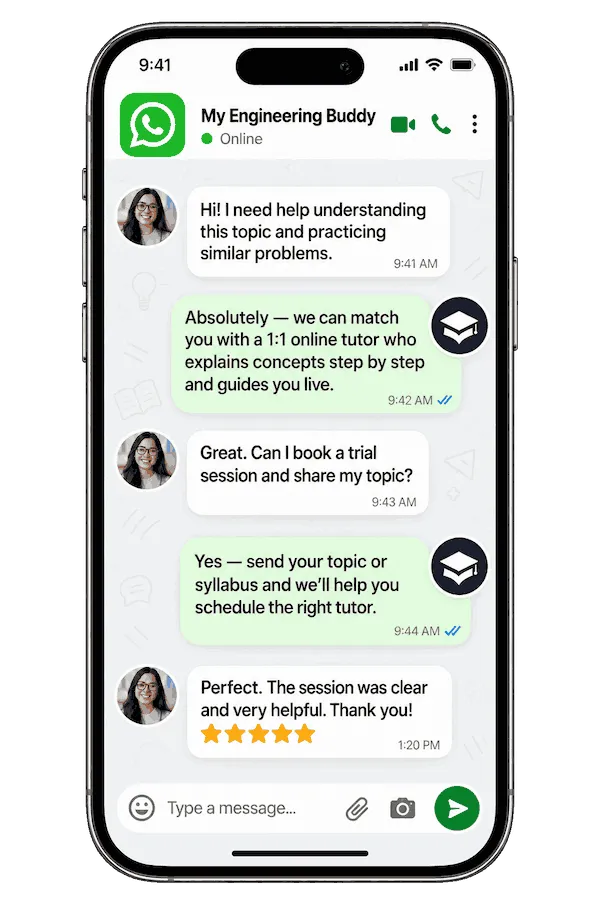
WhatsApp MEB for a quick quote — average response time under 1 minute.
Who This Building Information Modeling (BIM) Tutoring Is For
BIM support at MEB is built for students and professionals at every stage — from first-year architecture students navigating Revit for the first time, to postgraduate researchers working through complex data management frameworks. If the work involves a BIM model, a tutor can help.
- Undergraduate students in architecture, civil engineering, or construction management courses that require BIM deliverables
- Postgraduate students at universities such as UCL, TU Delft, Georgia Tech, University of Melbourne, or Heriot-Watt who need structured support with BIM dissertation components or software modules
- Working professionals studying for employer-led BIM upskilling programmes
- Students who submitted a BIM assignment and failed, with a resit deadline approaching and specific gaps still unresolved
- Students with a coursework or project submission deadline within four weeks and significant gaps in their model coordination or data management skills
- Anyone who has watched three YouTube tutorials and still cannot make clash detection work in Navisworks
1:1 Tutoring vs Self-Study vs AI Tools
Self-study works for picking up basic Revit navigation, but it has a serious gap: you can repeat the same modelling error across five assignments without ever knowing why marks are being deducted. AI tools can explain BIM concepts quickly and generate workflow summaries, but they cannot open your Revit file, spot a misaligned MEP element in a federated model, or tell you why your IFC export is dropping shared parameters. That requires someone looking at your actual work in real time. A human tutor who has seen the same error across dozens of student models knows exactly where to look. MEB sessions run over Google Meet with screen sharing, so the tutor sees your model, your clash report, and your submission brief — and responds to what is actually there, not a generic description of it.
Outcomes: What You’ll Be Able To Do in Building Information Modeling (BIM)
After focused 1:1 BIM tutoring, students consistently report that they can model a complete building element set in Revit with correct family parameters and level structure, analyse a clash detection report in Navisworks and categorise issues by severity and discipline, explain the information requirements within a BIM Execution Plan at the level expected for postgraduate assessment, apply ISO 19650 naming conventions across a project’s Common Data Environment, and present a coordinated federated model to a client brief without errors that would fail a professional review. These are not vague goals. They are the specific capabilities that appear in BIM module marking rubrics at universities across the UK, Australia, and North America.
Based on feedback from 40,000+ sessions collected by MEB from 2022 to 2025, 58% of students improved by one full grade after approximately 20 hours of 1:1 tutoring in a single subject. A further 23% achieved at least a half-grade improvement.
Source: MEB session feedback data, 2022–2025.
At MEB, we have found that BIM students who struggle with assignments almost always have the same root problem: they can follow a tutorial step by step, but they cannot transfer that process to a new brief. The tutor’s job is to break that pattern — by making the student explain the reasoning, not just repeat the clicks.
What We Cover in Building Information Modeling (BIM) (Syllabus / Topics)

BIM Fundamentals and Software Workflows
- Revit modelling: families, levels, grids, views, and annotation
- Model organisation: worksets, linked models, and file management
- IFC export settings and interoperability between platforms
- Navisworks: clash detection, timeliner, and model aggregation
- Quantification and basic cost data extraction from BIM models
- 2D drawing production from 3D models: sections, elevations, and schedules
Core texts include BIM Handbook by Eastman et al. and Autodesk Revit Architecture: No Experience Required by Vandezande and Krygiel. Supplementary resources from the National Institute of Standards and Technology are referenced for data standards context in advanced modules.
BIM Management, Standards, and Information Delivery
- ISO 19650 series: information management across the project lifecycle
- BIM Execution Plans (BEP): structure, content, and assessment requirements
- Common Data Environment (CDE): naming conventions, states, and suitability codes
- Level of Development (LOD) and Level of Information Need (LOIN)
- Employer Information Requirements (EIR) and how to respond to them
- BIM roles: information manager, BIM coordinator, and lead appointed party responsibilities
Recommended references include ISO 19650-1 and -2 (available via national standards bodies) and the UK BIM Framework guidance documents published by the Centre for Digital Built Britain.
Coordination, Collaboration, and Project Applications
- Federated model assembly: combining architectural, structural, and MEP models
- Clash detection methodology: hard, soft, and workflow clashes
- 4D BIM: linking model elements to construction programme in Navisworks Timeliner
- 5D BIM: cost data integration and quantity take-off from model
- BIM in sustainable design: energy analysis plugins and environmental data
- Collaboration workflows: BCF issue tracking and model-based communication
Supporting texts include BIM and Construction Management by Hardin and McCool and Integrated Project Delivery by the American Institute of Architects.
Platforms, Tools & Textbooks We Support
BIM tutoring at MEB covers the specific software and platforms used in university programmes and professional practice. Tutors are matched based on the tools your course requires — not a generic software overview.
- Autodesk Revit (Architecture, Structure, MEP)
- Autodesk Navisworks (Manage and Simulate)
- Autodesk BIM 360 / Autodesk Construction Cloud
- ArchiCAD (Graphisoft)
- Trimble Tekla Structures
- Solibri Model Checker
- Common Data Environments: Aconex, Viewpoint, BIMcollab
What a Typical Building Information Modeling (BIM) Session Looks Like
The tutor opens by checking where you left off — usually a specific Revit family that wasn’t behaving correctly or a clash report that came back with more issues than expected. You share your screen. The tutor looks at the actual model, not a description of it. If the problem is a wall type with wrong layer parameters, the tutor walks through the family editor live, asking you to explain each step before moving to the next. If it is a clash detection review in Navisworks, the tutor filters the report with you, categorises each issue, and works through the resolution workflow. You replicate each fix yourself. By the end of the session, the tutor sets a specific task — rebuild one element type independently using today’s method — and flags the next topic: typically information delivery or BIM Execution Plan structure.
How MEB Tutors Help You with Building Information Modeling (BIM) (The Learning Loop)
Diagnose: In the first session, the tutor reviews your model file or assignment brief directly. They identify whether the problem is software workflow, conceptual understanding of BIM standards, or the ability to write clearly about information management.
Explain: The tutor demonstrates the correct process live — working through a Revit modelling task or an ISO 19650 information flow on screen, using a digital pen-pad to annotate the model or diagram the concept.
Practice: You attempt the task with the tutor present. No pre-recorded walkthroughs. The tutor watches you work and catches errors as they form, not after submission.
Feedback: Every error gets a specific explanation. If you lost marks for incorrect LOD specification, the tutor shows you exactly where the marking rubric and the BIM standard diverged in your submission.
Plan: The session closes with a clear next topic and a specific task to complete before the following session. Progress is tracked across sessions so the tutor does not revisit ground you have already covered.
Sessions run over Google Meet. The tutor uses a digital pen-pad or iPad with Apple Pencil to annotate diagrams and model screenshots in real time. Before your first session, share your course brief, any past assignment feedback, and your submission date. The first session is also your diagnostic — every minute is used on your actual gaps. Start with the $1 trial — 30 minutes of live BIM tutoring that also serves as your first diagnostic.
Students consistently tell us that the moment things click in BIM is when they stop thinking about the software and start thinking about the information. The tutor’s role is to get you to that point — where you are making decisions about data, not just navigating menus.
Tutor Match Criteria (How We Pick Your Tutor)
MEB does not assign the first available tutor. Every match is made against your specific requirements.
Subject depth: The tutor must have demonstrable experience with your course level — undergraduate BIM modules, postgraduate BIM management programmes, or professional BIM practice. Tutors also need familiarity with the specific exam board or university framework where one applies.
Tools: Sessions run on Google Meet. The tutor uses a digital pen-pad or iPad with Apple Pencil for live annotation. For software-heavy BIM sessions, screen sharing is standard so the tutor can see your model directly.
Time zone: MEB covers New York, Los Angeles, Chicago, London, Dubai, Toronto, Sydney, Melbourne, and all major US, UK, Gulf, Canadian, Australian, and European time zones — including evenings and weekends.
Learning style: Calibrated in the first session. Some students need a step-by-step walkthrough of Revit workflows. Others need conceptual grounding in information management before software makes sense. The tutor adapts.
Communication: Clear English, adjusted to the student’s level. No jargon-dumping. Explanations are plain until the student is ready for technical precision.
Goals: Whether you need to pass a resit, reach distinction level in a postgraduate BIM management module, or prepare a professional portfolio, the tutor is matched to your specific outcome — not a generic BIM syllabus.
Unlike platforms where you fill out a form and wait, MEB responds in under a minute, 24/7. Tutor match takes under an hour. The $1 trial means you test before you commit. Everything runs over WhatsApp — no logins, no intake forms.
Study Plans (Pick One That Matches Your Goal)
MEB tutors build a session sequence after the diagnostic — not before it. For a catch-up (one to three weeks before submission), sessions focus on the highest-impact gaps: usually model accuracy, clash resolution, or BIM Execution Plan structure. For structured exam or assignment preparation over four to eight weeks, the tutor works through the full module syllabus in a logical sequence. For ongoing weekly support across a semester, sessions align to coursework deadlines as they appear. The tutor updates the plan as your understanding develops.
Pricing Guide
BIM tutoring at MEB runs from $20–$40/hr for most undergraduate and taught postgraduate sessions. Graduate-level and specialist topics — federated model coordination at professional depth, ISO 19650 implementation, or advanced 4D/5D BIM — reach up to $100/hr. Rate factors include the level of the course, the complexity of the topic, how close your deadline is, and tutor availability at your preferred time.
Availability during end-of-semester BIM project submission periods is limited. If your deadline is within two weeks, contact MEB now to secure a tutor.
For students targeting positions at leading AEC firms or postgraduate programmes with rigorous BIM components, tutors with professional practice backgrounds in project information management are available at higher rates — share your specific goal and MEB will match the tier to your ambition.
Start with the $1 trial — 30 minutes, no registration, no commitment. WhatsApp MEB for a quick quote.
MEB tutors cover 2,800+ advanced subjects — from architectural design and drafting tutoring to construction technology and management help — all with the same 1:1 structure and $1 trial entry point.
Source: My Engineering Buddy, 2008–2025.
FAQ
Is Building Information Modeling (BIM) hard?
BIM is not conceptually difficult, but it has a steep initial curve. Most students struggle with the gap between following a tutorial and applying the process to their own brief. A tutor who has seen that gap close across many students can shorten it considerably for you.
How many sessions are needed?
It depends on your starting point and deadline. Students closing a single modelling gap before a resit often need three to five sessions. A full semester of weekly support across a BIM management module typically runs ten to fifteen sessions. The tutor maps a realistic sequence after the first diagnostic.
Can you help with BIM homework and assignments?
Yes. MEB tutors help you understand the modelling task, information delivery requirement, or written component so you can produce and submit the work yourself. MEB tutoring is guided learning — you understand the work, then submit it yourself. For full details on what we help with and what we don’t, read our Academic Integrity policy and Why MEB.
Will the tutor match my exact syllabus or exam board?
Yes. MEB tutors are matched to your specific university module, software requirements, and assessment format. Whether your programme follows the UK BIM Framework, a US university’s own BIM curriculum, or an AEC industry standard, the tutor works from your actual brief.
What happens in the first session?
The tutor reviews your current model file, assignment brief, or any feedback from a previous submission. They identify the highest-priority gaps and begin working through them in the same session. Nothing is left to a later date that can be covered now.
Is online BIM tutoring as effective as in-person?
For BIM specifically, online is often more effective. Screen sharing means the tutor sees your actual Revit model or Navisworks session in real time — something an in-person tutor working from a printed brief simply cannot do. Digital pen-pad annotation adds the visual layer that makes the difference.
Can I get BIM help late at night or on weekends?
Yes. MEB operates 24/7 across all major time zones. If your BIM submission is due Monday and you are stuck on Saturday night, WhatsApp MEB and a tutor is matched within the hour. Response time averages under one minute.
What if I do not get along with my assigned tutor?
Tell MEB on WhatsApp. A replacement tutor is matched within the hour at no cost. The $1 trial is specifically designed to let you test the match before spending more. Most students settle with their first or second tutor.
Do you offer group BIM sessions?
No. Every MEB session is 1:1. Group sessions dilute the diagnostic accuracy that makes the difference in BIM — where one student may need help with Revit families and another with ISO 19650 compliance. Individual sessions are the only format MEB offers.
How do I get started?
Three steps: WhatsApp MEB, get matched with a verified BIM tutor usually within the hour, then start the $1 trial — 30 minutes of live 1:1 tutoring or one BIM homework question explained in full. No registration. No commitment.
Try your first session for $1 — 30 minutes of live 1:1 tutoring or one homework question explained in full. No registration. No commitment. WhatsApp MEB now and get matched within the hour.
Trust & Quality at My Engineering Buddy
Every MEB tutor goes through subject-specific screening before their first session. That includes a live demo evaluation, degree and professional experience verification, and ongoing feedback review after sessions. Tutors covering BIM modules are assessed on their software fluency, familiarity with relevant standards such as ISO 19650, and their ability to explain information management concepts at the level the student needs. Rated 4.8/5 across 40,000+ verified reviews on Google.
MEB tutoring is guided learning — you understand the work, then submit it yourself. For full details on what we help with and what we don’t, read our Academic Integrity policy and Why MEB. We guide — you submit your own work.
MEB has served 52,000+ students across the US, UK, Canada, Australia, the Gulf, and Europe since 2008 — across 2,800+ subjects. Students working through architecture tutoring, building science help, and sustainable architecture tutoring all use the same 1:1 structure and the same standard of tutor vetting that applies to BIM. Visit MEB’s tutoring methodology to see how sessions are structured from diagnostic to final review.
Students who work with MEB tutors on construction technology and management and Architectural AutoCAD tutoring consistently return when BIM modules begin — the same diagnostic-first approach applies across every built environment subject.
Source: My Engineering Buddy, 2008–2025.
A common pattern our tutors observe is that students who arrive with a BIM software problem actually have an information management problem underneath it. They do not know what the model is supposed to communicate. Fixing the software workflow takes one session. Building that conceptual foundation takes three — and it is always worth it.
Explore Related Subjects
Students studying Building Information Modeling (BIM) often also need support in:
- Architectural AutoCAD
- Architectural Design Drafting & Drawing
- Architectural Thesis
- Ekistics
- Lumion
- Urban Design and Planning
- Landscape Architecture
- Transportation Planning
Next Steps
Getting started takes under two minutes. Here is what to do:
- Share your course name, the BIM software you are using, and your hardest component or current block
- Share your time zone and availability — evenings, weekends, or specific days all work
- MEB matches you with a verified BIM tutor, usually within 24 hours — often within the hour
Before your first session, have ready: your course brief or university module outline, any past assignment feedback or a question you are currently stuck on, and your submission or exam date. The tutor handles everything else from there.
Visit www.myengineeringbuddy.com for more on how MEB structures sessions from first diagnostic to final review.
WhatsApp to get started or email [email protected].
Reviewed by Subject Expert
This page has been carefully reviewed and validated by our subject expert to ensure accuracy and relevance.




