




~1 min
Average Reply Time
~1 hour
To Be Matched With A Tutor
1 Trial
75% Find Their Tutor On The 1st Trial
$1
Your First 30 Minutes
Hire The Best Missile and Rocket Propulsion Tutor
Top Tutors, Top Grades. Without The Stress!





Related Subjects
Rocket nozzle thermodynamics. Combustion instability. Specific impulse calculations. If any of these stopped you cold in your last exam, you’re not alone — and you don’t have to figure it out solo.
Missile and Rocket Propulsion Tutor Online
Missile and Rocket Propulsion is an advanced aerospace engineering discipline covering the thermodynamics, fluid mechanics, and combustion principles that govern how rockets and missiles generate thrust. It equips students to analyze propulsion systems, design nozzles, and evaluate solid, liquid, and hybrid propellant performance.
Finding a qualified Missile and Rocket Propulsion tutor near me is genuinely hard — this is a graduate-level subject that sits at the intersection of gas dynamics, combustion chemistry, and structural mechanics. MEB connects you with a verified aerospace propulsion tutor who knows the exact course content you’re working through, whether that’s Tsiolkovsky’s rocket equation, ramjet thermodynamic cycles, or solid propellant burn rate analysis. Sessions are online, flexible across US, UK, Canada, Australia, and Gulf time zones, and structured from a diagnostic so no session is wasted.
- 1:1 online sessions tailored to your university course and syllabus
- Expert verified tutors with graduate-level propulsion knowledge
- Flexible time zones — US, UK, Canada, Australia, Gulf, Europe
- Structured learning plan built after a diagnostic session
- Ethical homework and assignment guidance — you understand before you submit
52,000+ students across the US, UK, Canada, Australia, and the Gulf have used MEB since 2008 — across 2,800+ subjects, from AP Calculus to A Level Music Technology to Data Science.
Source: My Engineering Buddy, 2008–2025.
How Much Does a Missile and Rocket Propulsion Tutor Cost?
Most Missile and Rocket Propulsion tutoring sessions run $35–$70/hr given the graduate-level specialisation involved. Undergraduate-level propulsion fundamentals start from $20/hr. You can test the service first — the $1 trial gives you 30 minutes of live 1:1 tutoring or one homework question explained in full.
| Level / Need | Typical Rate | What’s Included |
|---|---|---|
| Undergraduate Propulsion | $20–$40/hr | 1:1 sessions, homework guidance |
| Graduate / Advanced Specialist | $40–$70/hr | Expert tutor, niche depth, research support |
| $1 Trial | $1 flat | 30 min live session or 1 homework question |
Tutor availability tightens significantly around end-of-semester exam periods. Book early if you have a fixed deadline.
WhatsApp MEB for a quick quote — average response time under 1 minute.
Who This Missile and Rocket Propulsion Tutoring Is For
This service is for students at undergraduate and graduate level who are working through a propulsion or aerospace engineering course and hitting walls — whether that’s the mathematics of isentropic flow, the physics of combustion chambers, or the systems engineering behind a full propulsion cycle.
- Undergraduate aerospace or mechanical engineering students taking a propulsion module
- Masters and PhD students needing support on combustion modelling or nozzle design assignments
- Students with a university conditional offer depending on passing this course
- Students 4–6 weeks from finals with significant gaps in thermodynamic cycle analysis or propellant chemistry still to close
- Researchers needing structured help with specific impulse calculations or trajectory optimisation methods
- Students at institutions including MIT, Georgia Tech, Caltech, Imperial College London, Delft, and UNSW where propulsion courses are among the most demanding in the curriculum
1:1 Tutoring vs Self-Study vs AI Tools
Self-study works for motivated students — but in missile and rocket propulsion, where a single sign error in a Navier-Stokes derivation cascades into five wrong answers, you can repeat the same mistake for weeks without knowing it. AI tools are genuinely useful for quick definitions and equation lookups, but they cannot diagnose why you keep misapplying the rocket equation’s mass flow term, adapt a worked example to your specific nozzle geometry in real time, or catch the reasoning error before it becomes a habit. That live correction loop — specific to your problem set, your notation, your course — is where a 1:1 propulsion tutor creates results that neither a textbook nor an AI chatbot can replicate. MEB delivers that online, with flexible scheduling across every major time zone.
Outcomes: What You’ll Be Able To Do in Missile and Rocket Propulsion
After structured 1:1 sessions, students consistently report that they can solve thrust and specific impulse problems from first principles without reaching for a formula sheet. They can analyze isentropic flow through convergent-divergent nozzles, explain the trade-offs between solid and liquid propellant systems in design-review terms, model combustion chamber pressure and temperature profiles for a given propellant combination, and apply the Tsiolkovsky rocket equation to multi-stage vehicle sizing problems. They can also present propulsion system trade studies clearly — a skill that matters as much in coursework submissions as it does in any aerospace career.
Based on feedback from 40,000+ sessions collected by MEB from 2022 to 2025, 58% of students improved by one full grade after approximately 20 hours of 1:1 tutoring in a single subject. A further 23% achieved at least a half-grade improvement.
Source: MEB session feedback data, 2022–2025.
What We Cover in Missile and Rocket Propulsion (Syllabus / Topics)

Rocket Propulsion Fundamentals
- Thrust equation and specific impulse derivation
- Tsiolkovsky rocket equation and multi-stage vehicle analysis
- Convergent-divergent nozzle design: isentropic flow, throat conditions, exit Mach number
- Propellant types: solid, liquid, hybrid — performance comparison and selection criteria
- Combustion chamber pressure, temperature, and characteristic velocity (C*)
- Nozzle expansion ratio optimisation for altitude and vacuum conditions
- Mass flow rate, throat area, and chamber sizing relationships
Key texts: Rocket Propulsion Elements by Sutton & Biblarz; Fundamentals of Rocket Propulsion by Barrère et al. MIT OpenCourseWare also provides open mechanical engineering course materials relevant to propulsion thermodynamics.
Combustion and Propellant Chemistry
- Chemical equilibrium in combustion: adiabatic flame temperature calculations
- Solid propellant burn rate: Vieille’s law, strand burner testing, pressure exponent
- Liquid propellant feed systems: pressure-fed vs pump-fed, injector design
- Hybrid propellant regression rate and oxidiser-to-fuel ratio optimisation
- Combustion instability: acoustic modes, Rayleigh criterion, damping mechanisms
- Exhaust gas composition and its effect on delivered specific impulse
Key texts: An Introduction to Combustion by Turns; Combustion by Glassman & Yetter. Supports coursework on propellant system design and chemical performance modelling.
Missile Propulsion and Flight Systems
- Ramjet and scramjet thermodynamic cycles: inlet, combustor, nozzle analysis
- Turbojet and turbofan integration in missile propulsion contexts
- Trajectory and range analysis: drag, gravity losses, burn time optimisation
- Guidance and control interfaces: propulsion system response to steering demands
- Solid rocket booster staging: separation, ignition sequencing, inter-stage loads
- Thermal protection and nozzle material selection under high-temperature conditions
Key texts: Tactical Missile Propulsion edited by Jensen & Netzer; Introduction to Flight by Anderson. Connects propulsion physics to full vehicle performance for missile applications.
At MEB, we’ve found that students who struggle with missile and rocket propulsion almost always hit the same wall: they can recall the equations but can’t trace where their assumptions break down mid-problem. That’s the gap a 1:1 tutor closes — not by re-explaining the formula, but by watching you work through it live.
What a Typical Missile and Rocket Propulsion Session Looks Like
The tutor opens by checking where you left off — typically a nozzle flow problem or a combustion chamber sizing exercise from the previous session. You share your working on screen; the tutor uses a digital pen-pad to annotate directly, showing exactly where the isentropic assumption was applied incorrectly or where the specific impulse calculation lost a term. You then rework the problem step by step, with the tutor present but pushing you to articulate each physical principle as you go. If it’s an assignment week, the session may shift to your current problem set — the tutor explains the method for one problem in full, then watches you apply it independently to the next. The session closes with a concrete task: two or three propellant performance problems to attempt before next time, plus the specific topic — say, combustion instability or staging analysis — that opens the following session.
How MEB Tutors Help You with Missile and Rocket Propulsion (The Learning Loop)
Diagnose: In the first session, the tutor asks you to work through a problem live — often a thrust or specific impulse calculation. This isn’t a test. It shows exactly where your understanding breaks down: whether it’s the thermodynamic assumptions, the unit handling, or the physical model behind the equations.
Explain: The tutor works through a representative problem on the digital pen-pad — writing out each step, naming each assumption, and flagging the points where most students drop marks. You see the reasoning in real time, not just the answer.
Practice: You attempt the next problem with the tutor present. No jumping in immediately. The tutor watches you work, notes where you hesitate, and asks targeted questions to surface the gap rather than just correcting the output.
Feedback: Every error gets a specific explanation — not “that’s wrong” but “you applied the isentropic relation here, but the flow is no longer isentropic past this point — here’s why that matters for your exit velocity.” That precision is what changes results.
Plan: The session ends with a clear record of what was covered, what gaps remain, and what to attempt before next time. Topic sequencing follows your course timeline — no random jumping between subjects.
Sessions run over Google Meet with a digital pen-pad or iPad and Apple Pencil for live annotation. Before your first session, share your course outline and any problem sets you’ve already attempted. The first session is both a diagnostic and a working session — nothing is wasted. Start with the $1 trial — 30 minutes of live tutoring that also serves as your first diagnostic.
Students consistently tell us that the moment things click in propulsion isn’t when they finally memorise the equations — it’s when they understand why the rocket equation takes the form it does. That physical intuition is what we build in every session.
Tutor Match Criteria (How We Pick Your Tutor)
Not every aerospace tutor is the right fit for missile and rocket propulsion. Here’s what MEB screens for specifically.
Subject depth: Tutors must have graduate-level training in propulsion, combustion, or aerospace engineering — not just a general engineering degree. We check their familiarity with your specific course content: nozzle design, propellant chemistry, or missile system analysis depending on what you’re studying.
Tools: All sessions use Google Meet with a digital pen-pad or iPad and Apple Pencil for live equation work and diagram annotation. Screen sharing is available for any simulation or software-based tasks.
Time zone: MEB tutors cover New York, Los Angeles, Chicago, London, Dubai, Toronto, Sydney, Melbourne, and all major European time zones — evenings and weekends included.
Learning style: Calibrated from the first session. Some students need equation-first rigour; others need the physical picture before the maths makes sense. The tutor adjusts from session one.
Communication: Clear technical English, adapted to the student’s level. No over-simplified analogies for graduate students; no jargon overload for undergraduates new to the field.
Goals: Whether you need to pass a specific module, complete an assignment on combustion instability, or build deep conceptual knowledge for research, the tutor calibrates to that target from the start.
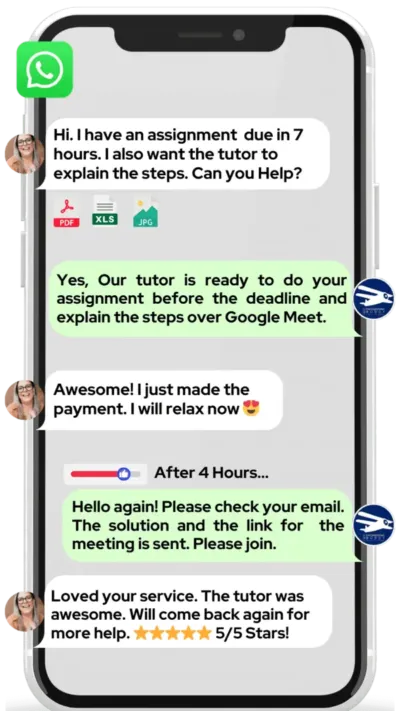
Unlike platforms where you fill out a form and wait, MEB responds in under a minute, 24/7. Tutor match takes under an hour. The $1 trial means you test before you commit. Everything runs over WhatsApp — no logins, no intake forms.
Study Plans (Pick One That Matches Your Goal)
Once the diagnostic session identifies your gaps — whether that’s convergent-divergent nozzle analysis, combustion chemistry, or multi-stage trajectory problems — the tutor builds a specific session sequence. A catch-up plan over 1–3 weeks targets the highest-priority gaps before an upcoming submission. An exam prep plan over 4–8 weeks works through all major syllabus areas with past problem practice and timed review. Ongoing weekly support follows your semester schedule, keeping pace with lectures and coursework deadlines as they arise.
Pricing Guide
Undergraduate propulsion tutoring starts from $20/hr. Graduate and specialist propulsion topics — combustion instability modelling, missile system trajectory analysis, hybrid propellant design — typically run $50–$100/hr depending on depth, timeline, and tutor availability.
Rate factors include: course level, topic complexity, how quickly you need sessions, and tutor availability in your time zone. Availability is tightest in November–December and April–May exam periods.
For students targeting aerospace graduate programmes at institutions like MIT, Caltech, Imperial College London, or Delft, tutors with active research backgrounds in propulsion and combustion are available at higher rates — share your specific goal and MEB will match the tier to what you’re aiming for.
Start with the $1 trial — 30 minutes, no registration, no commitment. WhatsApp MEB for a quick quote.
MEB has been running 1:1 technical tutoring since 2008. In propulsion specifically, the tutors who get results are those who’ve worked the problems themselves — at graduate level, in real courses, with real deadlines.
Source: My Engineering Buddy, 2008–2025.
FAQ
Is Missile and Rocket Propulsion hard?
Yes — it consistently ranks among the most demanding modules in aerospace engineering. It combines graduate-level thermodynamics, fluid mechanics, and combustion chemistry, all applied under real physical constraints. Most students find the gap between understanding individual concepts and solving integrated system problems to be where they struggle most.
How many sessions are typically needed?
Students with specific exam or assignment deadlines usually see meaningful progress in 4–8 sessions. Based on MEB data, around 20 hours of 1:1 tutoring in a single subject produces a full grade improvement for the majority of students. Your tutor will give a clearer estimate after the first diagnostic session.
Can you help with homework and assignments in Missile and Rocket Propulsion?
Yes. MEB tutors explain methods, work through representative problems with you, and guide your reasoning — so you understand the solution and submit your own work. MEB tutoring is guided learning — you understand the work, then submit it yourself. For full details on what we help with and what we don’t, read our Academic Integrity policy and Why MEB.
Will the tutor match my exact syllabus or exam board?
Yes. Before your first session, share your course outline, university, and the specific topics causing problems. The tutor is matched to your content — not a generic propulsion curriculum. Coverage varies by institution, and MEB matches to what your course actually requires.
What happens in the first session?
The tutor asks you to work through a problem live — a thrust calculation or nozzle flow problem is typical. This reveals exactly where your understanding breaks down. The rest of the session addresses those gaps directly. You’ll leave with a clear picture of what to work on and in what order.
Is online tutoring as effective as in-person for a subject like this?
For propulsion specifically, online works well. The digital pen-pad replicates whiteboard problem-solving clearly. Students who commute or are studying across time zones particularly value the flexibility. The structure — live annotation, real-time feedback, diagnostic planning — is identical to what you’d get in person.
Can I get Missile and Rocket Propulsion help at midnight or on weekends?
Yes. MEB operates 24/7 across all major time zones. If you’re studying in the Gulf, Australia, or the US West Coast and need a session on a Sunday evening or a Tuesday at 11pm, tutors are available. WhatsApp MEB and you’ll typically be matched within the hour.
What if I don’t get on with my assigned tutor?
Tell MEB immediately — over WhatsApp. There’s no friction in switching. The $1 trial exists specifically so you can test the match before committing to ongoing sessions. If the fit isn’t right, MEB reassigns without delay and without charging you again for the trial.
Do you offer help with specific propulsion software or simulation tools?
Yes, where the tutor has that background. CEA (Chemical Equilibrium with Applications), MATLAB-based propulsion models, and basic CFD post-processing are areas where MEB tutors have supported students. Share what tools your course uses when you message, and MEB will confirm availability.
How do I get started?
Three steps: WhatsApp MEB with your course name, the topic you’re stuck on, and your available times. MEB matches you with a verified tutor — usually within 24 hours. Your first session is the $1 trial: 30 minutes of live tutoring or one homework question explained in full, no registration required.
Trust & Quality at My Engineering Buddy
Every MEB tutor in missile and rocket propulsion holds at least a master’s degree in aerospace, mechanical, or a closely related engineering discipline. Tutors go through a subject-specific screening process — not a general application — that includes a live demo session evaluated for explanation quality, problem-solving method, and pacing. Ongoing session feedback from students feeds back into tutor allocation. Rated 4.8/5 across 40,000+ verified reviews on Google, MEB has been running 1:1 technical tutoring since 2008 across 52,000+ students in the US, UK, Canada, Australia, the Gulf, and Europe.
MEB tutoring is guided learning — you understand the work, then submit it yourself. For full details on what we help with and what we don’t, read our Academic Integrity policy and Tutoring Methodology.
MEB covers 2,800+ advanced subjects. Students working through missile and rocket propulsion often also need support in related areas — find an online compressible flow tutor, get gas dynamics tutoring, or work with a tutor on CFD assignment help. Visit www.myengineeringbuddy.com for the full subject list and to learn more about how MEB works.
Since 2008, MEB has matched students to subject-specific tutors — not generalists. In propulsion, that distinction is the difference between a session that moves you forward and one that re-explains what the textbook already said.
Source: My Engineering Buddy, 2008–2025.
Try your first session for $1 — 30 minutes of live 1:1 tutoring or one homework question explained in full. No registration. No commitment. WhatsApp MEB now and get matched within the hour.
Explore Related Subjects
Students studying Missile and Rocket Propulsion often also need support in:
- Aerodynamics
- Flight Mechanics
- Aircraft Design
- Aircraft Structures
- Turbulence Modeling
- Aeroacoustics
- Aircraft Performance
Next Steps
Ready to get started? Here’s what to do:
- Share your course name, university, the topics giving you the most trouble, and your exam or submission deadline
- Share your availability and time zone — MEB covers evenings and weekends across all major regions
- MEB matches you with a verified Missile and Rocket Propulsion tutor, usually within 24 hours
Before your first session, have ready: your course outline or syllabus, a recent problem set or assignment you struggled with, and your exam or deadline date. The tutor handles the rest.
Visit www.myengineeringbuddy.com for more on how MEB works, tutor screening, and what to expect from your first session.
WhatsApp to get started or email [email protected].
52,000+ Happy Students From Various Universities






Reviewed by Subject Expert
This page has been carefully reviewed and validated by our subject expert to ensure accuracy and relevance.

