

Hire Verified & Experienced
Slope Stability Analysis Tutors
Email: [email protected]
4.8/5 40K+ session ratings collected on the MEB platform



Hire The Best Slope Stability Analysis Tutor
Top Tutors, Top Grades. Without The Stress!

Your slope is failing on paper — and the exam is in six weeks. That’s exactly the gap MEB tutors are built for.
Slope Stability Analysis Tutor Online
Slope stability analysis is the geotechnical engineering process of evaluating the safety of natural or engineered slopes against failure, using methods such as Bishop’s, Fellenius, and Morgenstern-Price to calculate the factor of safety.
If you’re searching for a Slope Stability Analysis tutor near me, MEB connects you with verified geotechnical engineering tutors who know Bishop’s simplified method, limit equilibrium theory, and PLAXIS modelling — not just the textbook chapter titles. As part of our broader Civil Engineering tutoring programme, 1:1 online Slope Stability Analysis tutoring gives you direct access to tutors with real project and academic experience. One session can shift your understanding of failure planes from vague to concrete.
- 1:1 online sessions tailored to your course syllabus and exam board
- Expert-verified tutors with geotechnical engineering backgrounds
- Flexible time zones — US, UK, Canada, Australia, Gulf
- Structured learning plan built after a diagnostic session
- Ethical homework and assignment guidance — you understand before you submit
52,000+ students across the US, UK, Canada, Australia, and the Gulf have used MEB since 2008 — including students in Civil Engineering subjects like Slope Stability Analysis, Geotechnical Engineering, and Foundation Design Engineering.
Source: My Engineering Buddy, 2008–2025.
How Much Does a Slope Stability Analysis Tutor Cost?
Rates run $20–$40/hr for most undergraduate and postgraduate levels. Specialist geotechnical topics — finite element modelling, probabilistic analysis, advanced PLAXIS work — can reach $70–$100/hr. The $1 trial gets you 30 minutes of live 1:1 tutoring or a full explanation of one homework question before you commit to anything.
| Level / Need | Typical Rate | What’s Included |
|---|---|---|
| Undergraduate (most levels) | $20–$40/hr | 1:1 sessions, homework guidance |
| Advanced / Postgraduate | $40–$100/hr | Expert tutor, FEM and probabilistic depth |
| $1 Trial | $1 flat | 30 min live session or 1 homework question |
Tutor availability tightens sharply in final exam periods. Book early if your submission window is within the next four weeks.
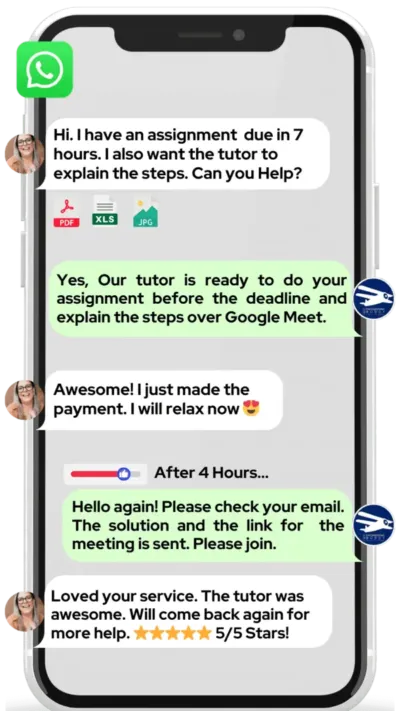
WhatsApp MEB for a quick quote — average response time under 1 minute.
Who This Slope Stability Analysis Tutoring Is For
Slope Stability Analysis sits in the middle of a civil or geotechnical engineering degree where abstract soil mechanics suddenly has to produce a defensible number. Most students hit the same wall: the theory made sense in lectures, but the worked problems don’t close. MEB tutors have seen that pattern thousands of times.
- Undergraduate civil or geotechnical engineering students tackling limit equilibrium for the first time
- Postgraduate students modelling failure mechanisms in PLAXIS 2D/3D for a thesis or coursework submission
- Students retaking after a failed first attempt — a tutor who has seen the most common failure modes saves weeks of guessing
- Students with a university conditional offer depending on this grade
- Students working through assignments on Spencer’s method, Bishop’s simplified, or Janbu’s correction without a worked solution to check against
- Researchers and graduate students running probabilistic stability analyses who need a technical sounding board
Students have come to MEB from programmes at Georgia Tech, University of Texas at Austin, Imperial College London, Delft University of Technology, University of Melbourne, and ETH Zurich — among many others.
At MEB, we’ve found that the students who struggle most with Slope Stability Analysis aren’t weak on maths — they’ve never seen the physical picture behind the failure plane. Once a tutor draws it out on a digital pen-pad and ties it back to the factor of safety equation, the numbers start making sense within one session.
1:1 Tutoring vs Self-Study vs AI vs YouTube vs Online Courses
Self-study works if you have the right textbook and time — but there’s no one to tell you why your factor of safety is wrong. AI tools give fast answers on Coulomb’s equation but can’t check whether your assumed failure surface is physically reasonable. YouTube handles the conceptual overview well and stops the moment your specific PLAXIS boundary condition doesn’t behave. Online courses follow a fixed pace that rarely matches your assignment deadline. 1:1 tutoring with MEB is live, calibrated to your exact course — whether that’s a geotechnical design module at an Australian university or a graduate soil dynamics paper at a US programme — and corrects your reasoning in real time, before the error becomes a submission.
Outcomes: What You’ll Be Able To Do in Slope Stability Analysis
After working with an MEB tutor, you’ll be able to apply Bishop’s simplified method and Morgenstern-Price to real slope geometries and defend your choice of method. You’ll analyze pore water pressure effects on effective stress and explain why a slope that passes a total stress check can still fail under seepage conditions. You’ll model failure surfaces in PLAXIS 2D, interpret the factor of safety output, and present sensitivity results clearly in a written report. You’ll solve Spencer’s method by hand and verify it computationally — the kind of cross-check examiners reward.
Based on feedback from 40,000+ sessions collected by MEB from 2022 to 2025, 58% of students improved by one full grade after approximately 20 hours of 1:1 tutoring in subjects like Slope Stability Analysis. A further 23% achieved at least a half-grade improvement.
Source: MEB session feedback data, 2022–2025.
Try your first session for $1 — 30 minutes of live 1:1 tutoring or one homework question explained in full. No registration. No commitment. WhatsApp MEB now and get matched within the hour.
What We Cover in Slope Stability Analysis (Syllabus / Topics)

Limit Equilibrium Methods
- Fellenius (Ordinary) method — assumptions and hand calculations
- Bishop’s simplified method — iterative factor of safety solution
- Janbu’s generalised method and correction factors
- Morgenstern-Price and Spencer’s method — interslice force assumptions
- Planar and wedge failure in rock and soil slopes
- Tension crack analysis and the effect of water-filled cracks
- Critical failure surface location — trial-and-error vs optimisation
Core texts: Das, Principles of Geotechnical Engineering; Craig, Craig’s Soil Mechanics (8th ed.); Abramson et al., Slope Stability and Stabilisation Methods.
Seepage, Pore Pressure and Effective Stress
- Total vs effective stress analysis — when each applies
- Pore pressure ratio (ru) and its effect on factor of safety
- Phreatic surface construction and seepage pressure distribution
- Rapid drawdown conditions and excess pore pressure
- Long-term vs short-term stability — drained vs undrained parameters
- Sensitivity analysis — what happens when pore pressure assumptions change
Core texts: Fredlund & Krahn, Comparison of Slope Stability Methods of Analysis (Canadian Geotechnical Journal); Das, Principles of Foundation Engineering.
Numerical and Software-Based Analysis
- Finite element slope stability in PLAXIS 2D/3D — strength reduction technique
- Setting up geometry, material models (Mohr-Coulomb, Hardening Soil), and boundary conditions
- Interpreting Msf output and displacement contours
- Probabilistic stability analysis — Monte Carlo and first-order reliability
- Comparing LEM output with FEM results — why they diverge and when that matters
- Report writing — presenting factor of safety with appropriate safety margins
Core texts: Brinkgreve et al., PLAXIS 2D Reference Manual; Duncan & Wright, Soil Strength and Slope Stability.
What a Typical Slope Stability Analysis Session Looks Like
The tutor opens by checking where you left off — usually the Bishop’s simplified iteration or the PLAXIS model you couldn’t get to converge. From there, the session moves through the live problem on screen: the tutor draws the slope geometry and failure arc on a digital pen-pad, labels the slices, walks through the force equilibrium, and shows exactly where the factor of safety calculation breaks down in your working. You replicate the steps or explain the reasoning back — that’s where the gaps surface. If pore pressure assumptions are the issue, the tutor builds a seepage scenario and has you re-run the numbers. The session closes with a specific practice task — usually one unseen problem using a different method — and notes the next topic to cover, whether that’s Spencer’s method, rapid drawdown, or interpreting PLAXIS Msf output.
How MEB Tutors Help You with Slope Stability Analysis (The Learning Loop)
Diagnose: In the first session, the tutor identifies whether the gap is conceptual (what the failure plane represents physically), procedural (where the iteration breaks down), or software-based (why the PLAXIS model isn’t converging). These are three different problems. The fix for each is different too.
Explain: The tutor works through a problem from scratch on a digital pen-pad — labelling geometry, applying Mohr-Coulomb failure criteria, setting up the slice equilibrium. You see the logic build, not just the answer.
Practice: You attempt the next problem while the tutor watches. That’s where the real errors appear — the ones you’d never catch marking your own work.
Feedback: The tutor shows exactly which step broke and why that step costs marks in a graded submission — not a general comment, but a line-by-line correction tied to the method you’re using.
Plan: Before the session ends, the tutor sets the next topic and maps it to your assignment or exam date. No session is standalone — each one feeds the next.
Sessions run on Google Meet with a digital pen-pad or iPad and Apple Pencil. Before your first session, have your course syllabus, a recent problem set you struggled with, and your exam or submission date ready. The tutor takes it from there. Start with the $1 trial — 30 minutes of live tutoring that also serves as your first diagnostic.
Students consistently tell us that Slope Stability Analysis clicked when they stopped memorising the Bishop’s formula and started drawing the free body diagram first. The formula is just the maths that follows the picture. Our tutors teach the picture before the equation every time.
Tutor Match Criteria (How We Pick Your Tutor)
Every tutor goes through a subject-specific screening before being matched to any student. For Slope Stability Analysis, that means demonstrating working knowledge of limit equilibrium methods, software tools, and effective stress theory — not just a civil engineering degree on a CV.
Subject depth: Tutors are matched to your level — undergraduate limit equilibrium, postgraduate FEM, or research-level probabilistic analysis — and to your specific exam board or university module. Tools: All tutors use Google Meet plus a digital pen-pad or iPad and Apple Pencil, so slope geometry is drawn live, not described verbally. Time zone: Matched to your region — US, UK, Gulf, Canada, or Australia. Goals: Whether you need to pass a graded exam, complete a geotechnical engineering assignment, or build the depth needed for a research thesis, the tutor match accounts for that before the first session.
Unlike platforms where you fill out a form and wait, MEB responds in under a minute, 24/7. Tutor match takes under an hour. The $1 trial means you test before you commit. Everything runs over WhatsApp — no logins, no intake forms.
Study Plans (Pick One That Matches Your Goal)
The tutor maps the exact session sequence after the first diagnostic, but here’s how most students structure their time. Catch-up (1–3 weeks): Close specific gaps — one method per session, timed to an assignment deadline. Exam prep (4–8 weeks): Systematic coverage of limit equilibrium, pore pressure, seepage, and software output interpretation, with past paper problems under exam conditions. Weekly support: Ongoing sessions aligned to lecture schedule, with each assignment reviewed before submission. The tutor builds the specific sequence — you show up to the session ready to work.
Pricing Guide
Most Slope Stability Analysis sessions run $20–$40/hr. Graduate-level work — probabilistic analysis, advanced PLAXIS modelling, thesis support — can reach $70–$100/hr depending on tutor specialism and timeline. Rate factors include topic complexity, how close your exam or deadline is, and tutor availability in your time zone.
For students targeting top civil or geotechnical engineering programmes, or who need tutors with real-world geotechnical consultancy backgrounds, those profiles are available at higher rates — share your specific goal and MEB will match the tier to your needs.
Availability tightens in peak assessment periods. If your exam is within four weeks, book now. Start with the $1 trial — 30 minutes, no registration, no commitment. WhatsApp MEB for a quick quote.
MEB has served 52,000+ students since 2008, covering 2,800+ engineering and technical subjects — from Soil Mechanics tutoring and Rock Mechanics help through to advanced structural and geotechnical analysis at postgraduate level.
Source: My Engineering Buddy, 2008–2025.
FAQ
Is Slope Stability Analysis hard?
It’s not the maths that trips most students — it’s connecting the physical picture to the formula. Once you understand what the failure arc and slice forces represent, the iterative methods follow logically. A tutor who draws it out live makes that connection faster than a textbook ever does.
How many sessions are needed?
Students with one specific gap — say, Bishop’s method or PLAXIS convergence — often sort it in two to three sessions. Students covering the full module from limit equilibrium to seepage analysis typically need eight to twelve sessions spread over four to six weeks, depending on their starting point.
Can you help with homework and assignments?
MEB tutoring is guided learning — you understand the work, then submit it yourself. If you’re stuck on a factor of safety calculation or can’t interpret your PLAXIS output, the tutor explains the method step by step until you can complete it independently. See our Academic Integrity policy and Why MEB page for full details on what we help with and what we don’t.
Will the tutor match my exact syllabus or exam board?
Yes. Before the first session, share your course outline or exam board. MEB matches tutors to your specific module structure — whether that’s a UK university geotechnical module, a North American graduate course, or an Australian civil engineering programme. The first session starts from your actual syllabus, not a generic one.
What happens in the first session?
The tutor runs a short diagnostic — a few problems covering the key methods — to locate exactly where your understanding breaks down. From that point, every session targets the specific gap rather than repeating what you already know. It’s efficient by design, not by accident.
Is online tutoring as effective as in-person?
For Slope Stability Analysis, it works well online. The tutor draws slope cross-sections, failure surfaces, and slice force diagrams live on a shared digital pen-pad. Students report that seeing the geometry built in real time — rather than staring at a printed figure — is actually clearer than a whiteboard session.
Can you help me with PLAXIS 2D or 3D modelling for slope stability?
Yes. MEB has tutors experienced in PLAXIS 2D and 3D for geotechnical applications. Sessions cover model setup, material parameter selection, strength reduction analysis, and interpreting Msf and displacement output — the exact steps where most students get stuck on their coursework or thesis work.
What’s the difference between limit equilibrium and finite element methods for slope stability, and do I need to know both?
Limit equilibrium (Bishop, Spencer, Morgenstern-Price) is faster and required for most undergraduate exams. Finite element methods (PLAXIS strength reduction) are more accurate for complex geometries and dominate postgraduate and professional practice. Many courses now test both. Your tutor will clarify which your assessment requires and cover accordingly.
What if I don’t like my assigned tutor?
Tell MEB over WhatsApp and a new match happens within the hour. No awkward forms, no waiting period. The $1 trial is designed for exactly this — so you know before you commit to a block of sessions whether the tutor’s approach suits the way you think.
Can I get Slope Stability Analysis help at short notice — including late at night?
MEB operates 24/7 across time zones. WhatsApp a session request and you’ll typically get a response in under a minute, with a tutor matched within the hour. Late-night sessions before a submission deadline are common — tutors are available across US, UK, Gulf, and Australian time zones.
Do you offer help with probabilistic slope stability analysis?
Yes. Probabilistic methods — Monte Carlo simulation, first-order reliability methods (FORM), and reliability index calculation — are covered at postgraduate level. If your thesis or advanced module requires probabilistic analysis of the factor of safety distribution, share the brief with MEB and the tutor is matched to that specific depth.
Trust & Quality at My Engineering Buddy
Every tutor on MEB is screened before being matched to any student. For Slope Stability Analysis, that means demonstrating real subject competence — working through limit equilibrium problems, showing familiarity with geotechnical software, and passing a live demo evaluation. Rated 4.8/5 across 40,000+ verified reviews on Google, MEB has been running since 2008 across the US, UK, Canada, Australia, and the Gulf — 18 years of consistent delivery in technical engineering subjects. Ongoing session feedback keeps tutor quality in check after the screening too.
MEB tutoring is guided learning — you understand the work, then submit it yourself. For full details on what we help with and what we don’t, read our Academic Integrity policy and Why MEB.
MEB covers 2,800+ subjects across Civil Engineering and related disciplines. Students working on Slope Stability Analysis frequently also need Structural Engineering tutoring, Dam Engineering help, and support with Groundwater Engineering. All are covered by verified tutors under the same platform, same pricing model, and same $1 trial. See our tutoring methodology for how sessions are structured across technical subjects.
Explore Related Subjects
Students studying Slope Stability Analysis often also need support in:
- Earthquake Engineering
- Coastal Engineering
- Foundation Design Engineering
- Bridge Design Engineering
- Environmental Engineering
- Hydrology
- Structural Dynamics
Next Steps
Getting started takes less than five minutes.
- Share your exam board or course outline, your hardest topic, and your current timeline
- Share your availability and time zone
- MEB matches you with a verified tutor — usually within 24 hours
- First session starts with a diagnostic so every minute is used on the right problem
Before your first session, have ready: your exam board or course syllabus, a recent problem set or assignment you struggled with, and your exam or submission date. The tutor handles the rest.
Visit www.myengineeringbuddy.com for more on how MEB works.
WhatsApp to get started or email [email protected].
A common pattern our tutors observe is that students who arrive with a PLAXIS file they can’t interpret haven’t made an error in the software — they’ve made an assumption about drainage conditions that the model exposed. Catching that in a session beats discovering it after submission.
52,000+ Happy Students From Various Universities






How Much For Private 1:1 Tutoring & Hw Help?
Private 1:1 Tutoring and HW help Cost $20 – 35 per hour* on average.
Reviewed by Subject Expert
This page has been carefully reviewed and validated by our subject expert to ensure accuracy and relevance.
