

Hire Verified & Experienced
Transportation Planning Tutors
Email: [email protected]
4.8/5 40K+ session ratings collected on the MEB platform



Hire The Best Transportation Planning Tutor
Top Tutors, Top Grades. Without The Stress!





Most students fail their transportation planning studio not because the theory is hard — but because they can’t connect demand modeling to real network design under exam or project pressure.
Transportation Planning Tutor Online
Transportation Planning is the study of how people and goods move through built environments — covering land use, demand forecasting, network analysis, and policy evaluation. A strong Transportation Planning tutor helps students apply these frameworks to coursework, projects, and professional practice.
Finding a Transportation Planning tutor near me who actually knows the difference between four-step demand modeling and activity-based approaches isn’t easy. MEB matches you with a verified 1:1 online Transportation Planning tutor who works to your exact course outline — whether that’s an undergraduate planning studio, a graduate transport policy module, or a professional certification track. One outcome you can expect: clearer analytical reasoning and stronger project submissions, without the guesswork.
- 1:1 online sessions tailored to your course syllabus and project deadlines
- Expert verified tutors with subject-specific knowledge in transportation planning
- Flexible time zones — US, UK, Canada, Australia, Gulf
- Structured learning plan built after a diagnostic session
- Ethical homework and assignment guidance — you understand the work before you submit
52,000+ students across the US, UK, Canada, Australia, and the Gulf have used MEB since 2008 — across 2,800+ subjects, from AP Calculus to A Level Music Technology to Data Science.
Source: My Engineering Buddy, 2008–2025.
How Much Does a Transportation Planning Tutor Cost?
Most Transportation Planning tutoring sessions run $20–$40/hr. Graduate-level or highly specialized topics — corridor modeling, microsimulation, transit equity analysis — can reach up to $100/hr depending on tutor expertise. New students can start with the $1 trial: 30 minutes of live 1:1 tutoring or one homework question explained in full.
| Level / Need | Typical Rate | What’s Included |
|---|---|---|
| Undergraduate (most levels) | $20–$35/hr | 1:1 sessions, homework and project guidance |
| Graduate / Specialist | $35–$100/hr | Expert tutor, niche depth, research support |
| $1 Trial | $1 flat | 30 min live session or 1 homework question explained |
Tutor availability tightens during end-of-semester crunch and capstone submission periods. Book early if your deadline is within four weeks.
WhatsApp MEB for a quick quote — average response time under 1 minute.
Who This Transportation Planning Tutoring Is For
This service is built for students at every stage of transportation planning study — from second-year undergraduates hitting their first demand modeling assignment to graduate students wrestling with network optimization or transit policy analysis.
- Undergraduate students in civil engineering, urban planning, or geography programs with a transportation component
- Graduate students in master’s or PhD programs covering transport systems, land use, or infrastructure policy
- Students with a conditional offer or funding renewal dependent on passing a core transportation planning module
- Students working on capstone projects, dissertations, or studio submissions with a transportation planning focus
- Professionals upskilling in transport modeling tools or seeking support with certification coursework
- Students returning after a failed or incomplete grade in a transportation planning unit who need structured catch-up
Students in programs at institutions such as MIT, UC Berkeley, University of Toronto, University College London, TU Delft, and the University of Melbourne regularly work through transportation planning content at this level. MEB tutors are matched to the exact program demands — not a generic syllabus.
1:1 Tutoring vs Self-Study vs AI Tools
Self-study works for motivated students, but transportation planning problems — gravity models, level-of-service calculations, GIS-based network analysis — are easy to misapply without feedback. You can read the same chapter three times and still set up the trip distribution matrix wrong. AI tools are fast for definitions and syntax, but they cannot watch you work through a mode-choice model in real time, spot where your utility function parameters are off, or tell you why your answer would lose marks in a specific professor’s marking scheme. That diagnosis requires a human who knows the subject. MEB’s online Transportation Planning tutoring combines the flexibility of remote sessions with a structured feedback loop calibrated to your actual course — not a generic textbook.
Outcomes: What You’ll Be Able To Do in Transportation Planning
After working with an online Transportation Planning tutor through MEB, students apply the four-step travel demand model correctly across trip generation, distribution, modal split, and assignment. They analyze level-of-service metrics for road and transit networks and explain the trade-offs in policy terms. Students solve route assignment problems using Wardrop’s equilibrium principles and present findings in a format that holds up in a studio critique or written report. They model land-use and transport interactions using frameworks covered in their specific course — whether that’s VISUM, TransCAD, or manual calculation methods.
Based on feedback from 40,000+ sessions collected by MEB from 2022 to 2025, 58% of students improved by one full grade after approximately 20 hours of 1:1 tutoring in a single subject. A further 23% achieved at least a half-grade improvement.
Source: MEB session feedback data, 2022–2025.
Try your first session for $1 — 30 minutes of live 1:1 tutoring or one homework question explained in full. No registration. No commitment. WhatsApp MEB now and get matched within the hour.
What We Cover in Transportation Planning (Syllabus / Topics)

Travel Demand Modeling
- Trip generation: regression-based and cross-classification methods
- Trip distribution: gravity model calibration and Fratar method
- Modal split: logit and probit discrete choice models
- Traffic assignment: all-or-nothing, stochastic, and user equilibrium methods
- Activity-based modeling concepts and comparison to four-step approaches
- Forecasting and scenario testing for long-range transport plans
Core references for this track include Ortúzar and Willumsen’s Modelling Transport (4th ed.) and McNally’s The Four-Step Model from the Handbook of Transport Modelling.
Network Analysis and Infrastructure Planning
- Highway capacity analysis and level-of-service assessment (HCM methodology)
- Transit network design: route structure, frequency, and coverage trade-offs
- GIS-based network mapping and spatial data interpretation
- Intersection design and signal timing basics
- Multimodal corridor analysis and complete streets principles
- Infrastructure cost-benefit analysis and project prioritization frameworks
Key references include the Highway Capacity Manual (TRB), Vuchic’s Urban Transit: Operations, Planning, and Economics, and relevant MIT OpenCourseWare Civil Engineering materials for supplementary problem sets.
Transport Policy, Land Use, and Sustainability
- Land use–transport interaction models and feedback loops
- Transit-oriented development principles and policy instruments
- Transport equity analysis: access, affordability, and vulnerable populations
- Carbon accounting and emissions modeling in transport planning
- Active travel planning: cycling networks and pedestrian infrastructure
- Statutory planning frameworks in the US, UK, Canada, and Australia
Recommended texts include Banister’s The Sustainable Mobility Paradigm, Rodrigue’s The Geography of Transport Systems, and Meyer and Miller’s Urban Transportation Planning.
What a Typical Transportation Planning Session Looks Like
The tutor opens by checking where the previous session ended — usually a trip distribution exercise or a network assignment problem that was set as practice. If the student got it right, the tutor asks them to explain their steps aloud, which quickly reveals whether the reasoning is solid or the answer was lucky. From there, the session moves to the next topic: often modal split modeling using a binary logit model, or a level-of-service calculation for a signalized intersection. The student works through the problem on screen while the tutor annotates in real time with a digital pen-pad — marking where utility values were set up incorrectly or where a conversion factor was missed. The session closes with a specific task: one practice problem to complete before the next session, and a note of which topic follows.
How MEB Tutors Help You with Transportation Planning (The Learning Loop)
Diagnose: In the first session, the tutor asks you to walk through a recent problem — a demand forecast, a network sketch, or a policy analysis. Within 20 minutes, they know exactly which concepts are shaky and which are solid.
Explain: The tutor works through a live example using a digital pen-pad — not slides. You watch the four-step model built from scratch, or a logit model calibrated step by step, with every assumption stated out loud.
Practice: You attempt the next problem while the tutor watches. No waiting until next session to find out you set up the gravity model constants wrong.
Feedback: Errors are corrected immediately, with the tutor explaining not just what went wrong but why it would cost marks — whether that’s a calculation slip or a conceptual misread of the assignment brief.
Plan: At the end of each session, the tutor sets the next topic and a specific practice task, keeping the progression aligned to your course deadline or exam date.
Sessions run over Google Meet with a digital pen-pad or iPad and Apple Pencil for annotation. Before your first session, share your course outline or assignment brief and any work you’ve already attempted. Start with the $1 trial — 30 minutes of live tutoring that also serves as your first diagnostic.
At MEB, we’ve found that students who attempt at least one problem before each session — even an incomplete attempt — make significantly faster progress than those who arrive with blank notes. Struggle first. The tutor’s explanation lands differently when you’ve already hit the wall.
Tutor Match Criteria (How We Pick Your Tutor)
Every Transportation Planning tutor on MEB is matched on six criteria before the first session.
Subject depth: The tutor must have worked with the specific frameworks on your syllabus — whether that’s four-step modeling, VISUM-based assignment, or UK statutory transport assessment practice. Generic civil engineering knowledge is not enough.
Tools: All sessions use Google Meet with digital pen-pad or iPad and Apple Pencil annotation. For sessions involving GIS or transport modeling software, screen sharing with live walkthrough is standard.
Time zone: MEB covers New York, Los Angeles, Chicago, London, Dubai, Toronto, Sydney, Melbourne, and all major US, UK, Gulf, Canadian, Australian, and European time zones — including evenings and weekends.
Learning style: Calibrated from the first session. Some students need worked examples first; others learn faster by attempting problems under guided pressure. The tutor adjusts.
Communication: Clear English, adapted to the student’s level and familiarity with technical vocabulary.
Goals: Whether the priority is passing a specific module, finishing a capstone project, or building long-term analytical depth, the tutor structures sessions around that target.
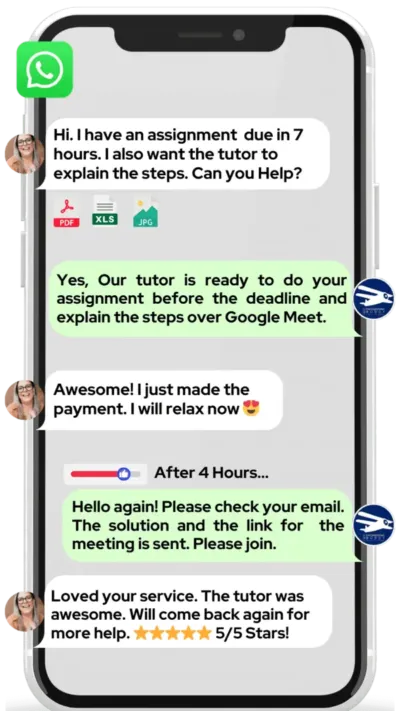
Unlike platforms where you fill out a form and wait, MEB responds in under a minute, 24/7. Tutor match takes under an hour. The $1 trial means you test before you commit. Everything runs over WhatsApp — no logins, no intake forms.
Study Plans (Pick One That Matches Your Goal)
The tutor builds a specific session sequence after the first diagnostic, but most students fall into one of three patterns. Catch-up (1–3 weeks): you have a submission or exam approaching and specific gaps to close — demand modeling, network analysis, or policy frameworks. Exam prep (4–8 weeks): structured revision across all assessed components, with past paper and case study practice. Weekly support: ongoing sessions aligned to your semester timetable, keeping pace with lectures and assignments as they arrive.
Pricing Guide
Transportation Planning tutoring starts at $20/hr for most undergraduate levels and runs to $40/hr for advanced coursework. Graduate-level work — microsimulation, transport equity research, dissertation support — is priced up to $100/hr depending on tutor specialization and timeline.
Rate factors include course level, topic complexity, how soon your deadline falls, and tutor availability. Sessions in peak periods — end of semester, capstone submission windows — book out faster.
For students targeting admission to or strong results within competitive graduate programs at institutions known for transportation research, tutors with professional consulting or research backgrounds are available at higher rates. Share your specific goal and MEB will match the tier to what you actually need.
Start with the $1 trial — 30 minutes, no registration, no commitment. WhatsApp MEB for a quick quote.
FAQ
Is transportation planning hard?
The theory is manageable, but the application is where students struggle — setting up demand models correctly, interpreting GIS outputs, and connecting policy goals to quantitative analysis. With guided practice on those specific steps, most students find it clicks faster than expected.
How many sessions will I need?
Students with one or two specific gaps — a demand modeling method or a network analysis technique — often see clear improvement in 3–5 sessions. Students covering a full module or working through a capstone project typically benefit from 10–20 hours across the semester.
Can you help with homework and assignments?
Yes. MEB tutors explain methods, walk through worked examples, and guide you through your own problem-solving — so you understand the work before you submit it yourself. MEB tutoring is guided learning — you understand the work, then submit it yourself. For full details on what we help with and what we don’t, read our Academic Integrity policy and Why MEB.
Will the tutor match my exact syllabus or exam board?
Yes. Before matching, MEB asks for your course outline, university, and the specific topics being assessed. Tutors are selected for familiarity with those frameworks — not assigned by subject name alone. A UK transport assessment module and a US urban planning studio are handled differently.
What happens in the first session?
The tutor runs a short diagnostic — usually asking you to walk through a recent problem or explain a concept. That 15–20 minutes shapes the entire session plan. No time is spent on topics you already understand. The first session doubles as your diagnostic when you use the $1 trial.
Is online tutoring as effective as in-person for transportation planning?
For problem-based subjects like transportation planning, online sessions with pen-pad annotation are at least as effective as in-person — the tutor can annotate network diagrams, model outputs, and calculation steps in real time on screen, which is often clearer than a physical whiteboard.
Can I get transportation planning help late at night or on weekends?
Yes. MEB operates 24/7 across all major time zones. Students in the US, UK, Gulf, and Australia regularly book evening and weekend sessions. WhatsApp MEB at any hour and a response typically comes back within a minute.
What if I don’t click with my assigned tutor?
Tell MEB over WhatsApp. No forms, no waiting period. A replacement tutor is identified — usually within the same day. The $1 trial is specifically designed so you find out before committing to a full session package.
Do you cover transport modeling software like VISUM or TransCAD?
Tutors with hands-on experience in specific transport modeling platforms are available. Mention the software when you contact MEB — it’s a matching criterion, not an afterthought. Software-specific help runs as a screen-share session alongside the modeling concepts.
How do I get started?
Three steps: WhatsApp MEB with your course details and the topic you’re stuck on, get matched with a verified Transportation Planning tutor within the hour, then start your $1 trial — 30 minutes of live 1:1 tutoring or one assignment question explained in full. No registration required.
Trust & Quality at My Engineering Buddy
Every MEB tutor goes through subject-specific screening before taking a session — including a live demo evaluation assessed by subject-matter reviewers, not just an HR checklist. Tutors hold relevant degrees and, for applied subjects like transportation planning, professional or research experience in the field. Ongoing session feedback is reviewed to catch any drop in quality early. Rated 4.8/5 across 40,000+ verified reviews on Google.
MEB tutoring is guided learning — you understand the work, then submit it yourself. For full details on what we help with and what we don’t, read our Academic Integrity policy and Why MEB. Our tutoring methodology is documented and consistent across all subjects.
MEB has served 52,000+ students across the US, UK, Canada, Australia, Gulf, and Europe since 2008, across 2,800+ subjects. Students working through related disciplines often also use MEB for urban design and planning tutoring, architecture tutoring, and building science help.
MEB has operated since 2008 across 2,800+ subjects. Every tutor is vetted through live demonstration, not just credentials — because a degree in the subject does not guarantee the ability to teach it under pressure.
Source: My Engineering Buddy, 2008–2025.
Students consistently tell us that the biggest shift happens not when they learn a new method, but when they finally understand why the method they were applying was producing wrong answers. That moment of correction — done live, with explanation — is what separates 1:1 tutoring from everything else.
Explore Related Subjects
Students studying Transportation Planning often also need support in:
- Urban Design and Planning
- Ekistics
- Landscape Architecture
- Building Information Modeling (BIM)
- Sustainable Architecture
- Construction Technology Management Safety
- Architectural Design Drafting Drawing
Next Steps
Getting started takes under five minutes. Here’s what to have ready before your first session:
- Your course outline or exam syllabus — or the specific assignment brief you’re working from
- A recent problem or homework attempt you struggled with (even a partially completed one)
- Your exam or submission deadline date and your current time zone
MEB matches you with a verified Transportation Planning tutor — usually within 24 hours, often within the hour. The first session starts with a diagnostic so no time is wasted covering ground you’ve already covered.
Visit www.myengineeringbuddy.com to read more about the MEB process, tutor matching, and how sessions are structured.
WhatsApp to get started or email [email protected].
Our experience across thousands of sessions shows that students who share a specific problem — not just “I’m struggling with transportation planning” — get matched faster and get more out of the first session. Be specific. The tutor is ready.
52,000+ Happy Students From Various Universities






How Much For Private 1:1 Tutoring & Hw Help?
Private 1:1 Tutoring and HW help Cost $20 – 35 per hour* on average.
Reviewed by Subject Expert
This page has been carefully reviewed and validated by our subject expert to ensure accuracy and relevance.

