




~1 min
Average Reply Time
~1 hour
To Be Matched With A Tutor
1 Trial
75% Find Their Tutor On The 1st Trial
$1
Your First 30 Minutes
Hire The Best Electrophysiology Tutor
Top Tutors, Top Grades. Without The Stress!
Related Subjects
Struggling to interpret action potentials, patch-clamp data, or membrane kinetics — and your next exam is closer than you’d like? You’re not alone. Electrophysiology trips up even strong biology and neuroscience students.
Electrophysiology Tutor Online
Electrophysiology is the study of the electrical properties of biological cells and tissues, including how ion channels generate and propagate action potentials. It equips students to analyse membrane voltage, ionic currents, and neural signalling in experimental and clinical contexts.
MEB provides 1:1 online tutoring and homework help in 2,800+ advanced subjects — including electrophysiology and the broader neuroscience tutoring curriculum. If you’ve searched for an electrophysiology tutor near me and found only generic science platforms, MEB is built differently: every tutor is matched to your exact course, institution, and timeline. Students who start structured sessions early consistently outperform those who cram alone.
- 1:1 online sessions tailored to your university module or research programme
- Expert-verified tutors with subject-specific knowledge in electrophysiology
- Flexible time zones — US, UK, Canada, Australia, Gulf
- Structured learning plan built after a diagnostic session
- Ethical homework and assignment guidance — you understand the work, then submit it yourself
52,000+ students across the US, UK, Canada, Australia, and the Gulf have used MEB since 2008 — including students in Neuroscience subjects like Electrophysiology, Neurophysiology, and Computational Neuroscience.
Source: My Engineering Buddy, 2008–2025.
How Much Does an Electrophysiology Tutor Cost?
Most electrophysiology tutoring sessions run $20–$40/hr. Graduate-level work — patch-clamp analysis, multi-electrode array interpretation, or thesis support — can reach $70–$100/hr depending on tutor background and timeline urgency. Try the $1 trial first: 30 minutes of live tutoring or one homework question explained in full, no registration required.
| Level / Need | Typical Rate | What’s Included |
|---|---|---|
| Undergraduate (standard modules) | $20–$35/hr | 1:1 sessions, homework guidance |
| Advanced / Graduate / Research | $35–$100/hr | Expert tutor, niche depth, thesis support |
| $1 Trial | $1 flat | 30 min live session or 1 homework question |
Tutor availability tightens around end-of-semester exam periods — particularly November–December and April–May. Book early if your module assessment falls in those windows.
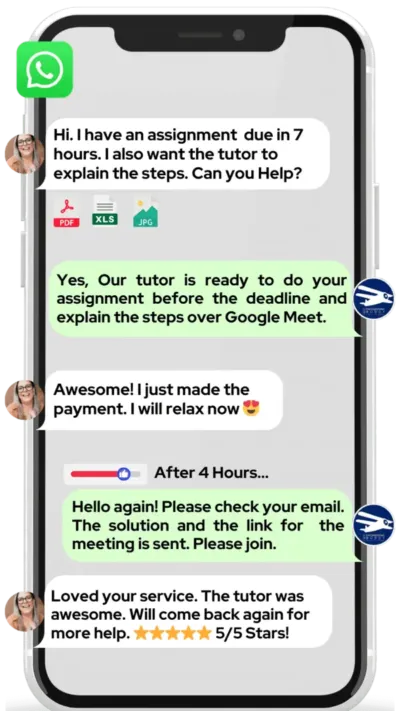
WhatsApp MEB for a quick quote — average response time under 1 minute.
Who This Electrophysiology Tutoring Is For
Electrophysiology sits at the intersection of physics, cell biology, and neuroscience — which means the gaps compound fast. Most students who come to MEB aren’t weak across the board; they’re stuck on one or two specific concepts that are blocking everything downstream.
- Undergraduate neuroscience, biology, or biomedical engineering students tackling ion channel kinetics for the first time
- Graduate students preparing for lab rotations involving patch-clamp or field potential recording
- PhD students who need to get sharper on the theoretical side — Hodgkin-Huxley modelling, Nernst equation application, cable theory
- Students retaking after a failed first attempt — especially those who passed anatomy but stalled on the electrical dynamics section
- Students with a university conditional offer depending on passing this module
- Parents supporting a student whose confidence has dropped alongside their grades in a neuroscience or physiology programme
MEB tutors have supported students at institutions including Johns Hopkins, University College London, McGill, the University of Melbourne, Imperial College London, ETH Zürich, Harvard, and the University of Toronto — all as plain context, not affiliation.
Not sure if the $1 trial makes sense for your level? It works for everyone from second-year undergrad to doctoral candidates. WhatsApp MEB and describe where you’re stuck.
1:1 Tutoring vs Self-Study vs AI vs YouTube vs Online Courses
Self-study works if you’re disciplined, but electrophysiology has layers — you can read the Goldman equation three times and still not know why it breaks down in your lab data. AI tools give fast definitions but can’t watch you misread an I-V curve and correct you in real time. YouTube covers action potential basics well; it stops when your question gets specific to your dataset or exam board. Online courses run at a fixed pace with no adjustments for what you already know. 1:1 tutoring with MEB is live, corrects errors the moment they happen, and is calibrated to your exact electrophysiology module — including the specific recording techniques and computational models your course uses.
Outcomes: What You’ll Be Able To Do in Electrophysiology
After consistent 1:1 sessions, students can solve Hodgkin-Huxley equations for specific conductance states, analyse patch-clamp recordings to identify channel subtypes, model resting membrane potential using the Nernst and Goldman equations, explain the ionic basis of action potential phases with accuracy under exam conditions, and apply cable theory to predict how signals decay across neuronal dendrites. These aren’t abstract goals — they’re the specific questions that appear in assessments at most research universities and in lab practicals.
Based on feedback from 40,000+ sessions collected by MEB from 2022 to 2025, 58% of students improved by one full grade after approximately 20 hours of 1:1 tutoring in subjects like Electrophysiology. A further 23% achieved at least a half-grade improvement.
Source: MEB session feedback data, 2022–2025.
At MEB, we’ve found that most electrophysiology students don’t have a motivation problem — they have a sequencing problem. They’re trying to understand synaptic integration before they’ve locked in the action potential mechanism. Fix the order, and the rest moves quickly.
What We Cover in Electrophysiology (Syllabus / Topics)

Track 1: Membrane Biophysics and Ion Channels
- Resting membrane potential and the Nernst equation
- Goldman-Hodgkin-Katz (GHK) voltage equation and ion permeability
- Voltage-gated Na⁺, K⁺, and Ca²⁺ channel gating kinetics
- Hodgkin-Huxley model — m, h, and n gate variables
- Refractory periods: absolute vs relative
- Ligand-gated ion channels and ionotropic receptor function
- Patch-clamp technique: whole-cell, single-channel, and outside-out configurations
Core texts for this track include Hille’s Ion Channels of Excitable Membranes (3rd ed.) and Johnston & Wu’s Foundations of Cellular Neurophysiology.
Track 2: Action Potentials, Propagation, and Synaptic Transmission
- Action potential phases: depolarisation, overshoot, repolarisation, hyperpolarisation
- Saltatory conduction and myelin sheath function
- Cable theory: length constant (λ) and time constant (τ)
- Excitatory and inhibitory postsynaptic potentials (EPSPs and IPSPs)
- Temporal and spatial summation at the axon hillock
- Neuromuscular junction and end-plate potential recordings
Recommended: Kandel et al., Principles of Neural Science (6th ed.) and Levitan & Kaczmarek’s The Neuron: Cell and Molecular Biology.
Track 3: Recording Techniques and Computational Methods
- Extracellular recording: local field potentials (LFPs) and multi-electrode arrays (MEAs)
- Sharp microelectrode and whole-cell patch-clamp recording protocols
- Current-clamp vs voltage-clamp: when and why each is used
- Signal filtering, amplifier settings, and artefact identification
- NEURON and Brian2 for computational modelling of membrane dynamics
- EEG and ECoG signal acquisition: frequency bands and clinical relevance
Supporting resources include Dayan & Abbott’s Theoretical Neuroscience and the PubMed Central database for peer-reviewed electrophysiology protocols.
Students consistently tell us that the jump from reading about patch-clamp to actually interpreting real recordings feels enormous. Our tutors bridge that gap by walking through real trace examples — the kind that appear in lab practicals and published papers — before moving to interpretation questions.
What a Typical Electrophysiology Session Looks Like
The tutor opens by checking where you landed on the previous session’s task — usually a Hodgkin-Huxley parameter problem or a patch-clamp trace interpretation exercise. If you got it right, they move forward. If not, they find the exact step where your reasoning diverged. From there, you work through the session’s core topic together on screen — say, calculating the reversal potential for a mixed-cation channel, or setting up a voltage-clamp protocol in NEURON. The tutor writes equations and annotates diagrams live using a digital pen-pad; you replicate the logic yourself, not just watch. By the end, you have a concrete task — three I-V curve problems or one modelling script to run — and the next topic is already set.
How MEB Tutors Help You with Electrophysiology (The Learning Loop)
Diagnose: In the first session, the tutor identifies exactly where your understanding breaks down — whether that’s the mathematical formalism of the Nernst equation, the conceptual leap to Hodgkin-Huxley gating, or misreading patch-clamp data formats. This shapes every session that follows.
Explain: The tutor works through problems live using a digital pen-pad or iPad and Apple Pencil — not slides, not pre-recorded clips. You see the reasoning built from scratch, which is how exam questions and lab reports actually get answered.
Practice: You attempt problems with the tutor present. No waiting. No “try it and email me.” Errors are caught before they solidify into habits.
Feedback: The tutor explains each error step by step — not just the right answer, but why the wrong reasoning loses marks. This is where most of the learning happens.
Plan: After each session, you have a clear next topic and a short task list. Progress is tracked so neither of you loses the thread across weeks.
Sessions run over Google Meet. Share your course syllabus, your most recent lab report or homework attempt, and your exam date before the first session — the tutor builds from there. Start with the $1 trial — 30 minutes of live 1:1 tutoring that also functions as your first diagnostic. Whether you need a fast catch-up before a practical exam, structured revision over four to eight weeks, or ongoing weekly support through the semester, the tutor maps the session plan after that first conversation.
MEB tutors have run sessions in neuroanatomy, neurochemistry, and electrophysiology — often with the same student in the same semester. The cross-subject context makes a real difference when synaptic chemistry and electrical dynamics overlap in assessments.
Source: My Engineering Buddy, 2008–2025.
Tutor Match Criteria (How We Pick Your Tutor)
Not every neuroscience tutor is right for electrophysiology. MEB matches on four criteria:
Subject depth: The tutor must have demonstrable knowledge at your specific level — undergraduate membrane biophysics, graduate recording techniques, or computational modelling for research. General biology tutors are not matched to electrophysiology courses.
Tools: All tutors use Google Meet with a digital pen-pad or iPad and Apple Pencil. Equations and diagrams are drawn live — not pasted from slides.
Time zone: Matched to your region — US, UK, Canada, Australia, or Gulf — so sessions run at reasonable hours without compromise on tutor quality.
Goals: Exam performance, conceptual depth, homework support, or research-level understanding. The match accounts for all of it.
Unlike platforms where you fill out a form and wait, MEB responds in under a minute, 24/7. Tutor match takes under an hour. The $1 trial means you test before you commit. Everything runs over WhatsApp — no logins, no intake forms.
Pricing Guide
Standard electrophysiology tutoring runs $20–$40/hr. Niche graduate-level topics — Hodgkin-Huxley computational modelling, MEA data analysis, or thesis chapter support — reach up to $100/hr depending on tutor background and urgency.
Rate factors: level of study, topic complexity, your exam or submission timeline, and tutor availability in your time zone.
Availability tightens in April–May and November–December. If your practical assessment or final exam falls in those months, book early.
For students targeting research positions, graduate programme admissions, or roles in clinical neurophysiology and BCI development, tutors with active research or professional backgrounds in electrophysiology are available at higher rates — share your specific goal and MEB will match the tier to your ambition.
Start with the $1 trial — 30 minutes, no registration, no commitment. WhatsApp MEB for a quick quote.
Try your first session for $1 — 30 minutes of live 1:1 tutoring or one homework question explained in full. No registration. No commitment.
WhatsApp MEB now
and get matched within the hour.
FAQ
Is electrophysiology hard?
It’s one of the more demanding neuroscience topics because it requires maths, physics, and biology simultaneously. Most students struggle with the Hodgkin-Huxley model and patch-clamp interpretation specifically. Those gaps are fixable with targeted 1:1 work — usually within a few sessions.
How many sessions are needed?
Students with specific gaps — one or two problem areas before an exam — often see clear improvement in three to five sessions. Those building from a weak foundation or preparing for a lab-heavy module typically need ten to twenty hours of structured tutoring across six to eight weeks.
Can you help with homework and assignments?
MEB tutoring is guided learning — you understand the work, then submit it yourself. Tutors explain the reasoning behind ion channel problems, data interpretation tasks, and modelling exercises. See our Academic Integrity policy and Why MEB page for full details on what we help with and what we don’t.
Will the tutor match my exact syllabus or exam board?
Yes. Share your university, module code, and course outline before the first session. MEB matches tutors who know your specific curriculum — not a generic electrophysiology overview — whether that’s a standard undergraduate module or a graduate research methods course.
What happens in the first session?
The tutor runs a short diagnostic — asking you to work through a problem or explain a concept — to locate exactly where your understanding breaks. From that point, every subsequent session is built around the specific gaps found, not a standard topic sequence.
Is online tutoring as effective as in-person?
For electrophysiology, yes. The tutor writes equations and annotates recordings live on screen using a digital pen-pad. Students consistently report that watching reasoning built in real time — rather than reading a textbook — is where the concept finally clicks.
Can I get electrophysiology help at midnight or on weekends?
MEB operates 24/7 across time zones. WhatsApp MEB at any hour — average response time is under a minute. If you’re in the US, UK, Gulf, or Australia, a tutor in your time zone is almost always available, including weekends and the night before an exam.
What if I don’t connect with my assigned tutor?
Tell MEB on WhatsApp. A replacement tutor is arranged — usually within the hour. The $1 trial is specifically designed so you test the match before committing to a full session block. No obligation, no awkward process.
Do you offer help with patch-clamp data analysis specifically?
Yes. Patch-clamp data interpretation — identifying single-channel conductance, open probability, reversal potential from I-V curves — is one of the most requested topics MEB tutors cover. Bring your raw traces or lab report to the first session and the tutor works through them directly with you.
How does electrophysiology overlap with neuroimaging, and can MEB help with both?
EEG, ECoG, and local field potential recording sit at the boundary between electrophysiology and neuroimaging. MEB tutors cover both sides — signal acquisition and neural source localisation. If your programme combines them in a single module or research project, one tutor can handle the full scope.
How do I get started?
WhatsApp MEB, share your course, exam date, and the specific topic where you’re stuck. MEB matches you with a verified electrophysiology tutor — usually within 24 hours. The first session is the $1 trial: 30 minutes live or one full homework question explained from start to finish.
Trust & Quality at My Engineering Buddy
Every MEB tutor goes through subject-specific screening before they take a session. That means a live demo evaluation in electrophysiology — not a CV check — alongside a review of their academic or research background. Tutors are assessed on how they explain, not just what they know. Ongoing session feedback from students feeds directly into tutor quality reviews. Rated 4.8/5 across 40,000+ verified reviews on Google.
MEB tutoring is guided learning — you understand the work, then submit it yourself. For full details on what we help with and what we don’t, read our Academic Integrity policy and Why MEB.
MEB has been running since 2008 and has served 52,000+ students across the US, UK, Canada, Australia, the Gulf, and Europe — in 2,800+ subjects. The Neuroscience category spans everything from electrophysiology to cognitive neuroscience tutoring and neuroimaging help. The tutoring methodology behind every session is documented at MEB’s tutoring methodology page.
Students in neurophysiology, computational neuroscience, and electrophysiology frequently overlap in their session needs — particularly when coursework covers both experimental recording and mathematical modelling in the same term.
Source: My Engineering Buddy, 2008–2025.
Explore Related Subjects
Students studying electrophysiology often also need support in:
Next Steps
Before your first session, have ready: your university module or course outline, a recent homework attempt or lab report you struggled with, and your exam or submission deadline. The tutor handles the rest.
- Share your exam board or course syllabus, the hardest topic, and your current timeline
- Share your availability and time zone
- MEB matches you with a verified electrophysiology tutor — usually within 24 hours
First session starts with a diagnostic so every minute counts.
Visit www.myengineeringbuddy.com for more on how MEB works.
WhatsApp to get started or email [email protected].
52,000+ Happy Students From Various Universities



Reviewed by Subject Expert
This page has been carefully reviewed and validated by our subject expert to ensure accuracy and relevance.

