




~1 min
Average Reply Time
~1 hour
To Be Matched With A Tutor
1 Trial
75% Find Their Tutor On The 1st Trial
$1
Your First 30 Minutes
Hire The Best SolidCAM Tutor
Top Tutors, Top Grades. Without The Stress!
Related Subjects
Your SolidCAM toolpaths keep gouging the part — and your submission is in three weeks.
SolidCAM Tutor Online
SolidCAM is a CAM software platform integrated with SolidWorks, used to program CNC machining operations including milling, turning, and multi-axis toolpath generation for manufacturing and engineering applications.
If you searched for a SolidCAM tutor near me, you have landed in the right place. MEB provides 1:1 online tutoring and project help across Mechanical Engineering and its specialist software tools — including SolidCAM. A verified tutor works through your specific project, toolpath errors, or iMachining setup with you live, on screen. No generic walkthroughs. No pre-recorded fixes. Just direct, calibrated help for your exact problem.
- 1:1 online sessions built around your project file, course module, or CNC workflow
- Verified tutors with hands-on SolidCAM and manufacturing experience
- Flexible scheduling across US, UK, Canada, Australia, and the Gulf
- Structured session plan built after a diagnostic — no time wasted on topics you already know
- Guided project support — we explain the logic, you build the toolpath and submit your own work
52,000+ students across the US, UK, Canada, Australia, and the Gulf have used MEB since 2008 — including students in Mechanical Engineering subjects like SolidCAM, Computer-Aided Manufacturing, and Manufacturing Processes.
Source: My Engineering Buddy, 2008–2025.
How Much Does a SolidCAM Tutor Cost?
Most SolidCAM sessions run $20–$40/hr. Advanced iMachining, 5-axis simultaneous toolpaths, or post-processor customisation can reach $60–$100/hr depending on the tutor’s industry background. The $1 trial gets you 30 minutes of live 1:1 help or a full walkthrough of one project problem — no registration required.
| Level / Need | Typical Rate | What’s Included |
|---|---|---|
| Standard (most undergrad levels) | $20–$40/hr | 1:1 sessions, toolpath guidance, project walkthroughs |
| Advanced / Specialist (5-axis, iMachining, post-processor) | $60–$100/hr | Industry-experienced tutor, niche depth |
| $1 Trial | $1 flat | 30 min live session or one full project question explained |
Tutor availability tightens during semester project submission windows — especially March–May and October–November. Book early if your deadline is approaching.
WhatsApp MEB for a quick quote — average response time under 1 minute.
Who This SolidCAM Tutoring Is For
SolidCAM sits at the intersection of design, manufacturing theory, and software — which means the failure points are specific. Students either get the CAD side but freeze on toolpath logic, or they understand machining in theory but can’t translate it into SolidCAM’s workflow. Both types arrive at MEB.
- Undergraduate and postgraduate mechanical or manufacturing engineering students with a SolidCAM module or project
- Students with a university conditional offer that depends on completing a manufacturing software unit successfully
- Engineers in industry transitioning to SolidCAM from another CAM package (Mastercam, Fusion 360 CAM, HSMWorks)
- Students whose CNC simulation keeps failing and can’t isolate the toolpath error
- Students 4–6 weeks from a project submission with significant gaps still to close in iMachining or multi-axis setup
- Parents supporting a student through a manufacturing engineering programme at universities such as MIT, Georgia Tech, Purdue, Imperial College London, or Delft University of Technology
Whether you need help with 2.5D milling, SolidTurn, or the full SolidCAM iMachining module, the tutor starts from where you are — not where the textbook assumes you should be.
1:1 Tutoring vs Self-Study vs AI vs YouTube vs Online Courses
Self-study works if you already have the machining background — most students don’t. AI tools give fast answers but can’t look at your actual SolidCAM file and tell you why your surface finish simulation is showing chatter. YouTube covers the basics well; it stops the moment your toolpath throws an error specific to your geometry. Online courses are structured but move at a fixed pace with no one to debug your setup live. A 1:1 SolidCAM tutor from MEB works inside your file, on your exact part geometry, correcting errors in real time — that’s the difference between understanding it and passing it.
Outcomes: What You’ll Be Able To Do in SolidCAM
After working with an MEB SolidCAM tutor, you will be able to apply iMachining toolpath strategies to real part geometries and explain the chip-thinning logic behind them. You will model and simulate full 3+2 and simultaneous 5-axis operations without collision errors. You will analyse and resolve tool gouge warnings, rest material issues, and surface finish discrepancies in the SolidCAM simulation environment. You will present a complete CNC program — from stock definition through to post-processed G-code — as a coherent, defensible project submission.
Based on feedback from 40,000+ sessions collected by MEB from 2022 to 2025, 58% of students improved by one full grade after approximately 20 hours of 1:1 tutoring in subjects like SolidCAM. A further 23% achieved at least a half-grade improvement.
Source: MEB session feedback data, 2022–2025.
At MEB, we’ve found that most SolidCAM errors aren’t software bugs — they’re conceptual gaps in how the student thinks about feed direction, depth of cut, and material engagement. Fix the concept, and the software behaves. That’s what the first session usually uncovers.
What We Cover in SolidCAM (Topics)

2.5D Milling and Turning Operations
- Profiling, pocketing, and face milling with 2.5D operations
- Drilling cycles: spot drilling, deep hole, tapping, and boring
- SolidTurn: turning, grooving, threading, and parting operations
- Stock model definition and material removal simulation
- Feed rate and spindle speed selection for specific materials
- Tool library setup and toolholder collision checking
Core reference: CAM Software Applications in Manufacturing by various publishers; CAM tutoring resources used alongside the SolidCAM interface documentation.
iMachining and HSM Toolpaths
- iMachining 2D and 3D: morphic spiral toolpath logic and chip-thinning theory
- Technology Wizard settings: hardness, tool diameter, stepover, and cutting angle
- HSM (High-Speed Machining) strategies: trochoidal milling and smooth toolpaths
- Rest machining and leftover material detection
- Surface quality control: scallop height and stepover calculations
- Comparing iMachining outputs against conventional toolpaths in simulation
Students working on iMachining modules often also benefit from Manufacturing Processes tutoring for the underlying machining theory.
Multi-Axis Machining and Post-Processing
- 3+2 (positional 5-axis) setup: tilted work planes and fixture strategy
- Simultaneous 5-axis toolpaths: swarf cutting, flow line, and morph between curves
- Collision and gouge checking in the SolidCAM simulation environment
- Post-processor selection and G-code output verification
- Linking moves, retract strategies, and safe zone configuration
- DNC communication and machine simulation with a virtual CNC model
Students working at this level often need parallel support in Mechanics of Materials and Mechanical Vibrations to interpret surface finish and vibration-related toolpath decisions.
Students consistently tell us that iMachining feels like a black box until someone explains the chip-thinning equation behind it. Once that clicks, the Technology Wizard stops feeling arbitrary — and the toolpath decisions start making sense on first attempt.
What a Typical SolidCAM Session Looks Like
The tutor opens by checking where you left off — usually a specific toolpath operation, a simulation error, or a post-processor output you couldn’t verify. From there, you share your SolidCAM file or screen via Google Meet, and the tutor works through the problem live: rebuilding the stock model if needed, correcting the iMachining Technology Wizard inputs, or stepping through a 5-axis collision check operation by operation. The tutor uses a digital pen-pad to annotate directly on screen — marking the gouge point, showing the correct lead-in angle, or drawing the chip-thinning geometry. You replicate the change and explain the logic back. The session closes with one concrete task — a specific operation to set up independently before next time — and the next topic is noted so nothing is left to chance.
How MEB Tutors Help You with SolidCAM (The Learning Loop)
Diagnose: In the first session, the tutor opens your actual SolidCAM project or asks you to replicate a specific operation from scratch. This immediately shows whether the gap is in CAD integration, toolpath logic, simulation interpretation, or post-processing — each of which needs a different fix.
Explain: The tutor works through a live example using your geometry — not a generic textbook part. For iMachining, that means showing exactly how the morphic spiral adapts to your pocket shape. For 5-axis, it means stepping through the collision check plane by plane. The digital pen-pad marks every critical point on screen.
Practice: You attempt the next operation independently while the tutor watches. This is where most students discover they understood the explanation but skipped a step in execution — caught immediately rather than at submission.
Feedback: The tutor identifies the exact step where the error entered — wrong tool axis orientation, incorrect depth of cut parameter, missing retract height — and explains why that specific error affects the G-code output or surface finish.
Plan: At the end of each session, the tutor sets the next operation to attempt solo and maps the remaining topics against your project deadline or course module schedule.
Sessions run over Google Meet. The tutor uses a digital pen-pad or iPad with Apple Pencil for live annotation. Before your first session, share your SolidCAM version, your part file or a screenshot of the operation giving trouble, and your submission date. The first session functions as your diagnostic — it identifies exactly where to focus so every subsequent session is efficient. Start with the $1 trial — 30 minutes of live help that doubles as that first diagnostic.
Tutor Match Criteria (How We Pick Your Tutor)
Not every CAM-literate engineer is the right match for your project. MEB matches on four criteria.
Subject depth: The tutor must have hands-on SolidCAM experience at your specific level — 2.5D milling for module-level coursework, iMachining and 5-axis for advanced projects or industry transition.
Tools: Every tutor uses Google Meet with screen sharing and a digital pen-pad or iPad plus Apple Pencil — so annotation on your actual toolpath is always possible.
Time zone: Tutors are matched to your region — US, UK, Gulf, Canada, or Australia — so sessions don’t start at 2 a.m.
Goals: Whether you need to pass a specific module, complete a manufacturing project, or transition from another CAM platform, the tutor match reflects that — not a generic “engineering tutor” assignment.
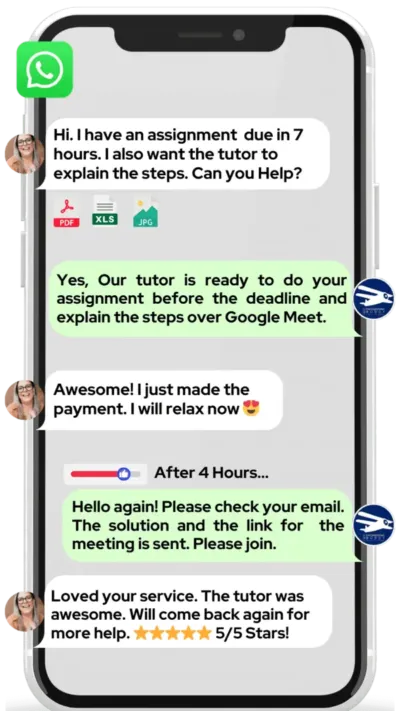
Unlike platforms where you fill out a form and wait, MEB responds in under a minute, 24/7. Tutor match takes under an hour. The $1 trial means you test before you commit. Everything runs over WhatsApp — no logins, no intake forms.
Pricing Guide
SolidCAM tutoring starts at $20/hr for standard module-level work. Advanced iMachining, simultaneous 5-axis, and post-processor customisation sessions typically run $60–$100/hr depending on the tutor’s industry background and the specificity of your project.
Rate factors include: your course level, the complexity of the operations involved, how close your deadline is, and tutor availability during peak submission periods.
For students targeting roles at precision manufacturers, aerospace firms, or graduate-level manufacturing programmes, tutors with professional CNC programming and CAM engineering backgrounds are available at higher rates — share your specific goal and MEB will match the tier to your ambition.
Start with the $1 trial — 30 minutes, no registration, no commitment. WhatsApp MEB for a quick quote.
Try your first session for $1 — 30 minutes of live 1:1 tutoring or one homework question explained in full. No registration. No commitment. WhatsApp MEB now and get matched within the hour.
FAQ
Is SolidCAM hard to learn?
SolidCAM is manageable once you understand the underlying machining logic. The software itself is structured — the difficulty is knowing why you’re making each toolpath decision, not just where to click. Most students hit the wall at iMachining or multi-axis setup, not the basic 2.5D operations.
How many sessions will I need?
For a single project troubleshooting issue — typically 2–4 sessions. For a full module covering 2.5D, iMachining, and multi-axis operations from scratch — expect 10–20 hours. The tutor sets a realistic plan after the first diagnostic session.
Can you help with SolidCAM project and portfolio work?
MEB provides guided learning support. The tutor explains the toolpath logic, walks through the simulation error, or demonstrates the correct parameter setup — you make the changes and submit your own work. See our Policies page for details.
Will the tutor match my exact course module or software version?
Yes. MEB matches tutors based on your specific SolidCAM version, the operations your module covers, and your project brief. Tutors are not assigned generically — the match is made on the specifics you share when you first contact MEB.
What happens in the first session?
The tutor asks you to share your SolidCAM file or replicate an operation live. This immediately shows where the gap is — CAD integration, toolpath logic, simulation, or post-processing. The rest of the session addresses the most pressing issue and sets the plan for remaining sessions.
Is online SolidCAM tutoring as effective as in-person?
For a software-based subject like SolidCAM, online is often more practical. Screen sharing means the tutor sees your exact file, your exact error, and your exact settings. There’s no delay replicating a physical setup. Google Meet with pen-pad annotation gives the same level of detail as sitting side by side.
What’s the difference between SolidCAM and Mastercam — and does MEB cover both?
SolidCAM runs natively inside SolidWorks; Mastercam is a standalone platform. Both generate CNC toolpaths but have different interfaces, post-processors, and workflow conventions. MEB covers both — if you’re switching between platforms, mention that when you first contact MEB so the tutor match reflects it.
Can MEB help me set up a post-processor for a specific CNC machine?
Yes. Post-processor setup and G-code output verification are covered. Share your machine controller type (Fanuc, Siemens, Haas, Mazak) when you contact MEB — the tutor match will prioritise experience with that specific controller where possible.
Can I get SolidCAM help at short notice — even late at night?
MEB operates 24/7 across time zones. WhatsApp response time averages under a minute. If your project is due in 48 hours, contact MEB now — tutors in compatible time zones can often start within the same day.
Do you offer group SolidCAM sessions?
MEB is built around 1:1 sessions. Group sessions are not offered — the whole point is that the tutor focuses entirely on your file, your errors, and your deadline. Splitting that attention defeats the purpose.
How do I get started?
Three steps: WhatsApp MEB with your SolidCAM version, the operation you’re stuck on, and your deadline. MEB matches you with a verified tutor — usually within the hour. Your first session is the $1 trial: 30 minutes live or one full problem explained.
What if my SolidCAM issue is very niche — like SwissCAM or SolidCAM for Inventor?
Contact MEB regardless. SwissCAM (multi-spindle Swiss-type turning), Mill-Turn, and SolidCAM integrations beyond the standard SolidWorks environment are covered where specialist tutors are available. Share the exact module and machine type — MEB will confirm availability before the trial.
MEB has covered Mechanical Engineering software tools — including SolidCAM, Finite Element Analysis, and Simulink — continuously since 2008, across 2,800+ engineering subjects and 52,000+ students worldwide.
Source: My Engineering Buddy, 2008–2025.
Trust & Quality at My Engineering Buddy
Every MEB tutor goes through a structured vetting process: subject-area assessment, a live demo session reviewed by MEB, and ongoing feedback monitoring tied to student outcomes. Tutors covering SolidCAM are required to demonstrate hands-on CAM experience — not just academic familiarity with machining theory. Rated 4.8/5 across 40,000+ verified reviews on Google.
MEB provides guided learning support. All project work is produced and submitted by the student. See our Policies page for details. For a full picture of how MEB operates and why students choose it over other platforms, read Why MEB.
MEB has served students across the US, UK, Canada, Australia, the Gulf, and Europe in 2,800+ subjects since 2008. In Mechanical Engineering specifically — covering SolidCAM, Finite Element Method, and Design of Machine Elements — the platform has built a deep pool of tutors with both academic and industry backgrounds. That depth is what makes specialist matches possible, even for niche topics like 5-axis post-processing or SwissCAM.
A common pattern our tutors observe is that students who struggle with SolidCAM have no problem with the SolidWorks CAD side — the breakdown is always at the point where machining knowledge should inform the software decision, and it doesn’t. That’s a teaching gap, not a software gap.
Explore Related Subjects
Students studying SolidCAM often also need support in:
- COMSOL Multiphysics
- Computational Mechanics
- Solid Edge
- LS-DYNA
- Nastran
- Rapid Prototyping
- Product Lifecycle Management (PLM)
Next Steps
Getting started takes under two minutes.
- Share your SolidCAM version, the operation or module you’re stuck on, and your submission deadline
- Share your availability and time zone
- MEB matches you with a verified tutor — usually within the hour
- Your first session opens with a diagnostic so every subsequent minute is used efficiently
Before your first session, have ready: your course outline or project brief, a screenshot or file of the SolidCAM operation giving trouble, and your deadline date. The tutor handles the rest.
Visit www.myengineeringbuddy.com for more on how MEB works.
WhatsApp to get started or email [email protected].
52,000+ Happy Students From Various Universities



Reviewed by Subject Expert
This page has been carefully reviewed and validated by our subject expert to ensure accuracy and relevance.

