Hire Verified & Experienced
Molecular engineering Tutors
Email: [email protected]
4.8/5 40K+ session ratings collected on the MEB platform



Hire The Best Molecular engineering Tutor
Top Tutors, Top Grades. Without The Stress!
Most students who struggle with molecular engineering don’t have a knowledge gap — they have a scale gap. The math works on paper. The chemistry makes sense in isolation. But designing functional matter at the nanoscale requires both simultaneously, and that’s where things fall apart.
Molecular Engineering Tutor Online
Molecular engineering is a discipline at the intersection of chemistry, physics, and materials science focused on designing, manipulating, and assembling molecules to build functional structures and devices — typically at the nanoscale — for applications in computing, medicine, and advanced materials.
If you’re searching for a molecular engineering tutor near me, MEB offers 1:1 online tutoring and homework help across the full breadth of chemical engineering — including molecular engineering at undergraduate, graduate, and research levels. You get a tutor who knows the specific course framework you’re working in, whether that’s a graduate module, a senior elective, or a research-adjacent course in nanotechnology or biomolecular design. No guarantees of specific outcomes, but the method is structured and the tutors are vetted.
- 1:1 online sessions tailored to your specific course and syllabus
- Expert-verified tutors with subject-specific knowledge in molecular-scale design and fabrication
- Flexible time zones — US, UK, Canada, Australia, Gulf
- Structured learning plan built after a diagnostic session
- Ethical homework and assignment guidance — you understand before you submit
52,000+ students across the US, UK, Canada, Australia, and the Gulf have used MEB since 2008 — including students in Chemical Engineering subjects like molecular engineering, electrochemical engineering, and reaction engineering.
Source: My Engineering Buddy, 2008–2025.
How Much Does a Molecular Engineering Tutor Cost?
Most molecular engineering tutoring sessions run $20–$40/hr at undergraduate level. Graduate and research-level sessions with specialist tutors can reach $100/hr depending on topic depth. You can test the match with a $1 trial before committing to regular sessions.
| Level / Need | Typical Rate | What’s Included |
|---|---|---|
| Undergraduate (most levels) | $20–$35/hr | 1:1 sessions, homework guidance |
| Graduate / Specialist | $35–$100/hr | Expert tutor, niche depth, research-level support |
| $1 Trial | $1 flat | 30 min live session or 1 homework question explained in full |
Tutor availability tightens during end-of-semester crunch periods. Book early if you have a fixed deadline.
WhatsApp MEB for a quick quote — average response time under 1 minute.
Who This Molecular Engineering Tutoring Is For
Molecular engineering sits at the edge of what most undergraduate curricula prepare you for. It pulls from quantum mechanics, thermodynamics, surface chemistry, and materials science — often in the same problem set. Students tend to struggle not because any one concept is impossible, but because the integrative demand is high.
- Undergraduates in chemical engineering, materials science, or chemistry hitting molecular-scale design for the first time
- Graduate students working on nanotechnology, drug delivery systems, or molecular electronics who need conceptual grounding alongside research
- Students retaking after a failed first attempt at a molecular engineering or nanomaterials module
- Students with a conditional university offer that depends on passing this module
- PhD candidates preparing for qualifying exams that include molecular design or self-assembly topics
- Students needing structured separation processes or transport phenomena grounding that feeds directly into molecular engineering coursework
Students who’ve worked through MIT OpenCourseWare or standard chemical engineering sequences at universities including Caltech, ETH Zurich, Imperial College London, MIT, Carnegie Mellon, and the University of Toronto often find molecular engineering demands a different mode of thinking. MEB tutors work within your specific course structure.
1:1 Tutoring vs Self-Study vs AI vs YouTube vs Online Courses
Self-study works if you have strong prerequisites and time — but molecular engineering rarely forgives gaps in quantum chemistry or statistical mechanics. AI tools give fast answers; they can’t watch you set up a Hamiltonian wrong and redirect you. YouTube covers molecular orbital theory and LCAO at a survey level — not your specific problem set. Online courses are paced for the average student, not for your exam date. With a 1:1 molecular engineering tutor from MEB, every session is calibrated to exactly where your understanding breaks down — whether that’s intermolecular force modelling, self-assembly thermodynamics, or MEMS fabrication constraints.
Outcomes: What You’ll Be Able To Do in Molecular Engineering
After working through a structured sequence with an MEB tutor, students report meaningful gains in both problem-solving confidence and technical execution. You’ll be able to apply quantum mechanical principles to predict and explain the electronic properties of molecular systems. You’ll be able to analyse intermolecular forces and use that analysis to design molecules with target properties — solubility, reactivity, mechanical response. You’ll be able to model self-assembly processes using thermodynamic and kinetic frameworks. You’ll be able to explain nanofabrication methods including lithography, thin-film deposition, and molecular beam epitaxy at the level expected in graduate vivas and advanced course exams. You’ll be able to present and defend your reasoning on molecular design problems, not just arrive at the answer.
Based on feedback from 40,000+ sessions collected by MEB from 2022 to 2025, 58% of students improved by one full grade after approximately 20 hours of 1:1 tutoring in subjects like molecular engineering. A further 23% achieved at least a half-grade improvement.
Source: MEB session feedback data, 2022–2025.
Try your first session for $1 — 30 minutes of live 1:1 tutoring or one homework question explained in full. No registration. No commitment. WhatsApp MEB now and get matched within the hour.
What We Cover in Molecular Engineering (Syllabus / Topics)

Track 1: Quantum and Electronic Foundations
- Wave-particle duality and the Schrödinger equation applied to molecular systems
- Molecular orbital theory, LCAO, and hybridisation
- Electronic structure methods: Hartree-Fock, DFT fundamentals
- Band theory and electronic properties of molecular conductors and semiconductors
- Spectroscopic methods for characterising molecular structure (UV-Vis, IR, NMR basics)
- Quantum confinement effects in nanostructures — quantum dots and nanowires
Core texts for this track include Levine’s Quantum Chemistry, Atkins’ Physical Chemistry, and Szabo & Ostlund’s Modern Quantum Chemistry.
Track 2: Molecular Design and Self-Assembly
- Intermolecular forces: van der Waals, hydrogen bonding, hydrophobic interactions
- Thermodynamics and kinetics of self-assembly — micelle formation, monolayer growth
- Supramolecular chemistry: host-guest systems, molecular recognition, rotaxanes and catenanes
- Polymer architecture at the molecular scale — block copolymers, dendrimers
- Biomolecular engineering: protein folding principles, DNA origami, engineered peptides
- Electrochemistry applied to molecular surfaces and redox-active molecular devices
Key references include Lehn’s Supramolecular Chemistry, Whitesides’ published work on self-assembly, and Jones’ Soft Condensed Matter.
Track 3: Nanofabrication and Device Applications
- Top-down fabrication: photolithography, electron beam lithography, etching techniques
- Bottom-up fabrication: molecular beam epitaxy, chemical vapour deposition, ALD
- Scanning probe microscopy — STM and AFM for molecular characterisation and manipulation
- MEMS and NEMS: design constraints, actuation mechanisms, molecular-scale integration
- Molecular electronics: single-molecule conductance, molecular switches and memory
- Biomedical applications: targeted drug delivery nanocarriers, molecular biosensors
Recommended texts include Poole & Owens’ Introduction to Nanotechnology and Ratner & Ratner’s Nanotechnology: A Gentle Introduction to the Next Big Idea.
What a Typical Molecular Engineering Session Looks Like
The tutor opens by checking where you left off — often that means revisiting a self-assembly thermodynamics problem or a DFT calculation that didn’t converge last time. From there, you and the tutor work through new material on screen: the tutor uses a digital pen-pad to draw molecular orbital diagrams, sketch nanofabrication process flows, or annotate your homework working in real time. You attempt problems yourself — the tutor watches for where your reasoning drifts, particularly on topics like quantum confinement scaling or intermolecular force trade-offs in molecular design. You then explain your reasoning back, which is where most conceptual gaps surface. The session closes with a specific practice task — a problem set section, a derivation to attempt cold, or a paper to read with guided questions — and the next topic is noted so you’re not starting blind next time.
How MEB Tutors Help You with Molecular Engineering (The Learning Loop)
Diagnose: In the first session, the tutor runs a short diagnostic — not a formal test, but a guided conversation and one or two worked problems. The goal is to locate exactly where your understanding breaks down: is it the quantum mechanical foundation, the thermodynamic framework for self-assembly, or the fabrication process logic? That shapes everything that follows.
Explain: The tutor works through problems live using a digital pen-pad — drawing orbital diagrams, walking through Gibbs free energy calculations for self-assembly, or tracing a nanofabrication sequence step by step. Nothing is left to “you’ll figure it out.”
Practice: You attempt problems with the tutor present. This is deliberate — the tutor needs to see your working, not just your answer. A wrong answer with correct reasoning is a different problem than a wrong answer from a fundamental misunderstanding.
At MEB, we’ve found that the biggest gains in molecular engineering come not from re-reading notes, but from students attempting problems under light pressure with a tutor who can interrupt the moment a reasoning error takes hold. That’s hard to replicate with any other format.
Feedback: The tutor identifies exactly where marks were lost or reasoning broke down — not just “that’s wrong” but why the molecular orbital argument doesn’t hold, or why the self-assembly calculation is missing an entropy term. This step is where understanding solidifies.
Plan: At the end of each session, the tutor maps the next topic, sets a practice task, and notes what to prioritise before the next meeting. This keeps progression intentional rather than reactive.
Sessions run over Google Meet. The tutor uses a digital pen-pad or iPad with Apple Pencil. Before your first session, share your course syllabus or module outline, a recent problem set or assignment you found difficult, and your exam or submission date. Start with the $1 trial — 30 minutes of live tutoring that also serves as your first diagnostic.
Molecular engineering tutoring works best when the session is built around your actual course material — not a generic nanoscience overview. MEB tutors ask for your syllabus before session one so the first hour is targeted, not exploratory.
Source: My Engineering Buddy, 2008–2025.
Tutor Match Criteria (How We Pick Your Tutor)
Not every chemical engineer can tutor molecular engineering. MEB matches on specifics.
Subject depth: Tutors are vetted for the specific level and content area — quantum foundations, supramolecular chemistry, or nanofabrication — not just for a general chemistry background. Tools: Every tutor uses Google Meet with a digital pen-pad or iPad and Apple Pencil — essential for drawing molecular structures and derivations live. Time zone: Matched to your region across US, UK, Gulf, Canada, and Australia. Goals: Whether you need to pass a graduate qualifying exam, close homework gaps week by week, or build conceptual depth for a research project, the tutor match reflects your actual objective.
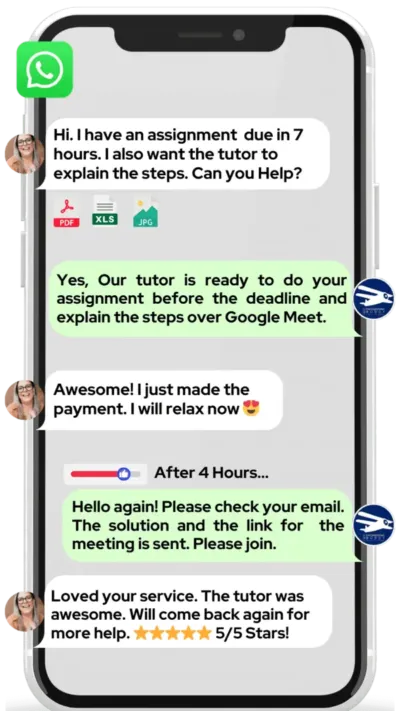
Unlike platforms where you fill out a form and wait, MEB responds in under a minute, 24/7. Tutor match takes under an hour. The $1 trial means you test before you commit. Everything runs over WhatsApp — no logins, no intake forms.
Study Plans (Pick One That Matches Your Goal)
A catch-up plan (1–3 weeks) is built for students with immediate gaps — a problem set due, an exam approaching, or a specific topic that’s been unclear for weeks. Exam prep over 4–8 weeks works through the syllabus systematically, with mock problems and review checkpoints. Ongoing weekly support stays aligned to your semester schedule, picking up new topics as your course moves forward. For students in research-adjacent molecular engineering work — dissertation chapters, qualifying exam prep, or literature review support — the tutor maps a bespoke sequence after the first diagnostic. The plan is built around your timeline, not a generic schedule.
Pricing Guide
Molecular engineering tutoring runs $20–$40/hr for most undergraduate modules. Graduate-level sessions, particularly those involving computational chemistry methods or advanced nanofabrication, reach $35–$100/hr depending on tutor specialisation and topic complexity. Rate factors include your level, how niche the topic is, your timeline, and tutor availability.
For students targeting positions at research institutions, doctoral programmes at top engineering schools, or roles at semiconductor or biotech firms requiring molecular-scale design knowledge, tutors with active research or industry backgrounds are available at higher rates — share your specific goal and MEB will match the tier to your ambition.
Availability tightens during end-of-semester and qualifying exam periods. Start with the $1 trial — 30 minutes, no registration, no commitment. WhatsApp MEB for a quick quote.
FAQ
Is molecular engineering hard?
Yes — it integrates quantum mechanics, thermodynamics, and materials science simultaneously. Most students find the conceptual load higher than standard chemical engineering modules. Gaps in physical chemistry or quantum basics make it significantly harder, which is why a diagnostic session helps.
How many sessions are needed?
Students closing specific gaps before an exam typically need 6–10 sessions. Those building understanding from scratch across a full module usually work over 15–25 hours. Your tutor maps a realistic sequence after the first diagnostic so you’re not guessing.
Can you help with homework and assignments?
Yes. MEB tutoring is guided learning — you understand the work, then submit it yourself. The tutor explains the method, walks through similar problems, and helps you identify where your reasoning is going wrong. See our Academic Integrity policy and Why MEB page for full details on what we help with and what we don’t.
Will the tutor match my exact syllabus or exam board?
Yes. Share your course outline or module guide before the first session. MEB tutors work within your specific course framework — not a generic molecular engineering overview — so sessions are targeted from the start.
What happens in the first session?
The tutor runs a short diagnostic using guided questions and one or two worked problems to identify exactly where understanding breaks down. The session plan for subsequent sessions is built from that starting point, not from a generic template.
Is online tutoring as effective as in-person?
For molecular engineering, online tutoring with a digital pen-pad is comparably effective to in-person for most students. The tutor can draw molecular diagrams, annotate your working, and share computational outputs in real time. The limiting factor is your preparation — not the format.
Can you help with molecular dynamics simulations and computational tools like GROMACS or LAMMPS?
Yes. MEB has tutors with hands-on experience in molecular dynamics simulation packages including GROMACS and LAMMPS. Whether you need help with force field selection, system setup, output analysis, or interpreting radial distribution functions, share your specific software and task when you contact MEB.
What’s the difference between molecular engineering and nanotechnology — and does it matter for tutoring?
The terms overlap but aren’t identical. Molecular engineering emphasises design and synthesis logic from a chemical and physical standpoint; nanotechnology is broader and includes device fabrication and systems integration. For tutoring, what matters is your specific course content — share your syllabus and MEB matches accordingly.
Do you offer group molecular engineering sessions?
No. MEB sessions are 1:1 only. The subject is too technically specific for group formats to work well — the tutor needs to track one student’s reasoning, not manage multiple threads simultaneously. Private sessions also keep your progress and course material confidential.
Can I get molecular engineering help at short notice — including late at night?
Yes. MEB operates 24/7 across time zones. WhatsApp response time averages under a minute. If you have a submission due in 24 hours or need to work through a problem set late at night, contact MEB directly and a match will be arranged as quickly as possible.
How do I get started?
Three steps: WhatsApp MEB with your subject, level, and deadline. MEB matches you with a verified tutor — usually within the hour. Start with the $1 trial: 30 minutes of live tutoring or one full homework question explained from start to finish.
Students consistently tell us that the hardest part of molecular engineering isn’t any single concept — it’s the moment two concepts from different courses suddenly need to work together in one problem. That’s the transition a good tutor prepares you for deliberately.
Trust & Quality at My Engineering Buddy
MEB tutors go through a multi-stage screening process: application review, subject knowledge assessment, a live demo session evaluated by MEB staff, and ongoing feedback review based on student ratings. Tutors hold relevant degrees and, at graduate and research levels, often have active or recent professional or research experience in nanoscale engineering, materials science, or computational chemistry. Rated 4.8/5 across 40,000+ verified reviews on Google.
MEB tutoring is guided learning — you understand the work, then submit it yourself. For full details on what we help with and what we don’t, read our Academic Integrity policy and Why MEB.
MEB has been serving students across the US, UK, Canada, Australia, the Gulf, and Europe in 2,800+ subjects since 2008. In Chemical Engineering, that includes molecular engineering and closely related subjects like energy and mass balance tutoring and chemical process safety help. The platform is built for advanced and specialist subjects — not just the common ones. See our tutoring methodology for how sessions are structured from diagnostic to close.
Our experience across thousands of sessions shows that students who share their course syllabus before session one make faster progress than those who arrive without context. It takes two minutes to send a module guide and saves the first 20 minutes of the session.
Explore Related Subjects
Students studying molecular engineering often also need support in:
- Aspen HYSYS
- Aspen Plus
- Combustion Engineering
- Food Biotechnology
- OpenFOAM
- Chemical Process Calculation, Control & Equipment Design
Next Steps
Share your exam board or course outline, the topics giving you the most trouble, and your current deadline or exam date. Share your availability and time zone. MEB matches you with a verified molecular engineering tutor — usually within 24 hours, often faster.
Before your first session, have ready:
- Your syllabus or course outline (or the specific module guide)
- A recent problem set, past paper attempt, or homework you struggled with
- Your exam date, submission deadline, or research milestone
The tutor handles the rest. First session starts with a diagnostic so every minute is used well.
Visit www.myengineeringbuddy.com for more on how MEB works.
WhatsApp to get started or email [email protected].
52,000+ Happy Students From Various Universities



How Much For Private 1:1 Tutoring & Hw Help?
Private 1:1 Tutoring and HW help Cost $20 – 35 per hour* on average.
Reviewed by Subject Expert
This page has been carefully reviewed and validated by our subject expert to ensure accuracy and relevance.