~1 min
Average Reply Time
~1 hour
To Be Matched With A Tutor
30 Min Trial
75% Find Their Tutor On The 1st Trial
$20-35+/hr
Premium Yet Affordable Learning
Hire The Best Sanskrit Tutor

Most students who fail Sanskrit don’t lack effort — they lack someone who can explain Panini’s grammar system in plain terms before the exam in three weeks.
Sanskrit Tutor Online
Sanskrit is a classical Indo-European language of ancient South Asia, foundational to linguistics, religious studies, and classical literature. Learners master Devanagari script, Paninian grammar, and translation of primary texts across academic and theological programmes.
MEB connects you with a 1:1 online Sanskrit tutor near me or wherever you are — US, UK, Canada, Australia, or the Gulf. Our language tutoring covers everything from Devanagari basics to advanced grammatical analysis of Vedic and Classical Sanskrit. Whether you are working through a university course, a seminary programme, or an independent reading project, MEB matches you with a tutor who knows the syllabus and can explain it clearly. No guarantees — but students who show up consistently make real progress.
- 1:1 online sessions tailored to your course or syllabus
- Expert-verified tutors with subject-specific knowledge of Sanskrit grammar and texts
- Flexible time zones — US, UK, Canada, Australia, Gulf
- Structured learning plan built after a diagnostic session
- Ethical homework and assignment guidance — you understand before you submit
52,000+ students across the US, UK, Canada, Australia, and the Gulf have used MEB since 2008 — including students in Language subjects like Sanskrit, Latin tutoring, and Ancient Greek tutoring.
Source: My Engineering Buddy, 2008–2025.
How Much Does a Sanskrit Tutor Cost?
Most Sanskrit tutoring sessions run $20–$40/hr. Advanced work — graduate-level text analysis, Vedic metre, or specialist philosophical commentary — can reach $70/hr. The $1 trial gets you 30 minutes of live tutoring or a full explanation of one homework question.
| Level / Need | Typical Rate | What’s Included |
|---|---|---|
| Introductory / Undergraduate | $20–$35/hr | 1:1 sessions, grammar, script, translation guidance |
| Advanced / Graduate / Vedic | $35–$70/hr | Expert tutor, specialist texts, philosophical commentary |
| $1 Trial | $1 flat | 30 min live session or one homework question explained |
Tutor availability tightens during end-of-semester submission periods. Book early if you have a specific deadline.
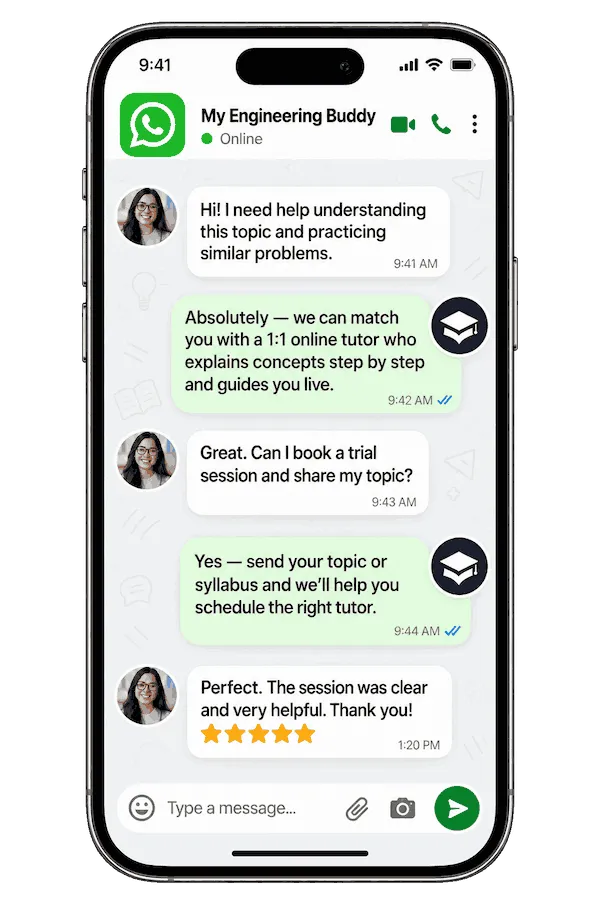
WhatsApp MEB for a quick quote — average response time under 1 minute.
Who This Sanskrit Tutoring Is For
Sanskrit attracts an unusually wide range of students. Some are working through a university classics or religious studies programme; others are reading primary texts independently. Most share one problem: the grammar is unlike anything they have studied before.
- Undergraduate students in classical languages, religious studies, or South Asian studies
- Graduate students analysing Vedic, Epic, or Classical Sanskrit primary sources
- Seminary and theology students reading Sanskrit philosophical or ritual texts
- Students with a university conditional offer depending on their language module grade
- Parents watching a child’s confidence drop alongside their grades in a classical language course
- Independent learners working through a reading project without institutional support
Students from programmes at institutions including Oxford, Cambridge, Harvard, Yale, the University of Toronto, the University of Sydney, and Leiden University have used MEB for Sanskrit support. If your programme involves Sanskrit — even as one module — a tutor who knows the grammar system saves weeks of confusion.
1:1 Tutoring vs Self-Study vs AI vs YouTube vs Online Courses
Self-study works if you are already disciplined and have a strong grammar background — most students are not and do not. AI tools explain rules quickly but cannot catch the specific error pattern in your declension tables or read your translation attempt in real time. YouTube covers Devanagari script and basic conjugations well; it stops being useful the moment you hit a compound or an irregular sandhi rule. Online courses are structured but move at a fixed pace with no one watching your mistakes. With 1:1 Sanskrit tutoring through MEB, the tutor sees exactly where your parse breaks down — whether that is a Bahuvrīhi compound, a passive construction in the Ashtadhyayi tradition, or an irregular verb in the Rigveda — and corrects it before the pattern gets embedded.
Outcomes: What You’ll Be Able To Do in Sanskrit
After consistent 1:1 work, students can parse and translate unseen Classical Sanskrit prose with confidence, apply Paninian sandhi rules correctly in both directions, analyse the grammatical structure of Vedic hymns without relying on transliteration, write compound formations accurately for academic submission, and explain the syntactic differences between Epic and Classical Sanskrit to a standard that holds up in an oral examination or written commentary.
Try your first session for $1 — 30 minutes of live 1:1 tutoring or one homework question explained in full. No registration. No commitment. WhatsApp MEB now and get matched within the hour.
Based on feedback from 40,000+ sessions collected by MEB from 2022 to 2025, 58% of students improved by one full grade after approximately 20 hours of 1:1 tutoring in subjects like Sanskrit. A further 23% achieved at least a half-grade improvement.
Source: MEB session feedback data, 2022–2025.
Supporting a student through Sanskrit? MEB works directly with parents to set up sessions, track progress, and keep coursework on schedule. WhatsApp MEB — average response time is under a minute, 24/7.
What We Cover in Sanskrit (Syllabus / Topics)

Classical Sanskrit Grammar
- Devanagari script: reading, writing, and transliteration conventions
- Nominal declension: all eight cases across masculine, feminine, and neuter stems
- Verbal system: present, imperfect, perfect, aorist, future, and optative
- Sandhi rules: internal and external, vowel and consonant
- Compound formation: Dvandva, Tatpurusha, Bahuvrīhi, Avyayibhava
- Participial constructions and the passive voice
- Syntax of complex sentences and relative clauses
Key texts: Sanskrit: An Introduction to the Classical Language by Michael Coulson; A Sanskrit Grammar by William Dwight Whitney; The Sanskrit Language by Thomas Burrow.
Vedic Sanskrit and Primary Texts
- Phonological differences between Vedic and Classical Sanskrit
- Accent (svara) in the Rigveda and its grammatical significance
- Reading selections from the Rigveda, Atharvaveda, and Upanishads
- Paninian grammar as applied to Vedic forms
- Ritual and cosmological vocabulary in the Brahmanas
- Comparative Indo-European context: cognates with Greek and Latin
Key texts: Vedic Grammar by Arthur A. Macdonell; A Vedic Grammar for Students by Macdonell; The Rigveda: The Earliest Religious Poetry of India (Jamison and Brereton translation).
Epic and Classical Literature
- Reading selections from the Mahabharata and Ramayana in original Sanskrit
- Kalidasa: Shakuntala and Meghaduta — grammar, metre, and literary analysis
- Prose literature: Panchatantra and Hitopadesa
- Classical metre (chandas): Anustubh, Indravajra, Mandakranta
- Philosophical Sanskrit: Bhagavad Gita, Yoga Sutras grammatical analysis
- Translation methodology: literal versus literary approaches for academic submission
Key texts: A Sanskrit Primer by Edward Perry; Classical Sanskrit Literature by A.B. Keith; The Bhagavad Gita with commentary (choose board-recommended edition).
What a Typical Sanskrit Session Looks Like
The tutor opens by checking the previous session’s topic — usually a specific declension paradigm or a sandhi exercise set as practice. The student shares their attempt on screen. The tutor works through it on a digital pen-pad, marking exactly where the case ending or vowel merger went wrong and why. Then the session moves into new material: if the week’s focus is Bahuvrīhi compounds, the tutor writes five examples in Devanagari, explains the internal logic, and asks the student to parse two more unprompted. The student attempts it live. Errors get corrected immediately, not a week later when the habit is already set. The session closes with a clear task — three unseen compound forms to parse, or ten lines of the Panchatantra to translate — and the next topic is named so the student knows exactly what to prepare.
How MEB Tutors Help You with Sanskrit (The Learning Loop)
Diagnose: In the first session, the tutor asks the student to read a short passage aloud in Devanagari, parse two nominal forms, and attempt one sandhi reversal. That takes fifteen minutes and tells the tutor everything — whether the issue is script fluency, case-ending confusion, verb roots, or compound analysis.
Explain: The tutor works through the rule live on a digital pen-pad. No slides. No recording to pause-and-rewind. The student asks questions in real time, and the explanation adjusts immediately to where the confusion actually is rather than where the textbook assumes it is.
Practice: The student attempts a new example with the tutor present. This is the step most self-study plans skip. Attempting problems alone after a lesson is not the same as attempting them under observation, where hesitation is visible and addressed on the spot.
Feedback: The tutor explains not just the correct answer but why the student’s version was wrong — which rule was misapplied, what the correct paradigm looks like, and how many marks that error would cost in an assessed translation.
Plan: Every session ends with the next topic identified and a specific task set. The tutor tracks progress across sessions, adjusting the pace when a student is close to a submission deadline.
Sessions run on Google Meet. The tutor uses a digital pen-pad or iPad with Apple Pencil to write Sanskrit directly on screen. Before your first session, have your course outline or syllabus, a recent homework attempt, and your submission or exam date ready. The first session covers diagnostic work and the first gap identified — usually within the nominal or verbal system.
Start with the $1 trial — 30 minutes of live tutoring that also serves as your first diagnostic.
At MEB, we’ve found that Sanskrit students who struggle with translation almost always have one specific gap — usually sandhi or compound analysis — not a general weakness across the whole system. Identifying that one gap in the first session changes the entire trajectory of the work.
Tutor Match Criteria (How We Pick Your Tutor)
Not every language tutor can teach Sanskrit. MEB applies specific criteria before matching.
Subject depth: The tutor must have demonstrable knowledge of Classical Sanskrit grammar, Devanagari script, and at least one primary text tradition — Vedic, Epic, or philosophical. Graduate-level tutors handle advanced commentary and Vedic metre.
Tools: Every tutor uses Google Meet with a digital pen-pad or iPad and Apple Pencil — essential for writing Devanagari live on screen without switching to a keyboard layout.
Time zone: Matched to your region. A student in California does not get a tutor whose only availability is 3am local time.
Goals: Exam deadline, conceptual depth, coursework completion, or research-level text analysis — the tutor is matched to the actual goal, not a generic language profile.
Unlike platforms where you fill out a form and wait, MEB responds in under a minute, 24/7. Tutor match takes under an hour. The $1 trial means you test before you commit. Everything runs over WhatsApp — no logins, no intake forms.
Study Plans (Pick One That Matches Your Goal)
If you have a submission in one to three weeks, the tutor focuses immediately on your weakest component — usually sandhi reversal or unseen translation — and builds a session-by-session sequence to close that gap before the deadline. For a four-to-eight-week exam preparation window, the tutor maps the full syllabus, prioritises assessed components, and runs timed translation practice in the final two weeks. Ongoing weekly support follows your semester schedule, staying one step ahead of each new grammar unit or text assignment. The tutor sets the specific sequence after the first diagnostic session — not before.
Pricing Guide
Sanskrit tutoring starts at $20/hr for introductory and undergraduate-level work. Graduate and specialist rates — Vedic metre, philosophical commentary, comparative Indo-European linguistics — run $50–$100/hr depending on tutor expertise and topic complexity. Rate factors include the level of Sanskrit required, the specific text or grammar system, your timeline, and tutor availability.
For students targeting graduate programmes in classical languages, religious studies, or South Asian studies at institutions requiring reading proficiency in Sanskrit, tutors with research backgrounds in Sanskrit linguistics and Indology are available at higher rates — share your specific goal and MEB will match the tier to your programme requirements.
Availability tightens at end-of-semester periods. Book your first session early.
Start with the $1 trial — 30 minutes, no registration, no commitment. WhatsApp MEB for a quick quote.
Sanskrit is one of the world’s most precisely structured grammatical systems. Students who approach it as a puzzle to solve — rather than a vocabulary list to memorise — consistently make faster progress. The grammar rewards close attention.
Source: MEB tutor feedback, aggregated 2022–2025.
FAQ
Is Sanskrit hard to learn?
Sanskrit grammar is complex — eight cases, extensive verbal morphology, and sandhi rules that change word boundaries. Most students find it demanding but logical. A tutor who explains the system structurally, rather than making you memorise exceptions, makes a significant difference in the early stages.
How many sessions will I need?
For a specific exam or submission, 8–15 sessions over four to six weeks is typical. Students building reading proficiency from scratch usually need a longer run — 20 or more sessions. The first session diagnostic gives a more accurate estimate based on your actual starting point.
Can you help with Sanskrit homework and assignments?
Yes. MEB tutoring is guided learning — you understand the work, then submit it yourself. The tutor explains the grammar rule or translation problem, works through an example, and checks that you can apply it independently. See our Academic Integrity policy and Why MEB page for full details on what we help with and what we don’t.
Will the tutor match my exact syllabus or exam board?
Yes. Before matching, MEB asks for your course outline, institution, and the specific texts or grammar components being assessed. Tutors are matched on that basis — not assigned generically as language tutors.
What happens in the first session?
The tutor runs a short diagnostic: reading Devanagari, parsing nominal forms, and attempting a sandhi exercise. This identifies your actual gap within fifteen minutes. The session then moves directly into the most urgent material rather than starting from chapter one.
Is online Sanskrit tutoring as effective as in-person?
For Sanskrit specifically, it is. The digital pen-pad lets the tutor write Devanagari live on screen, mark up your translation attempt, and diagram compound structures in real time. Students consistently report that the visual, interactive format works well for a script-based classical language.
Can I get Sanskrit help at short notice — even late at night?
MEB operates 24/7 via WhatsApp. Tutors span multiple time zones, so late-night sessions in the US, UK, or Gulf are regularly available. Message MEB and a tutor can typically be matched and available within the hour.
What is the difference between Vedic and Classical Sanskrit, and does MEB cover both?
Vedic Sanskrit is older, uses a pitch accent system, and has more irregular forms than Classical Sanskrit. Classical Sanskrit — codified by Panini — is more regular and is the standard taught in most university courses. MEB covers both. Specify which tradition your course focuses on when you message.
Do you offer group Sanskrit sessions?
MEB’s format is 1:1 only. Group sessions are not available. The 1:1 structure is deliberate — Sanskrit errors are highly individual, and a group setting cannot address the specific declension or sandhi mistake a single student is making repeatedly.
What if I am learning Sanskrit for religious or personal reasons, not a university course?
MEB tutors work with independent learners reading the Bhagavad Gita, Yoga Sutras, or Vedic hymns for personal or religious study. Share your specific texts and goals when you contact MEB, and the tutor will build sessions around those rather than a standard academic syllabus.
How do I get started?
Message MEB on WhatsApp. Describe your course or text, your current level, and your deadline or goal. MEB matches you with a verified Sanskrit tutor — usually within the hour. The $1 trial covers 30 minutes of live tutoring or one homework question explained in full. Three steps: WhatsApp → matched → start trial.
Can a Sanskrit tutor help with Devanagari script if I am a complete beginner?
Yes. Several students start with no script knowledge at all. The tutor begins with Devanagari reading and writing before moving to grammar. Most students reach confident script reading within three to four sessions of focused practice.
Trust & Quality at My Engineering Buddy
Every MEB Sanskrit tutor goes through a subject-specific vetting process: a written grammar test, a live demo session evaluated by a subject lead, and an ongoing review based on student feedback. Tutors hold degrees in classical languages, linguistics, religious studies, or South Asian studies — or have demonstrable professional research experience in Sanskrit. Rated 4.8/5 across 40,000+ verified reviews on Google.
MEB tutoring is guided learning — you understand the work, then submit it yourself. For full details on what we help with and what we don’t, read our Academic Integrity policy and Why MEB.
MEB has been serving students across the US, UK, Canada, Australia, the Gulf, and Europe since 2008 — across 2,800+ subjects. Language is one of MEB’s strongest subject families, with tutors covering Sanskrit alongside Hindi tutoring, Arabic tutoring, and Persian tutoring. Students who need support in adjacent classical languages will find the same tutor-vetting standard applied across all of them.
Students who treat the first diagnostic session seriously — bringing a real homework attempt, not a blank page — get better tutor matches and faster results. The more specific you are about what is not working, the faster it gets fixed.
Source: MEB tutor feedback, aggregated 2022–2025.
Students consistently tell us that the biggest shift in Sanskrit learning comes not from more reading but from having errors corrected live. Reading alone, without feedback, embeds mistakes. One session of active correction often clears a confusion that weeks of solo study left untouched.
Explore Related Subjects
Students studying Sanskrit often also need support in:
Next Steps
Before your first session, have ready:
- Your course outline or the specific texts and grammar topics being assessed
- A recent translation attempt or homework question you struggled with
- Your exam date, submission deadline, or learning goal
Share your time zone and availability. MEB matches you with a verified Sanskrit tutor — usually within 24 hours, often faster. The first session starts with a diagnostic so every minute is used on what actually needs fixing.
Visit www.myengineeringbuddy.com for more on how MEB works.
WhatsApp to get started or email [email protected].
A common pattern our tutors observe is that Sanskrit students often know more than they think — they have read the rules, they understand the logic — but they have never had to apply them under scrutiny. That first session changes their confidence more than any amount of solo revision.
Reviewed by Subject Expert
This page has been carefully reviewed and validated by our subject expert to ensure accuracy and relevance.