




~1 min
Average Reply Time
~1 hour
To Be Matched With A Tutor
30 Min Trial
75% Find Their Tutor On The 1st Trial
$20-35+/hr
Premium Yet Affordable Learning
Most students hitting a wall in Ancient Greek are spending hours re-reading the same passage — and getting nowhere without live correction.
Ancient Greek Tutor Online
Ancient Greek is an ancient Indo-European language of classical antiquity, studied at undergraduate and postgraduate levels. It equips students to read primary texts in philosophy, history, and literature in the original language.
Finding a reliable Ancient Greek tutor near me used to mean hoping your university had office hours free. MEB changes that. Our 1:1 online tutoring and homework help in Ancient Greek connects you with expert tutors across US, UK, Canada, Australia, and the Gulf — matched to your exact course, whether that’s a first-year language module, a graduate seminar on Thucydides, or an independent reading of Plato. One outcome you can expect: fewer marks lost to morphology errors and more confidence reading unseen passages.
- 1:1 online sessions tailored to your course syllabus and set texts
- Expert-verified tutors with degrees in Classics, Ancient History, or Linguistics
- Flexible time zones — sessions available for students in the US, UK, Canada, Australia, and the Gulf
- Structured learning plan built after a diagnostic session
- Ethical homework and assignment guidance — you understand the work, then submit it yourself
52,000+ students across the US, UK, Canada, Australia, and the Gulf have used MEB since 2008 — including students in Language subjects like Ancient Greek, Latin tutoring, and Hebrew.
Source: My Engineering Buddy, 2008–2025.
How Much Does an Ancient Greek Tutor Cost?
Most Ancient Greek tutoring sessions run $20–$40/hr depending on your level and the complexity of the texts involved. Graduate-level work on epic poetry or Attic prose can reach up to $100/hr with specialist tutors. You can start with the $1 trial — 30 minutes of live 1:1 tutoring, no registration required.
| Level / Need | Typical Rate | What’s Included |
|---|---|---|
| Undergraduate (Introductory–Intermediate) | $20–$35/hr | 1:1 sessions, grammar drilling, translation guidance |
| Advanced / Graduate / Specialist Texts | $35–$100/hr | Expert tutor, literary analysis, unseen translation |
| $1 Trial | $1 flat | 30 min live session or one homework question explained |
Availability tightens at the start of spring and fall semesters. If you need a tutor matched before your next assignment deadline, don’t wait.
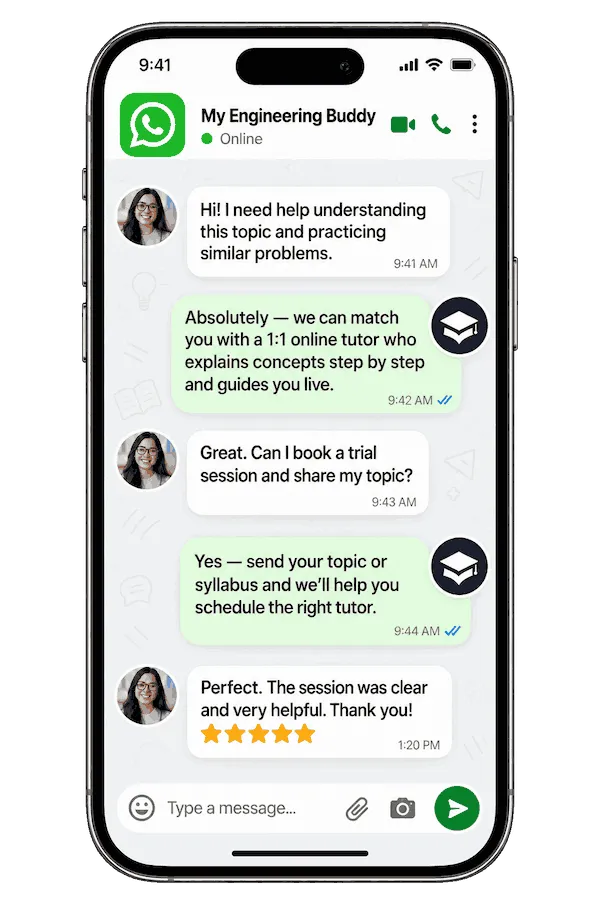
WhatsApp MEB for a quick quote — average response time under 1 minute.
Who This Ancient Greek Tutoring Is For
Ancient Greek has a steep learning curve — the morphology alone puts off students who might otherwise love the subject. This tutoring is built for people who haven’t given up but need structured help to move forward.
- Undergraduates in Classics, Ancient History, or Philosophy taking their first or second year Greek module
- Graduate students reading primary sources for dissertations on Plato, Aristotle, Thucydides, or the New Testament
- Students who failed their first attempt at a Greek translation exam and need to resit
- Students with a conditional university offer that depends on demonstrating reading competency
- Independent learners working through texts like the Iliad or Xenophon’s Anabasis without a formal course
- Parents whose child is enrolled in a classical education programme and is falling behind on declensions and verb conjugations
Students at Harvard, Oxford, Cambridge, Princeton, Columbia, Yale, and the University of Toronto have come to MEB for Ancient Greek support at every level from introductory grammar to doctoral reading lists.
Try the $1 trial if you’re not yet sure what level of support you need — the first session also serves as your diagnostic.
1:1 Tutoring vs Self-Study vs AI vs YouTube vs Online Courses
Self-study works if you have strong discipline and prior language experience — but Ancient Greek verb paradigms punish guesswork silently. AI tools generate plausible-sounding translations that can be subtly wrong in ways a beginner won’t catch. YouTube is useful for alphabet and basic forms; it stops dead when you’re parsing an aorist passive participle in Sophocles. Online courses move at a fixed pace that rarely matches your exam timeline. With a 1:1 Ancient Greek tutor online from MEB, every session is calibrated to your actual set texts, your current gaps, and your submission date — and errors get corrected before they calcify into habits.
Outcomes: What You’ll Be Able To Do in Ancient Greek
After consistent 1:1 sessions, students can parse and translate unseen passages at the level required for their course, explain the grammatical function of every word in a set text, write accurate commentary on epic or tragic metre, apply knowledge of Attic dialect forms to distinguish authorial style, and present close readings of philosophical argument in Plato or historical narrative in Herodotus. These are not generic outcomes — they are exactly what translation exams and seminar assessments test.
Based on feedback from 40,000+ sessions collected by MEB from 2022 to 2025, 58% of students improved by one full grade after approximately 20 hours of 1:1 tutoring in subjects like Ancient Greek. A further 23% achieved at least a half-grade improvement.
Source: MEB session feedback data, 2022–2025.
Supporting a student through Ancient Greek? MEB works directly with parents to set up sessions, track progress, and keep coursework on schedule. WhatsApp MEB — average response time is under a minute, 24/7.
Try your first session for $1 — 30 minutes of live 1:1 tutoring or one homework question explained in full. No registration. No commitment. WhatsApp MEB now and get matched within the hour.
What We Cover in Ancient Greek (Syllabus / Topics)

Track 1: Grammar and Morphology
- The Greek alphabet, pronunciation, and accent rules
- Noun declensions (1st, 2nd, 3rd) — case endings and their syntactic roles
- Verb conjugation: present, imperfect, aorist, perfect, future, pluperfect
- The full participle system — attributive, circumstantial, and genitive absolute
- Infinitives in indirect statement with verbs of saying and thinking
- Optative mood — use in conditionals, purpose clauses, and indirect speech
- Adjective agreement, comparison, and predicate position
Core texts: Hansen & Quinn Greek: An Intensive Course; Mastronarde Introduction to Attic Greek; Morwood & Taylor Oxford Grammar of Classical Greek.
Track 2: Translation and Set Texts
- Prose translation: Plato’s Apology, Xenophon’s Anabasis, Thucydides Book I
- Poetry translation: Homer’s Iliad and Odyssey (Books I–VI commonly set)
- Tragedy: Sophocles Oedipus Tyrannos, Euripides Medea — choral metre and dialect
- Unseen translation technique — reading for sense before parsing
- Commentary writing — identifying syntax, style, and rhetorical figures
- New Testament Greek (Koine) for theology and Biblical Studies students
Core texts: Balme & Lawall Athenaze; Joint Association of Classical Teachers Reading Greek; Mounce Basics of Biblical Greek.
Track 3: Literary and Historical Analysis
- Contextualising texts within 5th and 4th century BCE Athenian culture
- Philosophical argument structure in Socratic dialogues
- Historical methodology — how Thucydides and Herodotus construct their accounts
- Epic conventions: the invocation, in medias res opening, simile, epithets
- Metre: dactylic hexameter (Homer), iambic trimeter (tragedy)
- Comparing Attic and Ionic dialects across authors
Core texts: de Ste. Croix The Origins of the Peloponnesian War; Silk Sophocles: The Myth of Greek Tragedy; Griffin Homer on Life and Death.
At MEB, we’ve found that students who drill morphology and translation in the same session — rather than treating them as separate tasks — build speed much faster. Grammar only sticks when it’s tested against real text, not tables in isolation.
What a Typical Ancient Greek Session Looks Like
The tutor opens by checking the previous week’s work — usually a set passage from Plato or a Homer book that was partially translated as practice. You share your attempt on screen, and the tutor reads through it line by line. Where you’ve misread a participle or confused a 3rd declension genitive with a dative, the tutor pauses, writes out the correct parsing on a digital pen-pad, and has you explain the rule back in your own words. Mid-session moves into the new material — often an unseen passage from the same author — worked through together with the tutor narrating their own decision process in real time. You replicate that process independently on the final few lines. The session closes with a specific passage set for the next week and one grammatical pattern to review before then.
How MEB Tutors Help You with Ancient Greek (The Learning Loop)
Diagnose: In the first session, the tutor asks you to translate a short passage cold — usually 5–8 lines of Attic prose. The errors reveal exactly which verb forms or case endings are causing problems. That shapes the whole plan.
Explain: The tutor works through the correct analysis live, writing on a digital pen-pad so you can see each morphological step. No rushing. No assumptions about what you already know.
Practice: You attempt a new passage or set of forms with the tutor present. The tutor doesn’t step in immediately — they let you work, then intervene at the point of error before the wrong pattern settles.
Feedback: Every mistake gets an explanation, not just a correction. “You lost marks here because you read this as nominative — look at the accent and the context of the verb.” That’s the level of specificity MEB tutors work at.
Plan: The session closes with a clear next topic, a specific passage to translate, and an honest timeline for covering the remaining syllabus before your exam or submission date.
All sessions run over Google Meet with a digital pen-pad or iPad and Apple Pencil. Before your first session, have your course reading list or set texts ready, along with any marked work where you lost points. The first session doubles as your diagnostic — start with the $1 trial and let the tutor build the plan from there.
Ancient Greek demands two things at once: memorising the system and applying it under time pressure. MEB tutors teach both, drilling paradigms through real text so knowledge and speed build together — not sequentially.
Source: My Engineering Buddy, tutoring methodology overview.
Tutor Match Criteria (How We Pick Your Tutor)
Not every Ancient Greek tutor is right for every student. Here’s what MEB checks before matching.
Subject depth: Tutors hold degrees in Classics, Ancient Languages, Philosophy, or Theology — with demonstrable reading competency in Attic Greek, Homeric Greek, or Koine depending on your need.
Tools: Every tutor uses Google Meet and a digital pen-pad or iPad with Apple Pencil — essential for writing out declension tables and parsing sentences live.
Time zone: Matched to your location — whether you’re in the US, UK, Gulf, Canada, or Australia — so sessions happen at a time that doesn’t wreck your sleep schedule.
Goals: Whether your target is passing a translation exam, completing a dissertation chapter using primary sources, or building reading fluency for independent study, the tutor match reflects that specific aim.
Unlike platforms where you fill out a form and wait, MEB responds in under a minute, 24/7. Tutor match takes under an hour. The $1 trial means you test before you commit. Everything runs over WhatsApp — no logins, no intake forms.
Study Plans (Pick One That Matches Your Goal)
The tutor builds a specific sequence after the diagnostic session, but here are the three frameworks most Ancient Greek students fall into. Catch-up (1–3 weeks): for students behind on morphology or with a translation paper approaching — intensive grammar drilling combined with timed passage work. Exam prep (4–8 weeks): systematic coverage of set texts, unseen technique, and commentary practice tied to your exam date. Weekly support: ongoing sessions aligned to your semester reading list, covering new texts as they’re assigned and reinforcing grammar as new forms appear.
Pricing Guide
Ancient Greek tutoring starts at $20/hr for introductory and intermediate undergraduate work. Advanced courses, graduate seminars, and specialist dialect work (Homeric, Koine, Doric) run $35–$100/hr depending on tutor expertise and session complexity.
Rate factors include your current level, the complexity of the texts involved, how close your deadline is, and tutor availability. Rates rise slightly during peak semester periods when demand is highest.
For students targeting top Classics programmes at Oxford, Cambridge, Harvard, or Princeton, MEB can match you with tutors who have research or teaching backgrounds in ancient languages at the postgraduate level — share your specific goal and MEB will match the tier to your ambition.
Start with the $1 trial — 30 minutes, no registration, no commitment. WhatsApp MEB for a quick quote.
Students consistently tell us that the first session reframes the whole subject. Ancient Greek stops feeling like an impossible wall of endings and starts feeling like a system. That shift usually happens within 90 minutes of focused 1:1 work.
FAQ
Is Ancient Greek hard?
Ancient Greek is genuinely demanding — its three-gender noun system, complex verb conjugations, and accent rules require sustained effort. Most students find grammar difficult initially but progress quickly once a tutor identifies which specific patterns are causing errors.
How many sessions are needed?
Students closing specific grammar gaps before an exam typically need 8–12 sessions. Building sustained translation fluency from an intermediate level usually takes 20–30 hours across a semester. The tutor sets a realistic timeline after the diagnostic session.
Can you help with homework and assignments?
MEB tutoring is guided learning — you understand the work, then submit it yourself. If you’re stuck on a translation exercise or unseen passage, the tutor explains the grammatical logic so you can complete it accurately. See our Academic Integrity policy and Why MEB page for full details on what we help with and what we don’t.
Will the tutor match my exact syllabus or exam board?
Yes. MEB tutors work with specific course readers, set text lists, and university module outlines. Share your reading list and the tutor prepares around those exact texts — not a generic Ancient Greek syllabus.
What happens in the first session?
The tutor asks you to attempt a short cold translation — 5–8 lines of Attic prose. This reveals exactly which forms and constructions are causing problems. Everything from session two onward is built around those specific gaps.
Is online tutoring as effective as in-person?
For Ancient Greek, yes — parsing and translation work very well on screen when the tutor uses a digital pen-pad to write out morphological steps live. Most MEB students find the format more focused than in-person sessions, with less time lost to setup and travel.
Can you help me read the New Testament in the original Greek?
Yes. MEB tutors cover Koine Greek as well as Classical Attic. Students in theology, Biblical Studies, and religious history regularly use MEB for help reading the Gospels, Pauline epistles, and Septuagint in the original language.
What’s the difference between Attic Greek and Homeric Greek?
Attic is the dialect of 5th–4th century BCE Athens — Plato, Thucydides, Xenophon. Homeric Greek is an older literary dialect used in the Iliad and Odyssey, with different forms for certain verbs and nouns. Most university courses begin with Attic before introducing Homeric features. MEB tutors handle both.
Can I get Ancient Greek help at midnight?
Yes. MEB operates across time zones and tutors are available late evenings and early mornings for US, UK, Gulf, and Australian students. WhatsApp MEB at any hour — typical response is under a minute and a tutor can often be matched the same day.
Do you offer group Ancient Greek sessions?
MEB specialises in 1:1 tutoring only. Group sessions are not offered. The 1:1 format is what allows the tutor to target your specific grammar errors and set texts — something group teaching cannot replicate.
How do I find an Ancient Greek tutor in my city?
You don’t need to. All MEB sessions are online via Google Meet, which means location is irrelevant. Students in New York, London, Dubai, Toronto, and Sydney are all matched with the same pool of qualified tutors — availability and subject fit matter, not geography.
How do I get started?
WhatsApp MEB, share your course level and set texts, and get matched with a tutor — usually within the hour. Your first session is the $1 trial: 30 minutes of live tutoring or one homework question explained in full. Three steps: WhatsApp → matched → start trial.
Trust & Quality at My Engineering Buddy
Every MEB tutor in Ancient Greek holds a relevant degree — Classics, Ancient Languages, Philosophy, Theology, or a closely related field — and passes a subject-specific vetting process that includes a live demo evaluation. Tutors are reviewed after every session, and anyone falling below MEB’s quality threshold is removed from the platform. Rated 4.8/5 across 40,000+ verified reviews on Google.
MEB tutoring is guided learning — you understand the work, then submit it yourself. For full details on what we help with and what we don’t, read our Academic Integrity policy and Why MEB.
MEB has served 52,000+ students across the US, UK, Canada, Australia, the Gulf, and Europe since 2008, covering 2,800+ subjects. Within the Language category, MEB provides expert support in Ancient Greek alongside related subjects like Latin tutoring, Sanskrit help, and Greek teaching. See our tutoring methodology for how sessions are structured from diagnostic to exam readiness.
A common pattern our tutors observe is that students arriving with years of Latin find Ancient Greek morphology less intimidating — but the verb system still catches nearly everyone. Identifying which aspect of the verb is the real sticking point usually takes one session.
Explore Related Subjects
Students studying Ancient Greek often also need support in:
Next Steps
Before your first session, have ready: your exam board and syllabus or course outline, a recent translation attempt or passage you struggled with, and your exam or deadline date. The tutor handles the rest.
- Share your set texts, current level, and hardest component
- Share your availability and time zone
- MEB matches you with a verified tutor — usually within an hour
The first session starts with a cold translation diagnostic so every minute of your time is used well. Visit www.myengineeringbuddy.com for more on how MEB works.
WhatsApp to get started or email [email protected].
Reviewed by Subject Expert
This page has been carefully reviewed and validated by our subject expert to ensure accuracy and relevance.




