~1 min
Average Reply Time
~1 hour
To Be Matched With A Tutor
30 Min Trial
75% Find Their Tutor On The 1st Trial
$20-35+/hr
Premium Yet Affordable Learning
Three students failed their A Level Latin unseen translation in the same week. All three had revised. None had ever worked through a passage with someone who could catch their errors live.
Latin Tutor Online
A Latin tutor online provides 1:1 instruction in classical Latin language, literature, and translation — covering grammar, prose composition, verse reading, and set texts at GCSE, A Level, IB, AP, and undergraduate levels.
MEB connects you with a verified Latin tutor near me — or wherever you are — for live, one-to-one sessions built around your exact syllabus. Whether you are working through Caesar, Virgil, or Cicero, or struggling with ablative absolutes and indirect statement, your tutor adjusts to where you are right now. Our language tutoring programme covers 2,800+ subjects across the US, UK, Canada, Australia, and the Gulf. One session can change how a passage clicks.
- 1:1 online sessions tailored to your exact course and exam board
- Expert-verified tutors with subject-specific knowledge of Latin texts and grammar
- Flexible time zones — US, UK, Canada, Australia, Gulf
- Structured learning plan built after a diagnostic session
- Ethical homework and assignment guidance — you understand before you submit
52,000+ students across the US, UK, Canada, Australia, and the Gulf have used MEB since 2008 — including students in Language subjects like Latin, Ancient Greek, and French.
Source: My Engineering Buddy, 2008–2025.
How Much Does a Latin Tutor Cost?
Most Latin sessions run $20–$40/hr, depending on level and exam board. GCSE and beginner Latin sit toward the lower end; A Level, IB, AP Latin, and undergraduate prose composition typically run higher. You can start with the $1 trial — 30 minutes live or one question explained in full — before committing to a longer schedule.
| Level / Need | Typical Rate | What’s Included |
|---|---|---|
| GCSE / Pre-University | $20–$30/hr | 1:1 sessions, grammar, set text prep |
| A Level / IB / AP Latin | $30–$50/hr | Verse, prose, unseen, essay support |
| Undergraduate / Graduate | $50–$100/hr | Advanced texts, composition, research |
| $1 Trial | $1 flat | 30 min live session or 1 homework question |
Availability tightens in April–May (AP, IB, A Level exam season) and October–November (university deadlines). Book early if your exam is within six weeks.
WhatsApp MEB for a quick quote — average response time under 1 minute.
Who This Latin Tutoring Is For
Latin tutoring at MEB serves students from GCSE through graduate level. If you are behind on grammar, lost on a set text, or sitting an exam in weeks, you are exactly who this is designed for.
- GCSE and A Level students working through OCR, Eduqas, or Cambridge International syllabuses
- IB and AP Latin students preparing for Paper 1 and Paper 2 components
- Undergraduate students at universities such as Oxford, Cambridge, Yale, Harvard, Toronto, and Sydney tackling prose composition or advanced literary analysis
- Graduate students and researchers reading primary sources in ecclesiastical or medieval Latin
- Students retaking after a failed first attempt — particularly A Level or AP Latin, where unseen translation is the most common failure point
- Parents watching a child’s confidence drop as set texts get harder and grammar rules multiply
Need help with Greek tutoring alongside Latin? MEB covers both. And if you are aiming for a Classics degree, the $1 trial is the fastest way to test whether the fit is right before you commit.
At MEB, we’ve found that students who arrive with “I’ve read the notes but the passage still makes no sense” almost always have one or two grammar gaps — indirect statement, the subjunctive, or participle agreement — that are blocking everything else. One session to close those gaps changes the whole picture.
1:1 Tutoring vs Self-Study vs AI vs YouTube vs Online Courses
Self-study: works if you have the grammar foundation and discipline, but Latin errors compound — one misread participle derails the whole sentence. AI tools: can parse vocabulary and give quick grammar explanations, but cannot watch you translate live, catch the exact moment you misparse a genitive, or tell you why that cost marks on a past paper. YouTube: useful for grammar intros, silent when your specific Virgil passage is confusing you. Online courses: fixed pace, no adjustment for your syllabus or exam date. 1:1 tutoring with MEB: live, text-specific, corrects errors in real time — tuned to your exact OCR, AP, or IB syllabus.
Outcomes: What You’ll Be Able To Do in Latin
After working with an MEB Latin tutor, students report clear, measurable shifts. You will be able to analyze an unseen prose passage and correctly identify the construction of every finite verb and participle. You will apply the rules for the ablative absolute and indirect statement without having to look them up mid-translation. You will write a timed essay on a set text — Virgil’s Aeneid, Cicero’s speeches, or Ovid’s Metamorphoses — with a structured argument rather than a summary. You will explain metrical patterns in dactylic hexameter, which is a direct mark-earner in verse components. None of this is guaranteed in a fixed number of sessions, but these are the specific capabilities students gain through consistent 1:1 work.
Supporting a student through Latin? MEB works directly with parents to set up sessions, track progress, and keep coursework on schedule. WhatsApp MEB — average response time is under a minute, 24/7.
Based on feedback from 40,000+ sessions collected by MEB from 2022 to 2025, 58% of students improved by one full grade after approximately 20 hours of 1:1 tutoring in subjects like Latin. A further 23% achieved at least a half-grade improvement.
Source: MEB session feedback data, 2022–2025.
What We Cover in Latin (Syllabus / Topics)

Latin Grammar and Prose Composition
- Noun declensions (1st–5th) and adjective agreement across all cases
- Verb conjugations: indicative, subjunctive, imperative — active and passive
- Indirect statement (accusative and infinitive) and indirect question
- Ablative absolute: formation, translation, and exam mark-scheme precision
- Gerunds, gerundives, and the passive periphrastic
- Purpose, result, and conditional clauses in connected prose
- Prose composition: translating English into correct classical Latin style
Core textbooks: Wheelock’s Latin (Wheelock & LaFleur), Cambridge Latin Course (Books I–IV), Oxford Latin Syntax (Devine & Stephens).
Set Texts — Verse and Prose
- Virgil: Aeneid Books I, II, IV, VI — narrative, characterisation, Augustan themes
- Ovid: Metamorphoses and Amores — mythological narrative, elegiac metre
- Cicero: In Catilinam, Pro Milone, selected letters — rhetorical structure and political context
- Caesar: Gallic War — military narrative, syntax patterns, historical context
- Tacitus: Annals — historiographical style and imperial commentary (undergraduate)
- Livy: Ab Urbe Condita — prose style, historical method (undergraduate and above)
Core textbooks: OCR and Cambridge set text editions with facing commentary; A Latin Dictionary (Lewis & Short) for advanced readers.
Unseen Translation and Exam Technique
- Parsing strategy: identifying main verb → subject → object before translating
- Handling unfamiliar vocabulary through context and word-family reasoning
- Metrical scanning: dactylic hexameter and elegiac couplet for verse papers
- Timed unseen practice under exam conditions with tutor debrief
- Essay writing for literary analysis components: argument structure, textual evidence, stylistic comment
- Mark-scheme familiarisation: what gains and loses marks on OCR, Eduqas, AP, and IB papers
Core textbooks: Latin Unseens (Cullen & Taylor); past papers from OCR, Cambridge International, and the College Board AP Latin course materials.
Latin is one of the few subjects where a single grammar rule — correctly understood — can unlock an entire passage. Students who work with a tutor on those specific constructions consistently outperform those who re-read notes alone.
Source: My Engineering Buddy tutor observation, 2008–2025.
What a Typical Latin Session Looks Like
The tutor opens by checking the previous week’s translation practice — specifically whichever construction caused the most hesitation, often the ablative absolute or a conditional clause. From there, the student reads a passage aloud or types out a translation attempt in the shared document. The tutor watches the student’s reasoning in real time and uses a digital pen-pad to annotate the text — underlining the main verb, bracketing participial phrases, marking case endings — so the student can see exactly where the parse breaks down. The student then retranslates the corrected version, not just reads it back. By the end, one specific task is agreed: a timed unseen passage or a grammar drill set, ready for the next session. The tutor notes which constructions still need reinforcement. Nothing is left vague.
Students consistently tell us that the moment they stop translating word-by-word and start reading Latin in phrases — finding the verb first, then working outward — is when unseen translation stops being frightening. That shift usually happens in two or three sessions of focused practice.
How MEB Tutors Help You with Latin (The Learning Loop)
Diagnose: In the first session, the tutor works through a short passage or grammar exercise with you and identifies the specific gaps. It is rarely “everything” — it is almost always two or three constructions: the subjunctive in indirect question, participle agreement, or the genitive of description. Naming them precisely is where the work starts.
Explain: The tutor demonstrates the rule with a worked example drawn from your actual set text, not a generic textbook sentence. The digital pen-pad shows every step of the parse annotated on screen.
Practice: You attempt the next sentence or passage while the tutor watches. No skipping ahead. No filling in the answer for you. The tutor sees exactly where you hesitate.
Feedback: Errors are corrected step by step — not just “wrong,” but why it was wrong and what the mark scheme would have expected. This is where most students make their biggest gains.
Plan: At the end of each session, the tutor sets a specific task and maps the next topic in sequence. You always know what comes next and why.
Sessions run on Google Meet with a digital pen-pad or iPad and Apple Pencil. Before your first session, share your syllabus or exam board, the set texts you are working on, and any recent translation attempt or past paper you found difficult. The first session covers a diagnostic passage and builds your specific session map from there.
Start with the $1 trial — 30 minutes of live tutoring that also serves as your first diagnostic.
Try your first session for $1 — 30 minutes of live 1:1 tutoring or one homework question explained in full. No registration. No commitment. WhatsApp MEB now and get matched within the hour.
Tutor Match Criteria (How We Pick Your Tutor)
Not every Latin specialist is the right match for your course. MEB matches on four criteria.
Subject depth: The tutor must have working knowledge of your specific syllabus — OCR A Level, Eduqas, Cambridge International IGCSE, IB ab initio, or AP Latin. A tutor who knows Cicero but has never seen an OCR mark scheme is the wrong fit for an A Level student.
Tools: Google Meet plus digital pen-pad or iPad and Apple Pencil — non-negotiable for annotation-heavy Latin work.
Time zone: Matched to your region. US, UK, Gulf, Canada, and Australia students are all covered without anti-social session times.
Goals: Exam score, homework completion, reading fluency, or undergraduate research support — the tutor brief is different for each. You tell MEB your goal; the match is made to it.
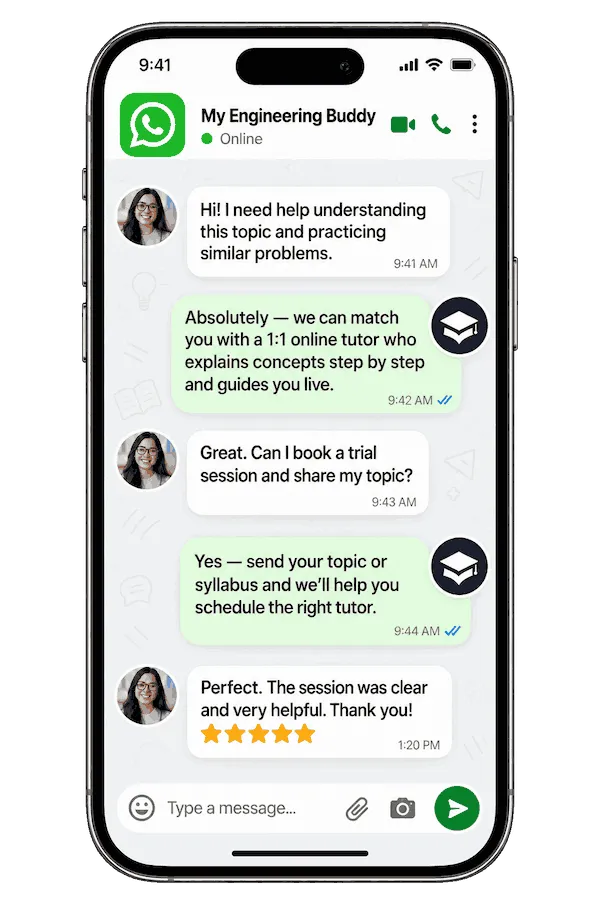
Unlike platforms where you fill out a form and wait, MEB responds in under a minute, 24/7. Tutor match takes under an hour. The $1 trial means you test before you commit. Everything runs over WhatsApp — no logins, no intake forms.
Study Plans (Pick One That Matches Your Goal)
After the first diagnostic session, your tutor builds a specific sequence. Three common formats: Catch-up (1–3 weeks) — students with significant grammar gaps closing in before an exam, covering the highest-yield constructions first. Exam prep (4–8 weeks) — structured revision through set texts and timed unseens, aligned to your exam date and past paper analysis. Weekly support — ongoing sessions through the school year or university semester, paced to coursework deadlines and essay submissions. The tutor adjusts the plan after every session, not once at the start.
Pricing Guide
Latin tutoring at MEB runs $20–$40/hr for most levels. Undergraduate prose composition, graduate-level reading of medieval or ecclesiastical Latin, and specialist research support go up to $100/hr. Rate factors include the level, the complexity of the texts involved, how quickly you need sessions, and tutor availability.
Demand for Latin tutors peaks in April–May during A Level, AP, and IB exam season. If your exam falls in that window, book before March.
For students targeting Classics degrees at Oxford, Cambridge, Yale, or similar, tutors with postgraduate Latin and Classical Studies backgrounds are available at higher rates — share your specific goal and MEB will match the tier to your ambition.
Start with the $1 trial — 30 minutes, no registration, no commitment. WhatsApp MEB for a quick quote.
FAQ
Is Latin hard to learn?
Latin grammar is systematic but demanding. The case system and verb conjugations take time to become automatic. Most students find that a few sessions targeting their specific gaps — usually the subjunctive and participial constructions — create a clear turning point.
How many sessions will I need?
It depends on your starting point and exam date. Students with a specific grammar gap to close often see results in 3–5 sessions. A full A Level or AP Latin exam prep programme typically runs 10–20 sessions over 6–10 weeks, built around your timeline.
Can you help with homework and assignments?
Yes. MEB tutoring is guided learning — you understand the work, then submit it yourself. Your tutor explains constructions, walks through translation strategy, and helps you develop the skills to handle similar passages independently. See our Academic Integrity policy and Why MEB page for full details on what we help with and what we don’t.
Will the tutor match my exact syllabus or exam board?
Yes. When you contact MEB, share your exam board — OCR, Eduqas, Cambridge International, College Board AP Latin, or IB. The tutor match is made to that specific syllabus, including the set texts and assessment components for your year.
What happens in the first session?
The tutor runs a short diagnostic — usually a passage translation and a targeted grammar exercise. From this, they identify your two or three highest-priority gaps and build the session sequence. Nothing is generic; the plan comes directly from what you show in that first 30 minutes.
Is online Latin tutoring as effective as in-person?
For Latin, yes — often more so. The digital pen-pad annotation, shared documents for translation work, and screen sharing for mark schemes replicate everything an in-person session does. Timing, scheduling flexibility, and access to specialist tutors are all better online.
What is the difference between AP Latin and A Level Latin?
AP Latin (College Board) focuses primarily on Caesar’s Gallic War and Virgil’s Aeneid, with one exam in May. A Level Latin (OCR or Eduqas) covers a broader set of authors across two or three papers, including an unseen component and a literature essay paper. The grammar demand is comparable, but the exam structure and set text selection differ significantly.
Can I get Latin help at midnight or on weekends?
Yes. MEB operates 24/7 across US, UK, Gulf, Canada, and Australia time zones. WhatsApp MEB at any hour — average response time is under a minute. Session scheduling is flexible and not limited to business hours.
What if Latin is required for my degree but I have no background in it?
This is a common situation in Classics, History, Philosophy, and some Theology programmes. MEB tutors work with complete beginners through to advanced readers. The first session assesses exactly where you start, and the plan builds from there — no assumption of prior knowledge.
Do you offer group Latin sessions?
No. All MEB sessions are 1:1. Latin grammar work and translation practice are most effective when the tutor can watch your specific reasoning and correct your specific errors in real time. Group formats dilute that.
Is ecclesiastical or medieval Latin covered?
Yes. Graduate students, researchers, and professionals reading Church Latin, Vulgate texts, or medieval chronicle sources are a distinct group MEB serves. Tutors with postgraduate backgrounds in these areas are available — share your specific texts when you contact MEB.
How do I get started?
Three steps: WhatsApp MEB, tell them your syllabus and exam date, get matched with a tutor — usually within the hour. Your first session is the $1 trial: 30 minutes live or one translation question explained in full. No registration, no commitment beyond that.
Trust & Quality at My Engineering Buddy
Every MEB Latin tutor goes through subject-specific screening before their first session. That includes a live demo evaluation on translation and grammar explanation, a check of their academic and professional background, and ongoing review based on student session feedback. Tutors hold degrees in Classics, Latin, Ancient History, or related disciplines — many have postgraduate qualifications. Rated 4.8/5 across 40,000+ verified reviews on Google.
MEB tutoring is guided learning — you understand the work, then submit it yourself. For full details on what we help with and what we don’t, read our Academic Integrity policy and Why MEB.
MEB has been serving students in Language subjects — including Italian tutoring, German tutoring, and Latin — since 2008. The platform covers 2,800+ subjects across the US, UK, Canada, Australia, Gulf, and Europe. 52,000+ students served. The same rigour applied to Latin applies across the full catalogue. See our tutoring methodology for how sessions are structured and quality is maintained.
MEB has matched students in Language subjects — from Spanish tutoring to advanced Latin prose — with verified specialist tutors since 2008. The matching process takes under an hour. The results speak in the feedback data.
Source: My Engineering Buddy, 2008–2025.
Explore Related Subjects
Students studying Latin often also need support in:
Next Steps
Before your first session, have ready: your exam board and syllabus (or course outline), a recent past paper attempt or translation you struggled with, and your exam or deadline date. The tutor handles the rest.
- Share your exam board, hardest component, and current timeline
- Share your availability and time zone
- MEB matches you with a verified Latin tutor — usually within an hour
First session starts with a diagnostic so every minute is used well. Visit www.myengineeringbuddy.com for more on how MEB works.
WhatsApp to get started or email [email protected].
Reviewed by Subject Expert
This page has been carefully reviewed and validated by our subject expert to ensure accuracy and relevance.