~1 min
Average Reply Time
~1 hour
To Be Matched With A Tutor
30 Min Trial
75% Find Their Tutor On The 1st Trial
$20-35+/hr
Premium Yet Affordable Learning
Most students who struggle with Hebrew aren’t bad at languages. They’ve just never had someone explain the script, grammar, and syntax together in one place.
Hebrew Tutor Online
Hebrew is a Semitic language written right-to-left in a 22-letter alphabet, spoken by approximately 9 million people. It equips learners to read biblical texts, communicate in modern Israeli Hebrew, and engage with Jewish liturgical and literary traditions.
MEB connects you with a 1:1 online language tutor who knows your exact course, exam board, or proficiency target. If you’ve searched for a Hebrew tutor near me and found only generic platforms, MEB is different — tutors are matched to your level, script stage, and timeline. Most students are matched within the hour. Whether you’re working through biblical Hebrew at university, preparing for a proficiency exam, or building spoken Modern Hebrew from scratch, a dedicated Hebrew tutor online covers every layer.
- 1:1 online sessions tailored to your course, syllabus, or proficiency level
- Expert-verified tutors with subject-specific knowledge of biblical and modern Hebrew
- Flexible time zones — US, UK, Canada, Australia, Gulf
- Structured learning plan built after a diagnostic session
- Ethical homework and assignment guidance — you understand before you submit
52,000+ students across the US, UK, Canada, Australia, and the Gulf have used MEB since 2008 — including students in Language subjects like Hebrew, Arabic, and Latin.
Source: My Engineering Buddy, 2008–2025.
How Much Does a Hebrew Tutor Cost?
Most Hebrew tutoring sessions run $20–$40/hr depending on level and topic complexity. Graduate-level biblical Hebrew or specialist liturgical work can reach higher. Not sure if it fits your budget? Start with the $1 trial — 30 minutes live, no registration required.
| Level / Need | Typical Rate | What’s Included |
|---|---|---|
| Standard (most levels) | $20–$35/hr | 1:1 sessions, homework guidance |
| Advanced / Specialist | $35–$70/hr | Expert tutor, biblical or liturgical depth |
| $1 Trial | $1 flat | 30 min live session or 1 homework question |
Availability tightens around semester submission deadlines and exam periods — especially for biblical Hebrew at university level. Book early if your deadline is within four weeks.
WhatsApp MEB for a quick quote — average response time under 1 minute.
Who This Hebrew Tutoring Is For
Hebrew is taken at every level — secondary school language electives, undergraduate Judaic studies, seminary programmes, and PhD research in biblical texts. The challenges are different at each stage, but the need for focused 1:1 guidance is consistent.
- University students working through biblical Hebrew grammar and syntax for the first time
- Students with a university conditional offer depending on their language grade
- Learners building Modern Hebrew for travel, work, or aliyah preparation
- Theology and Judaic studies students needing to read primary texts in the original
- Parents watching a child’s confidence drop alongside their Hebrew grades
- Students 4–6 weeks from an exam with significant vocabulary or grammar gaps still to close
Students have come to MEB from programmes at institutions including the University of Oxford, New York University, Harvard Divinity School, Hebrew University of Jerusalem, University of Toronto, and the University of Melbourne. Sessions are matched to the level and pace of the course — not a generic syllabus.
1:1 Tutoring vs Self-Study vs AI vs YouTube vs Online Courses
Self-study works if you’re disciplined — but Hebrew script, vowel pointing, and verb conjugation errors go uncorrected for weeks. AI tools give fast grammar explanations but can’t hear your pronunciation or adapt to your specific exam text. YouTube covers the aleph-bet well and stops there. Online courses move at a fixed pace regardless of where you’re stuck. With MEB’s 1:1 Hebrew tutoring, the tutor identifies your specific gap — whether it’s the binyan verb system or reading unpointed text — and corrects it in the session, not three weeks later.
Outcomes: What You’ll Be Able To Do in Hebrew
After consistent sessions with a Hebrew tutor, you’ll be able to read and analyse unpointed biblical texts with confidence. You’ll apply the seven binyan verb forms correctly in both written and spoken contexts. Expect to write grammatically sound Hebrew prose for coursework assessments and explain the morphology of unfamiliar words under exam conditions. Students also report being able to present oral commentary on Torah passages or modern literary excerpts — skills that require both linguistic precision and cultural familiarity.
Supporting a student through Hebrew? MEB works directly with parents to set up sessions, track progress, and keep coursework on schedule. WhatsApp MEB — average response time is under a minute, 24/7.
Based on feedback from 40,000+ sessions collected by MEB from 2022 to 2025, 58% of students improved by one full grade after approximately 20 hours of 1:1 tutoring in subjects like Hebrew. A further 23% achieved at least a half-grade improvement.
Source: MEB session feedback data, 2022–2025.
What We Cover in Hebrew (Syllabus / Topics)

Biblical Hebrew
- The Hebrew alphabet, vowel pointing (nikud), and diacritical marks
- Noun declension: gender, number, and the construct chain (smichut)
- The seven binyanim: Pa’al, Nif’al, Pi’el, Pu’al, Hitpa’el, Hif’il, Huf’al
- Verb conjugation: perfect, imperfect, imperative, infinitives, and participles
- Syntax of the biblical narrative and poetry registers
- Reading and parsing selections from the Torah, Nevi’im, and Ketuvim
- Textual commentary and translation methodology
Key texts: Basics of Biblical Hebrew Grammar (Pratico & Van Pelt), A Grammar for Biblical Hebrew (Seow), Biblical Hebrew: A Text and Workbook (Kittel, Hoffer & Wright).
Modern Hebrew (Ivrit)
- Conversational vocabulary and everyday register
- Present, past, and future tense in spoken and written contexts
- Reading unpointed modern text (without nikud)
- Listening comprehension and response in Israeli Hebrew
- Writing formal and informal Hebrew for academic or professional use
- Differences between biblical and modern grammar — key divergences
Key texts: Hebrew from Scratch (Shalem), Colloquial Hebrew (Jacobs & Oz-Salzberger), Brandeis Modern Hebrew (Glinert).
Academic and Liturgical Hebrew
- Reading Mishnaic and Talmudic Hebrew alongside biblical texts
- Liturgical vocabulary for synagogue prayer and holiday readings
- Comparative Semitic linguistics for advanced students (Arabic, Aramaic cognates)
- Academic essay writing in Hebrew for university submissions
- Research methods for primary-source biblical scholarship
Key texts: A Practical Grammar for Classical Hebrew (Weingreen), The Mishnah (Danby translation for comparison), course materials from Judaic studies programmes.
At MEB, we’ve found that Hebrew students often plateau at the same point: they can read pointed text reasonably well but freeze the moment nikud is removed. That gap between pointed and unpointed reading is where 1:1 tutoring makes the biggest difference — it’s a skill that builds only through repeated, corrected practice with a tutor who can catch the pattern quickly.
What a Typical Hebrew Session Looks Like
The tutor opens by checking the previous session’s topic — usually a specific binyan conjugation set or a passage from Genesis assigned for translation. You share your screen or the tutor sends the text directly. Working through the passage, the tutor uses a digital pen-pad to annotate roots, identify verb stems, and show parsing decisions in real time. You then attempt the next verse independently while the tutor watches. Errors in root identification or construct-chain reading are corrected on the spot — not flagged for “review later.” The session closes with a concrete task: translate three more verses, complete a conjugation drill, or prepare three vocabulary sets from your next class reading. The next topic is noted before the call ends.
How MEB Tutors Help You with Hebrew (The Learning Loop)
Diagnose: In the first session, the tutor identifies exactly where the gap is — pronunciation of gutturals, weak verb conjugations, confusion between binyanim, or difficulty reading unpointed text. This takes 15–20 minutes and determines everything that follows.
Explain: The tutor works through examples live using a digital pen-pad or iPad + Apple Pencil on Google Meet. For Hebrew, this means writing roots, showing vowel changes across binyanim, and annotating actual text you’re studying — not generic exercises from a textbook.
Practice: You attempt the next problem or translation while the tutor stays on screen. No disappearing to “check your work later.” Immediate feedback on whether your reasoning is right — not just your answer.
Feedback: Step-by-step error correction. The tutor explains why a root was misidentified, where the construct chain broke down, or what grammatical rule the error reveals. That explanation is what builds long-term accuracy.
Plan: The tutor sets the next session’s focus and gives you a practice task — a specific passage, drill set, or vocabulary list — tied to your upcoming coursework or exam date. Accountability built in.
Sessions run on Google Meet. You’ll need a stable connection and, ideally, your course text or past assignment on screen. First session covers the diagnostic and at least one full worked problem. Start with the $1 trial — 30 minutes of live tutoring that also serves as your first diagnostic. Whether you need a two-week catch-up before a translation exam, structured revision over six weeks, or ongoing weekly support through the semester, the tutor maps the session plan after that first conversation.
Students consistently tell us that the moment they stop treating Hebrew roots as vocabulary items and start treating them as grammatical keys, everything unlocks. That shift doesn’t happen by reading a textbook. It happens when a tutor asks you to parse a word aloud and stops you mid-answer to show you exactly why your instinct was close but wrong.
Tutor Match Criteria (How We Pick Your Tutor)
Match quality determines everything. MEB doesn’t assign the first available tutor.
Subject depth: Tutors are matched to your level — biblical Hebrew for theology or Judaic studies coursework, Modern Hebrew for conversational or proficiency targets, or Mishnaic Hebrew for advanced research. Exam board and institutional course materials are factored in where relevant.
Tools: All tutors use Google Meet with a digital pen-pad or iPad + Apple Pencil — essential for a script-based language where annotating text live is not optional.
Time zone: Matched to your region — US, UK, Gulf, Canada, or Australia. No 3am sessions unless that’s what you want.
Goals: Whether your target is exam scores, reading fluency, homework completion, or research-level text analysis, the tutor is selected accordingly.
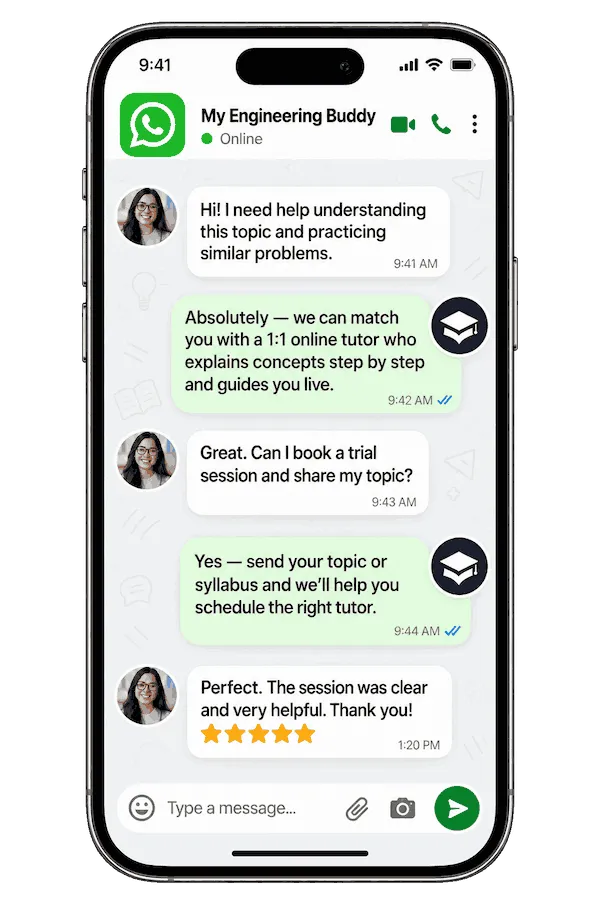
Unlike platforms where you fill out a form and wait, MEB responds in under a minute, 24/7. Tutor match takes under an hour. The $1 trial means you test before you commit. Everything runs over WhatsApp — no logins, no intake forms.
Pricing Guide
Hebrew tutoring runs $20–$40/hr for most levels. Graduate-level biblical Hebrew, Talmudic text analysis, or specialist liturgical work is available at higher rates — up to $100/hr for tutors with postgraduate research or professional backgrounds in Semitic languages.
Rate factors include level, topic complexity, your timeline, and tutor availability. Availability is tightest in the four weeks before semester finals and theology programme submission windows.
For students targeting admission to divinity programmes, advanced Judaic studies research, or professional translation credentials, tutors with academic research backgrounds in Semitic languages are available at higher rates — share your specific goal and MEB will match the tier to your ambition.
Start with the $1 trial — 30 minutes, no registration, no commitment. WhatsApp MEB for a quick quote.
MEB tutors work across 2,800+ subjects. In languages, that includes everything from Modern Hebrew to Ancient Greek tutoring and Sanskrit help — subjects that share Hebrew’s demand for precise grammatical parsing and script literacy.
Source: My Engineering Buddy, 2008–2025.
FAQ
Is Hebrew hard to learn?
Hebrew’s right-to-left script and root-based morphology make it genuinely challenging for English speakers. Biblical and Modern Hebrew also differ significantly. Most students find the verb system — seven binyanim with internal vowel changes — the steepest part. It’s learnable with consistent 1:1 guidance.
How many sessions do I need?
Students catching up before an exam typically need 8–12 focused sessions. For steady progress through a university course, weekly sessions across a semester is the standard pattern. The tutor sets a session plan after the first diagnostic — not before.
Can you help with homework and assignments?
MEB tutoring is guided learning — you understand the work, then submit it yourself. The tutor explains grammar rules, walks through translation methodology, and helps you identify errors in your own work. See our Academic Integrity policy and Why MEB page for full details on what we help with and what we don’t.
Will the tutor match my exact syllabus or exam board?
Yes. When you contact MEB, share your course name, institution, and the specific texts or grammar points you’re working on. Tutors are matched to that material — not to a generic Hebrew curriculum. Biblical, Modern, and Mishnaic Hebrew all require different specialists.
What happens in the first session?
The tutor runs a 15–20 minute diagnostic — checking script reading speed, verb parsing ability, and where your understanding breaks down. The rest of the session covers at least one full worked problem. You’ll leave with a clear plan for the next two to four weeks.
Is online tutoring as effective as in-person for Hebrew?
For a script-based language, online tutoring with a digital pen-pad is arguably more effective than sitting across a table. The tutor can annotate text directly on your screen in real time — showing vowel patterns, root derivations, and parsing decisions in a way that’s harder to replicate on paper.
What’s the difference between biblical and Modern Hebrew — do I need a different tutor?
Biblical Hebrew is a classical form with its own grammatical conventions, verb system, and vocabulary. Modern Hebrew (Ivrit) is a spoken and written contemporary language. They share a script and root system but diverge significantly in syntax and register. MEB matches tutors specifically to whichever variant — or combination — you’re studying.
Can you help with reading unpointed Hebrew text?
Yes — this is one of the most common requests from university-level Hebrew students. Moving from pointed (with nikud) to unpointed text is a distinct skill that requires pattern recognition across roots and verb forms. Tutors build this systematically, using your actual course texts rather than generic drills.
Do you offer help for bar/bat mitzvah preparation or synagogue Torah reading?
Yes. MEB tutors work with students preparing for b’nei mitzvah, including Torah portion reading, haftarah, and liturgical Hebrew pronunciation. Sessions are structured around your preparation timeline and specific reading assignment. This is separate from academic Hebrew tutoring and matched to tutors with liturgical experience.
Can I get Hebrew help at short notice or late at night?
MEB operates 24/7. Tutors cover US, UK, Gulf, Canadian, and Australian time zones. Contact via WhatsApp and the typical matching time is under an hour. Late-night sessions before a morning exam or submission are available — availability varies but the response is always fast.
How do I get started?
Three steps: WhatsApp MEB with your level, course name, and exam or deadline date. MEB matches you with a verified Hebrew tutor — usually within an hour. Your first session starts with the $1 trial: 30 minutes live or one full homework question explained. No registration, no commitment.
Trust & Quality at My Engineering Buddy
Every MEB tutor goes through a structured vetting process: subject knowledge screening, a live demo session evaluated by MEB staff, and ongoing review of session feedback from students. Tutors hold relevant degrees or postgraduate qualifications and are assessed specifically on the subject they teach — not just general teaching ability. Rated 4.8/5 across 40,000+ verified reviews on Google.
MEB tutoring is guided learning — you understand the work, then submit it yourself. For full details on what we help with and what we don’t, read our Academic Integrity policy and Why MEB.
MEB has served 52,000+ students across the US, UK, Canada, Australia, the Gulf, and Europe since 2008 — across 2,800+ subjects. In Language subjects, that covers everything from Hebrew and Arabic tutoring to French help and German tutoring. Tutors are specialists — not generalists assigned to whatever’s available. See our tutoring methodology for how the process works from first contact to final exam.
A common pattern our tutors observe is that students arrive having memorised paradigm tables but never having parsed a real sentence from their actual course text. The table is abstract. The text is the exam. Our sessions close that gap fast — using your coursework, not ours.
Explore Related Subjects
Students studying Hebrew often also need support in:
Next Steps
Ready to start? Here’s what to do:
- Share your exam board or course name, the hardest component you’re facing, and your current timeline
- Share your availability and time zone — sessions are matched to US, UK, Gulf, Canadian, and Australian hours
- MEB matches you with a verified Hebrew tutor — usually within 24 hours
- First session starts with a diagnostic so every minute is used well
Before your first session, have ready:
- Your exam board and syllabus, or your course outline and reading list
- A recent past paper attempt, translation exercise, or homework you struggled with
- Your exam date or submission deadline — the tutor builds the plan from there
Visit www.myengineeringbuddy.com for more on how MEB works.
WhatsApp to get started or email [email protected].
Try your first session for $1 — 30 minutes of live 1:1 tutoring or one homework question explained in full. No registration. No commitment. WhatsApp MEB now and get matched within the hour.
18 years running — since 2008. MEB has supported students in Spanish tutoring, Italian help, and Hebrew across six continents. The process is the same: one tutor, one student, no distractions.
Source: My Engineering Buddy, 2008–2025.
Reviewed by Subject Expert
This page has been carefully reviewed and validated by our subject expert to ensure accuracy and relevance.