

Hire Verified & Experienced
Semiconductor Physics Tutors
Email: [email protected]
4.8/5 40K+ session ratings collected on the MEB platform



Hire The Best Semiconductor Physics Tutor
Top Tutors, Top Grades. Without The Stress!
Your Semiconductor Physics grade stalled at the band gap equations — and the exam is six weeks away.
Semiconductor Physics Tutor Online
Semiconductor physics studies the electrical properties of materials such as silicon and germanium, covering band theory, carrier transport, p-n junctions, and device operation. It equips students to analyse and design electronic components and solid-state devices.
MEB offers 1:1 online tutoring and homework help in 2,800+ advanced subjects, including a Physics tutor service that spans everything from foundational mechanics to advanced solid-state theory. If you’ve searched for a Semiconductor Physics tutor near me and found only generic results, MEB matches you with a verified specialist — usually within the hour. Sessions are built around your exact syllabus, your current gaps, and your exam date.
- 1:1 online sessions tailored to your course or university module
- Expert-verified tutors with subject-specific knowledge in semiconductor theory and device physics
- Flexible time zones — US, UK, Canada, Australia, Gulf
- Structured learning plan built after a diagnostic session
- Ethical homework and assignment guidance — you understand the work before you submit
52,000+ students across the US, UK, Canada, Australia, and the Gulf have used MEB since 2008 — including students in Physics subjects like Semiconductor Physics, solid-state physics tutoring, and condensed matter physics help.
Source: My Engineering Buddy, 2008–2025.
How Much Does a Semiconductor Physics Tutor Cost?
Rates start at $20–$40/hr for most undergraduate levels. Graduate and specialist topics — device fabrication, quantum transport, MOSFET modelling — run up to $100/hr. The $1 trial gives you 30 minutes of live tutoring or one homework question explained in full before you commit to a rate.
| Level / Need | Typical Rate | What’s Included |
|---|---|---|
| Standard (most undergrad levels) | $20–$35/hr | 1:1 sessions, homework guidance |
| Advanced / Specialist | $35–$100/hr | Expert tutor, graduate-level depth |
| $1 Trial | $1 flat | 30 min live session or 1 homework question |
Tutor availability tightens sharply during end-of-semester exam periods — especially for EE and materials science cohorts in November and April.
WhatsApp MEB for a quick quote — average response time under 1 minute.
Who This Semiconductor Physics Tutoring Is For
Most students who come to MEB for semiconductor physics help are not struggling because the subject is impossible. They’re struggling because lectures moved past carrier statistics before the Fermi level made sense. One week behind becomes three fast.
- Undergraduate EE and materials science students hitting the device physics wall mid-semester
- Students retaking after a failed first attempt in a solid-state or electronic devices course
- Students with a university conditional offer that depends on passing this module
- Graduate students needing to close gaps before a qualifying exam covering semiconductor theory
- Students 4–6 weeks from finals with the p-n junction, MOSFET operation, or BJT biasing still unclear
- Parents watching a student’s confidence drop as lab reports and problem sets pile up
MEB tutors have supported students at MIT, Caltech, Georgia Tech, Imperial College London, the University of Toronto, ETH Zürich, the University of Melbourne, and KAUST — among many others.
1:1 Tutoring vs Self-Study vs AI vs YouTube vs Online Courses
Self-study works if you’re disciplined and the textbook is enough — but Neamen or Streetman alone won’t tell you where your reasoning broke down. AI tools give fast definitions of drift current but can’t watch you misapply the continuity equation and correct it live. YouTube covers band diagrams well up to the point you need to solve a specific exam problem — then it stops. Online courses are structured but fixed-pace, with no one to ask why your carrier concentration calculation is off by an order of magnitude. 1:1 tutoring with MEB is live, calibrated to your exact semiconductor physics syllabus, and corrects errors the moment they appear — not three days later when the assignment is due.
Outcomes: What You’ll Be Able To Do in Semiconductor Physics
After consistent sessions, students can solve carrier transport problems using the drift-diffusion model without prompting, analyse p-n junction behaviour under forward and reverse bias with confidence, model MOSFET and BJT operating regions from first principles, explain band structure and effective mass in context of real device materials, and apply the Shockley equation to diode problems on both coursework and unseen exam questions. These are not abstract abilities — they’re the exact skills that separate a passing grade from a strong one.
Based on feedback from 40,000+ sessions collected by MEB from 2022 to 2025, 58% of students improved by one full grade after approximately 20 hours of 1:1 tutoring in subjects like Semiconductor Physics. A further 23% achieved at least a half-grade improvement.
Source: MEB session feedback data, 2022–2025.
Supporting a student through Semiconductor Physics? MEB works directly with parents to set up sessions, track progress, and keep coursework on schedule. WhatsApp MEB — average response time is under a minute, 24/7.

What We Cover in Semiconductor Physics (Syllabus / Topics)
Track 1: Fundamentals — Band Theory and Carrier Statistics
- Crystal structure, Brillouin zones, and reciprocal lattice
- Energy bands in conductors, insulators, and semiconductors
- Fermi-Dirac distribution and carrier concentration at equilibrium
- Intrinsic and extrinsic semiconductors — donors and acceptors
- Effective mass, density of states, and the Fermi level in doped materials
- Temperature dependence of carrier concentration
Core texts: Neamen’s Semiconductor Physics and Devices (4th ed.), Streetman & Banerjee’s Solid State Electronic Devices (7th ed.).
Track 2: Carrier Transport and p-n Junction Theory
- Drift and diffusion current — the drift-diffusion model
- Continuity equations and minority carrier lifetime
- p-n junction in equilibrium — built-in potential and depletion width
- Forward and reverse bias characteristics, the Shockley diode equation
- Junction capacitance, breakdown mechanisms (Zener and avalanche)
- Ohmic and Schottky contacts
- Heterojunctions and band alignment
Core texts: Sze & Ng’s Physics of Semiconductor Devices (3rd ed.), Pierret’s Semiconductor Device Fundamentals.
Track 3: Semiconductor Devices — MOSFETs, BJTs, and Optoelectronics
- Bipolar junction transistor — operation, biasing, and the Ebers-Moll model
- MOS capacitor — flat-band voltage, threshold voltage, inversion
- MOSFET device physics — long-channel I-V characteristics and scaling effects
- Short-channel effects, DIBL, and velocity saturation in modern CMOS
- Solar cells, LEDs, and photodetectors — device principles
- BJT tutoring for students needing deeper treatment of transistor models
- Introduction to compound semiconductors — GaAs, InP, GaN
Core texts: Taur & Ning’s Fundamentals of Modern VLSI Devices, Saleh & Teich’s Fundamentals of Photonics.
At MEB, we’ve found that semiconductor physics clicks fastest when the tutor works the same problem twice — once showing the method, once watching the student attempt it and catching exactly where the reasoning drifts. That second pass is where the real learning happens.
What a Typical Semiconductor Physics Session Looks Like
The tutor opens by checking the previous topic — usually carrier transport or the junction equations from last time — asking the student to explain one result in their own words. From there, the session moves into the current problem set: MOSFET threshold voltage calculations or minority carrier diffusion length problems, worked live on a shared screen with a digital pen-pad so every step is visible. The student replicates the method on a new problem while the tutor watches and flags the moment an assumption goes wrong. The session closes with two or three practice problems set for independent work and a note of the next topic — typically junction breakdown or BJT biasing — so the following session has a clear starting point.
How MEB Tutors Help You with Semiconductor Physics (The Learning Loop)
Diagnose: In the first session, the tutor runs a short diagnostic — usually three to five problems spanning band theory, carrier statistics, and one device problem. This identifies whether the gap is conceptual (Fermi level confusion, band diagram misreading) or computational (algebra errors in the drift-diffusion equations).
Explain: The tutor works through the concept live using a digital pen-pad, drawing band diagrams, sketching depletion regions, and deriving the key equations step by step. No recorded slides. No skipping steps.
Practice: The student attempts a parallel problem with the tutor present. The tutor does not take over. They prompt. They ask why. They wait.
Feedback: Every error gets a precise explanation — not just the correct answer, but the specific point in the reasoning where the mark was lost and why. This is especially critical for the quantum mechanics underpinnings that catch students off guard in later semiconductor topics.
Plan: Each session ends with a written summary of what was covered, what the student should practise independently, and what comes next. The tutor tracks topic progression across sessions.
Sessions run on Google Meet with a digital pen-pad or iPad and Apple Pencil. Before the first session, share your course syllabus or module outline, one recent problem set or past paper attempt you struggled with, and your exam or assignment deadline. The tutor maps the session plan from there. Whether you need a quick catch-up before an exam, structured revision over 4–8 weeks, or ongoing weekly support through the semester, the plan is built after the diagnostic.
Start with the $1 trial — 30 minutes of live tutoring that also serves as your first diagnostic.
Students consistently tell us that the moment semiconductor physics starts making sense is when they stop memorising the Shockley equation and start deriving it from the continuity equations. MEB tutors are trained to get students to that point — not around it.
Try your first session for $1 — 30 minutes of live 1:1 tutoring or one homework question explained in full. No registration. No commitment. WhatsApp MEB now and get matched within the hour.
Tutor Match Criteria (How We Pick Your Tutor)
Not every physics tutor can handle semiconductor device equations at graduate level. Here’s what MEB checks before assigning yours.
Subject depth: The tutor must demonstrate working knowledge of your specific level — undergraduate device physics, graduate quantum transport, or a specialist module in CMOS scaling — not just general physics competence.
Tools: Every semiconductor physics tutor uses Google Meet with a digital pen-pad or iPad and Apple Pencil. Band diagrams and I-V derivations done in typed text are not acceptable.
Time zone: Matched to your region — US, UK, Gulf, Canada, or Australia — so sessions happen at a workable hour, not 2 a.m.
Goals: The tutor is briefed on whether you need exam score improvement, conceptual clarity on a specific device model, homework guidance, or research-level support in areas like spintronics tutoring or compound semiconductor devices.
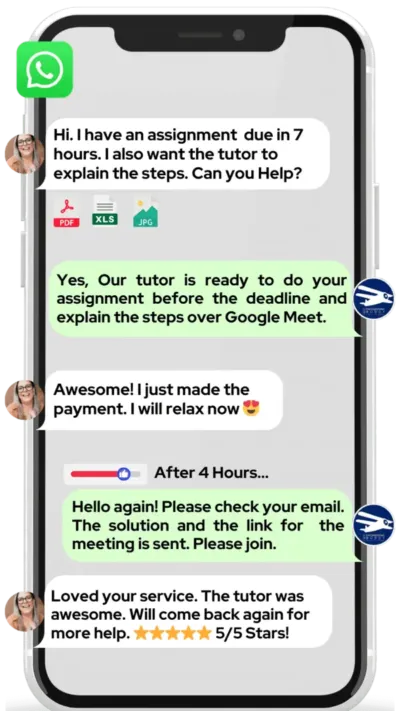
Unlike platforms where you fill out a form and wait, MEB responds in under a minute, 24/7. Tutor match takes under an hour. The $1 trial means you test before you commit. Everything runs over WhatsApp — no logins, no intake forms.
Study Plans (Pick One That Matches Your Goal)
Catch-up (1–3 weeks): for students behind on carrier transport or junction theory with a test approaching fast. Exam prep (4–8 weeks): structured topic-by-topic revision from band fundamentals through to MOSFET scaling, timed to your exam date. Weekly support: ongoing sessions aligned to your semester schedule and coursework deadlines, with the tutor adjusting pace as new material arrives. The tutor builds the specific sequence after the first diagnostic — not before.
Pricing Guide
Most semiconductor physics tutoring runs $20–$40/hr. Graduate-level topics — quantum transport, device simulation, advanced CMOS — run up to $100/hr. Rate factors include your level, topic complexity, timeline pressure, and tutor availability in your time zone.
Peak demand hits hard in November and April when EE and physics exam periods overlap across US, UK, and Australian universities. Availability is tighter then.
For students targeting roles at semiconductor firms or research positions at leading engineering programmes, tutors with industry or research backgrounds in device physics and fabrication are available at higher rates — share your specific goal and MEB will match the tier to your ambition.
Start with the $1 trial — 30 minutes, no registration, no commitment. WhatsApp MEB for a quick quote.
MEB has been running 1:1 online tutoring since 2008 — across engineering physics tutoring, modern physics help, and specialist subjects like Semiconductor Physics. 18 years. No shortcuts.
Source: My Engineering Buddy, 2008–2025.
FAQ
Is Semiconductor Physics hard?
Yes — by most undergraduate engineering standards, it’s one of the harder core modules. The challenge is that it requires simultaneous comfort with quantum mechanics, statistical thermodynamics, and circuit-level device behaviour. Most students hit the wall at carrier statistics or junction theory, not at the very beginning.
How many sessions are needed?
Students with one or two specific gaps — band diagrams, the Shockley equation, MOSFET threshold voltage — often close them in three to five sessions. Broader restructuring of understanding across the full course typically takes 10–20 hours. The diagnostic in session one gives a clear picture.
Can you help with homework and assignments?
Yes. MEB tutoring is guided learning — you understand the work, then submit it yourself. The tutor explains the method, works through a similar problem with you, and checks your reasoning. See our Academic Integrity policy and Why MEB page for full details on what we help with and what we don’t.
Will the tutor match my exact syllabus or exam board?
Yes. Share your module outline, course code, and university before the first session. MEB tutors are briefed specifically — whether you’re following an MIT-style 6.012, an Imperial College EE module, or a materials science track at a Canadian university. The session content is not generic.
What happens in the first session?
The tutor runs a short diagnostic — typically three to five problems across band theory, carrier transport, and one device topic. This identifies your exact gaps and sets the topic sequence for following sessions. Nothing is assumed. Everything is confirmed in that first hour.
Is online tutoring as effective as in-person?
For a subject like semiconductor physics — heavily visual, equation-dense — the digital pen-pad on Google Meet is often clearer than a whiteboard across a desk. Tutors draw band diagrams and I-V curves live. Students share their working in real time. The research on online 1:1 tutoring consistently supports comparable or better outcomes than face-to-face for technical subjects.
What’s the difference between semiconductor physics and solid-state physics?
Solid-state physics covers the full range of condensed matter — metals, insulators, magnetic materials, and superconductors. Semiconductor physics focuses specifically on the subset of materials and phenomena relevant to electronic and optoelectronic devices. There’s significant overlap in band theory and crystal structure, but semiconductor physics goes further into device operation.
Do I need quantum mechanics before starting semiconductor physics?
A basic grasp of quantum mechanics — wave functions, energy quantisation, the Schrödinger equation — is useful but not always required at first-year undergraduate level. At graduate level, quantum transport and density of states derivations assume it. If your quantum foundations are shaky, MEB can run both in parallel. It’s a common pairing.
Can you help at midnight or on weekends?
Yes. MEB operates 24/7. Tutors are available across time zones — including late evenings for US students, early mornings for Gulf and Australian students. WhatsApp is the fastest way to reach MEB at any hour, including weekends and the night before an exam.
What if I’m preparing for a qualifying exam that includes semiconductor physics?
Graduate qualifying exams at US universities often include semiconductor topics alongside electromagnetic theory and quantum mechanics. MEB has tutors who have specifically supported students through qualifying exam preparation — the session structure is different from coursework help, and the tutor is briefed accordingly.
Do you offer group semiconductor physics sessions?
No. MEB sessions are 1:1 only. Group sessions dilute the diagnostic precision that makes the tutoring work. Every session is calibrated to one student’s gaps, one student’s pace, and one student’s exam date.
How do I get started?
WhatsApp MEB, share your subject, level, and exam date. MEB matches you with a verified semiconductor physics tutor — usually within an hour. The $1 trial is your first session: 30 minutes live or one homework problem explained in full. Three steps: WhatsApp, matched, start.
Trust & Quality at My Engineering Buddy
Every MEB tutor goes through subject-specific vetting — a live demo session, review of their academic and professional background, and ongoing feedback checks from student sessions. Tutors covering semiconductor physics hold degrees in electrical engineering, materials science, applied physics, or closely related fields, and many have industry or research experience in device physics. Rated 4.8/5 across 40,000+ verified reviews on Google.
MEB tutoring is guided learning — you understand the work, then submit it yourself. For full details on what we help with and what we don’t, read our Academic Integrity policy and Why MEB.
MEB has served 52,000+ students across the US, UK, Canada, Australia, the Gulf, and Europe since 2008 — across 2,800+ subjects. In Physics alone, that includes specialist subjects such as Semiconductor Physics, laser physics help, and photonics tutoring. Our tutoring methodology is built around the diagnostic-explain-practise-feedback loop described on this page — not generic session booking.
A common pattern our tutors observe is that semiconductor physics students who come in thinking they have a “maths problem” actually have a conceptual gap one or two topics earlier — usually at the Fermi level or the depletion approximation. Fixing the concept fixes the maths.
Explore Related Subjects
Students studying Semiconductor Physics often also need support in:
- Applied Physics
- Atomic Physics
- Crystallography
- Statistical Mechanics
- Superconductivity
- Thermal Physics
- Optical Fiber Communication
From quantum field theory tutoring to device-level semiconductor physics — MEB covers the full depth of the Physics curriculum, with verified tutors at every level.
Source: My Engineering Buddy, 2008–2025.
Next Steps
Ready to start? Here’s what to do:
- Share your course module, exam board or university, and your hardest current topic
- Share your availability and time zone — morning, evening, weekends
- MEB matches you with a verified semiconductor physics tutor, usually within 24 hours
- First session begins with a diagnostic so every minute is used on what you actually need
Before your first session, have ready: your course syllabus or module outline, a recent problem set or exam attempt you struggled with, and your exam or deadline date. The tutor handles the rest.
Visit www.myengineeringbuddy.com for more on how MEB works.
WhatsApp to get started or email [email protected].
52,000+ Happy Students From Various Universities



How Much For Private 1:1 Tutoring & Hw Help?
Private 1:1 Tutoring and HW help Cost $20 – 35 per hour* on average.
Reviewed by Subject Expert
This page has been carefully reviewed and validated by our subject expert to ensure accuracy and relevance.

