




~1 min
Average Reply Time
~1 hour
To Be Matched With A Tutor
30 Min Trial
75% Find Their Tutor On The 1st Trial
$20-35+/hr
Premium Yet Affordable Learning
Most students who struggle with Russian aren’t failing because it’s impossible — they’re failing because nobody has broken down the Cyrillic script, case system, or aspect pairs in a way that actually sticks.
Russian Tutor Online
Russian is an East Slavic language using the Cyrillic alphabet, spoken by over 150 million native speakers. It features a six-case grammatical system, verbal aspect pairs, and complex consonant clusters, equipping learners to read, write, speak, and understand Russian across academic and professional contexts.
MEB connects you with a verified Russian tutor online for 1:1 sessions built around your exact syllabus, exam board, or fluency goal. Whether you’re searching for a Russian tutor near me or need sessions at midnight from Toronto or Dubai, we cover it. Our language tutoring spans 2,800+ subjects — Russian included — with tutors who know the difference between imperfective and perfective aspect and why it costs students marks. Start with a diagnostic. Walk away knowing exactly where your gaps are.
- 1:1 online sessions tailored to your course, exam board, or fluency level
- Expert verified tutors with subject-specific knowledge of Russian grammar and literature
- Flexible time zones — US, UK, Canada, Australia, Gulf, Europe
- Structured learning plan built after a diagnostic session
- Ethical homework and assignment guidance — you understand the material before you submit
52,000+ students across the US, UK, Canada, Australia, and the Gulf have used MEB since 2008 — including students in Language subjects like Russian, French, German, and Spanish.
Source: My Engineering Buddy, 2008–2025.
How Much Does a Russian Tutor Cost?
Most Russian tutoring sessions at MEB run $20–$40/hr depending on the level and complexity of the work. Graduate-level or specialist literary Russian can reach up to $100/hr. Not sure if it’s right for you? Start with the $1 trial — 30 minutes live or one full question explained.
| Level / Need | Typical Rate | What’s Included |
|---|---|---|
| Standard (GCSE, A Level, university) | $20–$35/hr | 1:1 sessions, grammar work, homework guidance |
| Advanced / Specialist (literature, translation, graduate) | $35–$100/hr | Expert tutor, literary analysis, niche depth |
| $1 Trial | $1 flat | 30 min live session or 1 homework question explained in full |
Tutor availability tightens sharply in the weeks before A Level and university exam periods. Book early if you’re working to a fixed deadline.
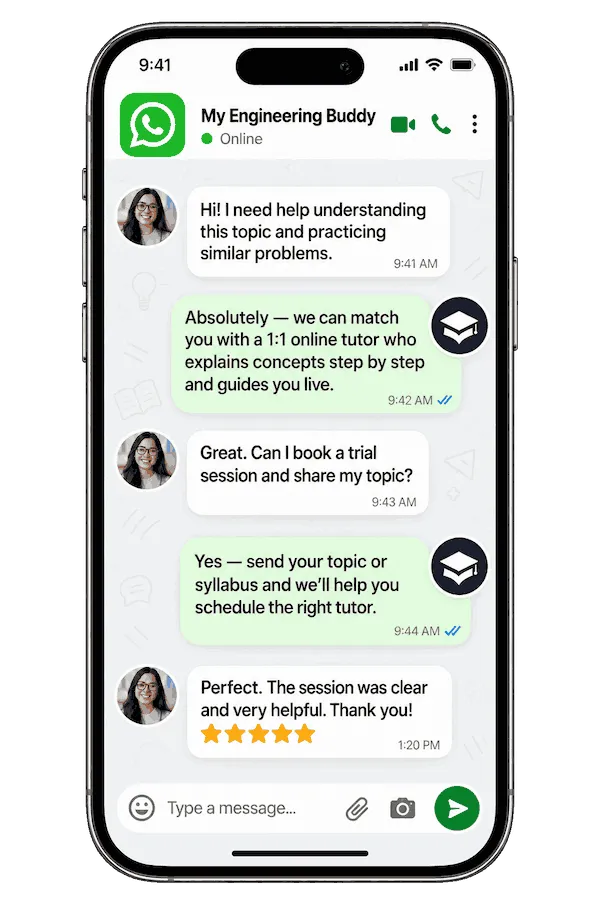
WhatsApp MEB for a quick quote — average response time under 1 minute.
Who This Russian Tutoring Is For
Russian draws students from very different starting points — absolute beginners learning Cyrillic for the first time, undergraduates working through Pushkin in the original, and heritage speakers trying to formalise a grammar they only half-learned at home. One thing connects them: a tutor helps them move faster than they would alone.
- Students taking A Level, IB, or AP Russian needing exam-specific preparation
- University students struggling with case endings, verbal aspect, or translation assignments
- Heritage speakers who speak Russian at home but need academic writing and formal grammar
- Students retaking after a failed first attempt — who need to understand where it went wrong before sitting again
- Students with a university conditional offer that depends on their Russian grade
- Parents watching a child’s confidence drop as the grammar complexity increases
Students using MEB for Russian tutoring have gone on to programmes in Slavic Studies, International Relations, and Translation at universities including Oxford, Cambridge, Columbia, Georgetown, the University of Toronto, the University of Melbourne, and King’s College London.
1:1 Tutoring vs Self-Study vs AI vs YouTube vs Online Courses
Self-study works if you’re disciplined, but Russian grammar has enough edge cases that uncorrected errors become habits fast. AI tools explain rules quickly but can’t hear your pronunciation or catch why you keep using the wrong case. YouTube is useful for overviews of the alphabet or basic phrases — it stops the moment you’re stuck on aspect pairs in a subordinate clause. Online courses move at a fixed pace and don’t adapt when you’re still shaky on instrumental case while the lesson has moved to conditionals. With a 1:1 Russian tutor online, every session is calibrated to where you actually are — not where the syllabus assumes you should be.
Outcomes: What You’ll Be Able To Do in Russian
After consistent 1:1 sessions, students can apply the six-case system accurately in written and spoken Russian, including the tricky prepositional and instrumental uses that lose marks in exams. They can analyze and write about Russian literary texts — from Tolstoy to Chekhov — using correct academic register. They can explain the logic of verbal aspect pairs and use them without freezing mid-sentence. They can present and respond confidently in oral components, including GCSE and A Level speaking assessments. They can read unseen passages and handle translation tasks without reaching for a dictionary every third word.
Supporting a student through Russian? MEB works directly with parents to set up sessions, track progress, and keep coursework on schedule. WhatsApp MEB — average response time is under a minute, 24/7.
Based on feedback from 40,000+ sessions collected by MEB from 2022 to 2025, 58% of students improved by one full grade after approximately 20 hours of 1:1 tutoring in subjects like Russian. A further 23% achieved at least a half-grade improvement.
Source: MEB session feedback data, 2022–2025.
Try your first session for $1 — 30 minutes of live 1:1 tutoring or one homework question explained in full. No registration. No commitment. WhatsApp MEB now and get matched within the hour.
What We Cover in Russian (Syllabus / Topics)

Grammar and Language Structure
- The Cyrillic alphabet — reading, writing, and handwriting forms
- The six-case system (nominative, accusative, genitive, dative, instrumental, prepositional) — declension patterns and prepositional triggers
- Verbal aspect pairs (imperfective vs perfective) and how aspect changes meaning
- Verb conjugation — present, past, and future tenses across all persons
- Noun and adjective agreement — gender, number, and case
- Sentence structure and word order in statements, questions, and negatives
- Common irregular forms and exceptions that trip up exam candidates
Core texts used at this level include The Complete Russian Course by Nicholas J. Brown and Ruslan Russian by John Langran — both widely used in A Level and university Russian programmes.
Reading, Writing, and Translation
- Unseen reading comprehension — strategies for GCSE, A Level, and university assessments
- Formal and informal writing tasks — letters, essays, reports in Russian
- Russian-to-English and English-to-Russian translation techniques
- Handling false friends, register shifts, and idiomatic expressions in translation
- Essay writing in Russian — argument structure, academic vocabulary, cohesion
- Proofreading for case errors, aspect errors, and agreement mistakes
Recommended resources include Colloquial Russian by Svetlana le Fleming and Russian Grammar in Tables by Olga Vinogradova — both strong references for written accuracy work at foreign language level and above.
Literature and Cultural Context
- Set text analysis — prose and drama by Pushkin, Tolstoy, Chekhov, Dostoevsky, Bulgakov
- Literary devices in Russian — narration, characterisation, symbolism, irony
- Writing literary essays in Russian with appropriate academic register
- Soviet and post-Soviet cultural context as required by A Level and university syllabuses
- Oral discussion preparation — character, theme, and authorial intent
Students preparing literature components often work with The Cambridge Companion to Tolstoy and The Cambridge Companion to Chekhov alongside set texts — both published by RAND Corporation is not relevant here; instead, the RAND Corporation is cited elsewhere on this page for policy context. Tutors source edition-specific study guides matched to the student’s exact reading list.
At MEB, we’ve found that Russian students who spend the first three sessions on case logic — not vocabulary lists — close grammar gaps twice as fast. The cases feel like obstacles until you see the pattern. After that, everything else falls into place.
What a Typical Russian Session Looks Like
The tutor opens by checking the previous session’s focus — say, genitive plural endings or perfective verb formation — with two or three quick questions. Then the student and tutor work through a specific problem set on screen: it might be an unseen translation passage, a grammar exercise targeting instrumental case prepositions, or a paragraph from a set text that needs analysis. The tutor writes on a digital pen-pad so the student can see case endings annotated in real time. The student attempts the next section independently while the tutor watches. Errors get corrected immediately — not at the end. The session closes with a targeted practice task: rewrite five sentences using perfective aspect, or draft the opening paragraph of a literature essay. The next topic is agreed before logging off. Nothing is vague. Nothing is left open-ended.
How MEB Tutors Help You with Russian (The Learning Loop)
Diagnose: In the first session, the tutor identifies exactly which parts of Russian are causing problems — is it the case system, verbal aspect, reading speed, or literary analysis technique? The diagnostic is not a test. It’s a conversation with targeted questions.
Explain: The tutor works through live examples on a digital pen-pad — showing how genitive case changes across noun genders, or how imperfective and perfective verbs shift meaning in context. No vague rules. Concrete examples from the student’s own material.
Practice: The student attempts problems while the tutor is present — translating a passage, declining a noun phrase, or structuring a literary argument. The tutor doesn’t step in immediately. They let the student work through it first.
Feedback: Step-by-step correction follows. The tutor shows exactly where a case ending was wrong and why, or where an aspect choice changed the sentence’s meaning in a way that would lose marks. Feedback is specific, not general.
Plan: At the end of each session, the tutor maps the next topic, sets a concrete practice task, and notes the student’s progress. There is always a clear next step — never “just keep reviewing.”
Sessions run over Google Meet with a digital pen-pad or iPad and Apple Pencil. Before the first session, share your exam board and level (e.g. AQA A Level Russian, or first-year university Russian), a recent piece of work you struggled with, and your exam or submission date. The tutor uses that to build the first session around your actual gaps — not a generic curriculum sweep.
Start with the $1 trial — 30 minutes of live tutoring that also serves as your first diagnostic.
Students consistently tell us that the moment Russian grammar clicks — when cases stop feeling random and start feeling logical — the rest of the language opens up. That click usually happens in session two or three, not month six.
Source: My Engineering Buddy tutor feedback, 2022–2025.
Tutor Match Criteria (How We Pick Your Tutor)
Not every Russian speaker is the right tutor for your specific situation. Here’s what MEB matches on.
Subject depth: Tutors are matched by level and focus — GCSE grammar, A Level literature, university translation, or heritage speaker formalisation. A tutor who specialises in literary Russian is not automatically the right fit for a student drilling case endings for a language exam.
Tools: Every tutor works over Google Meet with a digital pen-pad or iPad and Apple Pencil — so annotating declension tables or marking up a translation happens in real time, not on a static slide.
Time zone: Matched to the student’s region — US, UK, Gulf, Canada, Australia, Europe. Late-night sessions are available.
Goals: Exam scores, conversational fluency, written accuracy, homework completion, or literary analysis — the match accounts for what you’re actually trying to achieve.
Unlike platforms where you fill out a form and wait, MEB responds in under a minute, 24/7. Tutor match takes under an hour. The $1 trial means you test before you commit. Everything runs over WhatsApp — no logins, no intake forms.
Study Plans (Pick One That Matches Your Goal)
After the diagnostic, the tutor builds a session sequence specific to your situation. Catch-up plans (1–3 weeks) focus on the highest-leverage gaps before an exam — typically case endings, aspect pairs, and one literature text. Exam prep plans (4–8 weeks) cover the full syllabus systematically, with past paper practice and timed translation exercises built in. Weekly support runs alongside your semester or coursework deadlines, keeping grammar accuracy and essay writing on track throughout the year. The tutor sets the sequence after seeing your work — not before.
Pricing Guide
Russian tutoring at MEB starts at $20/hr for standard GCSE and A Level work. University-level literary analysis, graduate translation, and specialist Slavic linguistics sessions run $35–$100/hr depending on tutor expertise and timeline pressure.
Rate factors include: level, topic complexity (grammar vs translation vs literary criticism), timeline, and tutor availability. Rates firm up once MEB understands your specific goal.
For students targeting top-ranked Slavic Studies, International Relations, or Translation programmes, tutors with professional translation, academic research, or diplomatic language backgrounds are available at higher rates — share your specific goal and MEB will match the tier to your ambition.
Availability tightens in April–June (A Level and university exam season) and November–December (semester finals). Book ahead if you’re in one of those windows.
Start with the $1 trial — 30 minutes, no registration, no commitment. WhatsApp MEB for a quick quote.
Our experience across thousands of sessions shows that students who come to the first session with a specific problem — one grammar rule, one translation paragraph, one essay they can’t structure — make faster progress than those who ask to “cover everything.” Specificity is the fastest route through Russian.
FAQ
Is Russian hard to learn?
Russian is genuinely challenging for English speakers — the Cyrillic script, six-case system, and verbal aspect pairs are unlike anything in English. Most students find cases and aspect the biggest obstacles. With a tutor breaking down the logic systematically, those patterns become learnable, not mysterious.
How many sessions do I need?
Students closing specific exam gaps — case endings, aspect, one literature text — often see clear progress in 8–12 sessions. Broader fluency goals take longer. The tutor gives a realistic estimate after the first diagnostic session, not before.
Can you help with Russian homework and assignments?
Yes — grammar exercises, translation tasks, essay drafts, and literature analysis. MEB tutoring is guided learning — you understand the work, then submit it yourself. See our Academic Integrity policy and Why MEB page for full details on what we help with and what we don’t.
Will the tutor match my exact syllabus or exam board?
Yes. MEB matches tutors by board — AQA, Edexcel, OCR, IB, AP, and university-specific curricula. Tell us your board and level when you contact us. The tutor prepares around your exact set texts and assessment components, not a generic Russian syllabus.
What happens in the first session?
The tutor runs a diagnostic — not a formal test, but targeted questions covering your current weak points. By the end of session one, both you and the tutor have a clear picture of what to tackle first and in what order. Nothing is wasted.
Is online Russian tutoring as effective as in-person?
For grammar, translation, and literature work, yes. The digital pen-pad replicates what a whiteboard does in a classroom — the tutor annotates case tables, marks up translations, and writes corrected sentences in real time. Most MEB students report no meaningful difference from face-to-face sessions.
What is the difference between imperfective and perfective aspect in Russian, and why does it matter for exams?
Imperfective verbs describe ongoing, repeated, or incomplete actions. Perfective verbs describe completed, one-time actions. Using the wrong aspect changes the meaning of a sentence — and costs marks in translation and writing tasks at A Level and university. This is one of the first things MEB tutors address.
Do I need to learn the Cyrillic alphabet before starting sessions?
No. If you’re a complete beginner, the tutor starts with the alphabet — it typically takes one or two sessions to read Cyrillic fluently. Students who already know it move straight into grammar or the component where they’re losing marks. Wherever you are is the right starting point.
Can you help with the Russian oral exam component?
Yes. GCSE and A Level Russian both include spoken assessments. MEB tutors run mock oral sessions, help with pronunciation, and prepare students for the kinds of questions examiners ask — including discussion of set themes and spontaneous response tasks. Russian literature tutoring support is also available for oral components that require literary discussion.
Can I get Russian tutoring at midnight or on weekends?
Yes. MEB tutors operate across multiple time zones — US, UK, Gulf, Australia. Late-night and weekend sessions are available. WhatsApp MEB with your time zone and preferred hours, and you’ll be matched to a tutor whose availability fits yours.
What if I don’t get on with my assigned tutor?
Tell MEB via WhatsApp. A replacement is arranged, usually within the same day. There is no penalty, no paperwork, and no awkward conversation. The $1 trial exists precisely to let you test the match before committing to a longer plan.
How do I get started?
Three steps: WhatsApp MEB, get matched with a verified Russian tutor (usually within an hour), then start the $1 trial — 30 minutes of live tutoring or one homework question explained in full. No registration, no upfront commitment beyond one dollar.
Trust & Quality at My Engineering Buddy
Every MEB tutor goes through subject-specific screening — not a general language test, but an evaluation of their knowledge of Russian grammar, exam board syllabuses, and literary texts relevant to the levels they’ll teach. New tutors complete a live demo session evaluated by MEB’s team. Ongoing performance is tracked through session feedback and student outcomes. Rated 4.8/5 across 40,000+ verified reviews on Google. Tutors hold relevant degrees in Russian, Slavic Studies, Linguistics, or Translation, and many have professional translation or academic research backgrounds. For German tutoring, French tutoring, and other language subjects, the same screening process applies.
MEB tutoring is guided learning — you understand the work, then submit it yourself. For full details on what we help with and what we don’t, read our Academic Integrity policy and Why MEB.
MEB has been serving students across the US, UK, Canada, Australia, the Gulf, and Europe since 2008 — across 2,800+ subjects. The Language category is one of MEB’s strongest areas, covering Russian alongside Spanish tutoring, Arabic tutoring, and Japanese tutoring. If you need Chinese tutoring or Latin tutoring alongside Russian, MEB covers both without requiring separate platforms or contacts. See our tutoring methodology for details on how sessions are structured.
A common pattern our tutors observe is that Russian learners plateau around the intermediate stage — they can conjugate verbs and decline simple nouns, but aspect and complex case constructions feel like a wall. That’s exactly the point where 1:1 instruction makes the biggest difference.
Source: My Engineering Buddy tutor observations, 2022–2025.
Explore Related Subjects
Students studying Russian often also need support in:
Next Steps
When you contact MEB, have the following ready:
- Your exam board and level (e.g. AQA A Level Russian, IB Russian B, first-year university Russian)
- The component or topic causing the most difficulty right now
- Your exam or submission date, and your availability and time zone
Before your first session, also prepare: a recent past paper attempt or piece of work you struggled with, and your syllabus or course outline if you have it. The tutor handles the rest — including building the session plan around what you share.
MEB matches you with a verified tutor usually within 24 hours. The first session begins with a diagnostic so every minute is used well. Visit www.myengineeringbuddy.com for more on how MEB works.
WhatsApp to get started or email [email protected].
Reviewed by Subject Expert
This page has been carefully reviewed and validated by our subject expert to ensure accuracy and relevance.




