




~1 min
Average Reply Time
~1 hour
To Be Matched With A Tutor
30 Min Trial
75% Find Their Tutor On The 1st Trial
$20-35+/hr
Premium Yet Affordable Learning
Most students hit Jurisprudence and freeze — not because they can’t think, but because no one explained the difference between Hart and Dworkin in plain language before the essay was due.
Jurisprudence Tutor Online
Jurisprudence is the philosophical and theoretical study of law — examining what law is, why it has authority, and how legal systems relate to morality, justice, and society. It equips students to critically evaluate legal frameworks and construct reasoned jurisprudential arguments.
If you’re searching for a Jurisprudence tutor near me, MEB gives you something better: a verified 1:1 online Jurisprudence tutor who has worked through Hart, Rawls, Dworkin, and Fuller before — and knows exactly where students lose marks. MEB covers the full Law subject family, including Jurisprudence at undergraduate, postgraduate, and LLB level. Sessions are live, structured around your course, and built to sharpen the argument — not summarise the reading list.
- 1:1 online sessions tailored to your exact syllabus, exam board, or course outline
- Expert-verified tutors with subject-specific knowledge in legal theory and philosophy of law
- Flexible time zones — US, UK, Canada, Australia, and Gulf sessions available
- Structured learning plan built after a first diagnostic session
- Ethical homework and assignment guidance — you understand the work before you submit it
52,000+ students across the US, UK, Canada, Australia, and the Gulf have used MEB since 2008 — including students in Law subjects like Jurisprudence, Legal Theory, and Constitutional Law.
Source: My Engineering Buddy, 2008–2025.
How Much Does a Jurisprudence Tutor Cost?
Most Jurisprudence sessions run $20–$40/hr. Graduate-level or specialist legal theory work goes up to $100/hr. The $1 trial gets you 30 minutes of live 1:1 tutoring or one full homework question explained — no registration required.
| Level / Need | Typical Rate | What’s Included |
|---|---|---|
| Undergraduate (LLB / BA Law) | $20–$35/hr | 1:1 sessions, essay planning, assignment guidance |
| Graduate / LLM / Specialist | $35–$100/hr | Expert tutor, advanced legal philosophy depth |
| $1 Trial | $1 flat | 30 min live session or one homework question |
Tutor availability tightens around end-of-semester deadlines and exam periods. Book early if you’re within six weeks of a submission.
WhatsApp MEB for a quick quote — average response time under 1 minute.
Who This Jurisprudence Tutoring Is For
Jurisprudence is one of the most essay-heavy modules in any law degree — and one of the least intuitive. Students who do well in contract or tort often hit a wall here because the questions aren’t about rules; they’re about whether rules are legitimate at all.
- LLB and BA Law students who can’t distinguish natural law from legal positivism under exam conditions
- LLM students needing to engage critically with Dworkin’s “Law as Integrity” or Raz’s authority thesis for a dissertation
- Students retaking after a failed first attempt who need to rebuild argument structure from scratch
- Students with a university conditional offer depending on this grade — and a deadline that’s already close
- Parents watching a student’s confidence drop alongside their essay marks
- Pre-law students at US universities preparing for jurisprudence components in legal studies or philosophy of law courses
Students at universities including Harvard, Oxford, LSE, University of Toronto, ANU, and Leiden have used MEB for law support. MEB also works with students progressing into law school, Bar prep, or LLM programmes at institutions across the UK, US, Canada, and Australia.
1:1 Tutoring vs Self-Study vs AI vs YouTube vs Online Courses
Self-study works if you can read Hart without losing the thread — but most students need someone to push back. AI tools give definitions fast; they can’t tell you why your essay argument collapses at the third paragraph. YouTube covers Hobbes and Locke at a surface level; it stops when you need to compare Dworkin and Hart on the rule of recognition. Online courses are structured but fixed — no one adjusts when you’ve misread Rawls. A 1:1 Jurisprudence tutor from MEB reads your actual draft, identifies the exact point the argument breaks, and rebuilds it with you in real time.
Outcomes: What You’ll Be Able To Do in Jurisprudence
After consistent sessions, students can analyze the core debate between Hart’s legal positivism and Fuller’s inner morality of law without conflating the positions. They write essays that apply Dworkin’s “law as integrity” framework to a given case scenario rather than summarising it. Students explain Rawls’s veil of ignorance and its implications for distributive justice in their own words — accurately. They present a coherent critique of natural law theory using contemporary counterexamples. They sit down with a past paper question and construct an argument structure before writing a single sentence of prose.
Based on feedback from 40,000+ sessions collected by MEB from 2022 to 2025, 58% of students improved by one full grade after approximately 20 hours of 1:1 tutoring in subjects like Jurisprudence. A further 23% achieved at least a half-grade improvement.
Source: MEB session feedback data, 2022–2025.
At MEB, we’ve found that Jurisprudence essays improve most when students stop trying to memorise theorists and start understanding what each theorist is actually arguing against. That shift — from recitation to argument — is what most students are missing, and it’s what a good first session targets directly.
What We Cover in Jurisprudence (Syllabus / Topics)

Legal Positivism and Natural Law
- Hart’s concept of law — primary and secondary rules, rule of recognition
- Austin’s command theory and its limitations
- Fuller’s inner morality of law and the eight desiderata
- Aquinas and classical natural law theory
- Finnis and the new natural law school
- The Hart–Fuller debate: obligation to obey unjust laws
Core texts: H.L.A. Hart, The Concept of Law; Lon Fuller, The Morality of Law; John Finnis, Natural Law and Natural Rights.
Rights, Justice, and Political Philosophy
- Dworkin’s “law as integrity” and rights as trumps
- Rawls’s theory of justice — original position, veil of ignorance, difference principle
- Nozick’s libertarian critique of distributive justice
- Raz’s authority thesis and service conception of law
- Critical Legal Studies and the indeterminacy thesis
- Feminist jurisprudence — care ethics and law’s gender bias
- Get structured support with Legal Studies tutoring alongside Jurisprudence if your course spans both modules.
Core texts: Ronald Dworkin, Law’s Empire; John Rawls, A Theory of Justice; Joseph Raz, The Authority of Law.
Legal Interpretation, Comparative, and Applied Jurisprudence
- Statutory interpretation — textualism vs purposivism vs intentionalism
- Judicial reasoning and the role of precedent in common law systems
- Comparative jurisprudence — civil law vs common law traditions
- International law and its jurisprudential basis — see also International Law tutoring
- Sociological jurisprudence — Pound’s social engineering and law in context
- Applied ethics in law — capital punishment, civil disobedience, legal moralism
Core texts: Ronald Dworkin, A Matter of Principle; Brian Leiter, Naturalizing Jurisprudence; the Stanford Encyclopedia of Philosophy is a reliable open-access reference for primary jurisprudential positions.
Students consistently tell us that the hardest part of Jurisprudence isn’t reading the theorists — it’s knowing which theorist’s framework answers the specific essay question. Tutors spend a significant part of early sessions on exactly this: matching the right lens to the right question type.
What a Typical Jurisprudence Session Looks Like
The tutor opens by checking the previous topic — say, whether the student can explain Hart’s secondary rules without referring to notes. If there’s a gap, it gets fixed before moving on. The session then moves to the current focus: the student and tutor work through an essay question together, with the tutor using a digital pen-pad to annotate the argument structure on screen. If the student is writing on natural law, the tutor asks them to place Finnis against Aquinas unprompted, then corrects the reasoning where it drifts. The student then attempts a paragraph on their own while the tutor watches. Errors in argument logic — not just writing style — get flagged immediately. The session closes with a specific task: one past-paper question to attempt before the next session, with the exact paragraph structure mapped out. Next topic noted: usually Rawls or the Hart–Dworkin debate, depending on where the essay deadline falls.
How MEB Tutors Help You with Jurisprudence (The Learning Loop)
Diagnose: In the first session, the tutor identifies whether the student’s problem is conceptual (genuinely misunderstanding positivism vs naturalism), structural (can’t build an argument from a question prompt), or presentational (understands the theory but loses marks on essay technique). These are different problems with different fixes.
Explain: The tutor works through the concept live — not a lecture, but a worked demonstration. For Jurisprudence, this means taking a past-paper question, selecting the relevant theoretical framework, and showing exactly how an answer gets built from the prompt outward. Digital pen-pad annotation makes the argument structure visible in real time.
Practice: The student attempts the next question with the tutor present. For Jurisprudence, this usually means constructing an argument map or drafting a thesis statement under light pressure — enough to simulate exam conditions without full isolation.
Feedback: The tutor goes through the attempt step by step. In Jurisprudence, marks are lost at specific points — usually where students conflate two theorists, fail to address the counterargument, or state a conclusion without showing the reasoning chain. Each error gets a named fix, not a general note.
Plan: Before the session ends, the tutor sets the next topic and the specific task. If the exam is eight weeks out, the plan maps each session to a distinct area — positivism, then justice theory, then interpretation, then applied ethics — with deliberate spacing for revision.
Sessions run on Google Meet with a digital pen-pad or iPad and Apple Pencil for annotation. Before your first session, share your course outline or module guide, a recent essay attempt or past paper you struggled with, and your exam or submission date. The first session covers a diagnostic and starts the first topic in the same hour. Start with the $1 trial — 30 minutes of live tutoring that also serves as your first diagnostic.
MEB has been running 1:1 law sessions since 2008. Tutors covering Jurisprudence also support students in Legal Research, Human Rights Law, and related theoretical modules — drawing on experience across hundreds of law students each year.
Source: My Engineering Buddy, 2008–2025.
Tutor Match Criteria (How We Pick Your Tutor)
Not every legal theory tutor is right for your course. MEB matches on specifics.
Subject depth: Tutors are matched to your level — LLB, LLM, or pre-law — and your syllabus focus, whether that’s analytical jurisprudence, critical legal theory, or applied legal philosophy.
Tools: All tutors use Google Meet with a digital pen-pad or iPad and Apple Pencil. Argument structures, essay outlines, and concept maps are drawn live — not described verbally.
Time zone: Matched to your region. US, UK, Gulf, Canada, and Australia sessions are all available. Late-night slots are accessible without pre-booking days in advance.
Goals: Whether you need essay structure for a coursework deadline, conceptual depth for an exam, or dissertation-level support on a specific jurisprudential position — the tutor is matched to the actual goal, not a generic law profile.
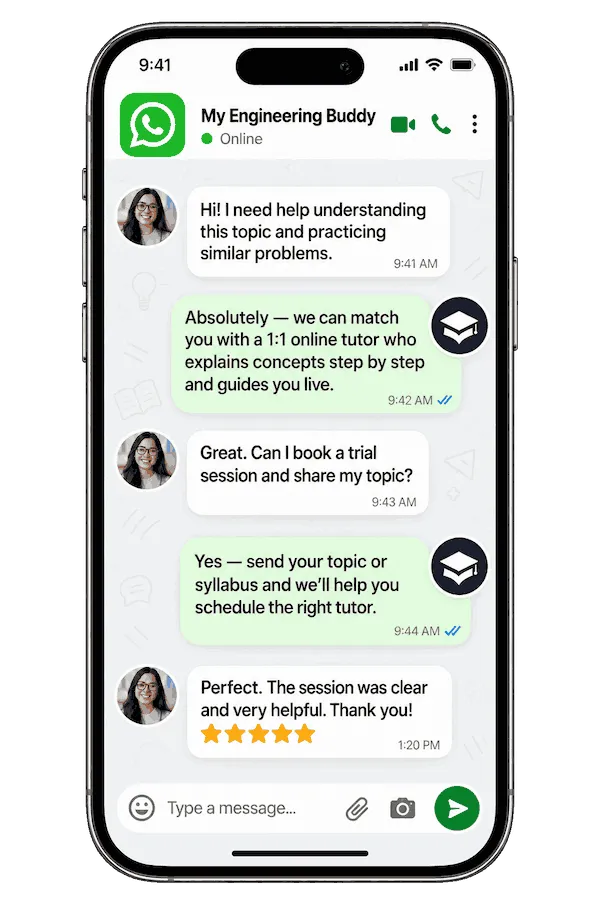
Unlike platforms where you fill out a form and wait, MEB responds in under a minute, 24/7. Tutor match takes under an hour. The $1 trial means you test before you commit. Everything runs over WhatsApp — no logins, no intake forms.
Study Plans (Pick One That Matches Your Goal)
A catch-up plan (1–3 weeks) targets students who’ve fallen behind on core theorists and need to close gaps before a submission or exam. An exam prep plan (4–8 weeks) works through each jurisprudential school systematically, with past-paper practice built into every second session. Weekly ongoing support aligns to semester deadlines — one session per week covers new material and reviews any Legal Theory or Jurisprudence assignment in progress. The tutor builds the specific sequence after the diagnostic session.
Pricing Guide
Jurisprudence tutoring starts at $20/hr for undergraduate-level work. LLM, dissertation support, and advanced legal philosophy sessions run $40–$100/hr depending on tutor expertise and topic complexity. Rate factors include level, how close the exam or deadline is, and tutor availability in your time zone.
For students targeting top law school placements, Bar qualification, or LLM programmes at leading institutions, tutors with academic research backgrounds in legal philosophy are available at higher rates — share your specific goal and MEB will match the right tier.
Availability tightens significantly in the four weeks before end-of-semester exams and coursework deadlines. Book early. Start with the $1 trial — 30 minutes, no registration, no commitment. WhatsApp MEB for a quick quote.
Try your first session for $1 — 30 minutes of live 1:1 tutoring or one homework question explained in full. No registration. No commitment. WhatsApp MEB now and get matched within the hour.
FAQ
Is Jurisprudence hard?
For most law students, yes — because it requires philosophical argument, not legal rule application. Students trained to find the right answer in a statute struggle when the question is whether any answer can be “right.” That shift takes focused practice to make automatic.
How many sessions are needed?
Most students see clear improvement in essay structure within 4–6 sessions. Reaching the point where you can handle an unseen past-paper question confidently typically takes 10–15 hours of 1:1 work, depending on starting level and how much independent practice you put in between sessions.
Can you help with homework and assignments?
MEB tutoring is guided learning — you understand the work, then submit it yourself. The tutor works through the argument with you, not for you. See our Academic Integrity policy and Why MEB page for full details on what we help with and what we don’t.
Will the tutor match my exact syllabus or exam board?
Yes. Share your module guide, course outline, or reading list before the first session. Tutors are matched to your specific curriculum — whether that’s an Oxford PPE module, a US JD jurisprudence course, or an LLM legal theory unit at a UK or Australian university.
What happens in the first session?
The tutor runs a short diagnostic — asking you to explain a core concept or respond to a past-paper prompt. This identifies whether the problem is conceptual, structural, or presentational. The rest of the first session starts addressing the highest-priority gap immediately.
Is online tutoring as effective as in-person?
For Jurisprudence — which is argument-based, not practical — online is often better. The digital pen-pad makes argument mapping visible in a way a whiteboard can’t replicate across a desk. Most students adjust within the first 15 minutes of a session.
Can I get Jurisprudence help at midnight?
Yes. MEB operates 24/7 across time zones. Late-night sessions are regularly booked by students in the Gulf, Australia, and the US West Coast. WhatsApp MEB at any hour — response time is typically under a minute regardless of when you message.
What if I don’t like my assigned tutor?
Request a change via WhatsApp. MEB matches a replacement within hours, no explanation needed. The $1 trial is specifically designed so you find out before committing to a full session block — not after five sessions you weren’t sure about.
How do I get started?
Three steps: WhatsApp MEB, get matched to a verified Jurisprudence tutor within the hour, then start your $1 trial — 30 minutes of live tutoring or one question explained in full. No forms. No waiting period. No upfront commitment beyond one dollar.
What’s the difference between Jurisprudence and Legal Theory as course subjects?
They overlap significantly — most universities treat them as the same module or use the names interchangeably. Some programmes distinguish them by scope: Jurisprudence covers the philosophy of law broadly, while Legal Theory focuses on normative frameworks. Your tutor adapts to whichever framing your syllabus uses.
Do Jurisprudence tutors help with dissertation chapters on legal philosophy?
Yes. LLM and research students regularly use MEB for dissertation chapters covering positivism, critical theory, or rights theory. The tutor reviews your argument structure, flags gaps in engagement with secondary literature, and helps sharpen your thesis — without writing it for you.
How do I find a Jurisprudence tutor in my city?
MEB tutors work online, so your city doesn’t limit your options. Students in London, New York, Toronto, Dubai, and Sydney all access the same tutor pool. You’re matched by syllabus fit and time zone — not postcode. Sessions run on Google Meet, no travel required.
Trust & Quality at My Engineering Buddy
Every MEB tutor goes through subject-specific screening before their first session — this includes a live demo evaluation, review of academic and professional background, and ongoing feedback monitoring after each session block. Jurisprudence tutors hold degrees in Law, Philosophy of Law, or related fields, and many have postgraduate or research experience in legal theory. Rated 4.8/5 across 40,000+ verified reviews on Google.
MEB tutoring is guided learning — you understand the work, then submit it yourself. For full details on what we help with and what we don’t, read our Academic Integrity policy and Why MEB.
MEB has served 52,000+ students across the US, UK, Canada, Australia, Gulf, and Europe since 2008 — across 2,800+ subjects. In Law, that includes ongoing support in Jurisprudence, Administrative Law tutoring, Criminal Law tutoring, and the full range of law modules students encounter across undergraduate and postgraduate programmes. See our tutoring methodology for how sessions are structured from diagnostic through to exam readiness.
MEB covers the full Law subject family — from foundational modules to specialist postgraduate theory. Students working on Civil Law help and Property Law tutoring alongside Jurisprudence find that the philosophical grounding from Jurisprudence sessions carries directly into how they read and apply doctrine in other modules.
Source: My Engineering Buddy, 2008–2025.
Explore Related Subjects
Students studying Jurisprudence often also need support in:
- Animal Law
- Banking Law and Practice
- Copyright Law
- Cyber Law
- Environmental Law
- Family Law
- Islamic Law
- Tort Law
Next Steps
Before your first session, have ready:
- Your module guide, course outline, or reading list for Jurisprudence
- A recent essay attempt or past-paper question you struggled with
- Your exam date or coursework submission deadline
Share your syllabus focus, your hardest component (essay structure, a specific theorist, past-paper technique), and your time zone. MEB matches you with a verified Jurisprudence tutor — usually within 24 hours, often within the hour. The first session starts with a diagnostic so every minute is used well.
Visit www.myengineeringbuddy.com for more on how MEB works.
WhatsApp to get started or email [email protected].
Reviewed by Subject Expert
This page has been carefully reviewed and validated by our subject expert to ensure accuracy and relevance.




