Contact MEB Today To Get The Best
Product Lifecycle Management (PLM) Tutoring Online
Email: [email protected]



~1 min
Average Reply Time
~1 hour
To Be Matched With A Tutor
30 Min Trial
75% Find Their Tutor On The 1st Trial
$20-35+/hr
Premium Yet Affordable Learning
Hire The Best Product Lifecycle Management (PLM) Tutor


Most engineering students hit a wall with PLM not because it’s too hard — but because their course treats it as theory when industry runs it as process.
Product Lifecycle Management (PLM) Tutor Online
Product Lifecycle Management (PLM) is an engineering and business discipline that manages a product’s entire journey — from concept and design through manufacturing, service, and end-of-life — integrating data, processes, and teams across the product’s full lifespan.
If you’re searching for a PLM tutor near me, MEB connects you with verified, subject-specific tutors who know PLM as it’s actually taught and applied — covering Siemens Teamcenter, PTC Windchill, Dassault Systèmes ENOVIA, data governance, BOM management, and change control workflows. MEB has supported mechanical engineering students across the US, UK, Canada, Australia, and the Gulf since 2008. One structured diagnostic session shows exactly where your gaps are — and every session after that closes them.
- 1:1 online sessions tailored to your course syllabus and PLM platform
- Expert verified tutors with industry and academic PLM experience
- Flexible time zones — US, UK, Canada, Australia, Gulf
- Structured learning plan built after a diagnostic session
- Ethical homework and assignment guidance — you understand before you submit
52,000+ students across the US, UK, Canada, Australia, and the Gulf have used MEB since 2008 — including students in Mechanical Engineering subjects like PLM, product design, and manufacturing processes.
Source: My Engineering Buddy, 2008–2025.
How Much Does a PLM Tutor Cost?
Most PLM tutoring sessions run $20–$40/hr. Graduate-level or industry-specific PLM work — Teamcenter configuration, ENOVIA customisation, enterprise BOM workflows — can reach $70–$100/hr depending on depth and tutor background. The $1 trial gets you 30 minutes of live 1:1 tutoring or one homework question explained in full.
| Level / Need | Typical Rate | What’s Included |
|---|---|---|
| Undergraduate PLM modules | $20–$35/hr | 1:1 sessions, homework guidance |
| Graduate / enterprise-level PLM | $35–$70/hr | Expert tutor, platform-specific depth |
| $1 Trial | $1 flat | 30 min live session or 1 homework question |
Tutor availability tightens around semester project deadlines and capstone submission windows. Book early if you’re on a tight timeline.
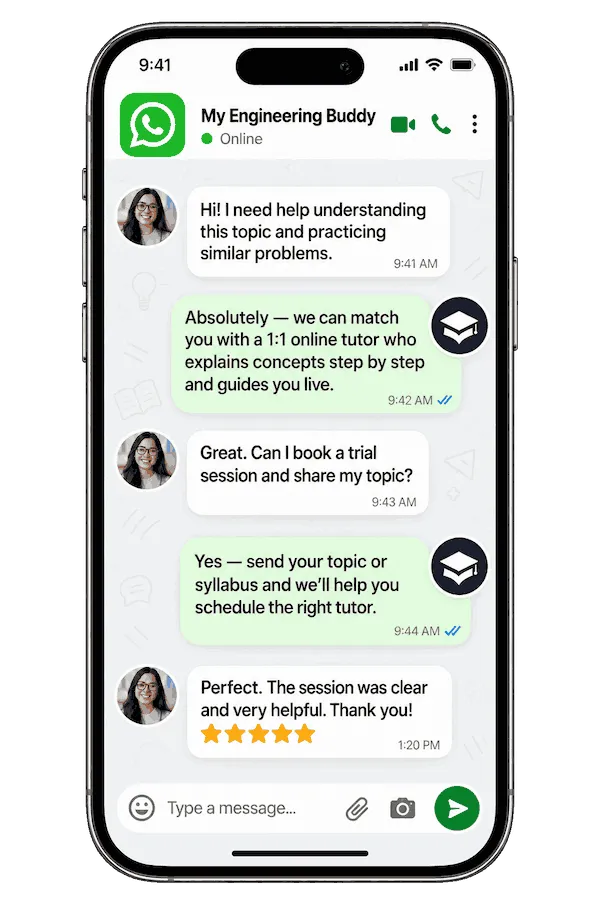
WhatsApp MEB for a quick quote — average response time under 1 minute.
Who This PLM Tutoring Is For
PLM spans engineering, operations, and product strategy — which means students come from very different starting points. Some are mechanical engineers learning their first PLM tool. Others are graduate students working through change management theory or BOM governance frameworks with a dissertation component attached.
- Undergraduate engineering students taking a PLM or product development module
- Graduate and masters students working on PLM strategy, lifecycle costing, or digital thread assignments
- Students who failed a PLM module first time and need to resit with a clear structure
- Students with a university conditional offer depending on passing this subject
- Engineers upskilling in Teamcenter, Windchill, or ENOVIA for professional development
- Parents watching a child’s confidence drop alongside their grades in a demanding engineering programme
Students have come to MEB from programmes at institutions including MIT, TU Delft, Georgia Tech, the University of Michigan, ETH Zurich, and Imperial College London. If PLM is on your syllabus, MEB has a tutor who knows it.
At MEB, we’ve found that PLM students who struggle most are rarely confused by the technology — they’re missing the systems-thinking layer that connects product data, process ownership, and organisational change. One session on that framing typically unlocks the rest of the course.
1:1 Tutoring vs Self-Study vs AI vs YouTube vs Online Courses
Self-study works if you’re disciplined — but PLM has no clean textbook path, and most students get stuck connecting theory to platform logic. AI tools give fast definitions but can’t diagnose whether your BOM structure or change-order workflow is actually wrong. YouTube covers PLM overviews well and stops cold when you’re working through Windchill configuration or a specific ENOVIA module. Online courses are structured but fixed-pace with no feedback on your actual assignment. 1:1 tutoring with MEB is live, calibrated to your exact course, and corrects errors in the moment — including the ones you didn’t know you were making in your PLM system logic.
Outcomes: What You’ll Be Able To Do in PLM
After focused 1:1 sessions, you’ll be able to apply BOM management principles to multi-level assemblies without losing traceability. You’ll analyse change control workflows and explain why engineering change orders follow the sequence they do. You’ll model a product lifecycle stage-gate process from concept through end-of-life, identifying decision criteria at each gate. You’ll present a lifecycle cost analysis that accounts for design, manufacturing, and disposal phases. You’ll solve common PLM data governance problems — version control conflicts, configuration item mismatches, and released-versus-unreleased status issues — with confidence.
Based on feedback from 40,000+ sessions collected by MEB from 2022 to 2025, 58% of students improved by one full grade after approximately 20 hours of 1:1 tutoring in subjects like Product Lifecycle Management (PLM). A further 23% achieved at least a half-grade improvement.
Source: MEB session feedback data, 2022–2025.
Try your first session for $1 — 30 minutes of live 1:1 tutoring or one homework question explained in full. No registration. No commitment. WhatsApp MEB now and get matched within the hour.
What We Cover in PLM (Syllabus / Topics)
PLM Foundations and Product Strategy
- Definition of PLM and its role in the product development enterprise
- Stage-gate and phase-review process models
- Product lifecycle stages: ideation, design, launch, maturity, end-of-life
- Lifecycle cost analysis and total cost of ownership
- Digital thread and digital twin concepts
- PLM vs PDM vs ERP: system boundaries and integration points
- Sustainability in product lifecycle — design for disassembly, circular economy frameworks
Core texts: Product Lifecycle Management by John Stark (Springer, 3rd ed.); Managing the Design Factory by Donald Reinertsen.
Data Management and Configuration Control
- Bill of Materials (BOM) types: engineering BOM, manufacturing BOM, service BOM
- Configuration management — baselines, configuration items, configuration audits
- Engineering change orders (ECOs) and change control boards
- Part numbering schemes and revision control
- Document management and vault structures
- Released vs. work-in-progress status management
Core texts: Configuration Management Best Practices by William Clemens; Product Data Management by Ed Miller.
PLM Platforms and Enterprise Integration
- Siemens Teamcenter: workspace, item types, workflows
- PTC Windchill: product structures, lifecycle templates, access control
- Dassault Systèmes ENOVIA on 3DEXPERIENCE platform
- Integration with CAD tools: CATIA, NX, SolidWorks, Creo
- PLM–ERP integration patterns (SAP, Oracle)
- API and customisation fundamentals for enterprise PLM
- PLM data migration strategies and governance models
Core texts: Teamcenter Customization and Administration (Siemens documentation); The Digital Thread by Bob Raynor.

Platforms, Tools & Textbooks We Support
PLM is inseparable from its platforms. MEB tutors work directly with you inside the tools your course or employer uses — not just the theory around them. Platforms covered include Siemens Teamcenter, PTC Windchill, Dassault Systèmes ENOVIA, Aras Innovator, Oracle Agile PLM, and Arena PLM. CAD integration support extends to Solid Edge, SolidWorks, NX, CATIA, and Creo. For simulation-linked PLM workflows, tutors also support Simulink and FEA data handoff protocols.
What a Typical PLM Session Looks Like
The tutor opens by checking where you got stuck since last time — often a BOM structure problem or a change control workflow question left unresolved. You share your screen inside Google Meet, and the tutor walks through the exact PLM concept or platform task with you — say, configuring a lifecycle template in Windchill or tracing a part revision through an ECO in Teamcenter. The tutor uses a digital pen-pad to annotate process flows, draw data relationships, and mark up your work in real time. You replicate the steps or explain the logic back. The session closes with a specific task: complete one BOM variant exercise, or map out the change-order sequence for your assignment scenario. Next topic is noted before you disconnect.
How MEB Tutors Help You with PLM (The Learning Loop)
Diagnose: In the first session, the tutor asks you to walk through a PLM problem you’ve already attempted — a BOM, a lifecycle gate decision, or a platform task. Where you hesitate or guess reveals the actual gap, not the one you reported.
Explain: The tutor works through the concept live with a digital pen-pad — drawing product data flows, annotating change control sequences, or stepping through platform logic on screen. No slides. No pre-recorded content.
Practice: You attempt a parallel problem with the tutor present. For platform-based topics, that means doing it in the tool, not describing it.
Feedback: The tutor reviews each step — not just whether the answer is right, but why a given BOM structure is wrong, or which configuration management principle you applied incorrectly and where marks would have been lost.
Plan: Every session ends with a clear next topic, a specific task to complete before the next session, and an updated timeline against your deadline or exam date.
Sessions run over Google Meet with a digital pen-pad or iPad and Apple Pencil. Before your first session, share your syllabus or course outline, any PLM platform your module uses, and the specific assignment or topic you’re most stuck on. The first session starts with a diagnostic — this also serves as your $1 trial, so 30 minutes is all you need to see whether MEB is the right fit.
Start with the $1 trial — 30 minutes of live tutoring that also serves as your first diagnostic.
Students consistently tell us that the biggest shift in PLM comes when the tutor stops explaining the platform and starts showing how product data decisions in the tool connect to real engineering outcomes downstream in manufacturing and service.
Source: My Engineering Buddy tutor and student feedback, 2022–2025.
Tutor Match Criteria (How We Pick Your Tutor)
Not every mechanical engineering tutor knows PLM. MEB matches on four things specifically.
Subject depth: Tutors are matched to your exact course level — undergraduate module, graduate programme, or professional upskilling — and to the PLM platform your syllabus or employer uses.
Tools: Every session runs on Google Meet with a digital pen-pad or iPad and Apple Pencil. Platform-specific tutors can share their own Teamcenter or Windchill environments when needed.
Time zone: Tutors are available across US, UK, Gulf, Canada, and Australia time zones — matched to your availability, not theirs.
Goals: Whether your target is a passing grade, a capstone distinction, or a specific PLM certification, the tutor match reflects that — not a generic engineering slot.
Unlike platforms where you fill out a form and wait, MEB responds in under a minute, 24/7. Tutor match takes under an hour. The $1 trial means you test before you commit. Everything runs over WhatsApp — no logins, no intake forms.
Study Plans (Pick One That Matches Your Goal)
Catch-up (1–3 weeks): for students behind on a PLM module or approaching a resit with specific gaps in BOM management or change control. Exam prep (4–8 weeks): structured revision across all PLM tracks, timed to your submission or exam date. Weekly support: ongoing sessions aligned to your semester schedule, keeping assignments and coursework on track. After the diagnostic session, the tutor maps the exact sequence — no guessing at what comes next.
Pricing Guide
PLM tutoring starts at $20/hr for standard undergraduate modules. Graduate-level work — enterprise PLM strategy, platform configuration, digital thread architecture — runs $35–$100/hr depending on topic complexity and tutor specialisation. Rate factors include your level, the specific platform involved, how quickly you need support, and tutor availability. Demand spikes around capstone project deadlines and end-of-semester submissions — if you’re inside 4 weeks of a deadline, book as soon as possible.
For students targeting roles at companies running complex PLM environments — aerospace, automotive, defence — tutors with direct industry experience in Teamcenter or Windchill implementation are available at higher rates. Share your specific goal and MEB will match the tier to your ambition.
Start with the $1 trial — 30 minutes, no registration, no commitment. WhatsApp MEB for a quick quote.
A common pattern our tutors observe is that students can describe PLM perfectly in an essay but freeze when asked to implement a change-order workflow in an actual platform. The gap between knowing the process and operating the system is exactly where 1:1 sessions close the distance fastest.
FAQ
Is PLM hard?
PLM is conceptually demanding because it sits at the intersection of engineering, data management, and organisational process. Most students find the platform-specific tasks harder than the theory — especially BOM structures and change control workflows under time pressure. With a good tutor, both become manageable.
How many sessions are needed?
Students closing a specific gap before a deadline often need 4–8 sessions. Those seeking consistent semester support typically book weekly. The diagnostic session in your first meeting sets a realistic target based on your current level and timeline.
Can you help with homework and assignments?
MEB tutoring is guided learning — you understand the work, then submit it yourself. The tutor explains the PLM concept, works through a similar example, and checks your reasoning. See our Academic Integrity policy and Why MEB page for full details on what we help with and what we don’t.
Will the tutor match my exact syllabus or exam board?
Yes. Share your course outline, university, and PLM platform when you first message MEB. Tutors are matched specifically — not assigned from a general engineering pool. If your module uses Windchill, your tutor knows Windchill.
What happens in the first session?
The tutor starts with a diagnostic — asking you to walk through a problem you’ve already attempted. This reveals the real gaps quickly. The rest of the session addresses the highest-priority issue and sets the plan for subsequent sessions.
Is online tutoring as effective as in-person?
For PLM, often more so. Screen sharing inside Google Meet lets both student and tutor work inside the actual PLM platform simultaneously. The digital pen-pad handles annotation, process diagrams, and data flow mapping as clearly as any whiteboard.
What’s the difference between PLM and PDM — and does it matter for my course?
PDM (Product Data Management) handles file and document storage within a single team. PLM extends that across the full product lifecycle, including manufacturing, service, and end-of-life. Most university PLM courses test this distinction explicitly — getting it wrong in an assignment costs marks.
Can MEB help with both Teamcenter and Windchill in the same programme?
Yes. Some graduate programmes expose students to multiple PLM platforms for comparison. MEB has tutors with hands-on experience across Teamcenter, Windchill, ENOVIA, and Aras Innovator — matched to whichever platform your module or project requires.
Can I get PLM help at short notice — including evenings and weekends?
MEB operates 24/7 across all major time zones. If you message on WhatsApp, average response time is under a minute. Evening and weekend sessions are available and often in high demand — book ahead if your deadline is within two weeks.
Do you offer group PLM sessions?
No. All MEB sessions are 1:1 by design. Group sessions dilute the diagnostic precision that makes the sessions effective — the tutor can’t correct your specific BOM structure error if they’re also managing four other students’ questions at the same time.
How do I find a PLM tutor in my city?
You don’t need to. MEB’s online format means your tutor is matched by subject expertise and time zone — not geography. Students in New York, London, Dubai, and Sydney access the same tutor pool. Quality doesn’t depend on your postcode.
How do I get started?
Message MEB on WhatsApp. You’ll be matched with a verified PLM tutor within the hour. The first session is the $1 trial — 30 minutes live or one question explained in full. Three steps: WhatsApp → matched → start trial.
Trust & Quality at My Engineering Buddy
Every MEB tutor goes through subject-specific screening before working with students. That means a live demo session evaluated against a structured rubric, degree verification, and review of professional or academic background in PLM specifically — not just general mechanical engineering. Rated 4.8/5 across 40,000+ verified reviews on Google. Ongoing session feedback is reviewed to keep tutor performance consistent.
MEB tutoring is guided learning — you understand the work, then submit it yourself. For full details on what we help with and what we don’t, read our Academic Integrity policy and Why MEB.
MEB has been running since 2008, serving 52,000+ students across the US, UK, Canada, Australia, the Gulf, and Europe in 2,800+ subjects. Within mechanical engineering, the platform covers everything from computer-aided manufacturing (CAM) tutoring and rapid prototyping help to advanced PLM strategy and platform configuration. If it’s on a mechanical engineering programme, MEB has a tutor for it. Learn more about how sessions are structured at MEB’s tutoring methodology page.
Since 2008, MEB has operated across 2,800+ engineering and technical subjects — PLM sits in a cluster of subjects, including engineering ethics and design of machine elements, where students most often underestimate the workload until the assignment deadline is two weeks away.
Source: My Engineering Buddy, 2008–2025.
Explore Related Subjects
Students studying PLM often also need support in:
- Kinematics of Machines
- Mechanics of Materials
- Theory of Machines
- Thermodynamics
- Vehicle Engineering
- Thermal Engineering
- Energy Engineering
Next Steps
When you message MEB, share three things: your course or syllabus (or the PLM platform your module uses), the topic or assignment you’re stuck on, and your exam or submission deadline. MEB matches you with a verified PLM tutor — usually within an hour.
Before your first session, have ready:
- Your course outline or syllabus, including which PLM platform is covered
- A recent assignment attempt or homework question you struggled with
- Your deadline or exam date
The tutor handles the rest. First session starts with a diagnostic so every minute counts.
Visit www.myengineeringbuddy.com for more on how MEB works.
WhatsApp to get started or email [email protected].
Reviewed by Subject Expert
This page has been carefully reviewed and validated by our subject expert to ensure accuracy and relevance.